How Creativity is Necessary in the Museum

Originally posted on Medium, June 8, 2017.

What is Creativity? Why is it so important to have creativity in our practice as museum professionals? Questions like these two are what we ponder every day to fulfill our museums’ missions and our career goals. Creativity allows us to be able to express ourselves and provides another outlook on the world around us. Museum professionals especially need to express their creative sides to help their organizations continue to grow and adapt to their changing communities. This is not a new topic but we can always learn something new when we express our creative side. I learn a lot when I allow to express my creative side whether it is drawing, writing, or making projects; and I use my experiences inside and outside of museums to inspire me to create something different and sometimes the same subject from a different perspective.

Since I was young, I made various drawings of many things including animals and landscapes. As I developed my interests in museums, I began drawing museums I have been to and museums I have worked with. For instance, I drew the Butler-McCook House in Hartford, the Stanley-Whitman House in Farmington, Connecticut, Noah Webster House in West Hartford, and Connecticut Historical Society. I drew many of these drawings from my own memory, and one was drawn using a photograph as reference. Also, I used either pens or pencils to make my drawings (depending on which utensil was available at the time). I learned to use my creativity to assist in my museum experience, and I continue to use references from books and professional development programs discussing creativity.

Connecticut Historical Society, pen, drawn 2015

  Noah Webster House, pen, drawn 2015

Stanley-Whitman House, pen, drawn 2014
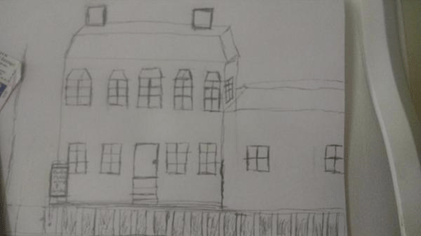
Butler-McCook House, pencil, drawn 2014

One of the resources I used and continue to use is Linda Norris’ and Rainey Tisdale’s Creativity in Museum Practice to help me get inspired. Norris and Tisdale express the importance of allowing creativity to inspire work in the museum no matter which department they work from. In their book, they state that they believe “the daily life of museum workers behind the scenes both needs and deserves more attention in order for museums to reach their full potential.” Norris and Tisdale shared colleagues’ stories from across the museum field of what creative practices have worked for themselves and their museums. Also, they shared their own tips on how to jumpstart one’s creative practice using no-cost or low-cost activities. Throughout the book, Norris and Tisdale discuss many ways museum professionals can find creativity in their daily tasks, and use whatever inspiration they find in the environment they are surrounded by. The style of this book is written as both a textbook and a workbook to help museum professionals spark their own creativity.

Norris, Linda and Rainey Tisdale, Creativity in Museum Practice, Walnut Creek, CA: Left Coast Press, 2014.

One of the professional development programs I participated in was a NYCMER workshop in October called “Exhibition Designs for Educators” at El Museo del Barrio. This program was an example of how educators can learn to express their creativity to design exhibits and programs simultaneously. There was a challenge in which we were not told what the object was, and we were expected to create an exhibit with an unknown artifact (what appeared to be a cement block). The group I worked with received the prompt to create this exhibit as a warm and friendly environment; we brainstormed various ways we could create the exhibit using the prompt. For more information about this activity, check out the post “Writing about Museum Education: Using Professional Development to Our Advantage.” By brainstorming together as a group, we were able to express our collective creative experience that led to the concept we designed.
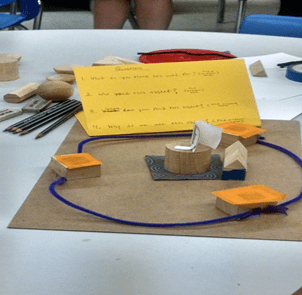
“Exhibition Designs for Educators” Activity, October 2016

Creativity is especially used in museum education programs to not only entertain its audiences but to educate them on the subject matter of the museums’ expertise including but not limited to art, history, and science.

There are many examples of when I used creativity as a museum education professional. For instance, while I was working in historic house museums in Connecticut, I taught and assisted participants in making crafts and cooking recipes for school and camp programs. One of the crafts I helped kids make were cornhusk dolls during the summer camp program at Noah Webster House & West Hartford Historical Society which not only was a fun activity but they also learned about what kinds of dolls kids during the eighteenth century played with and created themselves to find ways to entertain themselves. I have also helped fifth grade students make apple pies and Irish-style mashed potatoes at the Stanley-Whitman House in Farmington. At Connecticut Landmarks Butler-McCook House, I helped kids create Samurai helmets out of gift wrap and yarn during the New Year’s Eve celebration, First Night Hartford. The Samurai helmet activity was inspired by the Samurai armor that the McCook family have in their old 18/19th century house; Reverend McCook and his daughter Frances traveled to many places on the way to and from China to visit another daughter Eliza, and one of the places they visited was Japan where he purchased the Samurai armor to bring back to Hartford.

One of the most recent examples include creating activities for kids to participate in during down time in school programs and during general tours at the Long Island Maritime Museum. I created activities such as cross word puzzles, word searches, matching games, and a scavenger hunt. To create these activities, I used information about the Long Island Maritime Museum and the maritime history it shares with its visitors. For instance, I created a crossword puzzle about one of the historic buildings on the museum’s property called the Rudolph Oyster House based on the information about the Oyster House and oyster business; the Rudolph Oyster House was built in 1908 by William Rudolph for his oyster company established in 1895, and it was used as an oyster culling and shucking house until 1947 and was acquired by the Long Island Maritime Museum in 1974.

Another example of activities I created was a breeches buoy search to teach participants the parts of the breeches buoy, an early contraption that pulled victims from shipwrecks, by writing down the names of the parts next to the corresponding letter (I included a word bank so they see the appropriate names). The next example of activities I created is a Name These Boats activity that challenges participants to use their memories of the boats stored in the museum’s Small Craft Building. I included a word bank to limit the possibilities, and participants would write down the name of the boat next to the photograph of a boat.

I also had the opportunity to observe a children’s program that the Maritime Explorium in Port Jefferson participated in. Children created sound-sandwiches for them to take home and play music on by blowing into them like harmonicas. The sound-sandwiches were made with tongue depressors, two pieces of straw, and rubber bands. To make them, one of the two tongue depressors needs a large rubber band wrapped around it from one tip to another; then the two tongue depressors and two small pieces of straw are tied together with smaller rubber bands at the ends. Sound-sandwiches can be adjusted until a humming or vibrating sound is heard. This was not only a fun activity for children to participate in but they also learned how to create sound by using the materials they were given.

Last weekend I created another exhibit for my childhood church to share the community’s summertime fun since the season would be around the corner soon and I wanted this exhibit to focus more on the parishioners as well as their interactions with the community around them. I included photographs from the Summer Festival the church participated in in 1975, and photographs from a Church picnic that took place by the beach in the 1960s. I also included bulletins that included announcements of activities planned for the summer, ways to get involved in the community, and current events to remind parishioners to be good Christians and learn more about the issues discussed as a result of events. I designed little suns to decorate the exhibit with to represent summer. This exhibit is an example of how creativity is especially useful during the exhibit design process.
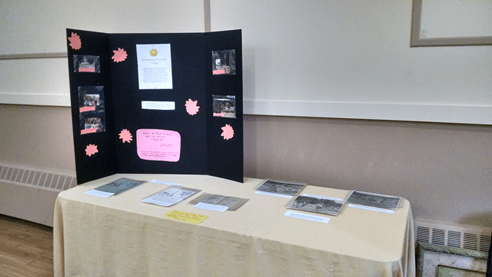
Summertime Fun with Trinity exhibit, opened June 4, 2017

Tomorrow I am also participating in another professional development program about creativity, Creativity Incubator. It is a New York State Council on the Arts (NYSCA)/ Greater Hudson Heritage Network (GHHN) Partnership Program which encourages museum staff to test out experimental interpretive approaches through hands-on activities. I will travel to the Raynham Hall Museum in Oyster Bay, New York where it is being hosted. Creativity will continue to be a significant part of our work as museum professionals, and we need to find ways to inspire creativity in our work and inspire creativity with our visitors.

What ways have you found to inspire creativity work for you? Do you have a favorite moment where you accomplished a creative project, museum-related or not? Have you been inspired by something outside of the museum field that helped you complete a project?


EdComVersation: Developing a Strategy for Inclusion and Diversity

Originally posted on Medium, April 27, 2017. 

During the months of April and March, there has been a lot of discussion about inclusion, equity, and diversity. First, there was discussion about equity and inclusion in museums (https://medium.com/@steward.lindsey/equity-and-inclusion-in-museums-9abf113c861b). Second, there was the blog post on EdComVersation discussion about the Journal of Museum Education edition on Race, Dialogue, and Inclusion (https://medium.com/@steward.lindsey/edcomversations-and-journal-of-museum-education-race-dialogue-and-inclusion-1a6bdc61ebb5). Third, there was discussion about gender equity in museums(https://medium.com/@steward.lindsey/gender-equity-in-museums-an-important-issue-that-should-be-addressed-723341320b03).

To continue the discussion on inclusivity and diversity, I recently participated in this month’s EdComVersation about developing a strategy for inclusion and diversity. One of the two panelists for this webinar was Dina Bailey, the CEO of Mountaintop Vision, a consulting firm that focuses on working with organizations in change management and strategic initiatives in to embrace diversity and inclusion in communities. The second panelist was Chris Taylor, the Chief Inclusion Officer at the Minnesota Historical Society which preserves Minnesota’s past, shares the state’s stories and connects people with history. By participating in this program, I found the resources very helpful and informative since after learning more about inclusion, equity, and diversity I can continue my understanding of these topics by learning how to implement inclusion and diversity.

This month’s webinar’s format included questions from Sheri Levisky-Raskin, who moderated the discussion, and from participants in the webinar. Bailey and Taylor shared their answers to questions posted and their insights on creating strategies for inclusion and diversity. To begin the discussion, they shared their definition of inclusion and definition. According to Bailey, diversity is having different types of people in one space or program and inclusion is the action of coming together to do something. To add to these definitions, Taylor added that diversity is the intended outcome for an organization while inclusion is the process of how we get there and how we make decisions. Both Bailey and Taylor pointed out that in general people have used the terms “diversity” and “inclusion” interchangeably without realizing this; while these terms refer to the same subject both terms are different. The discussion continued with the difference between Strategy and strategy when developing a strategy for inclusion and diversity.

While defining inclusion and diversity, Taylor also brought up the point that while we are looking at the definitions of these terms we should also look at the definition of strategy. He stated that there is a difference between Strategy and strategy. Strategy with a capital “s” is the strategic planning with the question of what are the outcomes in mind; meanwhile, strategy with a lowercase “s” raises the question of what can you do within your team, and figure out how to do the day to day activities.

Bailey and Taylor answer the question of what can you do to come up with an inclusion plan towards diversity. They stated that it is better to either define diversity and inclusion for the organizational culture or to keep the definitions broad and genetic. Taylor reiterated this answer by pointing out inclusion comes from us and the organizational culture should contain one of the most important things to bring the work internally. Also, Bailey revealed that it is important to make it personal since it is difficult to maintain goals when terms are defined broadly.

The discussion continued by allowing participants to ask themselves where do inclusion and diversity sit in your institutions and gave additional advice on how to start integrating inclusion and diversity in the institutions. Bailey and Taylor stated that diversity must be a part of what you do and by having someone responsible for inclusion there would be someone to evaluate and implement written documents to support diversity in the institution. Other advice both gave are to include leadership in the process and volunteer to do stuff if higher levels do not have time to work on since it shows that you think it is important as well as passionate about diversity; find someone you trust to collaborate with; and use the resources available, and there are plenty, for inclusion and diversity.

Both Bailey and Taylor explained it is alright to have a small group of staff to start with on these discussions and to start on small projects. There are ways to start without spending a lot including getting to know who you are as a staff and institution to allow themselves to become more aware of our own stereotypes, prejudices, etc. then the understanding of oneself gets better. Other ways to start is to share the resources such as books, websites, and webinars by forming small gatherings such as book clubs. They also suggest that articles can also be shared in the lunchroom weekly, send email informing the rest of the staff resources are available in the room, and at the end of the month offer to discuss it if they have read them.

I leave it here to ask you these questions: Has your staff worked on an inclusion plan towards diversity within your institutions? What methods have you worked on to raise awareness on inclusion and diversity?


EdComversations and Journal of Museum Education: Race, Dialogue, and Inclusion

Originally posted on Medium, March 16, 2017.

I recently read Museum Education Roundtable’s publication Journal of Museum Education, and the topic is Race, Dialogue, and Inclusion. Today I participated in this week’s EdComversation on this edition of the Journal of Museum Education. The moderator was Sheri Levinsky-Raskin who is the Assistant Vice President, Education & Evaluation at the Intrepid Sea, Air & Space Museum. The panelists were Lanae Spruce who is the Manager of Social Media & Digital Engagement at the Smithsonian National Museum of African American History and Culture; Anna Forgerson Hindley who is the Supervisory Early Childhood Education Specialist at the Smithsonian National Museum of African American History and Culture; and Amanda Thompson Rundahl who is the Director of Learning and Engagement at the Saint Louis Art Museum and the vice president at the Museum Education Roundtable. I will discuss what I have read in the Journal and then I will discuss additional findings conversed in this month’s EdComversation.

Last week I started to talk about this month’s Journal and how each edition lays out each article and case study written for that month. I decided to continue the discussion about this month’s Journal this week since I am participating in this program that is a main about this month’s Journal.

In this edition, the editorial by Cynthia Robinson, editor-in-chief of the Journal of Museum Education, discussed how the new National African American Museum of History and Culture is a powerful and timely symbol of hope. Also, Robinson discussed how the large draw of visitors to the new museum testifies the need for such a museum. She pointed out also that talking about race, race relations, and racism has always been difficult for many people, and the education department’s ability to open and sustain conversations across races is a critically important contribution to our society. She introduces the articles by acknowledging the hard work that went into writing the articles, and by explaining how these authors experiences provide information for other museums to adapt the ideas and approaches in their own programming.

For instance, Anna Forgerson Hindley (Early Childhood Education Coordinator, National Museum of African American History and Culture) and Julie Olsen Edwards’(co-author of Anti-bias Education for Young Children and Ourselves, NAEYC, 2010) article “Early Childhood Racial Identity-The Potential Powerful Role for Museum Programming” examined how the National African American museum of History and Culture approach conversations on race with young children and their families as well as teachers through a couple of programs. One was an Early Childhood Education Initiative program with young children and their families, and another was a series of Let’s Talk! Dialogue on Race workshops for teachers; both programs were developed based on research on the current understanding of the development of race identity and race between birth and age eight. The education specialists use the museum’s collection and content as concrete starting point to discuss abstract concepts (i.e. race and identity), and create staff development programs that also include focus on young children and the approaches to supporting self-care to enable long-term effectiveness in addressing the emotions charged and combative issues of race and racism.

Today’s American Alliance of Museums webinar, Race, Dialogue, and Inclusion, included discussions about two articles in the Journal. The two articles, given to participants before the program began, were “Race Isn’t Just a ‘Black Thing’-The Role that Museum Professionals Can Play in Inclusive Planning and Programming” and “Social Media for Social Justice”. “Race Isn’t Just a ‘Black Thing’” was written by guest editors Esther J. Washington (Director of Education, National Museum of African American History and Culture) and Anna Forgerson Hindley (Early Childhood Education Coordinator, National Museum of African American History and Culture and one of today’s panelists).

Washington and Hindley explained in their article that while the museum was planned for ten years the staff had sensed that this rich historical and cultural content, the educational programming developed around this content, and the museum structure itself, with its prominent placement on the National Mall, would quell a desire for a long-awaited inclusiveness. They gave details about what the ten-year process of creating the museum was like, and brief information about each article in this month’s Journal. Also, Washington and Hindley expressed their hopes the examples we provide inspire brave conversations across all museums and cultural institutions. They pointed out that the issues of race will be with us for a time to come and these are subtle and nuanced and often difficult to broach; but with some effort, museums can, do and should play an important role in inclusion and by doing so, the field will be made better.

“Social Media for Social Justice” was written by Lanae Spruce (Digital Engagement Specialist at the Smithsonian National Museum of African American History and Culture; another one of today’s panelists) and Kaitlyn Leaf (Digital Learning Specialist at the Smithsonian National Museum of African American History and Culture). Spruce and Leaf explained that the museum is tasked with stimulating a national dialogue on race and helping to foster a spirit of reconciliation and healing, and it directly impacts social media practice and how we engage with digital audiences since it helps them reach new audiences, highlight relevant museum collections, create participatory experiences, and confront issues of race and social justice. Also, they discuss a way that describes this museum’s use of collections, programming, and storytelling to uplift marginalized voices in the digital sphere.

In addition to discussing the articles, the panelists answered various questions posted by Sheri Levinsky-Raskin and participants in the program. For instance, the panelists shared their responses to how should museums be catalysts of social change. Hindley discussed that it is disturbing that part of the American culture is to forget what had happened in our past. She also pointed out that African American history is American history. I agree with this statement because we are a country filled of people with various cultural and ethnic backgrounds. We should celebrate this fact, and we should be able to include all aspects of our nation’s history.

Another question that was brought to the panelists attention was how do we define inclusion and social justice. Spruce defined inclusion as making people a part of the institution and making sure people are comfortable in the space created. Hindley also stressed the importance of creating a collaborative space for visitors and staff to feel safe in and express different viewpoints and be respected. These points are significant in our museum field because without that comfort we cannot effectively participate in our communities. The more we look at our museums’ historic narratives and missions the more we will be able to find ways to connect with our visitors and create opportunities that will be inclusive for all visitors.

To answer the question on the definition of social justice, the panelists pointed out that museums need to make sure there is equity as well as come up with ideas to train staff and engage with all visitors. One important tip that Hindley shared was to take time on yourself and recognize pieces of your life that brought you to this point in life. I think that is a significant point because we need to recognize that we all have bias, and we need to learn more about ourselves before we can be able to learn about everyone else in our communities. Spruce also stated that it is also important to use partnerships with outside organizations as resources.

The tips on how to tell inclusive stories in institutions include be open to criticism as well as listen to what criticisms there are to adapt programming to be more inclusive. Another tip was to change speaking orders in meetings and set up meetings with diverse members. The most important tip I took away from the program was to listen. For instance, museums should participate in Museums Respond to Ferguson, Museum Workers Speak, read and do research, and look at social media feeds from other organizations that discuss inclusion and equity. After reading these articles, participating in programs such as the NYCMER program last week and AAM’s webinar this week, I hope to find ways to create ways to help the museum community be more inclusive in our society.

How is your institution finding ways to reach out to visitors that may have felt excluded? Did you read this month’s Journal of Museum Education? What was your reactions to the articles?

Museum Education Programs: The Challenges of Having Chaperones Be Effective Participants

Originally published on Medium and Student Voices, January 27, 2017.

I think many museum educators agree that from time to time we all have chaperones accompanying school groups that do not engage with the program and not participate in encouraging kids involvement in the programs. I recently had a conversation on Twitter about this subject which began with this question to the online discussion group, #MuseumEdChat: “how do you engage chaperones to be effective partners in your programs? Without losing kid interest or pandering”. Not many people on Twitter have found solutions to this posted question but we attempted to answer this question by coming up with our own answers. I thought it would be best to create a program that would encourage chaperone participation by allowing them to collaborate with the students so that way kids are not discouraged from participating and chaperones can set a good example for kids to become active learners. Also, chaperones are therefore seen as more than “crowd control”. The conversation on Twitter made me think about my own experiences with school field trips and chaperones.

As a museum educator, I have had mixed experiences with chaperones. Some of the chaperones encouraged kids to participate in the school program activities while others passively sit there not engaging with kids or the educators. Chaperones who have not interacted with the program have either text or talk amongst themselves. These museums I have taught school programs taught me various lessons on how to handle these mixed experiences. At the Old State House in Hartford, for instance, I taught the “I Spy” program for kindergarten students on my very first day of my museum education internship. The “I Spy” program is an activity in which students created their own spy glasses made from paper towel rolls and decorated various stickers, crayons, and color paper; then once their spy glasses were finished, the educators, chaperones, and myself took the group of kids around the Old State House using the spy glasses to make observations about what they saw. While they were being made, chaperones and teachers not only brought kids around with Old State House staff to participate in the activity together but they also assisted me and the Old State House staff helping students decorate their spy glasses as well as made sure they could understand the instructions. After the first day of my internship at the Old State House, I learned that students and teachers can participate together on the activity and can encourage students to participate in the activity. Another experience taught me how to handle challenging situations while teaching programs.

When I was at the Stanley-Whitman House, I taught various programs including a life in eighteenth century Connecticut program for kids aimed at fourth and fifth grade levels that included a cooking lesson assisted by myself and another museum educator. One of the fifth-grade groups were a rowdy bunch that were rough housing and not listening to a word one museum educator and myself were instructing the students about the cooking lesson on making Irish-style mashed potatoes and apple pie. The group was so rowdy that because of the rough housing and not paying attention, the recipes came out poorly and one student cut his finger with the knife used to cut potatoes. The museum educator and myself followed protocol to get first aid to clean and put a band aid on his finger. Then I called the rest of the group to sit down in silence until the program was finished. Meanwhile, the teacher who was with this group sat by and did nothing to help discipline the group nor showed interest in what we were teaching this group throughout the whole cooking lesson. What I kept thinking was: If the teacher was not willing to engage with the session, then why should the students? This experience has taught me to figure out how to handle tough groups, and showed me one of the early examples of what it is like to be around inactive teachers and chaperones. Another example of mixed experiences I have had with school groups and chaperones revealed that each visiting school chaperones behave differently and museum educators prepare for various situations.

At the Noah Webster House, I have had various teachers and chaperones that had different levels of involvement in the programs. Some chaperones were willing to assist the groups in making sure the students were paying attention as well as assisting with activities. Others were either passively sitting by as I teach the session or were destructive in the students learning process. For instance, there is a program called Living History in which museum teachers and students assume 18th century identities and pretend to be living in that period in West Hartford (or West Division as the town was called in the 18th century) learning different ways the Webster family performed chores i.e. cooking and cleaning. Some teachers and chaperones would continuously refer to 21st century items and ideas which distracts the students and encourages the students to do the same thing even though the pre-visit materials they received before the field trip warned against doing so. Then at the Long Island Museum, one of my most recent experiences, I taught a program that took place in the museum’s 19th century School House to teach students about what school and life was like on Long Island during the 19th century.

The program starts with a comparison on what school is like back then and now by asking students about their school and informing them about the 19th century rural community. I asked the students what their schools was like, and then asked inquiry-based questions about what they think it is like in the School House; for instance, I ask how many rooms are in this school house as well as how many grade levels are inside and after hearing their answers I inform them there is one classroom with eight or nine grade levels. After the short introduction, I informed the students we are pretending to be traveling back in time and share that they will be participating in reading, writing (using scratch pens, or pen and inkwells), and arithmetic (math) activities as well as behave how 19th century students would have in school. After the students participates in the lessons and the recess using toys students back then used, we pretended to travel back to the 21st century so they can go back on the bus to go back to school. There were different reactions chaperones had to the program and different ways chaperones interacted with the students. Some assist with the activities and even asked to also participate in the activities such as working on penmanship using scratch pens and inkwells. Other chaperones had a less active approach including sitting back and chatting with other chaperones. All experiences showed me that each chaperone had different expectations about what the chaperones’ roles should be.

I decided to take a closer look at any research and published works written about chaperones to see how museum educators can answer the question about chaperones being effective partners in school programs. I found an article from Volume 28 of the Journal of Museum Education by Maija Sedzielarz called “Watching the Chaperones: An Ethnographic Study of Adult-Child Interactions in School Field Trips”. Sedzielarz, at the time of the article, was the School Visits Coordinator at the Science Museum of Minnesota in St. Paul where the research for the article took place. This article was a synthesis from her master’s thesis research at the University of Minnesota; it was a study of the types of chaperones that participate in school field trips to museums by using ethnography to record observations between adults and children. This study was conducted at the Science Museum of Minnesota where they began to design materials that tap into the chaperone’s expectations of field trip outcomes, directly addressing chaperone needs as well as assumptions then share these findings with the teachers planning trips to the museum. According to Sedzielarz, she stated that she found in the recent study of the chaperones’ behavior in elementary school field trips, in which she observed and interviewed almost thirty chaperones at the museum and additional five chaperones at three other local museums, she “heard comments that revealed what each chaperone felt was important about the trip and what kinds of outcomes they expected and consequently experienced” (Sedzielarz, 21). The article went into detail about how the chaperones Sedzielarz observed felt they had multiple roles to fill: guide, learning leader, teacher, role model, security guard, learner, group facilitator, and timekeeper. She explained chaperones frustrations on what roles they should be focusing more on during their visits with school groups.

From my own experience, chaperones are not necessarily included in most of the programs taught and this causes them to think the programs are only for the students; therefore, it leads to most chaperones taking inactive roles in the field trips. What I understood from the article is that we as museum educators need to remind chaperones that the most important role that they are there to learn as well. Sedzielarz stated that “If we believe that school field trips are valuable learning experiences, we also need to regard all members of the field trip as learners” (24). Each museum has their own materials and ways of presenting this material to the school groups, and it is up to museum educators to make sure the chaperones’ role have a part in being learning partners with the students and museum educators.

How are your museum(s) or cultural institutions handle working with teachers and chaperones? Do you have ideas on how chaperones can be learning partners in your programs? What are your experiences working with chaperones like in the past?

Maija Sedzielarz (2003) Watching the Chaperones, Journal of Museum Education, 28:2, 20–24, DOI: 10.1080/10598650.2003.11510478

https://mystudentvoices.com/museum-education-programs-the-challenges-of-having-chaperones-be-effective-participants-96cced3d449c

Museum Education Online: Museums’ Position in the Virtual World

Originally posted on Medium. December 8, 2016.

Museum education is continuing to evolve as a museum field after many years of creating programs for schools and the public. While I have over seven years’ experience in the field so far, I have seen many changes to advance the field and make an impact on the community around us. For instance, in my last blog I discussed the continuously evolving inclusion of programs for people with special needs. Also, the internet has given the world, especially the museums, opportunities to connect and provide ways to learn online. This week I am looking at museums in the virtual world, including social media and online learning, and my reactions to these changes. When I was growing up attending museums, the internet was still a new concept created and not many websites offered online learning. As a child, I visited more museums than finding out about museums on the internet. My family would drive down to see Washington D.C., Thomas Jefferson’s Monticello, and Gettysburg battleground during the summer. I used the internet later to assist me with research for school and I used the internet more when I went to college and graduate school.

When I was at Western New England getting my Bachelor’s degree I participated in different courses that used online tools as part of curriculum. Most of my classes were in person courses with activities and assignments taken in an online portal, MYWNEC, as a supplement to these courses. I took two online courses, and with some exceptions the class met online; my first course was a psychology course that was entirely online and my second course was an art history course that occasionally had assignments where I had to attend a museum to complete them. I had a few courses that took place completely in the classroom. Meanwhile while I was at Central Connecticut State University getting my Master’s degree, there were no online courses provided in the program but I used resources online as part of my research for papers and projects. For instance, when I worked on the proposal for Connecticut Historical Society’s next exhibit which was eventually accepted and became Cooking by the Book (it was displayed from January 2013 to April 2013), I used their online collections resource to decide which objects to include in the proposal. Outside of school I took a few online courses on edx.org about various subjects including history and interactions in the classroom; I take these courses at my own pace to keep my skills relevant and updated. While I was becoming a museum professional, I saw how museums utilized the internet to create websites that provide information about their exhibits, programs, and resources.

Each museum I worked for have various ways visitors and potential visitors can access what they offer on the internet. On Stanley-Whitman House’s website, it has the history of the house and information on the museum as well as information about education programs, adult group programs, and special events & programs. The Stanley-Whitman House also provides information about the collections, gardens, exhibits, and research services. On Connecticut Landmarks’ website, it provides information about the nine properties it owns especially the two properties I worked at, Butler-McCook House and Isham-Terry House; the website also provides other information including information about the organization, upcoming special events, events calendar, a link to the facilities rental site, various ways individuals can donate to the organization, ways to get involved in the organization, and press releases. On Noah Webster House & West Hartford Historical Society’s website, in addition to information about the historic house museum/historical society and on how to become a member, it has information about school, youth, adult, and public programs as well as information about their exhibits especially their new tablet tour I learned about while I was a museum educator there. The website also has a Discovery & Learn section which includes the history of Noah Webster and West Hartford, brief descriptions of the historical society’s collections; a kid’s corner that includes interactive activities kids can download and click on tabs to learn about the history of West Hartford and Noah Webster, and teachers can download keys to a couple of the activities; and a Q&A section with the Executive Director that is coming up soon. On the Long Island Museum’s website, it has various information including on exhibits past and current, programs for students, adults, public and families, and a collections database that allows visitors to look up various pictures, books, and objects found in the museum’s collection. The previously mentioned museums’ websites have different ways to grab people’s attention and help bring them to these museums.

Museums use and should use the internet to their advantage to expand their reach to their audiences. As technology and the internet continue to evolve, museums also need to evolve to gain as well as maintain visitors to their exhibits. One of the books I read about museums and the internet is called Unbound By Place or Time: Museums and Online Learning by William B. Crow and Herminia Din published by the American Association of Museums Press (now called the American Alliance of Museums) in 2009. This book discusses various forms of online learning, the advantages and challenges of online learning, and how museums can utilize online learning.

Crow and Din also provided case studies that gave examples of how museums can create successful programs for visitors. The authors also stated that it is important to recognize that in the end our online programs are tools, no matter what we learn and experience our relationship with it will change as it evolves, and that what is consistent is our dedication and commitment for providing resources our museums offer. This is true even today especially with new technology being used in school and adult programs; at Long Island Museum for instance has a program for Alzheimer’s patients that use a tablet to play music related to objects and sections in exhibits. It is also true especially as skype is used to communicate with people and it has the potential to be used in more museum education programs. What do you think of the relationship between museums and online learning? Does your organization have online programs? If so, what are the advantages and challenges you find as an educator using these programs? If your organization does not use online learning programs, would you like to introduce this to your museum/organization and create your own?

As you ponder these questions, I recommend visiting these sites:
www.stanleywhitman.org
www.ctlandmarks.org
www.noahwebsterhouse.org
www.longislandmuseum.org


Writing about Museum Education

Originally posted on Medium website on October 19, 2016

As I continue my career in museum education by having many adventures in the field, I realized someday I want to be able to look back on all of the work I accomplished and be able to share these experiences with other educators. This was when I thought about writing this blog series. When I started to create this blog, the first words I see are “Tell your story.” I kept thinking about how to start this first blog entry, and when I saw those words I thought about how to begin this story. In order to tell my story of when I first found my passion for museum education, I will start from the beginning.

When I was a child, my mother encouraged my sisters and I to visit museum during family vacations. One of the family vacations was a trip to Plimoth Plantation with my nana, mom, and my two sisters. During that trip, all of us were in the meetinghouse and suddenly my mom and nana saw me go up to the pulpit to pretend to be a minister. My mom told me years later that I encouraged people coming into the meetinghouse to come sit down on the benches and a bunch of people sat down as I continued my pretend lecture; I even came up to people to give them communion and shake their hands. This is one of those kids say and do the most interesting things, and not only that it was also the moment that I truly enjoyed learning about history. My family made a number of trips over the years, and I enjoyed visiting museums and sites such as Monticello, Battle of Gettysburg battleground, Colonial Williamsburg the most. Education for me has always been my favorite part of life, and while at times it was challenging for me field trips especially to museums have given me a way to understand the lessons I learned in the classroom.

In school I was a student with learning differences that according to my I.E.P. (Individualized Education Plan) made speech, reading, and math a series of challenges I overcame as I continued my education. I thank my teachers every day for their commitments they made to fill my head with knowledge and their efforts to provide my classmates and I educational experiences outside the classroom. Even when I entered Western New England College (now University) in Springfield, Massachusetts and joined the Historical Society I enjoyed planning Historical Society trips to places such as Salem and Old Sturbridge Village. While I was in college, I looked back on my experiences and realized that I wanted to have a career in the museum field. Every day I was thankful for all of those field trips and family vacations I went on. Each of those trips gave me wonderful experiences I will always cherish.

While I was in graduate school at Central Connecticut State University, I began my museum career at the Old State House in Hartford as an intern in the education department during the summer. Then I worked as a Museum Teacher at the Stanley-Whitman House in Farmington as I continued graduate school. Towards the end of my graduate program, I began working as a Museum Interpreter at Connecticut Landmarks’ historic house museums, Butler-McCook House and Isham-Terry House, where I gave tours to both school and the public. After I graduated with my degree in Public History in 2013, I also began to work at the Noah Webster House & West Hartford Historical Society as a Museum Educator. Then I transitioned to New York to work as a Museum Educator with the Long Island Museum in Stony Brook. I also have been working as a Parish Historian for the church I grew up going to and volunteer at various museums on Long Island. All of these experiences I plan to talk about as I continue to write in this blog.

This story will continue not only with a discussion about my experiences in greater detail but I also will discuss recent topics in the field as well as recent books and journal articles I read. I also will write about conferences and workshops I attended. What I hope to accomplish with this blog is to give educators and aspiring educators both a personal account of and resources on the museum education field. I will end this entry with one of my favorite quotes on education:

“Wisdom is not a product of schooling but of the lifelong attempt to acquire it.”
― Albert Einstein