Reaction to Article: Museums transition from institutions of elite to places that “promote humanity”

Originally posted on Medium, May 18, 2017.

Especially in honor of International Museums Day, I wrote this blog post about museums progress towards inclusion and diversity. I came across an article posted on the St. Louis Public Radio website called “How are museums changing from institutions of the elite to places that ‘promote humanity?’” written by Kelly Moffitt, who is an online producer for St. Louis Public Radio’s talk shows St. Louis on the Air. Moffitt discusses about the radio show host Don Marsh’s interview with Sarah Sims, the Director of K-12 Education Programs at the Missouri History Museum, and Nicole Ivy, the Director of Inclusion for the American Alliance of Museums on the topic about promoting humanity and last week’s Annual Conference and Meeting in St. Louis.

In the beginning of the article, Moffitt stated a memory Sims had about visitors in museums. Sims stated that she remembers a trip she took her students to a local museum; one of the students came up to her during the visit and said to her how special the trip was, and when Sims asked why the student said, “this is a mansion and this is the only time I get to come here.” Sims mentioned how much this broke her heart since the museum they went to and many museums are free, and that museums should be places for everyone.

This story also broke my heart since it is not right that there are people who do not feel they are able to go to museums. Museums should be accessible to people who want to learn and make people feel welcome to attend. Museum professionals are working on making their organizations more accessible and inclusive, as evidenced especially in my previous blog posts on this subject.

The interview continued when Ivy described a brief history of how museums were viewed and run. According to the article, Ivy stated the history of the American museum is linked to elitism; museums started with the cabinet of curiosity and a real focus on exclusion. Her reference to the cabinet of curiosity reminded me of my own experience with a version of a cabinet of curiosity. While I was at Connecticut’s Old State House completing my internship, I was fortunate enough to see its own version of a cabinet of curiosities.

Inside one of the rooms of Connecticut’s Old State House, there was a small museum called Steward’s Museum of Curiosities. The Connecticut General Assembly allowed Reverend Joseph Steward to occupy space in the Old State House in 1796 to use it as a portrait studio. A year after opening the portrait studio, Reverend Steward established a curiosity room on the third floor featuring all sorts of wonders and treasures, including animals such as a two-headed calf, from around the world. The Museum of Curiosities was reproduced and moved to the second floor where other items are also displayed including Steward’s portraits. The purpose of this museum was to educate individuals of nature and animals they were not normally exposed to.

When I took both school groups and visitors through this Museum of Curiosities, there was a mixed reaction to the items in the room. As I described the history behind this museum, some individuals were impressed with the items in the room. Some were not impressed with the animals but were interested in the portraits Steward painted. This experience taught me that many people will have different reactions to curiosities. Also, the experience showed how individuals’ educational experiences have changed since the cabinet of curiosities were set up.

Museums have over time changed to become more responsive and more inclusive. This fact has been reiterated by Ivy during the interview and other museum professionals have worked to have their organizations create programs and exhibits more responsive and more inclusive. Ivy pointed out that a key to increasing diversity and inclusion would mean opening the doors of the museum to people who are really hurting; I agree that it is a key to increasing diversity and inclusion because everyone should be able to have a space to express their thoughts and museums can create relationships with the community to be able to serve society better.

To read the original article, see the post here: http://news.stlpublicradio.org/post/how-are-museums-changing-institutions-elite-places-promote-humanity#stream/0

What do you think of this article? Do you think we are making good progress so far in diversity and inclusion?

Visitor-Centered Museums: How We Can Appeal to Our Audiences

Originally posted on Medium, May 11, 2017. 

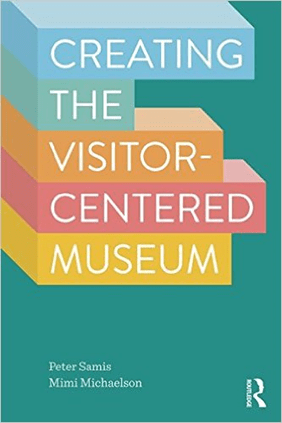
This week I finished reading this book Creating the Visitor-Centered Museum by Peter Samis and Mimi Michaelson. Peter Samis is the Associate Curator of Interpretation at the San Francisco Museum of Modern Art, and Mimi Michaelson is an education and museum consultant who received her doctorate in Human Development and Psychology from Harvard University. It is one of the books I had on my list of books I wanted to read on museum education, and the rest of the books I have on the list can be found here: https://medium.com/@steward.lindsey/books-i-want-to-read-on-museum-education-in-2017-14ed52facb11.

My book review of Creating the Visitor-Centered Museum will touch on the layout of the book while pointing out the main takeaways from the book. In addition to reviewing Samis and Michaelson’s book, I will also discuss my own experiences in creating visitor-centered museums. By describing Samis and Michaelson’s examples of visitor-centered museums and my experiences in creating programs that make museums I worked for more visitor-centered, I reiterate the importance of keeping museum offerings relevant to returning and new visitors.

Samis, Peter and Mimi Michaelson, Creating the Visitor-Centered Museum, New York and London: Routledge, Taylor & Francis Group, 2017.

Samis and Michaelson’s Creating the Visitor-Centered Museum is an interesting book that while it does not present a new concept it describes different examples of how museums can create programs and exhibits that are focused on the visitor. The important take away from this book, as museum professionals learn in recent years, is there is not just one way to create a visitor-centered museum. To introduce the concept of the visitor-centered museum, the book was divided into three parts: the introduction, or setting the stage; the case studies; and the conclusion to introduce varieties of visitor-centeredness and change.

One of the most important points Samis and Michaelson introduced in the beginning of the book is if museums do not make changes the museums are not going to survive. Also, both authors pointed out that many transitions in museums have to do with museums reaching out to the community to both visitors and potential visitors in new and authentic ways. Samis and Michaelson described in detail why it is important to consider the visitors. They also described that to be able to consider the visitors change takes leadership, and that change begins with a recognition that something is not working. Then the authors described the contours of change; one of the ways they discussed contours of change was pointing out that prioritizing visitors as essential to the museum’s mission may also lead to empowering the voices of those who have traditionally had most direct contact with them.

The authors provide ten different case studies of museums that had approached creating visitor-centered museums through various programs and exhibits. Each case study presented museums that opened their doors to a wider range of visitors and how this decision to change their approach in reaching their audiences presented internal struggles to reorganize their institutions. A few of the museums working towards being more visitor-centered presented in the book include the Denver Art Museum, Ruhr Museum, Minnesota History Center, Oakland Museum of California, and the Van Abbe Museum. To describe each of the museums’ case studies, the authors used a continuum of approaches that begin and end with institutions not strictly speaking collection based; in between these museums, there are museums of various art and multidisciplinary institutions that are intent on finding ways of making their collections relevant to the public and the final museums on the continuum apply contemporary theory and performance to connect with visitors.

Samis and Michaelson’s goal for the book is to share what we have witnessed and join or provoke ongoing conversation related to how (or even why) museum professionals should prioritize visitors in our institutions. Inside the book, there are pictures and charts printed in color to aid in achieving the book’s goal in describing how museums can be more visitor-centered. Also, each chapter was broken down to key takeaways that summarized what the reader learned to make sure museum professionals can understand what they might be able to do with their own institutions.

Each institution is different from one another, and what we can take away from this book is we can find ways to adapt our programs and events that will bring more visitors in by considering the visitors. The museums I have worked for are, of course, different from one another and present their own experiences with creating visitor-centered museum experiences. For example, when I was completing my required internship hours, while working towards my Master’s degree, at Connecticut’s Old State House I participated in distributing and collecting surveys for a lunch program called Conversations at Noon in which people who work in Hartford can attend monthly discussions on various topics related to Hartford history. Participants also can see inside the Old State House while they are sitting in one of the original rooms former state representatives used especially during the eighteenth century.

Another example is while I was at Connecticut Landmarks Butler-McCook House and Isham-Terry House there were programs created that encouraged visitors to not only participate in program but to also see the historic house museums’ collections.

At the Butler-McCook House, one of the programs it held was the Cultural Cocktail Hour, a monthly program which encouraged adult visitors to see and possibly purchase local artists’ works, listen to live music, and socialize. During the program, the first couple of rooms are opened to participants and they can view the rooms and learn a little bit about the family that lived in the Main Street Hartford house. At the Isham-Terry House, there are a few programs hosted at the house including a Hartford Holiday house tour which is one of the Hartford homes to participate in a mostly self-guided tour of the house while participating in holiday festivities. Currently Connecticut Landmarks is moving forward with improving their tours and programs to make it even more visitor-centered based on the interpretive framework and make sure visitors can make connections to their own interests and understand the people who lived in the houses.

As museum professionals, we make sure our work can help identify who our visitors are and how we can continue to be relevant to visitors and understand the overall needs of our society to bring in new visitors.

Do you think museums are becoming more visitor-centered? How have museums changed over the years? What are your organizations doing to make them more visitor-centered?

Response to Blog: “Museums are places to forget”

Originally posted on Medium, May 4, 2017. 

I chose to do something a little different this week for my blog post. While I have done something similar in the past by responding to what museum professionals discuss in professional development programs. This time I decided to write about what other people discuss about in the museum field in their own blogs. I came across the blog post “Museums are places to forget” written by Steven Lubar. Lubar is a professor of American Studies at Brown University in Providence, Rhode Island, and a museum consultant. Before that, Lubar was the Curator at the National Museum of American History, Director at the Haffenreffer Museum of Anthropology, and Director at the John Nicholas Brown Center for Public Humanities and Cultural Heritage. He has written a book called Inside the Lost Museum: Curating, Past and Present which will be released in August.

When I came across this blog and finished reading this blog, I thought it was an interesting piece since it reminds me of lessons I have learned while in both college and graduate school. At least one of my previous classes had a deep discussion about what it means to be a professional historian, and one of the topics discussed was about history and memory. The relationship between history and memory is an ongoing discussion that takes place outside of the classroom especially during my experiences as a museum professional. This blog post Lubar wrote is a discussion about how museums are examples of how history and memory are dealt with within our community.

One of the things that caught my attention as I read the blog was this subtitle for the blog. Lubar stated that “sometimes, museums are places of forgetting, not remembering” which I find interesting since in general people believe that they are supposed to attend museums to be reminded of our past and learn about a part of the past that help them understand a community’s culture. While this is true that people come to museums to be reminded of the past, museums can represent what we have forgotten and chose to forget. Museums can also sometimes choose to forget the past and/or unintentionally forget the past.

Museums have the purpose to tell a narrative that supports the institution’s mission, and sometimes when museum professionals decide on a narrative not every item in its collections can be displayed to explain their narrative. For instance, when I worked at the Butler-McCook House & Garden in Hartford, the historic house is set up to tell the story of the third and fourth generations of the family who lived in the house during the 19th century even though the history of the house and family can be traced back to the 18th century.

The staff created an exhibit in the History Center that gives an overall history of Hartford and of the family during the 18th and 19th century; the exhibit included not only narratives but also objects and photographs from the house’s collections. While I was there, the staff and myself worked on projects based on the interpretive framework that will help start including more information from the Butler-McCook House’s history; to this day, the Butler-McCook House continues to create interpretive programs that covers more history that can be shared with visitors of all ages and backgrounds interested in learning more about this family.

The example of the Butler-McCook House showed how a historic house museum while still maintaining its display in the house as a 19th century house it also works on incorporating other significant parts of the house’s history. There are more objects that are found in both the collections storage room and on the third floor of the house not open to the public which are not seen by the public.

This brings up a point Lubar brought up in his blog that there are times that not everything in a museum, especially at the Butler-McCook House, can be viewed by the public for various reasons. Some items in museums’ collections are those that are in poor condition, and even have stopped serving purposes for the museum and are forgotten with the passage of time.

Of course, there are more than a couple of reasons museums forget. Lubar pointed out that sometimes “society decides that it’s not longer ethical for museums to hold certain kinds of artifacts.” And this can be true especially for museums that have Native American artifacts in its collections. The Native American Graves Protection and Repatriation Act (1990) was created to require museums receiving federal funding to return Native American human remains and other artifacts to appropriate tribes. Between museums and the government, they work together to find out what is no longer ethical to hold onto for educational purposes and it is important for all museums to acknowledge ethical issues and find ways to make sure artifacts are given respect. It is also important for museums to serve and work with society to remain relevant, and to stay relevant museums need to pay attention to how society views its own practices in ethics.

Another statement that stood out to me was this statement about religion and religious artifacts. Lubar stated in the blog “When something’s put in a museum, it loses part of its meaning. Religious artifacts become art.” That can be true for museums that include religious artifacts in the collections. As Parish Historian at my childhood church, I have seen a unique situation where the meaning behind the artifacts in Trinity Church that have both its own original identity and an identity as a historic collection item. When I last talked about my experience as a Parish Historian, I talked about the exhibit I designed to celebrate the Easter season using items that were viewed as items used in church services in addition to photographs.

At the same time, Trinity Church also has items in the collections that are not stored with the rest of the items but are still used in church ceremonies (such as the chalice and prayer books); these items are listed in a book of donated items to the church which is one of the items in the collections. In my experience, the collections are constantly crossing the line between being part of a collection that is, until recent years, has been forgotten about by the Trinity community and being part of Trinity’s practices today. The Trinity community continues to rediscover its collections from the past as future projects are getting underway.

Museums today continue to practice its practice of helping the public remember and forgetting its history, and will always constantly cross the line between remembering and forgetting to meet expectations of society and its surrounding communities.

The link to the original blog post can be found here: https://medium.com/@lubar/museums-are-places-to-forget-ba76a92c5701
Do you agree that museums are places to forget? What are some examples you have seen and experienced with remembering to forget and forgetting to remember?

Lunch with NEMA: How to Bring the Community into Exhibit Design Process

Originally posted on Medium, April 27, 2017. 

This week I participated in another Lunch with NEMA program, a monthly webinar on various subjects in museums during lunch hour, called Bringing the Public into Your Sandbox Without Getting Sand in Your Face — or Theirs. The Lunch with NEMA program was about what it is like to bring community members in the exhibit design process by discussing EcoTarium’s experience in bringing in the community to design an exhibit called City Science. EcoTarium is a family-friendly, indoor-outdoor museum located in Worcester, Massachusetts with various offers including interactive exhibits, shows in the digital planetarium, daily Science Discovery programs, and live animal habitats. To find out more about EcoTarium, check it out here http://www.ecotarium.org/. Discussion was led by Betsy Loring, the Director of Exhibits, and Alice Promisel who is the Exhibit Content Developer for EcoTarium.

Loring and Promisel, in the beginning of the program, talked about EcoTarium and their exhibit City Science. City Science: The Science You Live is an immersive exploration of the modern city that allows visitors to investigate the science we encounter every day but rarely stop to consider. The exhibit allows visitors to experience firsthand that the way we design and build our cities has many impacts on people, animals, civic life, and the larger environment. It uses a variety of activities, from custom-designed computer challenges, live animal observations, and hands-on design activities.

Once they explained what the exhibit was about, Loring and Promisel discussed the lessons that they learned the hard way when they invited members of the community to develop the exhibit. The first lesson they learned the hard way was to make sure they get the right minds to work on the exhibit. In other words, individuals who normally visit the museum. I agree that this is an important lesson since learning who your visitors are can help find out who will more likely be more invested in assisting in this collaboration.

The second lesson they learned the hard way is that before brainstorming it is important to get people in the right mindset. People outside of the museum do not understand the exhibit development process so it is important to include a visual of how the museum exhibit spaces are set up and how much time is dedicated to developing exhibits. Loring and Promisel described how they also found ways to have participants come up with relevant ideas for the exhibit.

They came up with a warm up activity to help participants get in the right mindset to come up with ideas for the exhibit. The question Loring and Promisel came up with to have participants come up with was: what’s the one thing you want to change about Worcester? After the warm up activity, a brainstorm session began in which they stressed that it is important to make a home for every idea no matter how broad or specific; then organize them in sections related to subjects related to developing an exhibit such as exhibit design, interactive activities, and content. Loring and Promisel also stressed that it is important to include content experts throughout the exhibit process. By including content experts, specific questions about specific content can be answered.

In addition to coming up with ways to inspire participants to brainstorm ideas and include content experts, it is important to explain to them what their role is and what their role is not in the exhibit design process. They suggest that institutions write a role document, or job description, to explain their roles; the document should explain why expertise is needed and how they will be helping, where their input is needed and when, the time commitment needed from the participants, and when they will see and hear about the results. It is also important to discuss what the museum is and does by giving them information about the vocabulary and definitions used in the museum to help them understand what the institution is looking for in an exhibit.

I enjoyed this Lunch with NEMA because it provides another example of how collaborations with people and organizations outside the museums’ walls can present its own benefits and challenges. Not all institutions are the same but we can learn from their experiences and adapt them to our own institutions. At the same time, not all collaborations are the same, and we can all learn from our own experiences and from other institutions to work on making better collaboration projects and be effective members in the community.

What are your collaboration projects? Did you come across challenges when collaborating with others, and how did you handle them?

EdComVersation: Developing a Strategy for Inclusion and Diversity

Originally posted on Medium, April 27, 2017. 

During the months of April and March, there has been a lot of discussion about inclusion, equity, and diversity. First, there was discussion about equity and inclusion in museums (https://medium.com/@steward.lindsey/equity-and-inclusion-in-museums-9abf113c861b). Second, there was the blog post on EdComVersation discussion about the Journal of Museum Education edition on Race, Dialogue, and Inclusion (https://medium.com/@steward.lindsey/edcomversations-and-journal-of-museum-education-race-dialogue-and-inclusion-1a6bdc61ebb5). Third, there was discussion about gender equity in museums(https://medium.com/@steward.lindsey/gender-equity-in-museums-an-important-issue-that-should-be-addressed-723341320b03).

To continue the discussion on inclusivity and diversity, I recently participated in this month’s EdComVersation about developing a strategy for inclusion and diversity. One of the two panelists for this webinar was Dina Bailey, the CEO of Mountaintop Vision, a consulting firm that focuses on working with organizations in change management and strategic initiatives in to embrace diversity and inclusion in communities. The second panelist was Chris Taylor, the Chief Inclusion Officer at the Minnesota Historical Society which preserves Minnesota’s past, shares the state’s stories and connects people with history. By participating in this program, I found the resources very helpful and informative since after learning more about inclusion, equity, and diversity I can continue my understanding of these topics by learning how to implement inclusion and diversity.

This month’s webinar’s format included questions from Sheri Levisky-Raskin, who moderated the discussion, and from participants in the webinar. Bailey and Taylor shared their answers to questions posted and their insights on creating strategies for inclusion and diversity. To begin the discussion, they shared their definition of inclusion and definition. According to Bailey, diversity is having different types of people in one space or program and inclusion is the action of coming together to do something. To add to these definitions, Taylor added that diversity is the intended outcome for an organization while inclusion is the process of how we get there and how we make decisions. Both Bailey and Taylor pointed out that in general people have used the terms “diversity” and “inclusion” interchangeably without realizing this; while these terms refer to the same subject both terms are different. The discussion continued with the difference between Strategy and strategy when developing a strategy for inclusion and diversity.

While defining inclusion and diversity, Taylor also brought up the point that while we are looking at the definitions of these terms we should also look at the definition of strategy. He stated that there is a difference between Strategy and strategy. Strategy with a capital “s” is the strategic planning with the question of what are the outcomes in mind; meanwhile, strategy with a lowercase “s” raises the question of what can you do within your team, and figure out how to do the day to day activities.

Bailey and Taylor answer the question of what can you do to come up with an inclusion plan towards diversity. They stated that it is better to either define diversity and inclusion for the organizational culture or to keep the definitions broad and genetic. Taylor reiterated this answer by pointing out inclusion comes from us and the organizational culture should contain one of the most important things to bring the work internally. Also, Bailey revealed that it is important to make it personal since it is difficult to maintain goals when terms are defined broadly.

The discussion continued by allowing participants to ask themselves where do inclusion and diversity sit in your institutions and gave additional advice on how to start integrating inclusion and diversity in the institutions. Bailey and Taylor stated that diversity must be a part of what you do and by having someone responsible for inclusion there would be someone to evaluate and implement written documents to support diversity in the institution. Other advice both gave are to include leadership in the process and volunteer to do stuff if higher levels do not have time to work on since it shows that you think it is important as well as passionate about diversity; find someone you trust to collaborate with; and use the resources available, and there are plenty, for inclusion and diversity.

Both Bailey and Taylor explained it is alright to have a small group of staff to start with on these discussions and to start on small projects. There are ways to start without spending a lot including getting to know who you are as a staff and institution to allow themselves to become more aware of our own stereotypes, prejudices, etc. then the understanding of oneself gets better. Other ways to start is to share the resources such as books, websites, and webinars by forming small gatherings such as book clubs. They also suggest that articles can also be shared in the lunchroom weekly, send email informing the rest of the staff resources are available in the room, and at the end of the month offer to discuss it if they have read them.

I leave it here to ask you these questions: Has your staff worked on an inclusion plan towards diversity within your institutions? What methods have you worked on to raise awareness on inclusion and diversity?


UPDATE: Looking Back, Moving Forward

Originally posted on Medium, April 25, 2017. 

As promised, I am giving you all an update on the response to the exhibit I created and discussed about in the blog entry Looking Back, Moving Forward: How to Create an Exhibit on Limited Resources. I created an exhibit for Trinity Church in Wrentham displaying the Church’s over 150-year history with the Easter theme; the exhibit has photographs and objects related to the Easter season. Also, I included photographs of the exhibit in the blog post. You can find the original blog post here: https://medium.com/@steward.lindsey/looking-back-moving-forward-how-to-create-an-exhibit-on-limited-resources-f99d2f3e56f6. It was decided that the exhibit will be displayed throughout the Easter season.

After the exhibit was completed, parishioners who attended the Good Friday service could see the exhibit for the first time. The rector made an announcement during the service, and in the next couple of services, that I had created the exhibit and is available to be seen in the Parish Hall. Parishioners gathered around the exhibit to thoroughly read the exhibit labels as well as look at the pieces. They enjoyed learning about Trinity’s history and appreciated the efforts put into the exhibit. A few comments included it is evident that I had put a lot of time and effort into the exhibit.

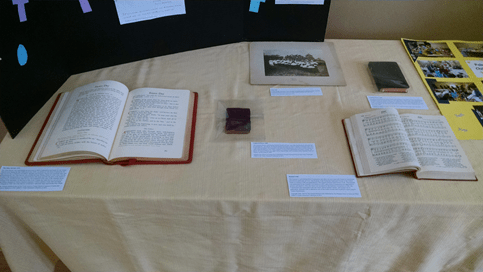
One of the common comments stated that they were surprised with how many people have been in Trinity’s choir. The comment was referencing a photograph I chose to include in the exhibit. I included a picture of a boy choir that was taken outside in 1909. While it does not indicate when in 1909 the photograph was taken, it is supposed to epitomize a depiction of Trinity parishioners 46 years after Trinity Church’s first year as a parish.

This reaction to the exhibit tells me that they appreciate the exhibit and enjoy learning about their church’s history. It is also gives me further encouragement to create another exhibit to display Trinity Church’s collections.

Reactions to MuseumHive: Discussion with Kimberly Drew

Originally posted on Medium, April 20, 2017. 

This week I thought I would discuss the video I watched of the discussion with Kimberly Drew, Social Media Manager at the Metropolitan Museum, through the MuseumHive broadcast that aired last week. MuseumHive is an informal hangout of people, created by museum media developer Brad Lawson, connected with museums to explore new community-centered visions for museums. It uses Google Hangouts to both create content and encourage people to socialize on the Internet and in person (museum professionals gather at the Roxbury Innovation Center in Boston). To learn more about MuseumHive and its programming, visit http://www.museumhive.org . According to MuseumHive, Kimberly Drew is a leading thinker in the museum world focusing on black culture and art, and has a wide range of articles written about her work including “4 Black Women Making the Art World More Inclusive” in New York Magazine. Her practice is at a cross between contemporary art, race, and technology. Drew’s practice can be described as a place for those who would be negated access and space, and is an inverted version of what already exists rather than oppositional.

Before reviewing the video, I read a blog post on the MuseumHive website about this discussion. One of the quotes from Drew used in the blog caught my attention:
“I think about the things I’m sending out in the world because there are so many silences within the web and in the truth of our particular moment. I try to think about the things that I send out, can create, or can share, and how I could share positive images and also real images and also be able to articulate history in a way that feels inclusive…When you’re adding to this noise, in what ways are you improving upon silence?”
— Kimberly Drew, The Creative Independent

This quote resonated with me because as a museum professional who uses social media to share her experiences on and to express her thoughts about the field I also try to both share positive messages and share real information that is inclusive for readers out there both in the museum professional field and in other fields respectively. In the discussion video, Drew talks about her work in social media and about technology in the museum field.

The style of the video was a Question and Answer session between hosts, members in the audience, and Drew. One of the first questions Drew answered was how she got her start in social media career. Drew explained that she was bouncing around various smaller art organizations before she started working at the Met where she has been working for the past two years. She began her career with an internship in the Director’s Office at the Studio Museum in Harlem.

Her experience at the Studio Museum in Harlem inspired her work on social media with a blog she started writing in 2011 called “Black Contemporary Art”, a Tumblr blog where she posts art by and about people of African descent to share with online viewers. She also featured many posts from other contributors on artwork made by and about people of African descent. I visited her Tumblr blog, and it has an interesting mix of artwork in various mediums including photography and paintings depicting people of African descent. One of the pieces that caught my attention was Charles McGee’s Noah’s Ark: Genesis (1984), posted on April 5th and was made with enamel and mixed media on masonic; it caught my attention because it has numerous prints mixed together, limited colors that stick out from the rest of the piece, and these features provide an interesting interpretation of the story of Noah’s Ark. Her blog was what inspired her interest in social media.

After beginning her blog, Drew has worked for Hyperallergic, The Studio Museum in Harlem, and Lehmann Maupin. Then she gave lectures and participated in panel discussions at places such as the New Museum, The Schomburg Center for Research in Black Culture, and the Brooklyn Museum. Drew was honored by AIR Gallery as the recipient of their inaugural Feminist Curator Award, was selected as one of the YBCA100 by the Yerba Buena Center for the Arts, and selected as one of Brooklyn Magazine’s Brooklyn 100. Another question that was asked was what were the challenges in working in the digital platform.

Drew explained that in her role as Social Media Manager at the Met the strategy for digital access for the Met constantly change. She also points out, that in addition to pointing out the challenges, she enjoys her work in adapting materials to make them more accessible for various people of limited abilities. Also, Drew discussed that a line must be drawn between being glued to the computer and “unplugging”; in other words, one managing social media has to find ways to not make working on social media taxing. This I understand because it is important to access resources shared on social media but there are so many things on the Internet that it can be easy to end up glued to the computer or laptop. I myself use social media to keep up to date on resources I see from various museums and museum associations and to maintain networks made on the social media sites; what I usually do to find a balance of spending time away from social media and on social media is I dedicate time to look through social media sites to see what has been posted, then I saved what captured my attention and move on to other aspects in life away from the computer.

Drew moved on to the topic on the future of museums and communities. She stated that museums should be encouraged to continue connecting with the community outside of the museum. Drew also stressed the importance of reaching out to community leaders, and to bridge dialogue with the community through social media outlets. Initiating dialogue goes a long way for making people aware of what organizations such as historic house museums and art institutions offer since it is easy for people to forget about their existence even when they live near these places. I agree that it is significant to maintain a strong relationship with the community because it helps support museums importance within the community and maintaining museums as resources communities can turn to. When museums maintain and update their social media outlets such as Twitter, Facebook and Instagram, people understand what museums have to offer in terms of programming and resources they can participate in and use. For instance, I continue to learn more about museums on Long Island by following them on their Facebook pages.

After the discussion opened to questions from the audience in the center, one of the questions asked was what projects inspires Drew and brings her joy. She did not point to a specific project but she stated that she likes people and she is happy to be able to talk to many people and hear different perspectives. I see where she is coming from because since getting more involved in social media myself and creating this blog I have met so many people and learned a lot from them on their experiences and perspectives in the field; I appreciate all the responses to the blog, and thank you all for continuing to inspire me to continue to write. Drew also said that she likes walking to the Met each day and notice people take selfies and share them on the social media sites since she sees so many different stories and perspectives in each one. This further points out that people’s experiences in museums vary from person to person, and different aspects of museums make an impact in various ways. Museums continue to serve the community, and we need to continue social media to adapt to an evolving society.

How does your organization use social media? What are the challenges you face on social media?

Looking Back, Moving Forward: How to Create an Exhibit on Limited Resources

Originally posted on Medium, April 13, 2017. 

This week I am going to discuss something a little different than I usually do on this blog. I discuss on this blog many experiences I have had in the museum field and yet I have not discussed another aspect of my museum experiences. For more information about my previous experiences related to exhibit design and planning an exhibit, see this blog post: https://medium.com/@steward.lindsey/how-to-use-food-to-create-relevance-in-museums-810c7ad7c713 . To read about my other experiences in the museum field, look at my other previous blog posts here: https://medium.com/@steward.lindsey . While I have talked about one of the exhibits I created in the past, I have not discussed my work with my childhood church. For the past couple of years, I have volunteered at Trinity Church in Wrentham as Parish Historian.

As Parish Historian, I oversee maintaining the collections and updating the collections list of Trinity’s Historical Collections. I became the Parish Historian not only because my educational background made me qualified to handle the position and project but I have always been interested in learning more about Trinity Church’s history since I attended services as a child. My family went to Trinity for many years while I was growing up. Whenever I saw old pictures of the church and the rectors, I asked many questions about how old the church is and who the individuals in the photograph were. Many years later I developed a deeper appreciation for Trinity Church’s history, and have continued to learn more about Trinity Church’s history through the collections. I was asked this year to develop an exhibit displaying the church’s collections.

Since Easter was coming up I decided to create an exhibit that showed Easter traditions at Trinity. The first step was to go through the Trinity Historical Collections to find items related to the Easter season including objects, books, and photographs. I wrote down a list of items in the collections related to the exhibit theme. From that list, I narrowed it down to about ten items since the space available is limited. Some of the items I chose were Lent and Easter cards, 19th and 20th century Books of Common Prayer, a hymnal from 1940, and I also included photographs from Palm Saturday Children’s Event. I decided on these items because over Trinity’s 150 history there have been many Easter services, and by including recent photographs they show that current parishioners are a part of Trinity’s long history and they are significant in Trinity’s future. To bring these items in the collections together, an exhibit narrative and labels need to be typed and edited.

Some of the items selected for the exhibit.

Also, I typed the exhibit narrative and exhibit labels to honor the Easter exhibit theme. In the exhibit, I described the importance of this exhibit:

Since celebrating our 150th anniversary, our parishioners continue to carry on the tradition of worship. As we remember and celebrate Jesus’s resurrection, Trinity looks back at our long history of celebrating his return. This exhibit shares items from Trinity’s archives that reflect on where our Easter traditions came from. By looking at these items, everyone will understand the story of Trinity’s celebration of Easter. We learn about how Trinity Church continues the Parish Community traditions during holy week and Easter.

After I wrote and edited the exhibit narrative, I wrote the exhibit labels for each of the items on display. To write the exhibit labels, I examined each item to figure out how old the item is, what is made of, what is in the photographs, and how it is related to the Easter theme. I used the information I gathered through observations and information provided with the collections to create the exhibit labels to share information with the visitor and parishioner. Here is an example of one of the labels I wrote for the exhibit:

Easter Card, 1954
Easter card was given to parishioners during Reverend T. Frederick Marshall’s ministry in 1954. Reverend Marshall served as rector at Trinity Church between 1947 and 1956. Inside the card is the schedule for Easter Day services with the Holy Communion at seven and eight in the morning, Choral Eucharist with Sermon at 10:45 a.m., Public Baptism at three in the afternoon, and a Children’s Service at four in the afternoon. This card also has an Easter Greeting from Reverend Marshall stating, “Wishing you a Happy and Blessed Easter”. The card also has a quote from the Prayer Book,
“And note, that every Parishioner shall communicate at the least three times in the year, of which Easter to be one.”
Printed by Mowbrays in England. Found among the Trinity Historical Records in 2015. [slightly altered after pasting it in Medium post and here on this webpage]

Once I edited and printed out the labels and narrative, I discussed with the current rector where the display will be placed to make sure parishioners will be able to see it. I knew before the discussion that the most likely room the exhibit can be seen is in the Parish Hall, which is a room where parishioners gather after services to socialize and drink coffee. I shared my thoughts on where the exhibit should be displayed; I pointed out two places that may work. The first option is close to the seating area and right across from the entrance into the church; it is the best option because the exhibit will be the first thing parishioners will see when leaving after the service for coffee hour. The second option was next to the entrance to the Parish Hall from the parking lot; while it may seem to be a good option since it offers similar exposure, the exhibit would be displayed underneath a bulletin board with various announcements potentially distracting, and it is too exposed to where parishioners get their coffee and treats. We agreed that the first option is the best place for the exhibit. The rector also offered to let me borrow one of her table cloths to drape over the table for the display and to add color to the exhibit.

When creating the exhibit I used limited resources available from the church. For instance, I used an extra Elmer glue cardboard board that I borrowed from the church’s choir room and scrap paper to make crosses, eggs, and birds that were used as decorations; also, I borrowed push pins to attach the labels, decorations, and artifacts in plastic slip covers. To create the crosses, eggs, and birds, I took green, pink, and blue pieces of paper then I traced them into the various shapes and cut them out to pin them on the board. I also pinned a couple of the pieces from the collections on the board by placing them in plastic sleeves and pinning the sleeves onto the board. Also, I displayed the exhibit labels by figuring out how the viewer will most likely be able to read it and to make it visually appealing.

Picture of exhibit board designed using limited resources.

Once I have completed this board, I laid out the rest of the items and exhibit labels with similar standards I used for the Elmer glue cardboard board on visibility and visual appeal. So far, I have had positive reactions to this exhibit and more individuals will be able to see this exhibit before and after services this Easter weekend and afterwards to allow more opportunities for people to see the exhibit. I will post an update the more I learn about people’s reactions to this exhibit.

The exhibit as a whole. Trinity Traditions: Easter Celebrations Throughout the Century.

How have you designed an exhibit on limited resources and limited budget? What challenges did you face when creating your exhibits?


Book Review: Museum Administration 2.0 by Hugh H. Genoways, Lynne M. Ireland, and Cinnamon Catlin-Legutko

Originally posted on Medium, April 6, 2017.

After a while, I have completed Hugh H. Genoways and Lynne M. Ireland’s Museum Administration 2.0 with revisions made by Cinnamon Catlin-Legutko. It took me a while to read this book because I wanted to make sure I comprehended each detail the authors provided. I wanted to read this book not only develop my skills as a museum professional but to learn more about how museum administration works. As a museum educator, in the past, I had limited experience in the administration aspect of the museum. I taught school and public programs and the experiences I gained did not include a lot of administration skills. The administration skills I gained before I went to the Long Island Museum was some time answering phone calls and preparing flyers and mailings.

While I was at the Long Island Museum, I gained more administration skills that helped me develop my skills as a museum professional. In addition to teaching school programs and implementing public programs, I learned how to book school and group programs including tours and In the Moment program (for Alzheimer’s/dementia patients); after answering phone calls and taking down information such as the name of school/organization and the number of individuals attending, I recorded the information on the facilities sheet, placed the program and organization (as well as the time) on the Master Calendar via Google Docs, and provide the program/school/organization/time information on the daily sheet to write down official numbers as well as observe the number of programs for that day.

Also, I was also in charge of scheduling volunteers who taught larger school programs that require various stations and geared towards larger school groups. Based on how many of these school programs were scheduled for that month, I used the sheet of the volunteers’ availability to schedule the number of volunteers needed to run the program(s) for the number of days scheduled. Once finalized I printed copies and sent them to all volunteers while keeping one to put on the board for them to refer to while at the museum.

In addition to the programming related administration work, I also worked on various projects in the Education department. For instance, I oversaw printing program flyers, after the everyone in the department approved of the details, and sending the flyers to the head of the Suffolk County and Nassau County libraries for them to distribute to all libraries in the counties to post on bulletin boards; I also made sure there was many copies printed to be sent to and distributed at the museum’s visitor center. Then I went over budgets with the Director of Education for purchasing food and drinks for the public programs; we collaborated on the paperwork once the items were purchased. Also, I made sure the mailing for school program brochures and bus trip flyers mailings went smoothly; I printed address labels, placed address labels on envelopes, placed brochures/flyers in the envelopes, borrowed mailing boxes from postal offices to place envelopes in, and send them to the post office to be mailed. Since the Long Island Museum, I answered and redirected phone calls at the front desk, assisted in gift shop inventory, and tallied volunteers’ sailing Priscilla records during last year’s sailing season at the Long Island Maritime Museum.

I decided to write a review of this book because not only will this book be useful for all museum professionals but it has also been a while since I wrote a book review. By reading this book, I gain a deeper understanding of the museum running process on all levels and I hope everyone who reads this blog entry will also have a better understanding of how museums are run.
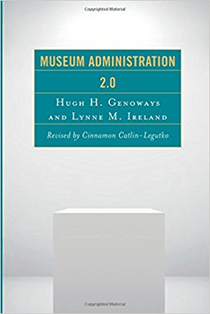
Genoways, Hugh H., Lynne M. Ireland, Cinnamon Catlin-Legutko, Museum Administration 2.0, Lanham, MD: Rowman & Littlefield, 2017. ISBN: 978–1442255517

This book is a second edition to the Museum Administration book published in the early 2000s and revisions were made in this second edition to provide updates on changes in the field since the first edition was published. The authors pointed out that this book is not just for museum directors and department heads but this book is for all members of the museum staff who have administrative duties. The book also provided not only case studies and case reviews but it also shared activities that can be used to practice the skills introduced in that chapter. There are also diagrams to illustrate the concepts explained in the chapters. Also, the authors pointed out the main point of this book which is this book should be used as a quick reference, inspiration during challenging times, and a jumping off point to dig deeper into more complex topics. Each chapter is dedicated to different aspects of how museums are run from what a museum and administration is to interpretation, exhibits, and programming.

The first chapter not only defines what a museum is and what an administration is but it also discusses types of museums, museum associations, the museum profession, and academic programs related to the field. In this chapter, the academic programs discussed in the book are museum studies, public history, and archival education. The chapter also lists several museum associations that exist in the United States including the primary professional museum association American Alliance of Museums, American Association for State and Local History, Association for Living History, Farm, and Agricultural Museums, Association of Children’s Museums, International Museum Theatre Alliance, and Museum Education Roundtable. The first chapter also pointed out that ultimately when learning about administration in museums experience is the great teacher. Also, it is important to know that no matter what position one holds in the museum each staff member will be expected to perform some administrative duties and each day presents sets of opportunities to make something happen.

The second and third chapters discussed start up and strategic planning. According to the second chapter on start up, creating a new museum or improving an existing one is a complex process requiring a clear sense of purpose and compliance with state and federal regulations. A couple of things the chapter points out are a museum should form only when a community can specify the need for it and plan a solid business model for its sustainability; and all museums need a well-defined mission statement, written bylaws, articles of incorporation, and IRS tax-exempt status. Another important part of museum operations is strategic planning; a strategic plan is a map or chart an organization agrees to follow for three to five years to reach its goals, and the plans are strategic when the goals that respond to a museum’s environment, seek a competitive edge, effectively serve stakeholders, and identify the keys to long-term sustainability.

There are ten steps in the developing process of a strategic plan for a museum. The steps are initiate and agree on process, identify organizational mandates, identify and understand stakeholders and develop mission, external and internal assessments, identify strategic issues, review and adopt strategic issues, formulate strategies (action or work plans) to manage strategic issues, establish a vision for the future of the museum, evaluation and reassessment, and finalizing the plan. The fourth and fifth chapters discuss topics on finance and sustainability.

I appreciate that the finance chapter went into such detail since finance is important for the staff to have a handle on how money is spent as this helps them make effective decisions with significant financial impact. The chapter discusses how to develop a budget, manage a budget, and accounting. Budget management requires both a day to day approach and a long view so by learning all the steps of developing and maintaining the budget a museum will be able to function and fulfill its mission. On the chapter of sustainability, it discusses how a museum’s financial stability and future rely on effective fundraising and revenue-generating practices that provide for present operational needs and generate income for future capital and operational needs.

There are various parts of financing that help sustain museums to keep them running. For instance, development is about building relationships with people that would lead to the end result (money) for museums. Other parts of sustainability include making a (development) plan, raising funds, accumulate contributed income (i.e. memberships, annual giving, sponsorships, fundraising events, and campaigns), planned giving, government support, and grants. Museums are also sustained through earned income which includes admission fees, museum store, dining facilities, planetariums and theaters, educational programming, special exhibits, traveling exhibits, and blockbuster exhibits and other partnerships.

The sixth and seventh chapters discuss topics on the working museum and ethics and professional conduct. According to the working museum chapter, staff are the museum’s most valuable asset. I agree with this statement because each museum staff member has a role in keeping a museum running, and a museum like any organization is like a car (each part of a car helps keep the car running and performing its functions as well as fulfilling its purposes). The working museum describes how the staff, board members, and volunteers understand how their organization is laid out in chart form that would be especially helpful for new people joining the organization. It also discusses the museum employees which reveals general expectations of the employee based on their job descriptions, and the significance of leadership in museums with detailed descriptions of leadership types. This chapter also went into detail about how the museum board, director, and staff should interact with one another.

In the ethics and professional conduct chapter, it points out that there is a universal agreement that standards articulate a way to guide the thoughts and actions of museum professionals and provide some basis for judging the performance of institutions and individuals. The chapter discusses museum ethics by defining ethics and how important it is to develop a code of ethics for museums. Also, the chapter describes ethics statements and a good statement according to the authors will articulate the traditional values or morals and communal standards of the museum profession. Then the chapter discusses the codes of professional museum conduct through governance, collections, institutional codes of professional museum conduct, and enforcement.

The eighth and ninth chapters talk about legal issues and facilities management. I appreciate that in the beginning of the legal issues chapter the authors stated that nothing in the chapter should be considered legal advice because it reinforces the idea that this book should be used as a reference. The authors also recommended a couple of books to use as museum law references to start with and then seek legal counsel when necessary: Museum Law: A Guide for Officers, Director and Counsel by Marilyn E. Phelan (2014), and the 2012 update of A Legal Primer on Managing Museum Collections by Marie C. Malaro and Ildiko P. DeAngelis. This chapter provides brief detailed descriptions of the Americans with Disabilities Act (ADA), Native American Graves Protection and Repatriation Act (NAGPRA), Unrelated Business Taxable Income (UBIT), legal liability, artists’ rights, copyright, and the Sarbanes-Oxley Act of 2002. To have a good facilities management plan, museum staff must consider the needs of the people who work within the organization, the preservation and exhibition of objects in the museum’s collection, and the people who visit the museum.

The facilities management chapter describes in detail museum facilities and the significance of maintaining the museum property. Museum facilities includes the physical structure and the utility services. This chapter also discusses facility operations which includes housekeeping, emergency preparedness, health and safety, fire prevention, safety data sheet, hazardous materials, biological waste materials, integrated pest management, and security. Visitor services is also part of facilities management since providing a range of services will make the museum a welcoming environment for visitors to feel comfortable in and a guaranteed return visit. The services provided are pre-visit information, parking, accessibility, orientation, museum stores, rest rooms, food service, and educational services. In the tenth and eleventh chapters, the authors provided details on marketing and public relations as well as collections stewardship.

Both marketing and public relations are married concepts since both concepts deal with communications and reaching to the public. Marketing is a process that helps people exchange something of value for something they need or want. This chapter discusses several aspects of marketing including motivations for marketing, history of marketing activities, the marketing plan, tactical marketing, and e-communications. Public relations, meanwhile, is built upon marketing and is charged with trying to develop a successful image for the organization. The chapter also discuss how public relations are incorporated in museum’s overall strategic plan; it also describes the PR tools museums use in museums’ public relations practices which are events, community relations, media relations, media releases, public service announcements, interviews and speeches, print materials, and buzz. This chapter also discusses the significance of museums and the community working together to maintain museums’ relevance within the community. The authors dedicated an entire chapter on collections stewardship.

In this chapter, the authors describe what a collections management policy is and addresses nine issues that the collections management policies must cover. The nine issues mentioned are collection mission and scope, acquisition and accessioning, cataloging, inventories, and records, loans, collection access, insurance, deaccession and disposal, care of the collection, and personal collecting. Each of these nine issues are fully described throughout the chapter. The twelfth chapter discussed interpretation, exhibition, and programming.

According to the book, interpretation is everything we do that helps visitors make sense of our collections include: exhibitions, education programs, and evaluation. The core of interpretation is communication and it is up to museum professionals to translate these communication pathways to a variety of audiences. In this chapter, it discusses exhibits as well as interpretive planning, exhibit policy, exhibit planning and development. The chapter also went into detail about programming as well as the policy and guidelines for the museums’ educational functions. All museums also need to provide evidence from outcome based evaluations that they are fulfilling the social contract of providing educational experiences for its visitors.

One of the things that we all should take away from this book is the longer one works in the field, the more one will know and the more one will give back to the field. The advice that I took away from this book is to keep your head up, your eyes forward, and your brain learning. This is important to me as a museum professional because I understood that we are always learning from our experiences and we continue to develop our skills as museum educators to better serve our institutions and our communities. While I read this book, I used a pencil to write down notes in the books to highlight the main points of the book for whenever I want to look back at the lessons this book presented. It is an important book I will continue to use throughout my career as a museum professional.

What are your experiences in museum administration? How have you applied your administrative skills in your daily role as a museum professional?
Gender Equity in Museums: An Important Issue that Should Be Addressed

Originally posted on Medium, March 30, 2017.

During the past month, I have discussed what I have learned about equity and inclusion in the museum field. Equity and Inclusion are both issues that must be discussed in each industry of the United States not just in museums. The experiences I have has this month during professional development programs showed me more evidence of how we all need to find out what to do to have a more diverse museum community. During my experiences as a museum educator, I have met so many incredible people of various backgrounds in the field and I am thankful for the opportunity to work with and connect with them. Museums create opportunities for people to learn and identify with the human issues their exhibits and programs present. Last week I started a discussion on gender represented in the museum; I specifically talked about women in the historical narrative of museums and how each museum has their own narratives of how the women were represented in their communities. Women are not only represented as historical figures in museum exhibits but there are women including myself who are museum professionals. This week I attended one of the New England Museum Association’s webinars Lunch with NEMA.

The Lunch with NEMA program is called The Gender Equity in Museums Movement which is named for the GEMM movement founded by Anne Ackerson and Joan Baldwin. This program was led by Ackerson and Baldwin as well as GEMM committee members Scarlett Hoey (NEMA YEP PAG co-chair and Program Manager at ArtsWorcester) and Matthew Dickey (Director of Development at Gore Place). Each of the presenters addressed six myths about gender equity and debunked these myths.

The first myth, for instance, was feminism is all about women being in power; feminism is really all about equity and equality or equal opportunity for all. The second myth was the contributions of women in museums are recognized. Not many people realize that there were so many early generations of women pioneers in museums such as Florence Higginbotham who was the founder of the Museum of African American History in Boston and the first Director of Gore place was a woman named Mrs. Patterson.

The third myth is the salary disparity between male and female museum workers is a thing of the past; unfortunately, women make 10,000 less than their male counterparts annually. The fourth myth was there are so many in museum field that gender equity can happen on its own; while it is true that there are a lot of women in the field but there is still enough evidence that gender equity needs to be addressed by staff. The fifth myth is that it’s not about gender anymore. The sixth myth is that change only happens from the top down; the presenters argued that employees at all levels can inspire change and persist with other managers, and it is important to know that your voice matters.

Then the presenters shared statistics to show why the numbers matter when discussing equity. For instance, the Bureau of Labor Statistics stated that in 2016 there are 364,000 workers in the museum field and of that number, forty-one percent were women. Also, for every dollar a man makes, women now make 79.6 cents; women art museum directors earned 75 cents in 2016 in institutions with budgets greater than $15 million and earnings almost equal in institutions less than $15 million.

According to the presenters and the survey webinar participants took, more museums are responding to equity across the board and the presenters discuss how museums are working towards equity. To work towards equity, museums should incorporate equity in the organization’s culture. A museum should have self-awareness of the issues as well as institutional commitment at the CEO and board levels. Even though implementing equity can be challenging, it is important to have equity as part of the institutional values of museums. Another way museums can work towards equity is to raise visibility of women in museums.

They also pointed out that staff can lead toward change but the board must recognize and practice equity by putting it in the policies. The presenters provided resources on policies and practices; there are equity and diversity policies resources provided by the American Historical Association and the American Library Association. In addition, there is also an AAM LGBTQ guide museums could use on equity. It is stressed that museums should have an HR policy and staff should know what their HR policy is for their museum. Another resource they provide is ASTC Diversity tool kit: (http://www.astc.org/resource/equity/ASTC_DiversityEquityToolkit_Leadership.pdf )

Not only did they discuss resources but they also stress that the gender equity agenda should be enforced early. For instance, professional associations need to form programs that educate individuals about equity. Also, museum studies programs should also incorporate lessons in equity and educate students about salary negotiations before they enter the workforce. The lessons need to share what the Gender Equity Museums Movement is which raises awareness in gender equity and explains what they want to accomplish. To learn more about the organization, you can find information here: http://www.genderequitymuseums.com.

The most important lesson I learned, and what we all should take away from this program, is that gender equity is not a woman’s issue it is a human issue. We need to recognize that equity is for all of us, and we need to find out how we can bring more awareness to equity.

What is your organization doing to enforce equity in your workspace? There have been a lot of programs lately that discuss equity in museums, what do you think inspired these programs to discussed now?