Social Media Journalists at Conferences: My Experience As One At NYCMER 2018

Added to Medium, May 24, 2018

At each conference I have attended, and of course I am sure everyone reading this post felt this way as well, there are so many sessions I have wanted to attend but I could not be in more places at once. Twitter began to provide opportunities to share information from conferences on the social media platform. This year the NYCMER conference, React & Respond: The Next Steps, held at Teachers College at Columbia University this past Monday (May 21st) had social media journalists sharing their impressions about the conference and the highlights of each sessions. Rachel Ropeik, the Social Media Coordinator for NYCMER, asked myself and other NYCMER members to join her team of social media journalists.
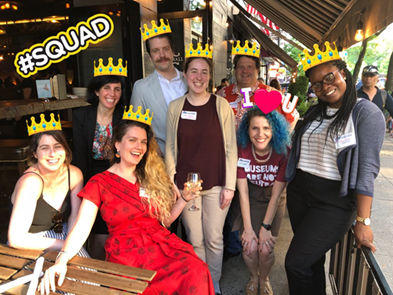
NYCMER Social Media Journalists, Courtesy of Rachel Ropeik, Social Media Coordinator, NYCMER via Twitter

We were asked to cover the conference via Twitter by tweeting our impressions of and thoughts about the keynote session and the rest of the conference sessions. I attended the sessions, and then I tweeted some highlights of the sessions I chose to attend. All of the social media journalists, and other NYCMER conference participants following on Twitter, used the hashtags #NYCMERsmj and #NYCMER2018 to participate in conversations on the social media site. We also included photographs we took during the conference to give followers visuals of what we covered in the sessions we participated in. In this blog post, I included some of my tweets I shared during the conference for each session I participated in with brief descriptions.

This year’s NYCMER conference began with a keynote that discussed this year’s theme: React & Respond: The Next Steps. The keynote was moderated by Keonna Hendrick who is School Programs Manager at the Brooklyn Museum, cultural strategist, educator and author, nurturing equity through art and museum education. Hendrick posed questions to the keynote participants Gonzalo Casals and Annie Polland. Gonzalo Casals is the Director of the Leslie-Lohman Museum of Gay and Lesbian Art. His experience ranges from innovative cultural programming and authentic community engagement strategies to progressive cultural policy. Annie Polland is the Executive Director at the American Jewish Historical Society (AJHS). Previously, Polland served as the Senior Vice President for Programs & Interpretation at the Lower East Side Tenement Museum where she was responsible for developing programs and content for over 250,000 annual visitors.

Lindsey Steward‏ @Steward2Lindsey 9:04 AM – 21 May 2018
Welcome to this year’s #NYCMER2018 I’m looking forward to learning more about today’s theme 🙂 What are your thoughts about this year’s theme? #NYCMERsmj

Lindsey Steward @Steward2Lindsey 21 May 2018, 9:23am
I’m also glad that NYCMER is requiring salary information in job postings. It is important for us to show our support for equity and best practices in salary sharing and negotiations #NYCMER2018 #NYCMERsmj

Lindsey Steward @Steward2Lindsey 21 May 2018, 9:49am
Allows people to upload pictures that tell their immigrant stories. What a great idea to be able to share and identify with people’s stories #NYCMERsmj #NYCMER2018
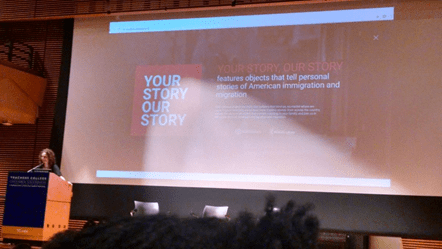
 

Lindsey Steward @Steward2Lindsey 21 May 2018, 9:56am

Interesting thought: If you could create a poem or an inscription on the Statue of Liberty today, what would it say? #NYCMERsmj #NYCMER2018

Lindsey Steward @Steward2Lindsey
I think board of trustees should also participate in programs and conferences like @NYCMER This will also help staff and board work together especially on diversity. It is unfortunately not surprising when no one said they were from a museum board. #NYCMER2018 #NYCMERsmj
10:48 AM – 21 May 2018

The first session I attended was Virtual Field Trips: Traveling Through Time and Space to Connect Museums and Audiences. During this session, Frantz Lucien, an educator at the Intrepid Sea, Air, and Space Museum who specializes in community outreach and engagement, and Charissa Ruth, a freelance educator whose resume includes the Intrepid Museum, the Brooklyn Botanical Garden, the Brooklyn Public Library, and the Cooper Hewitt Museum, discussed their experience with virtual field trips. Lucien and Ruth discussed the benefits and challenges of running and planning virtual field trips. They also performed a demonstration what a virtual field trip is like by giving us a brief demonstration of what it would be like to be in space without wearing a space suit.

Lindsey Steward @Steward2Lindsey 11:29 PM – 21 May 2018
A test to see how Virtual Field Trips work via Skype #NYCMERsmj #NYCMER2018

Lindsey Steward @Steward2Lindsey 1:13 PM – 21 May 2018
Lindsey Steward Retweeted Paul Orselli
Paul, I think there should be required professional development programs for museum leaders, directors and board of trustees, to talk about salary and the importance of having salary information included when searching for a job candidate. #NYCMERsmj #NYCMER2018
Paul Orselli @museum_exhibits
#NYCMER2018 Food for thought over lunch: How can we get ALL orgs to require salary ranges on job postings? #NYCMERsmj

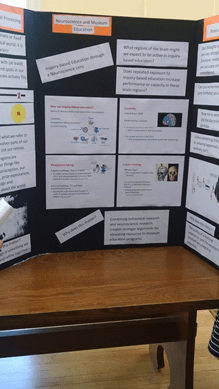
During the lunch break, I attended poster sessions that shared various brief information related to this year’s theme. One of the most interesting poster sessions I attended is Neuroscience and Museum Education. Megan Kuensting from The Met’s School Programs team shared some highlights gleaned from her Master’s program in Neuroscience and Education at Columbia University Teacher’s College, including questions about the potential for inquiry-based education to reduce student stress.

Lindsey Steward @Steward2Lindsey 21 May 2018, 1:37pm
Check out this fascinating information about Neuroscience and Museum Education! #NYCMER2018 #NYCMERsmj
The second session I attended was Beyond White Feminism: What Stands Between Museums and True Gender Equity: A Journal of Museum Education Facilitated Dialogue presented by Alicia Greene, the Community Engagement Program Developer for Boston Children’s Museum, and Margaret Middleton, the exhibit designer and museum consultant with over ten years’ experience in the museum field. In this session, we brainstormed topics about our concerns in the museum workplace in addition to discussing the upcoming edition of the Museum Education Roundtable’s Journal of Museum Education. An important take away from the session is that Museums still struggle to achieve gender equity in the workplace and the fight for representation in the galleries continues.

Lindsey Steward @Steward2Lindsey
This is to keep in mind when thinking about equity and resolving issues within the system put in place in museums. #NYCMER2018 #NYCMERsmj

The third session I attended was Making Room: Creating and Sustaining Effective and Inclusive Learning Environments presented by a former instructor and a current Museum Education Program Director at Bank Street College of Education, Cynthia Copeland and Cathleen Wiggins. This session was a participatory workshop which model interactive techniques and activities where participants explore scenarios and potential outcomes relevant to their communities.

Lindsey Steward @Steward2Lindsey 21 May 2018, 3:45pm
I love this quote! Everyone should feel like they are represented in the storytelling process. #NYCMER2018 #NYCMERsmj

I enjoyed this year’s NYCMER conference, and I thought it was a great idea to start having a team of social media journalists share information from the sessions. At first I was concerned that it would be a challenge to participate on Twitter and during the sessions at the same time. I decided to make a couple of tweets during the sessions then I tweet my reactions after the session ended. There was a lot of great reactions on the sessions at the NYCMER conference, and if you are interested in reading more tweets from the conference go to Twitter and look up #NYCMERsmj and #NYCMER2018.

How do you feel about having social media journalists during conferences? Does following conversations on Twitter make participation easier?


To Capture or Not to Capture: The Long Debate About Photography in Museums

Added to Medium, May 17, 2018

For as long as I can remember, I have come across a number of signs in museums that express their values in taking pictures within the exhibits. Museums post various signs such as “no photography”, “no flash photography”, and “no selfie sticks”. As a museum professional, I have received numerous responses from visitors who asked why they cannot take pictures, and a lot of them also began lengthy discussions about whether or not photography should be allowed in museums.

When I gave tours at the Butler-McCook House and Isham-Terry House, I have on occasion had to remind visitors of their no-flash photography policy. The reason why we told visitors about our policy is because almost everything in both of the houses, which were built in the 1780s and 1850s, are original to the house from the structure to the furniture, and from the silverware to the toys. Since the majority of the items in the houses are original to the families that lived in them, we want to protect and preserve the items for future visitors to enjoy. There are some visitors who respected the policy while others asked questions and expressed their thoughts on photography in museums.

It is tempting to take out a camera or phone to take pictures since one is able to capture the experience. At the same time, one can argue that it distracts from actually experiencing the visit to the museum.

In the New York Times article “At Galleries, Cameras Find a Mixed Welcome” by Fred A. Bernstein, he discussed the mixed reactions to photography policies. Bernstein revealed that some like Nina Simon support having cameras in the museum. According to the article, Bernstein revealed Nina Simon, executive director of the Museum of Art and History in Santa Cruz, California, believed people rely on their cameras as extensions of their senses and that

In Ms. Simon’s view, “Museums should prioritize providing opportunities for visitors to engage in ways that are familiar and comfortable to them” — and that means using cameras.

Simon does bring up a good point in giving visitors opportunities to engage in ways that are familiar and comfortable to them; as we move forward into the future, technology has open up ways people can interact with artifacts including but not limited to interacting with them on the museum website and sharing their pictures on social media outlets.

Bernstein also pointed out that there are individuals who shed light on why not allowing flash photography in museums is not an adequate policy. His article shared a statement made by Mervin Richard, who is the chief of conservation at the National Gallery of Art in Washington. Richard stated he had personally examined studies of the effects of light exposure on art and he concluded that there was little risk, and said the fear of the flashes damaging the art came from when people used flashbulbs (which could explode).

While the previous article’s discussion focused more about art, it did not include discussion about history museums and historic sites. The article “Why is taking photographs banned in many museums and historic places?”, written by Jay L. Zagorsky, focuses the discussion on historic places and museums.

Zagorsky shared five reasons that were used to answer the question posed in the article’s title. The first reason is camera flashes, which emit intense light, are believed to hurt paintings and the patina of delicate objects but research conducted by the University of Cambridge suggested that the use of flash poses little danger to most museum exhibits. The second reason is eliminating cameras improves the visitor experience since visitors, according to the article, are more likely to enjoy their experience when less visitors are stopping to use selfie sticks and causing traffic jams.

The third reason shared in Zagorsky’s article is by preventing photography ensures the gift shop maintains a monopoly on selling images. In other words, when photography is not allowed inside the museum or historic place the gift shop’s books, posters and postcards are the only legitimate source for high-quality images of a famous painting, statue or room. The fourth reason is it is believed by banning photographs this boosts security to prevent thieves from visually capturing and pinpointing weaknesses in alarm systems and surveillance cameras; it can be argued that uploading digital photographs to the internet is not more likely to boost museum security than compromising it.

Finally, the last reason shared in Zagorsky’s article is taking photographs often violates copyright protections. One of the arguments presented in the article was,

Copyright is more of an issue for modern artwork, especially when the piece is loaned to a museum. Museums don’t own the copyright of loaned paintings or sculptures since it resides with the owner or the original artist. However, today it is relatively easy to check if an image is being sold on the internet or used for unauthorized commercial purposes to ensure the copyright holder is paid their due.

A lot of the reasons presented in the article had counter arguments that makes it hard for museums to continue photography bans. Another thought I believe was a good point I think museums should consider is what Zagorsky shared; he stated

How can some museums generate more revenue and still satisfy our desire to take photographs? One simple model I first saw in the Natural History Museum in Rwanda is to charge a photography fee. Patrons can take as many pictures as they want as long as they pay upfront for the privilege.

I think museums should at least consider this idea since museums could not only protect copyrights and generate revenue but it would also allow visitors to capture their experience with the museums especially images that may not be included in gift shops.

Each museum has their own views about photography in its exhibits, and this debate would probably not be settled anytime soon.

What are your opinions about cameras and photographs taken by visitors in museums?

Resources:
https://www.nytimes.com/2012/03/15/arts/artsspecial/art-museums-photography-policies-vary-widely.html
http://theconversation.com/why-is-taking-photographs-banned-in-many-museums-and-historic-places-66356


What are the Best Practices for Historic House Museums?

Added to Medium, May 11, 2018

I thought about more recently about my past experiences in the museum field, specifically in historic house museums. Like all museums, historic house museums take a lot of time and resources to run. As museum professionals, we search through various resources and have discussions among colleagues to figure out the best practices for our museums. I am particularly going to discuss best practices in historic house museums.

Each historic house museum has their own unique stories and artifacts to share with its visitors. I worked at a number of historic house museums in the past, and each have not only their own stories and artifacts but they also have slightly different missions from one another. The historic house museums I was a museum educator for are Stanley-Whitman House, Noah Webster House, and Connecticut Landmarks’ Butler-McCook House and Isham-Terry House.

The Stanley-Whitman is a living history center and museum that teaches through the collection, preservation, research, and dynamic interpretation of the history and culture of early Farmington. This museum facility is centered on a ca. 1720 National Historical Landmark house, furnished with period antiques to reflect the everyday activities of Colonial life in Connecticut. In 2004, public service areas of the museum, including a modern classroom, a period tavern room, post-and-beam Welcome Center, research library, exhibit gallery, and collection storage area, were constructed to assist in fulfilling its mission.

The Noah Webster House & West Hartford Historical Society is located in the restored 18th-century birthplace and childhood home of Noah Webster, the creator of the first American dictionary and “Blue-Backed Speller”, a teacher, lawyer and early abolitionist. Its mission is to engage citizens by preserving and sharing history, promoting literacy and advocating greater cultural understanding.

Connecticut Landmarks is a state-wide network of eleven significant historic properties that span four centuries of New England history. It’s mission is to inspire interest and encourage learning about the American past by preserving selected historic properties, collections and stories and presenting programs that meaningfully engage the public and our communities. The two historic house museums I worked at were the Butler-McCook House and the Isham-Terry House, located in Hartford.

The Butler-McCook House & Garden, the only 18th-century home still remaining on Hartford’s Main Street, is a time capsule of Hartford’s past and the history of one family. For 189 years the Butler-McCook House & Garden was home to four generations of a family who participated in, witnessed, and recorded the evolution of Main Street between the American Revolution and the mid-twentieth century.

Inside the house, Connecticut Landmarks preserves the house with all the changes that took place over time. The house has original furnishings ranging from Connecticut-crafted colonial furniture to Victorian-era toys and paintings to samurai armor acquired during a trip to Japan. These objects were accumulated over the course of almost two centuries by members of this extraordinary clan, which included physicians, industrialists, missionaries, artists, globetrotters and pioneering educators and social reformers.

The Isham-Terry House is a time capsule of the genteel lifestyle of turn-of-the century Hartford. Dr. Oliver Isham purchased the 1854 Italianate house for his medical practice and as a home for himself, his parents and his three sisters in 1896. The footprint of the house remains the same as it was when it was built in 1854 with the three-story rectangular tower added in 1883.

This mansion has 15 rooms that are adorned with crown moldings, ceiling medallions, lincrusta wall coverings, hand painted walls and ceilings, gilt mirrors and valances, stained glass windows, elaborate gas-light chandeliers and many original kitchen and bathroom appliances and fixtures. It is filled with objects of historical, artistic and family significance including but not limited to antique furnishings, decorative arts, rare books, and the Terry clocks made famous by their great uncle Eli Terry.

All of the historic house museums I have worked for and visited focus their missions on community and education. While I have not visited all historic house museums in the country, I know that each one not only has a unique narrative but all historic house museums have to consider many factors that effect how they are run.

For instance, historic house museum professionals have to discuss interpretive planning. Interpretive planning, according to the book Museum Administration 2.0, is about deciding which interpretive messages will be carried throughout the organization, via exhibits, educational programs, marketing, and other forms of communication. At the Butler-McCook House, I was part of the team that worked on interpretive planning projects to brainstorm ways we can draw more visitors in while aligning the interpretive plan with the mission.

There are a number of steps that need to be taken when museum professionals work on the interpretive plan. According to my experience and in Museum Administration 2.0, a number of museum leaders and educators must collaborate to develop an interpretive plan which allows policy, planning, and process to flow out of the themes and messages the plan presents. I met with other museum educators, the executive director, an interpretive specialist, and site administrator to discuss the framework of the plan as well as the interpretive themes. Also, we discussed geographic and audience demographics from previous years. Museum educators were then asked to pick an interpretive theme to brainstorm ideas of new exhibits and tours using the narrative and objects in the collection related to the chosen theme.

Other considerations include but not limited to house maintenance, accessioning and deaccessioning objects in the collections. Also, historic house museums especially ones I have worked in have to figure out what to do with dangerous objects in its collections. I came across an article written by Jessica Leigh Hester called “The Most Dangerous Things You Can See in Museums” which listed a number of museums from around the world with the specific dangerous objects described underneath each museum mentioned in the article.

When I was working at the Butler-McCook House and Isham-Terry House, there were a number of items in the collection that would be considered too dangerous and each one had a solution to be sure they are not exposed to museum professionals and visitors. For instance, both of the houses had medicines used by members of both families who were physicians. Each of these were placed out of arms reach either in a closet behind glass (at Butler-McCook House) or in a cabinet (at Isham-Terry House).

Museum professionals at historic house museums have numerous things to consider, and would need assistance from colleagues and other resources. Last week I discussed how museum professionals find resources and the significance of these resources to assist in running museums. I discovered a website called Sustaining Places which is a site that has resources for small museums and historic sites which cover everything from administration to collections, and from curatorial and exhibitions to education and programming. Also, in addition to other resources from books and museum organizations, there are professional networks especially through the American Alliance of Museums. The American Alliance of Museums has a historic houses and sites network which was organized to create and maintain a welcoming network of museum professionals dedicated to the interpretation and preservation of important public histories, architecture, and culture.

Not all historic house museums are alike, and it is important for all museum professionals to learn and decide what methods work best for their organizations.

If you work in a historic house museum, what resources have you come across on historic house museums?

Resources:
https://www.ctlandmarks.org/
http://www.stanleywhitman.org/
https://noahwebsterhouse.org/
Genoways, Hugh H., Lynne M. Ireland, Cinnamon Catlin-Legutko, Museum Administration 2.0, Lanham, MD: Rowman & Littlefield, 2017.
https://www.atlasobscura.com/articles/most-dangerous-museum-objects
https://sustainingplaces.com/
https://www.aam-us.org/professional-networks/historic-houses-and-sites-network/

Significant Resources in the Museum Field

Added to Medium, May 3, 2018

As museum professionals, we continue to develop our education through professional development resources provided in various sources including but not limited to books, websites, blogs, webinars, conferences, seminars, and magazines. We learn so much from these resources, and therefore we continue to use the same ones we continuously use. Museum professionals also seek more resources to use to assist in their practices.

In my blog post Writing about Museum Education: Using Professional Development to Our Advantage, I stated that,

I truly believe professional development is important for all career paths, especially in the museum education field. Professional development in the museum education field have many opportunities to help museum professionals develop their careers to make sure they are up to date with latest theories and skills.

Professional development has many opportunities for all museum professions to develop their careers. There are many options to choose from, and we do not need to stick to one resource to develop our careers and skills. Museum professionals are able to make sure they are up to date with latest theories and skills by seeking networking opportunities.

One of the most important resources museum professionals use is their own experiences as well as experiences of other museum professionals. While we can learn from the materials we gained access to, the best resources are the ones gained from experience and sharing these experiences. By doing our jobs as museum professionals, we have practical knowledge of what occurs on a regular basis in museum practices. Museum educators especially regularly apply skills they learn from the programs they teach; when they teach programs on a regular basis, museum educators learn what methods work or what needs to be improved on a case to case situation.

In the twenty-first century, we have many options for communicating with one another to learn through each other’s experiences. Museum professionals can meet in person at conferences, seminars, and workshops, or online. Whether they are online or in-person, museum professionals can talk with one another to gain inspiration for their own projects or practices.

The benefit of interacting online is that museum professionals can communicate with other museum professionals outside of their region on a regular basis rather than waiting for the next national meet-up. Another benefit I mentioned in my blog post Online Communities: Why They Are So Important for Museum Professionals was

It is important that museum professionals have the opportunity to connect with one another since one of the best ways to continue adapting programs and exhibits is to learn from other museum professionals. Not many museum professionals have the opportunity to meet with others in person for various reasons especially not having enough time and money to invest in traveling to museum conferences and workshops.

If museum professionals are not able to attend conferences and workshops for whatever reason, providing a way to communicate online will help more museum professionals learn from one another to help move the museum field forward.

There are many opportunities online to communicate and learn from other museum professionals. For instance, there are online communities through social media such as the Emerging Museum Professionals group on Facebook, museum groups on LinkedIn, and #MuseumEdChat on Twitter. Each of the examples I listed inspire museum professionals to ask each other questions and seek advice related to the field, and encourage discussion among one another.

In recent months, I discovered that there are also online mentorships programs like the American Alliance of Museum’s (AAM’s) Museum Education Professional Network that provides space for mentors and mentees to communicate with each other. Museum professionals at each career level can apply to be a mentor or mentee to seek advice from one another, and learn from one another’s experiences. Once selected, a mentor and a mentee is matched together based on similar experiences and backgrounds in the museum field to then begin communicating with one another.

Another example of an opportunity online for museum professionals to learn from other museum professionals experiences is the blogs posted on personal websites or museum websites. I have written many blog posts in the past couple of years that continue to gain attention from all of you who have continued to read them (and I thank you for continuing to read each of these blog posts). Also, I have read many blogs from other museum professionals in the field. One of the most recent blog posts I have read came from Anne Ackerson and Joan Baldwin in their blog Leadership Matters.

Their most recent blog post, Museum Leadership: Being vs Doing, discusses the importance of knowing the difference between “being” a museum leader and “doing” your role as a museum leader. They also discussed where museum professionals should turn to if we find ourselves in a situation where we are managing more people than tasks. It is important that all museum professionals understand where they can turn to find information that will help us be effective leaders. We all need to remember that if we find our organizations are not helping us perform well in our roles we should speak up so we will figure out how we can effectively accomplish our goals.

We have unlimited resources that we can gain access to especially for museum professionals in the museum field. Our resources continue to develop as we learn from one another, from books, blogs, networks and online communities, and we move forward with changes based on what we learned. We do not rely on only one resource as the most significant resource since we need to keep our minds open to change as our communities and our field continue to evolve with the times. The museum field is fortunate to have so many outlets we can reach out to learn more about our roles in our organizations.

What resources have been the most helpful for you in your field? Have you participated in online communities like the ones I mentioned in this blog post?

Resources:
http://www.aaslh.org/
https://www.aam-us.org/
https://leadershipmatters1213.wordpress.com/2018/04/30/museum-leadership-being-vs-doing/
Writing about Museum Education: Using Professional Development to Our Advantage 

Online Communities: Why They Are So Important for Museum Professionals 


Reaction: The Cost of Museum Work

Added to Medium, April 26, 2018

With many discussions about museum professionals leaving the museum field and how we can improve the work conditions in the field, there is an additional post I came across this week. Seema Rao wrote about the cost of museum work for museum professionals in the field. It is a good summary of what is happening to museum professionals and museum work.

I think it is important to acknowledge that all museum professionals, full-time and part-time, face similar situations Rao presented in her post. Should we continue to pay this price to keep museums running? I do not think so. If we continue to go down the path we are going through, our field will not be able to survive and our mission as a museum community will not be fulfilled.

In the post, Rao began the cost of museum work discussion by asking readers to consider scenarios for both the museum and the job seeker. Then the discussion continued with a section on being a museum professional. The last section discussed the museum hiring culture’s effect on the museum field. Each section in the post discussed about the museum field in general, and brings attention to important points on the current condition of museum work so we all can understand why museum work culture needs to improve.

The museum field is beginning to become more aware of the work condition situations, and this post is an example of continued discussion that is happening among museum professionals. One of the points Rao made in the post is that,

Museums want to be able to bring in more visitors for less money while being the most academically rigorous (and ideally garnering an article in the Times), basically the Holy Grail. The path to this endpoint, however, is complicated, confusing, and subjective. Despite the many meetings where a colleague suggests they have the “right” answer to accomplish the grail, there is no single path to improving museums. There are good answers, better answers, and terrible answers–but there are no perfect answers. Museum professionals often feel like they are being measured against this idea of perfection that doesn’t exist.

As museum professionals, we attempt to find the perfect solution to bring in more visitors and revenue for our institutions. The problem is that all museums are structured differently; museums especially in the United States come in different sizes, have different missions, there are different types of museums, different demographics, and offer varying programs. It is hard to define success when no museum is the same as others. If we keep being measured against the idea of perfection that does not exist, we will not only be able to accomplish what we need to do but we will not be satisfied in our well-being as museum professionals.

Rao also discussed the hiring culture in the museum field, and what issues the current museum work culture presents. The museum hiring culture develops a split with local audiences, promotes bad management, depletes the field, and prevents diversity. Museum professionals dedicate a lot of time and effort to their work but unfortunately the work becomes overwhelming when the work load is increased to a point that one museum professional is doing the work of at least five individuals.

Some museum professionals deal with bad management within the museum. In the post, Rao pointed out that

In the first couple years of work, most professionals are given some latitude for their failures. About three years in, their colleagues start to judge them. This is the point at which they can improve or leave. Instead of promoting a culture of self-improvement, the hiring culture effectively promotes people leaving (for more money) before improving.

Museum professionals for a while now have not spent more than a few years working for one museum. What this post did not get into detail about is the amount of work that museum professionals are given as a result of bad management and lack of appropriate amount of staff members in the museum. An individual museum professional is given an amount of work that could be accomplished by multiple people, and with divided attention given to aspects of the responsibilities not a lot is accomplished.

Whether museum professionals work full-time or part-time, museum professionals face similar situations of an enormous workload. Part-time museum professionals are given the workload of a full-time museum professional, and full-time museum professionals are given even more work. Both part-time and full-time professionals have this in common: there is not enough time to accomplish what needs to be done. A lot of decisions are made based on attempting to find ways to cut costs to run the museum but it clearly does not promote the well-being of its employees. If management does not acknowledge or find ways to attempt to resolve matters, it leads to poor management and more museum professionals seeking to go elsewhere.

As museum professionals, we should be making more attempts to be able to make self-improvements for our well-being and our careers. In recent years, we started to find ways to self-improve ourselves. For instance, the New England Museum Association had a conference in Boston with the theme of Picture of Health: Museums, Wellness & Healthy Communities in 2014. A point was made that since our museums are moving forward with promoting health and wellness within the community we need to be promote health and wellness within our staff and board.

Rao also released a book called Objective Lessons: Self Care for Museum Professions which uses creative prompts to help museum workers and knowledge workers focus on self-care. The more we figure out how to practice and promote self-care the more we will be able to have a better workplace for our field.

I believe that the current cost of museum work is not appropriate for all museum professionals. Museums of all types can benefit from seeing what Rao has to say about the cost of museum work. We can do better than what museum work is costing us now, and we need to continue to work our way towards a better workplace.

How do you feel about the cost of museum work? What is your organization doing to help its museum professionals work on self-care and self-improvement?

Resources:
https://brilliantideastudio.com/art-museums/the-cost-of-museum-work/
https://www.amazon.com/Objective-Lessons-Self-Museum-Professions/dp/1979203210

Where You Lead, I Will Follow: The Importance of the Leader-Follower Relationship in Museums

Added to Medium, March 29, 2018

We cannot run museums without the dedicated museum professionals in various department positions. Previous blog posts and recent articles have pointed out why the relationship between leaders and followers are significant in the museum field. In the past, leaders and followers were seen as clearly defined positions within the administration; for instance, leaders make impactful decisions to run the museum while followers do whatever leaders ask them to do as passed down from a hierarchical ladder. Times have changed, however, and the roles are blurred to work together to help museums run.

I learned from my experience over the years that leaders and followers can learn from one another and collaborate together to keep a museum running. After getting my Master’s degree, I began working directly with the visitors as a museum educator in historic house museums in Connecticut. The skills I gained came from both experience working with the public and from colleagues who worked longer at the location than I had. We gathered together whether before and after programs, or during staff meetings to learn how to improve our skills as museum educators. As we gathered for museum educator meetings at the Noah Webster House & West Hartford Historical Society for instance, we shared experiences during the school programs with each other and the Director of Education who also shared information that would help us understand the overall educational goals of the institution.

After I went to Long Island, I began to learn more about the administration perspective of running the museum. I learned about booking programs, running a volunteer program, and other administration tasks at the Long Island Museum. At the beginning of each school program that requires volunteers, the Senior volunteers share their passions as well as their stories that they believed will help the education department. When I started work as both a museum educator and the office assistant at the Maritime Explorium, I learned more about the administrative perspective in running the museum while educating children through STEM activities. The previous examples revealed the overall lesson we should all take away as we continue our museum careers: we learn from each other and work together to have successful programming in museums.

Leaders and followers have varying experiences in the museum field, and they can learn from each of their perspectives to run the museum. Followers typically work directly with the visitors, and learn from the visitors what museum staff and the museum in general can improve on to fulfil its goals. Leaders typically work with the administrative tasks that run the museum such as but not limited to grant writing and ordering materials for programs.

What we need to remember is the museum’s most valuable asset, other than its collections, are its staff, both paid and volunteers. Leaders and followers in the museum field have many contributions to help its museum continue fulfilling the mission. Each museum professional working in a museum have varying needs, emotions, and personality traits, and being able to work effectively with groups and within groups is essential to the museum professional and to the museum’s success in fulfilling its educational mission.

Hugh H. Genoways and Lynne M. Ireland discussed leadership a number of times in their book Museum Administration 2.0 and they emphasized the importance of leadership for all museum professionals within the museum. One of the statements about leadership pointed out there is no one person who is responsible for exercising the leadership skills. In the book, they stated “Leadership is no longer perceived as the solitary province of the person ‘in charge’, rather it is exhibited by every staff member who has the ability to institute change, and does so, however minor that change might be” (4). Each staff member has the capabilities to contribute to museum’s progress based on what they bring to the museum.

Even though our resources now put emphasis on leadership being expressed by all staff members, there is not enough details describing the importance of followers. In the Leadership Matters blog, Joan Baldwin wrote about why followers matter in the museum field. On the followers in the museum field, Baldwin described them as this:

They tend to have more responsibility than authority. They are assistant curators, fund raisers, educators, and volunteer coordinators. Some may go through an entire week and not see a member of their organizational leadership team, and yet all the planning, the vision, and the courage leaders incubate comes to life with the followers. They are the yin to the leadership yang.

In other words, one cannot work without the other. As museum professionals, we need to remind ourselves of the importance of this yin yang relationship in the museum’s organization to successfully run the institution. Leaders and followers should learn to be a part of a team and recognize each other’s strengths.

Baldwin also emphasized that being ineffective leaders and followers will hinder the performance of the museum’s operations. If individuals go on to become leaders without an understanding and an empathy for the qualities of those who follow them, then their leadership practices will suffer. Individuals who are not effective followers tend to be unmotivated and trouble makers that drive productivity down; to have effective followers, museums need individuals who believe that what is shared is important than what is not shared.

To be sure we have effective partnerships between leaders and followers, there are a number of factors that need to be considered. For instance, in one of my blog posts “What is the Right Fit? A Deeper Analysis of Museum Boards”, I pointed out the importance of keeping communication open between museum’s leaders and staff members. I also said that each board and staff member needs to have a clear understanding of their roles and responsibilities. Hugh H. Genoways and Lynne M. Ireland’s Museum Administration 2.0 stated that some of the board responsibilities are but not limited to:

Review and approve policies consistent with the museum’s mission and mandate, and to monitor staff implementation of these policies.
Ensure the continuity of the museum’s mission, mandate, and purposes.
Plan for the future of the museum, including review and approval of a strategic plan that identifies the museum’s goals and ways to attain them, and monitoring implementation of the plan.

When museum leaders are aware of what their responsibilities are, they would be able to understand their roles in helping the staff and the museum effectively run programs and museums’ other functions.

Baldwin also pointed out in her blog post that getting to know the team is essential in being effective leaders. She stated in the blog,

Even if your team is two volunteers and a part-time curator. Listen to them. Value them. Know what motivates them. Welcome the moments when they challenge ideas because it indicates they’re with you, and they want the best for the museum. Figure out ways to remove the barriers with which they may be struggling. Pay them what they’re worth. Thank them.

If museum leaders value and appreciate their followers, there would be a healthy partnership that will successfully run a museum.

All museum professionals have the leadership skills and the ability to follow through on running programs, exhibits, events, et. cetera. We should listen to one another, and work together as a team to accomplish so much for our institutions.

What are some examples you experienced in the leader/follower dynamic? Did you have any challenges when creating stronger partnerships?

Resources
Genoways, Hugh H., Lynne M. Ireland, Cinnamon Catlin-Legutko, Museum Administration 2.0, Lanham, MD: Rowman & Littlefield, 2017.
What is the Right Fit? A Deeper Analysis of Museum Boards
https://leadershipmatters1213.wordpress.com/2018/03/26/why-followers-matter/
http://www.aam-us.org/resources/professional-networks/leadership-and-management

The Past is in the Past? A Closer Look into Public History

Added to Medium, March 22, 2018

As a museum professional with a Master’s degree in Public History, recent discussion in the public history field has captured my attention. One of the reasons why I decided to write a little more about public history this week is because I came across Taylor Stoermer’s “Let It Go: The Exceptionalist Narrative in American Public History” on Medium. Stoermer is a Museum Studies (Public History) lecturer at Johns Hopkins University. After reading his article, I thought more about my experience in public history and the lessons I’ve learned especially while I was earning my Master’s degree at Central Connecticut State University.

Stoermer’s “Let It Go” article briefly discussed internal issues museums face including equitable pay schemes, governance development, and better attention to the modern needs of emerging museum professionals in the economy. His article focuses more on external issues especially the disconnection between the America we see outside of our museums and the one that many of our sites represent.

He provided examples of tough issues museum professionals have always had a hard time discussing but are making progress in being awareness to these issues. According to the article, he stated that

Slavery and race have always been thorny issues for interpreters, but tremendous progress has been made to help them tell the stories of enslaved peoples, to accurately and effectively weave them throughout a site’s narrative (and maybe point out that race doesn’t really exist except as a cultural construct). Programs only for Black History Month, like those for Women’s History Month, just don’t cut it anymore, as the penny has finally dropped for museum directors that every month is for black and women’s (and LGBTQ) history (check out Old Salem’s “Hidden Town” project). But larger institutions are slowly, but surely, recognizing their responsibilities as stewards to smaller, satellite sites, in providing workshops and interpretive resources to create a rising tide that lifts all museum boats. The upcoming Mount Vernon/American Alliance of Museums program on museum leadership and the Montpelier/National Trust for Historic Preservation’s recent National Summit on Teaching Slavery are solid examples. We’re not yet where we need to be in those respects, but progress is being made.

It is true that we are not there yet and that progress is being made in discussing slavery and race. We should also acknowledge what smaller institutions are doing to provide workshops and interpretive resources. For instance, I mentioned in a previous blog post about my experience with the Stanley-Whitman House in Farmington, Connecticut.

A historic house museum that also focuses on the history of Farmington, the Stanley-Whitman House began to take a closer look at slaves who have lived in Farmington between the 17th and 19th century. While I was in graduate school, I decided to work with the Stanley-Whitman House on a project that addressed slavery in Connecticut. I had a couple of classmates and colleagues join me in the team to work on this project for a Curatorship class requirement. We researched former slaves who worked and lived in Connecticut before the 1790 Census to present the research results about what slavery was like for slaves in Farmington to colleagues who attended the In Plain Sight symposium presentations and discussion.

Since working on this project and the symposium, there have been more developments on discussing slavery in Connecticut. One of my teammates collaborated with the Stanley-Whitman House to create a database on the information about slaves in Farmington. This project is called The Farmington Slavery Research Project, and the goals were to document captive people – record them as they were discovered in primary source materials such as probate inventories, wills, account books and other records. It is an ongoing volunteer-staffed project that volunteers are welcome to contribute to the continuous research on Farmington’s history with slavery. To learn more about this project, I included a link in the resources section of this blog post.

Also, more recently a new exhibit that opened on February 17th called “Slavery, Resistance & Freedom in Connecticut”; one of the students from the Public History program I graduated from at Central Connecticut State University researched, wrote, and designed the exhibit. By being able to discuss slavery in Connecticut more, we are able to address what life had been like for enslaved individuals and draw more attention to their lived experiences.

Many museum professionals and public historians would have to admit that we still have a long way to go in creating that informative and comfortable dialogue between staff and visitors on tough issues. Our field is constantly attempting to catch up and move forward to remain relevant in the community. Stoermer brought up this question: “What are we trying to catch up to?” He concluded that the answer is that “…sites are trying to catch important, undertold, underrepresented stories up to the same tale of American exceptionalism that has dominated public history…” In other words, museum professionals and public historians research and tell stories that have been forgotten or previously overlooked to figure out how they fit into the familiar narrative of our nation’s history that the majority have become used to over the centuries.

We have realized in recent years that visitors are asking more questions that challenge the narrative and we continue to work towards answering these questions through our programming and exhibitions. Many questions come from what visitors learned or have seen outside of museums especially through our media. Movies in the cinemas are examples of media where debates have emerged to contribute to the ongoing portrayal of our history and museum practices.

The discussion surrounding the film, Black Panther, is especially important for the museum field and one of the excellent examples of public history. Before I proceed with talking about this film, there is a spoiler alert for individuals who have not yet seen the film since I will mention a scene from the film that museums should pay attention to.

Released last month, in case if one is not familiar with the film, Black Panther is a film from Marvel Studios about a superhero also known as T’Challa. He is also king of an African nation that is isolated and technologically advanced called Wakanda. According to IMDB, when T’Challa rises to power after the passing of his father, his claim to the throne is challenged by a vengeful outsider who was a childhood victim of T’Challa’s father’s mistake.

I saw the film last month, and I enjoyed it. In addition to special effects and other elements that go into making this film, I admired its look into the issues it presented especially when one of the main antagonists, Erik Killmonger, visited a museum that had items in the collections which belonged to the nation he was born in. In that scene, the curator approached Killmonger to explain the history of these items; a little while into the scene the curator told him the items are not for sale when he made an attempt to take them, and he responded by asking if her ancestors paid a reasonable price when they took them from his native country. I took notice of the museum scene not only because of what happens within that scene but my perspective as a museum professional made me think about past museum practices of obtaining items in its collections and the ethical practices we have today.

In the online museums journal, The Hopkins Exhibitionist, Casey Haughin wrote about the Black Panther film in the piece “Why museum professionals need to talk about Black Panther”. The article went into a deep discussion about the museum scene and wrote about the impact the film had on the continuing conversation on our nation’s and global history. Haughin stated that

Black Panther provides a platform to discuss a multitude of topics on a national scale. With issues such as police brutality, the ever-present effects of slavery in Western society, and black identity approached in the film, it is easy to gloss over one of the more exposition-driven scenes of the film that engages with the complicated relationship between museums and audiences affected by colonialism.

What I have learned in my history courses all the way up to the end of graduate school and beyond the classroom is that colonialism had a major impact on world and it continuously makes an impact as we deal with its consequences. We still have a long way to go to be as inclusive and accepting of one another as we need to be in an ever changing world.

Haughin proposed a response for museum professionals to make after seeing this film. According to the article, among many things that were proposed, it stated

The first step after this movie is to publicly confirm the reality of the situation; museums need to step up and acknowledge the fact that Killmonger’s anger in the exhibition and the experience he had were not entirely fictionalized, but rather a magnification of museum practices in the modern world. The next step is to listen. Listen to people of color, to communities, and to whole countries who see themselves both robbed by and cast out from international institutions. By communicating openly with the audience of a museum, professionals can determine how better to adapt their practices and make the institution a place that is relevant and respectful for all visitors. Until a truly symbiotic dialogue is established, this scene in Black Panther will represent the reality of museum politics where fact is truly more alarming than any fiction.

I also came across an opinion piece written by Lise Ragbir, who is a writer, curator, and the Director of the Christian-Green Gallery and the Idea Lab, both part of Black Studies at the University of Texas. In her piece, What Black Panther Gets Right About the Politics of Museums, she went into detail about the representation of current attitudes towards museums in the film while sharing her perspective of the scene, a similar situation that occurred in the film happening in France, and shared data from the American Alliance of Museums of how many African Americans visits. These are only a few examples of what she discussed in her piece.

One of the statements she made that stood out to me was the importance of access and how it creates opportunities to learn especially about how we are represented in other narratives. She then went on to say

To be clear, museums and other cultural spaces have functioned under the weight of these truths since people began publicly exhibiting art and artifacts. But old truths are giving way to new attitudes, as evidenced by France’s more diplomatic version of Killmonger’s vigilante repatriation of African artifacts. However, ongoing debates about representation, repatriation, and cultural appropriation — all cannily encapsulated in Killmonger’s memorable visit to the Museum of Great Britain in Black Panther — affirm that a great deal of work is still needed to make our museums truly welcoming and diverse. Besides, as Princess Shuri puts it: “Just because something works doesn’t mean it can’t be improved.”

Both Ragbir and Haughin emphasized what museum professionals need to do, and continue to do, is to work towards being truly inclusive and diverse organizations.

We need to invest in time to address each issue that we face in the public history/museum field. So many issues are brought to our attention and we need to keep moving forward to remain relevant in the changing climate of our society. We should be asking ourselves the tough questions, and finding effective ways to invite our visitors in to help our communities fully understand our past.

What do you think of our museums progress of being more inclusive and diverse so far? Have you discussed about Black Panther within your own organizations?

Resources:
https://medium.com/@History_Doctor/let-it-go-the-exceptionalist-narrative-in-american-public-history-3338e3a11b87
https://jhuexhibitionist.com/2018/02/22/why-museum-professionals-need-to-talk-about-black-panther/
https://hyperallergic.com/433650/black-panther-museum-politics/?utm_source=twitter&utm_medium=social&utm_campaign=sw#sidr
Farmington Slavery Research Project: www.captivepeople.stanleywhitman.org/
To learn more about Black Panther and the impact it has in the museum field:
https://www.aaihs.org/the-black-panther-and-cold-war-colonialism-in-the-marvel-universe/
https://impactingmuseums.org/2018/02/16/why-museum-professionals-should-go-see-black-panther-today/


How to Lead a Professional Development Program: Reflections of My Experience Presenting One on Gender Equity

Added to Medium, March 8, 2018

On Monday, March 5, 2018, I have had my first professional development program that I have presented for the field. The program was the Long Island Museum Association Roundtable, hosted by Preservation Long Island, called “Lessons from the Workplace: Women in the Museum”. I presented at this program with Anne Ackerson, who co-founded Gender Equity in Museums Movement in 2016. It was a wonderful experience, and I learned a lot from the process of arranging it to presenting the program.

This process began last year when I met with a then board member of the Long Island Museum Association (LIMA) at a previous Roundtable program to propose an idea for a future Roundtable program. Since I then recently joined Gender Equity in Museums Movement, I thought it would be a good idea to bring awareness of gender equity to my colleagues on Long Island. For the next few months, I discussed the idea with various LIMA board members and presidents and figure out when the roundtable should be scheduled.

After proposing this idea, I kept in contact with the then LIMA board member until he retired from the museum field. I continued the conversation with the remaining board members. A date was finally set for March 5th, 2018.

While having discussions with the LIMA board members, I informed the rest of the GEMM coalition that LIMA is interested in having a program about gender equity. Since I have not been involved with GEMM for very long and that it was the first presentation I have had since graduate school, I asked during one of the GEMM meetings if anyone is interested in coming down to Long Island to help with the presentation. Anne Ackerson volunteered to help with the presentation by collaborating together on the presentation and driving down to Long Island to co-present with me.

She and I determined that it would be best to edit an existing PowerPoint presentation so we would not necessarily need to re-invented the wheel. GEMM committee members have volunteered in the past to present at similar programs to promote the coalition and discuss gender equity issues.

Anne and I continued planning the roundtable meeting by talking with LIMA board members about logistics. For promotional materials, we were asked to send information about ourselves, the program, and about GEMM. Both of us emailed our biographies and the summary of the program we will present the day of the presentation.

Because I am also a LIMA member, I received the email newsletter that promoted our program. The LIMA board decided that the program will be presented at the organization Preservation Long Island in Cold Spring Harbor; located in the Methodist Episcopal Church, Preservation Long Island is a not-for-profit organization committed to working with Long Islanders to protect, preserve, and celebrate our cultural heritage through advocacy, education, and the stewardship of historic sites and collections. According to the email newsletter, our program would begin with check in and coffee at nine in the morning. Then our program would begin at nine-thirty, and would last until twelve thirty.

Since we had a PowerPoint presentation that typically are for shorter programs, Anne and I decided we would figure out how to fill the rest of the time. We decided it would be a good idea to see if there are museum professionals on Long Island who are willing to participate in a panel to answer questions from us and the audience. If we were not able to have panelists, we would fill the time with time dedicated to questions and answers from the audience and small group discussions.

Small group discussions would allow audience members to divide into small groups to answer questions we provided on handouts so after they discussed the answers to the questions they will write the answers down. A few of the questions that were on the sheet include:

“What does your board do to advance gender equity within your museum? What can or should it do?”
“How does your museum eliminate gender bias in board or volunteer recruitment, and in hiring staff?”
“How would a statement of organizational values be useful in addressing equity in your museum?”

After the small group discussions were finished, we would collect at least one handout from each group so that the responses will be used for future publications from the coalition on gender equity issues.

We were able to have museum professionals participate in the panel, and because of this we also decided to break down time dedicated to the presentation, panel, and small group discussions so we would be able to keep track of the time for the program.

Anne arranged to have panelists from organizations on Long Island to join the roundtable and participate in the discussion on gender equity. On the day of the program, we were able to have four female museum and former museum professionals to participate in the panel.

The first participant was Sarah Abruzzi who is an accomplished executive and fundraising professional with 20 years of experience in the non-profit sector. She served as Director of two museums and worked in all aspects of museum operations including education, collections management, volunteer coordination, fundraising, communications, and government relations. Now Abruzzi serves as Director of Major Gifts and Special Projects at the Long Island Museum in Stony Brook.

Then the next participant was Barbara Applegate who is the director of the Steinberg Museum of Art at Long Island University where she developed and presented exhibitions, many of them were made in collaboration with other institutions, and oversaw the development of special websites based on the Museum’s collection. Recently, she oversaw construction for the museum at a new campus location.

Marianne Howard, the Grant Writer for Mercy Haven in Islip Terrace, is another panel participant. Howard was previously the executive director for the Smithtown Historical Society, and she has held leadership positions among both museums and social services agencies in both New York City and on Long Island. She now works for Mercy Haven in Islip Terrace which is a non-profit organization which provides temporary and permanent housing and supportive services to those in need across Long Island.

Last but not least, Tracy Pfaff participated in the program as one of the four panelists. She became the Director of the Northport Historical Society in 2016, and before that she worked in a for-profit fine arts gallery, and she has interned at museums in Peru and Wyoming. Pfaff is the incoming co-president of LIMA with Theresa Skvarla. Once we were able to determine who would be able to participate in the panel, Anne and I discussed the schedule for the day as well as what should be divided among the two of us.

We decided to have the PowerPoint presentation at the beginning of the program which would last about fifteen to twenty minutes. Our presentation in the beginning was our welcome to the program as well as an overview of gender equity issues. The presentation has fourteen slides, and we made the decision to split the slides between the both of us.

Then the panel discussion would last for about forty minutes. Each of the panelists had opportunities to select questions they would like to address, and therefore not every panelist has to respond to every question. Nine questions were developed but we kept in mind that we may not be able to get to all of the questions. A couple of examples of questions that were addressed to the panelists are:

“Share an example of gender bias or inequity that affected your career and what you did about it.”
“What would you like to see our professional associations do to address gender bias? Is there a role for funders to advance the conversation?”
“In looking across the museum sector, where do you see the greatest positive movement to address gender inequity (i.e., collections, workforce and hiring, exhibits, etc.)”

Anne and I also decided to divide the questions between us so each of us would be able to ask questions to the panelists. We also allocated time for audience members to ask the panelists questions related to gender equity and the museum field.

Then we allocated time for a break so audience members can spend their time doing such as checking email, and get more coffee and pastries. During our conversations, we also decided to include a role playing activity after break and before the small group discussions.

Role playing activities would allow volunteers from the audience to play roles we give each pair and they will act out a scenario related to gender equity. We would allow up to five minutes of role playing then open it up to the audience to see how the situation could be handled differently or what their impressions were about the scenario. Also, we decided to have four different scenarios prepared for the program but we will start with two scenarios then see how much time is available.

Once the role playing and small group discussions are completed, we would wrap up the program by asking the audience to share a little bit of what their groups discussed and thanked them for coming out to hear our presentation and participate in our discussion.

A few days before the program, Anne and I spoke on the phone to finalize details for the day. We both agreed that it is important that we should be flexible and play by ear how we should proceed with the program to make sure the program is on schedule and to make sure our panelists and audience members are comfortable.

On the day of, I arrived early to take a look at the space we would be presenting in. Anne and I decided to take a few chairs from the first row to allow the panelists to sit there during the panel discussion and allow them to move to the back during the PowerPoint presentation. Also, we set up the PowerPoint presentation and mingled with museum professionals who have arrived for the program.

There were about between twenty and thirty museum professionals who arrived for the program which is more than Anne and I were expecting. We were very happy with the turn out, and we were also happy that many of them engaged with us, the panelists, and with each other about gender equity. Many questions, comments, and concerns were brought to us and we were able to answer to as many of them as possible. The discussion among the small groups was especially lively and we were able to collect many worksheets so we are able to use these answers for future publications.

There were some technical difficulties such as the microphone feed occasionally turned on and the lighting of the presentation made it a little hard to see the PowerPoint. I knew that we cannot always plan for everything, but we were flexible enough to continue on with the program. For instance, instead of using the last slide to share the small groups discussion we turned off the computer since we already had the questions on the handouts we gave audience members.

Overall, we had a very positive response from the program participants. We received many thanks from individuals we spoke with throughout the program. Also, I received congratulations from my colleagues and former colleagues I knew who attended the program. We also had many of them sign up to receive more information about GEMM, and we sent them the March newsletter we just sent out to other GEMM followers.

I learned a lot from this experience, and I am very proud to have arranged the program, been in the process, and in the program.

A special shout out to Anne Ackerson who has been so helpful during the process, and I thank you again Anne for everything leading up to and during the program.

What has your experiences been like presenting in professional development programs? Is there any advice you would give other professionals who start planning their own professional development programs?

Response to Alliance Labs: 7 Factors That Drive Museum Wages Down

Added to Medium, March 1, 2018

This past week was Museum Advocacy Day 2018 hosted by the American Alliance of Museums where museum professionals went down to Washington D.C. and/or used social media to bring awareness of museums impact on the country to their state representatives, the House of Representatives, and the Senate. I came across this article from Alliance Labs posted last week, and I thought about these factors as examples of why we need more support from our government representatives to increase our funding to help museums function.

I also thought this article is a good edition to the leaving the museum field discussion. One of the top reasons museum professionals decided to leave the field because of the low wages museums offer. When we take a closer look at museum wages, and how they are influenced to be the way they are in recent years, we are able to find out how we can make a better case for increasing funding in our museums to better support our institutions and our professionals to our government officials.

Written by Michael Holland, “7 Factors That Drive Museum Wages Down” discusses how our museum wages are influenced to the state they are currently in nowadays. According to Holland, the factors that drove museum wages down are the way laws and policies are written; people on top making decisions that have museum professionals wear many hats or have a job that is multiple jobs in one; figuring out how to monetize museum professionals’ work; limited advancement opportunity; internal equity in the museum; spouses of museum professionals earning higher income helps supplement expenses; and there are many applicants applying for the few jobs that are available in the field.

After reading this article, I felt that based on my experience as a museum professional these factors make sense and that we should be better at having museum professionals earn reasonable wages. To start having museum professionals earn living wages, we should take a look at the factors that influence the wages. Holland discussed about government structure, law, and policy and how this is part of how museum wages are down. He revealed that,

Many museums are affiliated with governmental entities. Museums at state universities are staffed by people who are actually public employees (just like the football coaches, but without the exorbitant salaries). Sometimes this is helps employees (legislatively mandated cost-of-living pay increases), but the structural framework of employee classification can put some hard limits on salaries, making it difficult to change compensation significantly without also changing your title and job description. This means that even if the museum has success raising substantial funding from the private sector, they may not be allowed to spend it on their staff in the same ways that a private business can.

Contractor pay is not limited by job titles or classifications, and is instead a reflection of what the market will bear, and they charge what it takes to stay in business. Museums are paying what the work is actually worth, but they pay someone other than their own staff to do it. This allows administrators to follow the rules and stay within the compensation ranges dictated by governmental job classifications, since they’re technically spending the money on stuff (goods and services) instead of staff (their own personnel).

What stood out to me was when he stated “even if the museum has success raising substantial funding from the private sector, they may not be allowed to spend it on their staff in the same ways that a private business can.” To me, it means that museum professionals do not have the control they have to improve funding that supports wages if relying on one form of financial support. Museums do not rely on one source for financial support since there are a lot of resources needed to keep a museum running.

Another statement that stood out to me was museums paying what the work is worth to someone other than their own staff so administrators can follow rules and stay within compensation ranges dictated by governmental job classifications. A lot of times we do need to bring in outside help to keep the museum running, however it should depend on what we need and if any of the staff can do it before bringing in someone else on a project. The main point of this factor I believe is that we need to have this wages discussion with our government, and Museum Advocacy Day is a great example of how we can talk with our representatives about the importance of museums as well as the museum professionals who dedicate so much time to their museums.

Holland also discussed about corporate culture being absorbed in the museum culture. He stated in the post that,

Like many companies, museums these days are doing more with fewer people, and have surprisingly small staffs who wear a lot of hats. With fewer people on staff, anything beyond daily operations can exceed in-house capacity, and when it does, work gets contracted out. This arrangement allows the company—sorry, the museum—to trim operating expenses and then spend on specific projects only as needed, rather than carry the ongoing expense of a larger staff. I haven’t seen the math to allow me to say for certain whether or not this ultimately saves the museum money in the long run, but it might look favorable on paper during the tenure of any given administration.

Wearing many hats is a very familiar concept for museum professionals, especially myself. I have not also seen the math on whether the way museum staff run the museum saves the museum money in the long run, and while it might look favorable on paper those who suffer from how museums are run these days the most are the staff.

In our field, there is so much discussion about how we need to make sure we take care of ourselves. For instance, Seema Rao wrote a blog post called “Productivity: In Defense of Breaks” which is all about the importance of taking breaks to be productive. However, it is a challenge to do so when there is so much to do and not much time to get the self-care time we need to prevent ourselves from burning out too quickly. Many museum professionals end up working on multiple projects simultaneously to the point that they are too tired to be productive, and they work longer hours to attempt to complete projects. Since the wages are low, museum professionals are more likely to work longer hours to attempt to pay for expenses. We need to incorporate self-care into how we run our museums by finding a way to increase wages and bring in more staff assistance while we keep our museums running.

Measuring employee value is a challenging situation to discuss and figure out because it can easily be undervalued when finding ways to save museum expenses to keep a museum running. Holland discusses measuring employee value as a factor that drove museum wages down by pointing out how the corporate world measures employee value:

One area where the museum sector appears to differ from the corporate world is the difficulty of measuring the value of any given employee to the organization. In business, a company can estimate with sometimes remarkable accuracy the return on investment (ROI) of hiring an employee, and quarterly earnings reports can validate those estimates. But most museums are not for-profit entities. They don’t have shareholders to please, or CEOs with their pay directly linked to the performance of the company by stock options.

If our museums insist on measuring our staff’s value, there has to be different standards and/or a different system that reflects our impact on the museum. While thinking corporately will to an extent help bring in money for museums, we also need to think like museums and give museum staff the value that they have earned and deserved.

Another set of situations that Holland has also listed as factors are limited advancement opportunity and understanding internal equity. There are not many opportunities for museum professionals to climb the ladder in their careers despite the fact that their positions in the field are essential for running the museum. Museum professionals, according to Holland, who manage to stick around long enough are likely to advance somewhat by becoming designated managers of other co-workers. There are museum professionals that have some advancement not clearly defined since there may be a title change and/or additional responsibilities added to the responsibilities they were originally hired for, and therefore priorities are mixed.

The fifth factor Holland mentioned, understanding internal equity, detailed that trying to fairly pay staff equal wages could also be driving museum wages down. Museums attempt to avoid conflict between staff members by giving all staff members equal wages. However, as Holland has stated:

Internal equity is a valid concern, but our understanding of equity might be incomplete if we’re basing it solely on salary. Broader economic trajectories over time can have enormous impact on whether or not a salary is truly sufficient. Nowhere has this impact been stronger than in housing costs. A staff member who bought their house for $40,000 in 1988 might be able to get by today on $34,000/year. But someone hired today in the same city where a house now costs $500,000 and a one-bedroom apartment goes for $1,600/month will not, unless they bring a pile of home equity with them (hint- this isn’t a thing for pretty much anyone under 30, and many well beyond that age). If the new hire is younger and has typical student loan debt, they’ll be even worse off. These two employees may have the same salary, but their economic realities are not even close to comparable. Perhaps a better definition of internal equity would be based on “effective income”, defined as how much money each of our two comparable staff members has remaining each month after their housing costs are paid.

This is a common concern within our museum community. I myself have worked with co-workers that are all different in age and circumstances. They all stress the situations they are in, and when we think about fairness as giving equal wages then we are not really being fair to all circumstances in which we are in to help support ourselves and our financial responsibilities. We need to figure out how to make wages more effective for all of our staff.

Other factors Holland discussed are spousal income subsidy and many applicants for few jobs. Both of these factors, as well as the previous factors, are familiar to me and I always have to keep this in mind when I think about my future. In a previous blog post on how to balance work and family, I mentioned that I am getting married and maintaining the balance is essential especially for me and other museum professionals. When I read the statement “With a steady supply of people who would love to work in a museum don’t have to worry so much about their earnings, museums may not have much incentive to raise salaries”, both Holland and myself have thought about the extent museums depend on hiring individuals with spouses and supplemental income. Like every individual museum professional has varying financial circumstances, married couples have varying financial circumstances that may very well need to depend on both salaries to fulfill their responsibilities.

I have also seen too often is having so many applicants apply for few jobs. As a museum professional who has applied to many times in the field, it felt discouraging for me when there are few jobs available and yet I have gained so much knowledge of the field that would be helpful for museums. While I have figured out a way or two to help me stay in the field I am passionate about, many museum professionals have to leave the field to figure out another way to fulfill financial obligations. Museums should acknowledge museum professionals who bring in the skills and knowledge they need to fulfill their organizations’ missions.

Many of these factors and ways we need to make the changes we should essentially do depend on the influences from the top. If we are able to talk with our government representatives to make changes and support our museums, we should do so and these changes will lead to museum professionals having equitable wages going forward in the museum field.

Have you read Holland’s post on Alliance Labs? What did you think of Holland’s “7 Factors That Drive Museum Wages Down”? Are there other factors we need to acknowledge and discuss?

Resources:
http://labs.aam-us.org/blog/7-factors-that-drive-museum-wages-down/
https://medium.com/@artlust/productivity-in-defense-of-breaks-a2e29bd7886

What Can We Do to Avoid Fraud?

Added to Medium, February 22, 2018

Fraud is a scary topic especially within the museum field. It is a topic not often talked about, and it should be discussed more among museum professionals. Maybe we think that it might not happen but it could happen at any point in any time frame if we are not careful. I do not recall being in a situation that led to fraud in the museum, and while I am thankful that I have not faced something like this I do feel that it is important that all of us in the field especially myself need to know what to do under these circumstances. Since this week is known by the American Association for State and Local History (AASLH) as “Nightmare at the Museum Week”, the webinars and articles they are sharing discussing deaccessioning and fraud inspired this week’s discussion on my blog. The more we talk about fraud, and learn from one another, the more we are able to be more aware of fraud and maybe we will be able to do our best to avoid fraud.

This topic captured my attention more now as a museum professional since I have become more involved in the financial realm of running a museum. I had some experience in keeping track of finances during college when I was a treasurer of two clubs for all four years. Since starting at the Maritime Explorium, I have been asked to be the manager of finances to make sure admissions and other income are adequately recorded and supported to keep the children’s science museum running. The more I get a closer look at the record keeping, the more I knew that the need for accurate record keeping is essential.

I notice more human counting errors when I began reviewing the daily and monthly reports. It is a challenge to go through a lot of previous records and make sure it is accurate, but it is necessary to make sure we have accurate information. If our organizations are not careful, we can be open to more issues down the road.

I reiterate that we should do our best to avoid fraud because if we do not prepare for it by updating our policies and evaluating our museum ethics fraud can sneak up before one realizes it happened. We can take a look at journal articles, magazine articles, and books that discuss fraud to see what would work best for our organizations.

Hugh H. Genoways and Lynne M. Ireland pointed out in their book Museum Administration 2.0 that museums need to keep in mind their professional codes and ethics when running the museum. By doing so, I believe museum professionals have the ability to have the tools they need for fraud prevention. According to Genoways and Ireland, a museum ethics statement is an important moral compass that guide staff and board to fulfill their museums’ missions. When we set up a code of standards for board and staff, we set an expectation that we will run the museum with the public’s interest and trust in mind.

Our museums should take care of our fraud prevention practices so we can maintain our visitors trust in our organizations. One of the examples of resources we can use on fraud and fraud prevention is an article that focuses on embezzlement.

AASLH published an article in their Winter 2017 edition of the magazine AASLH History News about embezzlement written by Max A. van Balgooy. He not only briefly described examples of museums, historic sites, and historical societies that had to face embezzlement, but also went into detail about what embezzlement is and how to detect fraud.

Van Balgooy revealed there was a study done by the Association for Certified Fraud Examiners (ACFE) called the 2016 Global Fraud Study. The study showed that the typical organization loses 5 percent of its revenues to fraud each year. Also, it stated frauds last an average of eighteen months before being detected, and losses rose the longer the schemes continued. Therefore, the faster an organization acts the smaller the losses will be for that organization.

He stated in the article that state and local history organizations can reduce losses and recover more quickly if boards and staff are more informed about the techniques used by criminals and adopt practices that provide obstacles and create transparency. I agree because we would be better prepared if we knew how criminals perform these crimes so we will be able to catch it as soon as possible.

One of the statements that stood out to me in the article was “Don’t Assume an Independent Audit Will Catch Fraud”. It stood out to me because when I thought about it, this makes sense because museum professionals are more aware of the finances and the financial history of their organization. It is the auditor’s job to detect any weaknesses in the financial management system and report that so the staff and board can work on improving this system. When we strengthen our system, we would be able to detect when a fraud may occur.

The most important thing I got out this article was we need to be talking about fraud more often. It is an embarrassing feeling and we do feel betrayed but we need to figure out how to deal with the situation. If we do not involve the authorities or overlook it, we would be letting the criminal(s) free to embezzle other organizations. Discussing it more will help museums and museum professionals feel more comfortable seek help and advice to best prevent from another fraud happening again. AASLH has recently followed this example of discussing the topic more often.

This afternoon, AASLH had a webinar called Fraud at the Museum: Protecting Your Organization from a Devastating Event. According to their webinar description,

Financial fraud can happen to any size history organization, from the very large to the smallest of the small. But it’s only after they become a victim that the vast majority of organizations take steps to protect themselves against fraud.

It is exactly the point that has to come across to museum professionals of all institutions, no matter what type or size of the museum. In the webinar, the guest speaker, Kelly Paxton, discussed how fraud is committed and discovered then proceeded with recommendations for policies and procedures to help prevent financial loss and protect its staff and board members.

I plan on looking at #AASLH Twitter Chat this Friday which discusses deaccessioning and fraud prevention. A few of the questions they will ask participants are:

What are your experiences with fraud or fraud prevention?
What policies do you have in place to deal with potential fraud?
What are your favorite resources for preparing your institution in this and other tricky areas?

These questions will hopefully let museum professionals be comfortable to discuss their experiences and resources they use to deal with fraud or work on fraud prevention.

If more museum professionals become more open to discussing fraud we would be able to help our organizations run better and maintain our visitors’ trust in our ability we can serve as educational institutions.

Have you heard of a situation in which fraud has taken place within an organization? What resources have you read that discussed fraud prevention?

Resources:
Genoways, Hugh H., Lynne M. Ireland, Cinnamon Catlin-Legutko, Museum Administration 2.0, Lanham, MD: Rowman & Littlefield, 2017.
van Balgooy, Max A. “Embezzlement”, AASLH History News, Winter 2017, Vol. 72, #1, 20-25.