Reactions to MuseumHive: Discussion with Kimberly Drew

Originally posted on Medium, April 20, 2017. 

This week I thought I would discuss the video I watched of the discussion with Kimberly Drew, Social Media Manager at the Metropolitan Museum, through the MuseumHive broadcast that aired last week. MuseumHive is an informal hangout of people, created by museum media developer Brad Lawson, connected with museums to explore new community-centered visions for museums. It uses Google Hangouts to both create content and encourage people to socialize on the Internet and in person (museum professionals gather at the Roxbury Innovation Center in Boston). To learn more about MuseumHive and its programming, visit http://www.museumhive.org . According to MuseumHive, Kimberly Drew is a leading thinker in the museum world focusing on black culture and art, and has a wide range of articles written about her work including “4 Black Women Making the Art World More Inclusive” in New York Magazine. Her practice is at a cross between contemporary art, race, and technology. Drew’s practice can be described as a place for those who would be negated access and space, and is an inverted version of what already exists rather than oppositional.

Before reviewing the video, I read a blog post on the MuseumHive website about this discussion. One of the quotes from Drew used in the blog caught my attention:
“I think about the things I’m sending out in the world because there are so many silences within the web and in the truth of our particular moment. I try to think about the things that I send out, can create, or can share, and how I could share positive images and also real images and also be able to articulate history in a way that feels inclusive…When you’re adding to this noise, in what ways are you improving upon silence?”
— Kimberly Drew, The Creative Independent

This quote resonated with me because as a museum professional who uses social media to share her experiences on and to express her thoughts about the field I also try to both share positive messages and share real information that is inclusive for readers out there both in the museum professional field and in other fields respectively. In the discussion video, Drew talks about her work in social media and about technology in the museum field.

The style of the video was a Question and Answer session between hosts, members in the audience, and Drew. One of the first questions Drew answered was how she got her start in social media career. Drew explained that she was bouncing around various smaller art organizations before she started working at the Met where she has been working for the past two years. She began her career with an internship in the Director’s Office at the Studio Museum in Harlem.

Her experience at the Studio Museum in Harlem inspired her work on social media with a blog she started writing in 2011 called “Black Contemporary Art”, a Tumblr blog where she posts art by and about people of African descent to share with online viewers. She also featured many posts from other contributors on artwork made by and about people of African descent. I visited her Tumblr blog, and it has an interesting mix of artwork in various mediums including photography and paintings depicting people of African descent. One of the pieces that caught my attention was Charles McGee’s Noah’s Ark: Genesis (1984), posted on April 5th and was made with enamel and mixed media on masonic; it caught my attention because it has numerous prints mixed together, limited colors that stick out from the rest of the piece, and these features provide an interesting interpretation of the story of Noah’s Ark. Her blog was what inspired her interest in social media.

After beginning her blog, Drew has worked for Hyperallergic, The Studio Museum in Harlem, and Lehmann Maupin. Then she gave lectures and participated in panel discussions at places such as the New Museum, The Schomburg Center for Research in Black Culture, and the Brooklyn Museum. Drew was honored by AIR Gallery as the recipient of their inaugural Feminist Curator Award, was selected as one of the YBCA100 by the Yerba Buena Center for the Arts, and selected as one of Brooklyn Magazine’s Brooklyn 100. Another question that was asked was what were the challenges in working in the digital platform.

Drew explained that in her role as Social Media Manager at the Met the strategy for digital access for the Met constantly change. She also points out, that in addition to pointing out the challenges, she enjoys her work in adapting materials to make them more accessible for various people of limited abilities. Also, Drew discussed that a line must be drawn between being glued to the computer and “unplugging”; in other words, one managing social media has to find ways to not make working on social media taxing. This I understand because it is important to access resources shared on social media but there are so many things on the Internet that it can be easy to end up glued to the computer or laptop. I myself use social media to keep up to date on resources I see from various museums and museum associations and to maintain networks made on the social media sites; what I usually do to find a balance of spending time away from social media and on social media is I dedicate time to look through social media sites to see what has been posted, then I saved what captured my attention and move on to other aspects in life away from the computer.

Drew moved on to the topic on the future of museums and communities. She stated that museums should be encouraged to continue connecting with the community outside of the museum. Drew also stressed the importance of reaching out to community leaders, and to bridge dialogue with the community through social media outlets. Initiating dialogue goes a long way for making people aware of what organizations such as historic house museums and art institutions offer since it is easy for people to forget about their existence even when they live near these places. I agree that it is significant to maintain a strong relationship with the community because it helps support museums importance within the community and maintaining museums as resources communities can turn to. When museums maintain and update their social media outlets such as Twitter, Facebook and Instagram, people understand what museums have to offer in terms of programming and resources they can participate in and use. For instance, I continue to learn more about museums on Long Island by following them on their Facebook pages.

After the discussion opened to questions from the audience in the center, one of the questions asked was what projects inspires Drew and brings her joy. She did not point to a specific project but she stated that she likes people and she is happy to be able to talk to many people and hear different perspectives. I see where she is coming from because since getting more involved in social media myself and creating this blog I have met so many people and learned a lot from them on their experiences and perspectives in the field; I appreciate all the responses to the blog, and thank you all for continuing to inspire me to continue to write. Drew also said that she likes walking to the Met each day and notice people take selfies and share them on the social media sites since she sees so many different stories and perspectives in each one. This further points out that people’s experiences in museums vary from person to person, and different aspects of museums make an impact in various ways. Museums continue to serve the community, and we need to continue social media to adapt to an evolving society.

How does your organization use social media? What are the challenges you face on social media?
Looking Back, Moving Forward: How to Create an Exhibit on Limited Resources

Originally posted on Medium, April 13, 2017. 

This week I am going to discuss something a little different than I usually do on this blog. I discuss on this blog many experiences I have had in the museum field and yet I have not discussed another aspect of my museum experiences. For more information about my previous experiences related to exhibit design and planning an exhibit, see this blog post: https://medium.com/@steward.lindsey/how-to-use-food-to-create-relevance-in-museums-810c7ad7c713 . To read about my other experiences in the museum field, look at my other previous blog posts here: https://medium.com/@steward.lindsey . While I have talked about one of the exhibits I created in the past, I have not discussed my work with my childhood church. For the past couple of years, I have volunteered at Trinity Church in Wrentham as Parish Historian.

As Parish Historian, I oversee maintaining the collections and updating the collections list of Trinity’s Historical Collections. I became the Parish Historian not only because my educational background made me qualified to handle the position and project but I have always been interested in learning more about Trinity Church’s history since I attended services as a child. My family went to Trinity for many years while I was growing up. Whenever I saw old pictures of the church and the rectors, I asked many questions about how old the church is and who the individuals in the photograph were. Many years later I developed a deeper appreciation for Trinity Church’s history, and have continued to learn more about Trinity Church’s history through the collections. I was asked this year to develop an exhibit displaying the church’s collections.

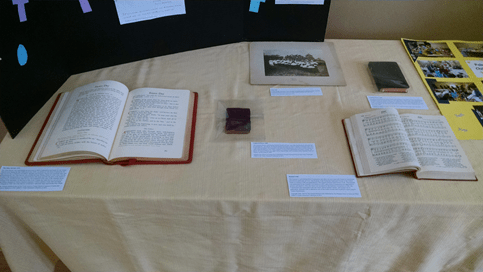
Since Easter was coming up I decided to create an exhibit that showed Easter traditions at Trinity. The first step was to go through the Trinity Historical Collections to find items related to the Easter season including objects, books, and photographs. I wrote down a list of items in the collections related to the exhibit theme. From that list, I narrowed it down to about ten items since the space available is limited. Some of the items I chose were Lent and Easter cards, 19th and 20th century Books of Common Prayer, a hymnal from 1940, and I also included photographs from Palm Saturday Children’s Event. I decided on these items because over Trinity’s 150 history there have been many Easter services, and by including recent photographs they show that current parishioners are a part of Trinity’s long history and they are significant in Trinity’s future. To bring these items in the collections together, an exhibit narrative and labels need to be typed and edited.

Some of the items selected for the exhibit.

Also, I typed the exhibit narrative and exhibit labels to honor the Easter exhibit theme. In the exhibit, I described the importance of this exhibit:

Since celebrating our 150th anniversary, our parishioners continue to carry on the tradition of worship. As we remember and celebrate Jesus’s resurrection, Trinity looks back at our long history of celebrating his return. This exhibit shares items from Trinity’s archives that reflect on where our Easter traditions came from. By looking at these items, everyone will understand the story of Trinity’s celebration of Easter. We learn about how Trinity Church continues the Parish Community traditions during holy week and Easter.

After I wrote and edited the exhibit narrative, I wrote the exhibit labels for each of the items on display. To write the exhibit labels, I examined each item to figure out how old the item is, what is made of, what is in the photographs, and how it is related to the Easter theme. I used the information I gathered through observations and information provided with the collections to create the exhibit labels to share information with the visitor and parishioner. Here is an example of one of the labels I wrote for the exhibit:

Easter Card, 1954
Easter card was given to parishioners during Reverend T. Frederick Marshall’s ministry in 1954. Reverend Marshall served as rector at Trinity Church between 1947 and 1956. Inside the card is the schedule for Easter Day services with the Holy Communion at seven and eight in the morning, Choral Eucharist with Sermon at 10:45 a.m., Public Baptism at three in the afternoon, and a Children’s Service at four in the afternoon. This card also has an Easter Greeting from Reverend Marshall stating, “Wishing you a Happy and Blessed Easter”. The card also has a quote from the Prayer Book,
“And note, that every Parishioner shall communicate at the least three times in the year, of which Easter to be one.”
Printed by Mowbrays in England. Found among the Trinity Historical Records in 2015. [slightly altered after pasting it in Medium post and here on this webpage]

Once I edited and printed out the labels and narrative, I discussed with the current rector where the display will be placed to make sure parishioners will be able to see it. I knew before the discussion that the most likely room the exhibit can be seen is in the Parish Hall, which is a room where parishioners gather after services to socialize and drink coffee. I shared my thoughts on where the exhibit should be displayed; I pointed out two places that may work. The first option is close to the seating area and right across from the entrance into the church; it is the best option because the exhibit will be the first thing parishioners will see when leaving after the service for coffee hour. The second option was next to the entrance to the Parish Hall from the parking lot; while it may seem to be a good option since it offers similar exposure, the exhibit would be displayed underneath a bulletin board with various announcements potentially distracting, and it is too exposed to where parishioners get their coffee and treats. We agreed that the first option is the best place for the exhibit. The rector also offered to let me borrow one of her table cloths to drape over the table for the display and to add color to the exhibit.

When creating the exhibit I used limited resources available from the church. For instance, I used an extra Elmer glue cardboard board that I borrowed from the church’s choir room and scrap paper to make crosses, eggs, and birds that were used as decorations; also, I borrowed push pins to attach the labels, decorations, and artifacts in plastic slip covers. To create the crosses, eggs, and birds, I took green, pink, and blue pieces of paper then I traced them into the various shapes and cut them out to pin them on the board. I also pinned a couple of the pieces from the collections on the board by placing them in plastic sleeves and pinning the sleeves onto the board. Also, I displayed the exhibit labels by figuring out how the viewer will most likely be able to read it and to make it visually appealing.

Picture of exhibit board designed using limited resources.

Once I have completed this board, I laid out the rest of the items and exhibit labels with similar standards I used for the Elmer glue cardboard board on visibility and visual appeal. So far, I have had positive reactions to this exhibit and more individuals will be able to see this exhibit before and after services this Easter weekend and afterwards to allow more opportunities for people to see the exhibit. I will post an update the more I learn about people’s reactions to this exhibit.

The exhibit as a whole. Trinity Traditions: Easter Celebrations Throughout the Century.

How have you designed an exhibit on limited resources and limited budget? What challenges did you face when creating your exhibits?


Gender Equity in Museums: An Important Issue that Should Be Addressed

Originally posted on Medium, March 30, 2017.

During the past month, I have discussed what I have learned about equity and inclusion in the museum field. Equity and Inclusion are both issues that must be discussed in each industry of the United States not just in museums. The experiences I have has this month during professional development programs showed me more evidence of how we all need to find out what to do to have a more diverse museum community. During my experiences as a museum educator, I have met so many incredible people of various backgrounds in the field and I am thankful for the opportunity to work with and connect with them. Museums create opportunities for people to learn and identify with the human issues their exhibits and programs present. Last week I started a discussion on gender represented in the museum; I specifically talked about women in the historical narrative of museums and how each museum has their own narratives of how the women were represented in their communities. Women are not only represented as historical figures in museum exhibits but there are women including myself who are museum professionals. This week I attended one of the New England Museum Association’s webinars Lunch with NEMA.

The Lunch with NEMA program is called The Gender Equity in Museums Movement which is named for the GEMM movement founded by Anne Ackerson and Joan Baldwin. This program was led by Ackerson and Baldwin as well as GEMM committee members Scarlett Hoey (NEMA YEP PAG co-chair and Program Manager at ArtsWorcester) and Matthew Dickey (Director of Development at Gore Place). Each of the presenters addressed six myths about gender equity and debunked these myths.

The first myth, for instance, was feminism is all about women being in power; feminism is really all about equity and equality or equal opportunity for all. The second myth was the contributions of women in museums are recognized. Not many people realize that there were so many early generations of women pioneers in museums such as Florence Higginbotham who was the founder of the Museum of African American History in Boston and the first Director of Gore place was a woman named Mrs. Patterson.

The third myth is the salary disparity between male and female museum workers is a thing of the past; unfortunately, women make 10,000 less than their male counterparts annually. The fourth myth was there are so many in museum field that gender equity can happen on its own; while it is true that there are a lot of women in the field but there is still enough evidence that gender equity needs to be addressed by staff. The fifth myth is that it’s not about gender anymore. The sixth myth is that change only happens from the top down; the presenters argued that employees at all levels can inspire change and persist with other managers, and it is important to know that your voice matters.

Then the presenters shared statistics to show why the numbers matter when discussing equity. For instance, the Bureau of Labor Statistics stated that in 2016 there are 364,000 workers in the museum field and of that number, forty-one percent were women. Also, for every dollar a man makes, women now make 79.6 cents; women art museum directors earned 75 cents in 2016 in institutions with budgets greater than $15 million and earnings almost equal in institutions less than $15 million.

According to the presenters and the survey webinar participants took, more museums are responding to equity across the board and the presenters discuss how museums are working towards equity. To work towards equity, museums should incorporate equity in the organization’s culture. A museum should have self-awareness of the issues as well as institutional commitment at the CEO and board levels. Even though implementing equity can be challenging, it is important to have equity as part of the institutional values of museums. Another way museums can work towards equity is to raise visibility of women in museums.

They also pointed out that staff can lead toward change but the board must recognize and practice equity by putting it in the policies. The presenters provided resources on policies and practices; there are equity and diversity policies resources provided by the American Historical Association and the American Library Association. In addition, there is also an AAM LGBTQ guide museums could use on equity. It is stressed that museums should have an HR policy and staff should know what their HR policy is for their museum. Another resource they provide is ASTC Diversity tool kit: (http://www.astc.org/resource/equity/ASTC_DiversityEquityToolkit_Leadership.pdf )

Not only did they discuss resources but they also stress that the gender equity agenda should be enforced early. For instance, professional associations need to form programs that educate individuals about equity. Also, museum studies programs should also incorporate lessons in equity and educate students about salary negotiations before they enter the workforce. The lessons need to share what the Gender Equity Museums Movement is which raises awareness in gender equity and explains what they want to accomplish. To learn more about the organization, you can find information here: http://www.genderequitymuseums.com.

The most important lesson I learned, and what we all should take away from this program, is that gender equity is not a woman’s issue it is a human issue. We need to recognize that equity is for all of us, and we need to find out how we can bring more awareness to equity.

What is your organization doing to enforce equity in your workspace? There have been a lot of programs lately that discuss equity in museums, what do you think inspired these programs to discussed now?

Women Represented in Historical Narrative and Museums

Originally posted on Medium, March 23, 2017.

In honor of women’s history month, I thought I would discuss women’s roles in history and how women are represented in museums. I specifically will talk about the women in the historical narrative of the museums I worked for. Also, I will discuss a lesson plan that I wrote for my capstone project, Women of the Eighteenth Century at Stanley-Whitman House, as a requirement for my Master’s degree in Public History at Central Connecticut State University. The lesson plan I wrote focused on the women who lived in the Stanley-Whitman House in Farmington, Connecticut, and women’s role in 18th century America.

In addition to my experience writing this lesson plan, I also worked at Connecticut Landmarks’ Butler-McCook House where strong independent women once lived in and heavily involved in the Hartford community. For instance, there was Frances McCook who was a substitute organist at her father’s (Reverend John James McCook) church at St. Joseph’s Episcopal Church in East Hartford and was an active member of the Antiquarian Landmarks Society (now called Connecticut Landmarks) who saved a historic building from being torn down by suggesting it is moved onto her family property. Women’s roles in history as we are reminded this month are significant in our society.

Women have an impact on our society in large and small ways. My experience on teaching Hartford history and the women’s role in preserving that history is an example of this. Stanley-Whitman House is a living history center and museum that teaches through the collection, preservation, research, and dynamic interpretation of the history and culture of early Farmington. My lesson plan was written based on this mission and on my experience teaching programs there. The purpose of this lesson plan was to aid school-age children in becoming more aware of the study of Early American women’s history and its significance to the overall local and American eighteenth-century history. According to my capstone project, it is based on the requirements of a Teaching with Historic Places lesson plan which focuses on eighteenth century New England women and it takes a specific look at the lives of two women who lived in the Farmington, Connecticut, Mary Steele Smith and Susannah Cole Whitman.

Mary Steele Smith was born in 1709 to Ebenezer Steele and Sarah Hart. She inherited the house from her father who purchased it from Deacon John Stanley, whose father (John Stanley) built the house between 1709 and 1720 using wood and stone, and used post and beam construction for the frame. At the time of her father’s death, he did not have male heirs who would have inherited his property so therefore Mary inherited the property. In 1725 18-year-old Mary and her 25-year-old husband Thomas Smith moved in, becoming its first occupants. Smith was a professional weaver who also farmed along the banks of the Farmington River. Mary and Thomas Smith lived in the house for ten years before selling the property and moving to another house in Farmington.

The second family that lived in the Stanley-Whitman house was the Whitman family. Reverend Samuel Whitman, a minister of the First Church of Christ, Congregational in Farmington, purchased the property in 1735 for his son Solomon Whitman who was born in 1711. Solomon married Susannah Cole (Cowles), born on October 22, 1721, in 1736. Susannah was the daughter of Caleb Cowles (1682–1725) who was a deacon and Abigail Woodford (1685–1736). Cowles and Woodford were both descendants of the parties that followed Thomas Hooker to Connecticut in the 1630s; James Cowles, Caleb’s great grandfather, came over to New England with his family from Essex County in England and sometime in 1633 his family traveled to where they settled Hartford, and Woodford was the granddaughter of Thomas Woodford who was one of the parties led by Thomas Hooker to Hartford, of which he became one of the founders in 1633. Based on these connections, Susannah would have come into a lot of wealth, land, and prestige.

Both were economically comfortable, two white New England women who were members of the First Congregationalist Church. Also, both Mary Smith and Susannah Whitman were landowners, mothers, daughters, faithful Christians, and servants within their communities, one in the early eighteenth century, and the other before the Revolution. The lesson includes background information about the history of Farmington and about women of different social and economic status to inform students that not every individual who lived during the eighteenth century lived the same way Mary and Susannah lived.

The capstone also includes background information on the history of Farmington taken from research materials found in the Stanley-Whitman House library and collections as well as Central Connecticut State University’s Elihu Burritt Library for more background information about eighteenth century New England. Farmington was settled in 1640 when English settlers arrived in the Tunxis Native Americans territory. For the first 100 years in Farmington, the main occupation was farming. By 1700, the self-reliant community included carpenters, blacksmiths, tailors, shoemakers, tanners, weavers, and coopers. As the number of industries grew in Farmington in the late 1700s, the town became increasingly prosperous. After the Revolutionary War, the town became a trading center, selling Yankee wares in the South and importing goods from as far away as China. Townspeople began wearing silks and satins, buying luxuries such as pianos and phaetons — light horse-drawn carriages — and spending money on fine new homes. The lesson plan has an impact on the Stanley-Whitman House because it provides them another lesson plan for visiting students who come to the museum.

This project provided a way to teach eighteenth century New England women’s history to students. The capstone project began with a paper called “Eighteenth-Century Women’s Roles in the Stanley-Whitman House: Typical or Extraordinary?” which discusses the question of whether Mary Smith and Susannah Whitman were typical women of their time or were exceptional; based on the available evidence, I discovered that Mary Steele Smith and Susannah Cole Whitman were largely typical women of their respective eras within their socio-economic class. After the paper, the capstone project continued with the lesson plan. The lesson plan was divided into sections: an introduction to the history of Stanley-Whitman House, about the lesson which has a citation and where the curriculum fits into the national and state learning standards, objectives for students, and materials for students. Another section in the lesson plan was teaching activities which includes a map activity, a few reading comprehension activities that include narratives of Farmington and women’s history especially the women who lived in Stanley-Whitman House, and object-based activities inside the house that help students compare the women in the house as well as the 18th century. The experience of writing this lesson plan provided an opportunity for me to learn more about women’s roles in the local community.

I continued to learn more about women in the local community by learning more about three women who were dedicated to preserving their family history and Hartford’s history. Connecticut Landmarks, originally known as the Antiquarian Landmarks society, obtained two historic houses from members of the organization in Hartford.

The first property was the Butler-McCook House located on Main Street across the street from Capitol Street; it was originally owned by four generations of the same family from the 1780s until 1971, and the last living member who owned it was Frances McCook (1877–1971). In 1907 and 1908, she traveled around the world with her father stopping in places like Spain, Italy, Egypt, Korea, Japan, and Hong Kong and then visited her sister Eliza in China; Eliza McCook was a teacher who moved to China to become a missionary. As a member of the Antiquarian Society, she offered to save Amos Bull House by having it moved onto her property.

The eighteenth-century building was originally a dry goods store and a residence and then it was used as a hardware store, an auto dealership, insurance offices and a restaurant; Amos Bull (1744–1825) was born in Enfield and grew up there and in Farmington. He completed his home in late 1789 and advertised that he was open for business in December 1789; his store sold linens, hardware and household items. In 1968, the building was threatened with urban renewal-related demolition but with the efforts of the community and Frances’ generosity the endangered building was moved to the rear of the Butler-McCook House.

Toward the end of her life, Frances decided to make the McCook house into a museum and spent years organizing family letters and diaries as well as taking care of the house. She wanted people to enjoy the house for its architectural significance as well as her family’s role in the Hartford community and the history of Hartford. What I have learned from these experiences and throughout my life is that women have contributed so much to our society, and they inspire me to be continue to achieve my goals as a person, historian, and museum educator.

Find out more about these women and places they lived in here:
http://www.ctlandmarks.org
http://www.stanleywhitman.org

What have you learned about women in history? If you had to choose a favorite female historical figure, who would it be? Do you have any women in your life you look up to for inspiration?


Equity and Inclusion in Museums

Originally posted on Medium, March 10, 2017.

This week’s blog post is both a continuation of the previous blog post “How to use Food to Create Relevance in Museums” and a discussion on equity and inclusion in museums. The topic was inspired by a New York City Museum Educators Roundtable (NYCMER) event Lessons in Equity from Culturally-Specific Institutions: Beyond the “Target Program” that took place this week at the Museum of Chinese in America. This panel began with a gallery exploration of the exhibit “Sour, Sweet, Bitter, Spicy: Stories of Chinese Food and Identity in America” and snacks and refreshments were provided based on the exhibit.

The panel was moderated by Stephanie LaFroscia who is the Arts Program Specialist at New York City Department of Cultural Affairs. Each of the panelists who spoke at the program represent culturally-specific institutions and discuss their experiences and challenges of inclusivity and equity. The panelists were Nancy Yao Maasbach (President of the Museum of Chinese in America), Shanta Lawson (Education Director at the Studio Museum in Harlem), Joy Liu (Education Specialist at the National Museum of the American Indian in New York), and Isra el-Bishar (Curator of Education and Public Programming at the Arab American National Museum). While I was listening to the panelists’ experiences, I also thought about how equity and inclusion is discussed in the general museum field. Last month’s Museum magazine issue was dedicated to the topic of equity and inclusion. Also, I recently received my issue of the Journal of Museum Education which includes articles based on the issue’s title “Race, Dialogue and Inclusion” (Volume 42.1, March 2017). By attending this program, I learned more about how to create an environment that is more inclusive as a museum professional.

The program took place at the Museum of Chinese in America (MOCA) located on Centre Street in New York City. The Museum of Chinese in America is an organization that is dedicated to preserving and presenting the history, heritage, culture and diverse experiences of people of Chinese descent in the United States; the museum also promotes dialogue and understanding among people of all cultural backgrounds. The central part of this museum’s mission is the goal to make Chinese American history accessible to the general public. Also, the museum not only promotes the understanding and appreciation of Chinese American arts, culture, and history but it also informs, educates and engages visitors of Chinese American history in the making.

Museum of Chinese in America

After I walked from the subway to the Museum of Chinese in America, I had the opportunity to try the food related to the museum’s exhibit “Sour, Sweet, Bitter, Spicy: Stories of Chinese Food and Identity in America” before the program began. The snacks were provided by Nom Wah Tea Parlor which is a vintage dim sum parlor that dates back to 1920. There was a sample of various dim sum featured on their menu as well as sparkling water and lemonade for beverages.

I had the opportunity to try vegetarian dumplings, scallion pancake, chicken siu mai, and fried sesame ball with lotus paste. Vegetarian dumplings have mixed vegetables and mushrooms in homemade tapioca starch wrappers. Scallion pancakes are made with wheat flour batter mixed with scallions and then the batter is pan-fried. Chicken Siu Mai is minced chicken in wonton wrappers. The fried sesame ball with lotus paste is lotus paste (sweet and smooth filled paste made from dried lotus seeds) that is wrapped in rice flour dough and then wrapped in sesame seeds. Each of these were delicious, and it is different from other Chinese dishes I have had during my lifetime so far. By trying dim sum, I was able to see what authentic Chinese food tastes like and I had the opportunity to appreciate the culture even more than I had before this experience.

Once I finished eating dim sum, I explored the exhibit “Sour, Sweet, Bitter, Spicy: Stories of Chinese Food and Identity in America” which opened on October 6, 2016 and will now close on September 10, 2017 due to its popularity. The exhibit had a large table and chairs around it in the middle of the room which featured plates, utensils, place settings, and ceramic sculptures; this exhibit told stories of thirty-three Chinese and Asian-American chefs. Also, this exhibit weaves together various complex stories through video installations featuring pioneering chefs including Cecilia Chiang, Ken Hom, Anita Lo, Ming Tsai, and Martin Yan; new restaurateurs like Peter Chang, Vivian Ku, and Danny Bowien; and persevering home cooks like Biying Ni, Yvette Lee and Ho-chin Yang.

This video as well as the large table in the center of the room create a tapestry of various stories that tell their experiences with immigration as well as sharing food memories, favorite dishes and cooking inspirations that define the culinary and personal identities of these chefs. The name of this exhibit comes from an expression that not only refers to the balance of flavors that define Chinese cooking but it also refers to the ups and downs of life. As I read each personal story and explored the rest of the museum’s exhibits, I began to understand the Chinese American experience and I was able to see the relevance of how important it is to continue telling stories of and to appreciate various cultures in our nation.

The program began, after spending time in the exhibit, with each representative from culturally-specific institutions describing their institutions’ missions. For instance, Shanta Lawson of the Studio Museum in Harlem stated that the museum, founded in 1968/1969, was created in response to the lack of diversity in the community and fifty years later there is still a long way to go, and was created to support black artists and art education. Nancy Yao Maasbach of the Museum of Chinese in America discussed the Journey Wall which features Chinese immigrant families and talk about how each of the items in their collection (which is about 65,000 items) have value to the museum and the community. Also, Isra el-Bishar of the Arab American National Museum stated that the museum has been around for twelve years and continues to fulfill its mission by finding ways to represent individuals’ narratives from each Arab country. At the conclusion of the program, after answering various questions from the moderator and people in the audience, each panelist discussed how their respective organizations move forward towards inclusion and equity.

Lawson, for instance, stated that the Studio Museum in Harlem staff plan to continue challenging themselves on how to push forward and challenge norms to see what works and what doesn’t work. Joy Liu of the National Museum of the American Indian in New York discussed the opportunity to include other indigenous peoples’ stories (Latin American indigenous groups), integrate indigenous history, and answer the question what does it mean to be indigenous today? Liu also stated that it is important to emphasize that indigenous peoples’ stories continue to this day, and make sure the truth about indigenous people (indigenous people are the majority in North America for example) is told. Also, Maasbach stated that the museum will use technology more to help visitors understand stories in a way people of different cultures can understand what they did not experience (such as the chair to simulate interrogation of twelve-year-old that was separated from family on Angel Island, California). This program made me think more about equity and inclusion, especially how it is discussed by organizations such as the American Alliance of Museums and the Museum Education Roundtable.

The American Alliance of Museums publishes Museum a magazine that publishes articles written by museum professionals and by writers who write about topics that help museum professionals run their museums. As an AAM member, I have the opportunity to subscribe to this magazine. The previous issue, January/February 2017, main topic was “Equity in the Museum Workforce”, and each article was written with this topic in mind. For instance, there is an article written by Elizabeth Merritt (founding director of the Center for the Future of Museums [CFM]) called “Taking the Bias out of Hiring” which discusses identifying and eliminating unconscious bias in the recruitment process. Another article is “We’re Not That Hard to Find: Hiring Diverse Museum Staff” by Joy Bailey-Bryant (who is responsible for the U.S. operations of Lord Cultural Resources) which presents a set of guidelines to implement change in the museum and identify a pipeline of diverse employees.

Museum Education Roundtable’s publication Journal of Museum Education presents articles written by museum education professionals and museum professionals to discuss current trends and practices in museum education. This month’s journal is on the topic of “Race, Dialogue, and Inclusion: A Museum on the National Stage” and it is broken down into a few sections. The Journal starts with an editorial from Cynthia Robinson, editor-in-chief, and then moves on to an article from guest editors and additional articles from various museum professionals; the Journal also includes a section Tools, Frameworks, and Case Studies which provide exercised examples of how the topic can be addressed in the museum, and What the Research Says which is a research study. I will also be participating in AAM’s discussion on Race, Dialogue and Inclusion based on this month’s Journal of Museum Education so I will discuss this one in further detail. I leave you with these questions to ponder on:

What is your museum/organization doing to move forward on equity and inclusion? Have you read any of the above articles and journal I referred to? If so, what do you think?

Museums Advocacy Week: How to Promote Museums Significance in our Nation

Originally posted on Medium, March 2, 2017.

This past week the American Alliance of Museums presented Museums Advocacy Days, which museum professionals go to Washington, D.C. each year since 2009 to speak to legislators about museums significance in our society. Museums Advocacy Day 2017 took place on February 27th and February 28th in Washington, D.C. and throughout the United States. Museum professionals also participate from home by promoting through social media, and by contacting their state representatives to send letters stressing how important museums are to our nation and society to continually give financial support to these organizations.

I have participated in various Museums Advocacy Days promotion over the years, and this year’s Museums Advocacy Days were no exception. For instance, I promote the significance of museums by posting facts and reposting information on Facebook and Twitter. I have also used templates provided by the American Alliance of Museums to write to legislators to help them understand how important museums are to our nation. The American Alliance of Museums announced that this year about 400 museum professionals went to Washington to speak with legislators.

When the museum professionals attend Museums Advocacy Day on location in Washington, D.C., there are various sessions scheduled to discuss the importance of museums. Much of this year’s Museums Advocacy Day took place at the Washington Plaza Hotel. The day before Museums Advocacy Day was when registration and material pick up begin, and a couple of optional programs are offered to give museum professionals advice on how to prepare for meetings with legislators. Then there was a Welcome Reception at the National Museum of Women in the Arts.

On the first day of Museums Advocacy Day, there is a networking breakfast before orientation. Then AAM’s President and CEO, Laura Lott, welcomed advocates by addressing why they were there and what is at stake in 2017 for museums. Dr. William (Bro) Adams, the National Endowment for the Humanities (NEH) Chairman, gave an overview of NEH while presenting its current priorities and explained how the agency partners with museums. The Director of National Public Engagement at the US Department of Education, Karen Stratman, provided an overview of the department’s priorities and gave details on how its programs can support museums’ work. Then Wendy Clark, Director of Museums, Visual Arts & Indemnity at the National Endowment for the Arts, discussed the NEA and how this organization supports museums. Paula Gangopadhyay, Deputy Director of the Institute of Museum and Library Services, then explained what IMLS is, its priorities, and the number of ways this organization supports and serves the entire museum field.

Then the first day continued with various sessions that help advocates successfully discuss with Congressmen and legislators about museums significance in our country. Also, they provide information about public policies and how to use them when discussing with legislators. Towards the end of the day, there is a way that advocates can practice with other advocates from their state and region as well as plan for their visits to the Hill.

On the second day of Museums Advocacy Day, it starts with a Congressional Kick-Off as well as a breakfast that will give advocates inspiration as they prepare to meet with legislators. The entire day is filled with meetings on Capitol Hill arranged by the American Alliance of Museums based on what information museum professionals give during registration. At the end of the day, there is a Congressional Reception located in the Madison Building of the Library of Congress to celebrate a long day of advocating for museums. If museum professionals like me did not go down to Washington, D.C., they still get involved by participating on social media and sending letters to local legislators.

All over social media, museum professionals post on social media to promote Museums Advocacy Day. Even museum professionals who were in Washington, D.C. used social media to quote presenters discussing museums and museums advocacy. Each quote is used to reinforce why museums are important in our country and why our government should provide sufficient funding for our museums and cultural organizations. For instance, the United States Department of Education, the American Alliance of Museums, and the American Alliance of Museums Education Committee was tagged with this quote on Twitter: “Nothing is more important than kids getting a broad education including museums”. I agree with that statement because museums provide lessons that will help supplement lessons taught inside the classroom, and help students develop skills that will be useful once they enter the working field.

Another tweet tagged the National Endowment for the Arts with this quote on arts and museums: “The arts are everywhere, they are all around us, belong to everyone & enrich our lives”. There is a quote that really resonated with me when I followed Museums Advocacy Day on Twitter: “We are from A-Z, Art Museums to Zoos & need to tell the truth, advance your mission. Always be advocating for museums!” This quote resonated with me because even when Museums Advocacy Day has come and gone I always stress the importance of museums in my daily practice as a museum professional; I also discuss museums impact on our society with my friends and family to help them understand what I do and how the museum field works. Additional resources are provided for museum professionals promoting Museums Advocacy Day.

The American Alliance of Museum provides resources to assist museum professionals successfully promote Museums Advocacy Day. For instance, on their website they present five ways to advocate today; the five ways are to speak up, engage your board members, visit legislators locally, raise awareness, and join the cause. AAM suggest to museum professionals can speak up by customize and send template letters to Congress on the issues you care about, including supporting NEA and NEH funding, supporting funding for IMLS Office of Museum Services, and demonstrating your museum’s economic impact. Also, AAM started a museum trustee initiative that gives museum professionals an opportunity to download a copy of Stand for Your Mission to inspire discussions with your board about how their role is significant in advocating for your museums and museums overall. The site also provides resources on how to make appointments with local legislators or invite elected officials to visit your museum. Also, the site includes a Publicity Toolkit that makes it easier to write an op-ed, craft a media pitch, write a press release, or be on talk radio to get viewers’ and listeners’ attentions. To join the cause, the AAM launched a campaign to recruit museum supporters and encourage supporters to enlist other people to support the campaign. Additional information is provided on AAM’s website under their Advocacy page.

What I have learned from each Museums Advocacy Day is that we can all participate whether we are in the area or located across the nation. Also, I learned that advocacy does not have to be practiced in one day but it can be continued throughout the year. Every now and then, no matter what happens within our nation, we still need to remind people of how museums are important resources for our society.

How has your organization participated in Museums Advocacy Day? What ways do you advocate for museums? What information from your organizations do you share to show how important your resources are to the public?

How to use Food to Create Relevance in Museums

Originally posted on Medium, February 24, 2017.

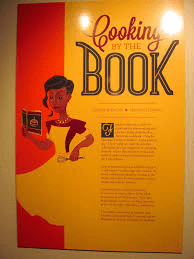
Food is an important necessity people need to survive, and by creating an exhibit or program based on the narrative of food history museums create examples of how people can understand relevance in museums. This week there was a webinar the American Association of State and Local History hosted called Interpreting Food at Museums and Historic Sites, which provided introduction to strategies for using food and food history to develop interpretation with depth and significance, and will make relevant connections to contemporary issues and visitor interests. This webinar inspired me to write about my own experiences when I collaborated with my classmates and Connecticut Historical Society on the exhibit Cooking by the Book: Amelia Simmons to Martha Stewart. Also, I will discuss how the study of food history is continued to be discussed since I first approached the subject during graduate school.

During my second semester of my first year of graduate school, I took a course on Museum Interpretation in which the major assignment was creating an exhibit at Connecticut Historical Society using food as the theme. My classmates and I were introduced to the project at the beginning of the semester, and my professor assigned books to provide background information on food history; one of the books was Warren Belasco’s Food: The Key Concepts (Bloomsbury Academic, 2008) which served as an introduction to the study of food studies and an essential overview to the increasingly critical field of enquiry. Other books assigned were about food and food preparation in different centuries in America.

In my records, I also found my notes on the justification of creating an exhibit based on food for Connecticut Historical Society. They argue that food is a part of history that individuals can identify with as being universally relevant. According to my notes, food is an essential part of life for everyone needs food to survive, and more than that food can unite families and larger communities; food can also conjure powerful memories for individuals whether it is a yearly holiday meal tradition or cooking in the kitchen with a relative. My justification notes also stated that the exhibit will provoke questions about the differences in food history as it relates to class and gender within Connecticut’s social structure as well as challenging visitors to think about their own personal experiences with food. This is what my teammates and I had in mind when we created the original proposal presented to the committee at Connecticut Historical Society.

To create the proposal, in addition to figuring out a way to present food history in Connecticut, we also picked out objects that represented food history and our idea for the exhibit. We originally came up with an idea that was like the Upstairs/Downstairs concept when creating the Connecticut food narrative. Then we included the idea of telling Connecticut food history throughout time from the 18th century to current period. We then looked through Connecticut Historical Society’s collections that we felt best represented the narrative we believed will be presented in the exhibit. For instance, I oversaw picking out items from the eighteenth century and one of the pieces I chose to include in our proposal was a ceramic bowl that was made and used between 1730 and 1770.

After selecting our items for the proposal, we also had to figure out how to include an interactive segment in our exhibit to allow visitors to engage with the historical narrative. A couple of ideas we had include a tea etiquette practice in which a table and chairs are set up with a container of all the necessary items for the tea setting (photocopies of the directions for a Victorian tea setting would be provided and visitors would then attempt to properly set the table for tea based on the directions). The second idea we came up with was we would provide reproductions of community cookbooks from the Connecticut Historical Society’s collections for the visitors to look through.

When our class had the opportunity to present our proposals, my teammates and I presented our idea to a committee of Connecticut Historical Society staff members to determine which group’s exhibit idea they will move forward with. Each member of my group presented two different sections of our exhibit idea, and I presented the very first section when visitors enter the exhibit space as well as the interactive elements section to the committee. The first section was called “Cooking for a New Nation” which would feature Amelia Simmons’ American Cookery (which was the first cookbook published in America). The book would have been used as a representation of how women cooked in eighteenth century America and the narrative would have described the women’s and servants’ roles in the kitchen during this period; when discussing these roles, the narrative would also discuss the separation between servants and household was emerging in the eighteenth century as well as the transition from colonies to a new nation. Then I described the objects that would be selected for display in this section. After the rest of the sections were presented, I introduced the interactive element for the exhibit we brainstormed for the proposal.

Some time passes, and our professor announced that the committee decided to choose our group’s idea for the exhibit with some suggested changes. The exhibit was changed to focus more on the time line of cookbooks published in the United States and discuss food history in America (especially Connecticut) in each century beginning with Amelia Simmons’ American Cookery and ending with Martha Stewart’s cookbooks. It was named Cooking by the Book: Amelia Simmons to Martha Stewart and we proceeded with selecting the objects and collaborating with the University of Hartford art design students to design the exhibit labels and space. My group oversaw the interactive element of the exhibit; the interactive element was changed to providing copies of various recipes that came from the cookbooks displayed in the exhibit, and presented the opportunity for visitors to write their own recipes and place them in a box. We each took a cookbook and selected the recipes we would be interested in using then narrowed down the options to a few of them. Cooking by the Book: Amelia Simmons to Martha Stewart eventually opened in January 2013, and it ran from January 18, 2013 to April 13, 2013.

Since then I did not see much of the history of food presented in a museum setting until I came across Michelle Moon’s Interpreting Food in Museums and Historic Sites which was published by the American Association of State and Local History in 2015, and the basis of this past week’s American Association of State and Local History (AASLH) webinar. Moon’s book argued that museums and historic sites have an opportunity to draw new audiences and infuse new meaning into their food presentations, and food deserves a central place in historic interpretation. Her book provides the framework for understanding big ideas in food history, suggesting best practices for linking objects, exhibits and demonstrations with the larger story of change in food production as well as consumption over the past two centuries. She also argues that food tells a story in which visitors can see themselves, and explore their own relationships to food.

I also came across Linda Norris’ blog post “Building a Learning Culture: Food Included” on her blog The Uncatalogued Museum which discussed her experience working with the board and staff at the American Swedish Institute in Minneapolis, Minnesota on creative practice in context of interpretive planning. The American Swedish Institute decided to include stories of all immigrants not only Swedish immigrant stories. To assist with creative practice including in interpretive planning, there are lessons that each institution needs to learn to connect with each other and with their communities. Norris introduced lessons from this experience including good ideas come from everywhere so it is important to cast a wide net to gain knowledge, and making time to think together is especially important.

Also, it is important be open to collaborate with people in the community to develop new collaborations and deepen other partnerships. If the American Swedish Institute did not learn that lesson, then they would not have learned about a restaurant in their community that shows appreciation for Bollywood dance and shows customers how to perform them. She also talked about the experience influencing the staff to schedule regular fika, or Swedish coffee break, with baked goods to spend some time from a busy day and connect with each other. For more information about her experience, the link to her blog can be found here: http://uncatalogedmuseum.blogspot.com/2017/02/building-learning-culture-food-included.html.

These previous examples show how food presentations in the museum field has evolved in the past few years. By sharing my previous experience on food presentation and the most current experiences on food and culture, I provide some examples of how visitors can make connections to their own memories related to food. I will soon be attending a New York City Museum Educators Roundtable (NYCMER) program called Lessons in Equity from Culturally-Specific Institutions: Beyond the “Target Program” at the Museum of Chinese in America on creating a diverse environment in the museum. The program will also include a closer look at the special exhibition Sour, Sweet, Bitter, Spicy: Stories of Chinese Food and Identity in America. When I heard about this program the first time, it reminded me of the many family meals I have had during my childhood and in my adulthood trying various Chinese food dishes. I will continue the discussion on food history and how individuals can to share my experiences after I attend this program.
Do you think your museum or institution would be able to include food history in its exhibits or programs? What is your most powerful memory that comes to mind when you think of food? Have you attended a program or exhibit that discusses food history or a subject related to food?


Professional Development: Shared Authority and Relevance of Education

Originally posted on Medium, February 16, 2017. 

This week I attended a couple of professional development programs on shared authority through the American Association of State and Local History (AASLH) called Peb Yog Hmoob Minnesota: Sharing Authority and Building Relationships with Your Communities and on education called The Relevance of Education through the American Alliance of Museums (AAM). The AASLH program was a case study of the Minnesota History Center and the Hmong community members’ relationship, and how they worked together to create an exhibit in 2013 on the Hmong culture anchored on the 40th anniversary of the first Hmong refugees’ arrival in Minnesota. The Relevance of Education program was a discussion based on the Committee on Education’s Excellence in Practice: Museum Education Principles and Standards that was released in 2002 and revised in 2005, and the program tackled questions including What has changed in the 15 years since its publication? How has the document impacted the field? How do the principles and standards hold up over time? In what way would the document be different if it was written today? These programs are significant to the practice of museum education since both topics discuss how to adapt the field to a changing society.
The concept of shared authority is certainly not a new one in the museum field but is continually discussed to be relevant in our evolving communities. While I was in graduate school earning my Master’s degree in Public History, I did some research in 2012 on shared authority between museum officials and the public by presenting the challenges in interpreting history with articles and case studies found in my research. Shared authority is a partnership between museum professionals and outside parties to work on projects for the public. I discussed in my presentation the positive impacts and the challenges shared authority has on museum staff.


Positive impacts shared authority presents includes encouraging experts to engage with the world around them; encouraging museums to stretch out beyond their communication channels and include others to interact more with the projects; visitors can engage deeply with the exhibits and museum experts are still able to share expertise in the collaborations. Partnerships also bring as many challenges into developing projects as they bring positive impacts. For instance, it is hard to please each visitor, and therefore it is important to have as balanced input from both museum professionals and visitors or outside parties as possible to have a successful program or exhibit. As we continue to work with others within our communities, our involvement in the community is increasingly becoming more significant as it is demonstrated in AASLH’s shared authority professional development program.


The presenters in the Peb Yog Hmoob Minnesota: Sharing Authority and Building Relationships with Your Communities program were Dan Spock (the Director of the History Center Museum and Exhibitions & Diversity Initiatives at the Minnesota Historical Society), Wameng Moua (the publisher of “Hmong Today,” a community newspaper and the voice behind HMONG-FM, a radio variety show focused on the Hmong), Sieng Lee (exhibit designer for the Peb Yog Hmoob/We Are Hmong Minnesota exhibit/visual artist), and Nicholas J. Hoffman (Managing Director of Education and Visitor Experience at the Missouri History Museum in Saint Louis, Missouri). The program discussed how the idea for the exhibit began and went through the entire process of creating this exhibit. It also revealed how museums can overcome the lack of diversity and diverse viewpoints within historical interpretation.


Before the exhibit was added to the Minnesota History Center, there was a lack of diversity that was in the exhibits as well as a lack of items that reflected what the community was really like in St. Paul. One day a committee from their local Hmong community, led by Wameng Moua and Sieng Lee, approached the History Center with a huge binder of photographs and materials of Hmong history. The committee asked this museum for full collaboration on this project, since they were concerned about having their impact on the state lessened in the eyes of MNHS’ visitors, by sharing curatorial control with Hmong community representatives from a list put together of a good mix of people that would form an advisory committee to discuss ideas. A few examples of what the advisory committee discussed include figuring out what do the people want to see (and it was decided they will tell the whole story of the culture), put together what the narrative would be, and the layout of the exhibit throughout the galleries.


The challenges that they faced while creating this exhibit was figuring out what objects to include and exclude in the exhibit, and where these objects would be placed in the exhibit. These challenges are always going to be present in every institutions’ exhibit planning, and it especially includes project collaborations with individuals outside the institution; the best way to approach these challenges is to stick with the narrative chosen for the exhibit then base decisions on that narrative. The presenters stated something similar in their discussion amongst other things they took away from this experience.


Some of the advice they present include the whole staff must be on board with doing things a little differently than what they normally do, and maintain authenticity for projects especially when presenting someone else’s culture within an exhibit. Also, they say to hit the streets and be open to learning all aspects of the community. It is also important to keep up with the evolving history of the community; exhibits like this one must be reflective of what the community is today. If an institution ignores the community surrounding it and does not acknowledge the evolution of a community, then the institution will not be supported by the community. The exhibit should also be created to attract each member of the community; for instance, an interactive element of a farmer’s market was added for children to learn about the food in the culture in English and Hmong by scanning the food to visually see the names associated with them. Each of the presenters also discussed what happened after the exhibit opened to the public, and how the History Center was affected by the exhibit.


During the exhibit opening, the staff noticed that there was a positive reaction to the exhibit. The exhibit also lasted longer than they were expecting; it ended up running for six months after the exhibit opening. After the opening, the staff conducted visitor research to find out how this exhibit affected the museum. According to the visitor research, the number of Asian visitors had quadrupled and a lot of them were under thirty years of age which means these individuals wanted to learn more about their history and their community. The exhibit also inspired to continue to develop new relationships with more people in the community. For instance, the exhibit led to the creation of Asian Pacific Heritage Day which celebrated various Asian cultures represented in the St. Paul community and currently they are working with Native American communities. Shared authority is a part of maintaining relevance in education, and the American Alliance of Museums’ The Relevance of Education program continues the discussion of learning to continue adapting the museum education practice.


The Relevance of Education program was hosted by Greg Stevens and moderated by Timothy Rhue II (Senior Informal Education Specialist at the Space Telescope Science Institute, Baltimore, MD and Communications Chair in EdCom). The panelists for this discussion were Jim Hakala (Senior Educator at the University of Colorado Museum of Natural History in Boulder, CO), Sage Morgan-Hubbard (Ford. W. Bell Fellow for Museums and P-12 education at AAM), and Mary Ellen Munley (Principal at MEM & Associates in Bennington, VT). After providing links to the original 1990 Statement on Professional Standards for Museum Education and the 2002 (revised in 2005) Excellence in Practice: Museum Education Principles and Standards for our reference, the discussion began with this question: How do these principles apply today? It was agreed that the principles in museum education need to be updated on a regular basis instead of addressing the need 15 years later.


Another point that was mentioned in the discussion was our institutions are constantly evaluating our communities and because of this we cannot stay static. Also, our institutions make efforts to make connections within our communities as well as include community members in collaborated projects to create a shared space for multicultural groups to get together in. The discussion also pointed out that our roles as museum professionals transitioned from about education being about what we want the public to know to serving the public by having the responsibility to earn the recognition of how important our institutions are.


Then we also need to acknowledge how we now define museum educators in the museum community. The term “museum educator” has a different definition at each institution. Based on my experience, I have noticed that museum educators can describe individuals who specifically teach school programs as well as museum staff in general that are dedicated to their institution’s mission in education. As a museum professional, I have had different titles at each museum I work for. For instance, at Stanley-Whitman House my title was “Museum Teacher”; at Connecticut Landmarks, when I started there it was simply “Tour Guide” but as I and my previous co-workers became more involved with interpretation and creating our own ways of presenting the material the title changed to “Museum Interpreter”; at Noah Webster House & West Hartford Historical Society, my title was “Museum Teacher”; and at the Long Island Museum my title was “Museum Educator” and yet my role included not only teaching school programs but also I was responsible for administrative tasks including mailing flyers and booking school programs as well as assisting running family and public programs. Since we include outside parties collaborate with museum staff, we allow their contributions to define their relationships as being co-curators, co-authors, and co-educators within our museum community. As a result, we need to keep in mind that the terminology for museum educators will change based on what the institutions and communities value in our society.


Another question that was addressed in the discussion was: How do the principles and standards hold up over time? The panelists discussed that the principles had a theoretical base work but it does not provide an example of applied best practices. Also, they stated that the basic principles were there all along but the interpretation changes over time. I agree with that statement because the principles do address ways to engage audience members of various backgrounds that would theoretically work in the museum setting, and yet our institutions learn to adapt and change with our society and because of these changes we view these education principles differently. Since our policies continue to change we need to be able to understand that we will not be able to get our programs right the very first time and that we need to be able to leave room for adjusting our programs based on audience members’ reactions and interactions with the programs. The next question on our minds would then be: What are the next steps?
Do we need to write another document to reflect what is going on now in museum education practice? The panelists concluded that the principles do need to be readdressed to reflect the changes that have been made since it was written in 2002 and revised in 2005.


Then we need to also address how the museum education field as its own community will support each member as we allow it to evolve with the changing society. Mary Ellen Munley had stated that she noticed there is what she calls an “isolation in practice” or in other words we do not have the time to catch our breath let alone get together to figure out what we need to do collectively as our own community. I see where she is coming from since as museum professionals we continue to create and implement programs, maintain and protect our collections, and run our administrations there is little time to stop and figure out our communities in practice.


However, I also see that there are moments where we can stop and develop our skills as professionals as well as connect with our community. For instance, there are opportunities for museum educators to develop their skills with state museum educator roundtables (like Connecticut Museum Educators Roundtable and New York City Museum Educators Roundtable), and the national group Museum Education Roundtable that offer resources and programs to allow them to be involved in the practice. Also, there are other ways that museum professionals can connect with the community and develop our skills including writing blogs about our experiences and joining various organizations that will help both parties grow and develop. The challenge is to finding the right balance so we would be able to both run our institutions and continue to grow with our community.


What is your opinion on how museum education is changing? Have you read Excellence in Practice? What are your answers to the questions I posted from the program? Do you have an example of shared authority that has occurred involving your institutions? What worked and what did not work?

Professional Development Programs: Managing Your Museum’s Online Reputation and Evaluating Volunteers and Volunteer Programs

Originally posted on Medium, February 2, 2017. 

In one of my previous blog posts, I said that professional development is important for all career paths. I still believe that is true. I recently attended a couple of professional development programs offered by the New England Museum Association and American Alliance of Museums. The New England Museum Association (NEMA) offers monthly online discussion series called Lunch with NEMA. NEMA’s program this month was called “Managing Your Museum’s Online Reputation Will Increase Visitors and Save Marketing Time and Expense”, and the presenters were Jonathan Lhowe and Terra Marcarelli from the Visit New England website. Lhowe and Marcarelli discuss how to attract today’s visitors and maintain museums’ online presence. Meanwhile, the American Alliance of Museums feature various online programs, including the EdComVersation discussions. The EdComVersation I attended this time was called “Evaluating Volunteers and Volunteer Programs” which featured several presenters giving case studies of how volunteer programs are run at different museums or organizations; each case study provide advice on how we can run our volunteer programs and make sure we utilize volunteers’ time to everyone’s advantage. It is important that volunteers feel like their time is well spent at the organizations and the museums or organizations need to see how volunteers’ work are assisting with their overall goals. By attending these programs, I not only learned more about the museum field but I also could see how the advice these programs gave can be applied to the museum education field.

The New England Museum Association’s “Managing Your Online Reputation” program began with statistics related to online presence of businesses in general then moved on to detailed advice for maintaining an accurate online presence to gain as well as maintain attention. Lhowe and Marcarelli explained that in the past reviews of museums and other businesses depended on in person visits and word of mouth. Today many people rely on online reviews from reliable sources including Facebook, Twitter, Yelp, TripAdvisor, Angie’s List, and expedia; in fact, two-thirds of people are more likely to buy from a store if they find positive comments about it online, and half are less likely to buy if there are negative comments. They also stated that it is important to be a part of the people’s conversations since the consumers control conversations about your institution and therefore your institution can participate in the conversation to easily moderate it. Another take away from this program was social media is not just about followers and likes but social media can also be used to generate leads and conduct customer service to gain return on investment. Managing online reputation can contribute to museum’s educational purposes.

By participating in consumer’s conversations, the museums will be able to get accurate reactions to the summer camp programs, after school programs, adult programs, and other public programs; then the staff can understand how to improve their programs or how to run the programs. Connecticut Landmarks, for instance, has released a survey on Facebook that will provide data that will help them understand how they are doing, compare them to other museums, and help them understand how they can create better experiences for the viewer and their community. With the data they collect, Connecticut Landmarks will be able to better serve the community with re-evaluated educational programs. It is especially important if a museum created a new educational program like a lecture, family or summer program; the museum would want to see how participants reacted to the program to see what they liked about it and what can be improved upon for the future. The second program I attended went into detail about how evaluating volunteers and the programs can benefit the museum overall, and by attending I not only gained new skills but was reinforced by my unique advantage of both running a volunteer program and being a volunteer myself.

The American Alliance of Museums’ “Evaluating Volunteers and Volunteer Programs” discuss the importance of evaluating volunteers and the programs as well as providing specific case studies on how evaluations can affect volunteers and volunteer programs. The following are reasons why museums should evaluate the volunteers and the volunteer programs: evaluation can help give volunteers information they need to do better work and can help museums nab problems early (problems with program or problem volunteers); convey appreciation and reinforce value of volunteers; motivate volunteers to do both their personal best and give positive impact on the museums; and it allows museum to improve volunteer program. When evaluating volunteers and the volunteer program, museums need to keep these questions in mind: Are we attracting enough volunteers with the right skills? Is our volunteer program effective? Are volunteers having the best possible experience with us? The presenters also gave specific pointers about how to evaluate the volunteer programs and the volunteers themselves. To effectively evaluate volunteer programs, it is important to have constant and consistent formal as well as informal evaluations; also, it is important to build the evaluation into the handbook, expectations, and orientation, explain your motivations and methods then report back to the volunteers, and be prepared to actively use the results and feedback. To effectively evaluate volunteers, there are a few ways to proceed including self-evaluations (asking them about their own actions as volunteers can give museums a visual of what is exactly being accomplished), individual evaluation sessions with supervisor, informal feedback, and if they are leaving the museum provide an exit interview to see what the museum can improve on the program. Then the program went into specific case studies with details on how their programs are run and what methods were used that either worked or needed improvements; a couple of them include a teen volunteer program at the Winterthur Museum, Philadelphia’s Magic Gardens, and the Chicago History Museum. Volunteers can serve many different departments in a museum, and the education department is no exception.

Volunteers can serve different purposes for the education department in a museum including assisting with school programs and summer camps, and working on administrative duties in the office. In my experience as a museum educator, I have had the opportunity to work with volunteers as well as being a volunteer for museums because I hope to develop my skills as a museum professional and continue my career in the field. At the start of my career, I volunteered at my childhood hometown’s museum during college and later I began an internship at Connecticut’s Old State House as a graduate student; then I got a job as a museum teacher at the Stanley-Whitman House in Farmington, Connecticut. I then later worked for Connecticut Landmarks’ historic house museums in Hartford, Butler-McCook House and Isham-Terry House, as a museum interpreter (I gave tours for school groups and the public) and Noah Webster House & West Hartford Historical Society as a museum educator; while I worked at these two historic house museums, I also volunteered to co-create and run a craft fair fundraiser for the Killingly Historical Society in Killingly, Connecticut. I created this fundraiser with my friend and grad school colleague to raise funds for operating the historical society; I ran the historical society’s twitter page to point out fun facts about the history of the town and advertise for the craft fair, talked to some interested crafters who wanted to sell their items at our craft fair and collect reservation fees, went with my friend to see the space where it will take place and organize the tables layout, and helped set up and clean up the fair. When I went on to the Long Island Museum, I oversaw scheduling volunteers to assist with larger school programs based on their availability and discussed with them what the students got from the lessons. Then when I went on to the Long Island Maritime Museum, I volunteered for a school tour, collected admission for a Boat Burning event, Past Perfect data entry and preserving books by scanning pages, and working at the visitor services desk. From my perspective, I can understand what volunteers need to complete their goals as well as making sure their work accomplishes work museums’ need to accomplish their mission.

Have you attended programs like these two programs? Did you attend these programs, and what did you think of these programs? What are your organizations doing to preserve your online reputations? What are your volunteer programs like? Do you feel that volunteers are accomplishing their goals and the goals of your organizations?

View at Medium.com

View at Medium.com

View at Medium.com

View at Medium.com

Responses to the Presidential Election: An American Alliance of Museums Conversation on the Future of Museums

Originally posted on Medium. January 19, 2017.

This afternoon I attended a webinar I registered for about museum education, EdComVersation, called Museums Respond to the Presidential Election. The program was hosted by Greg Stevens, Assistant Director of Professional Development at the American Alliance of Museums; moderated by Megan Wood, Director of Museum and Library Services at the Ohio History Connection and Ed Com Secretary; and guest speakers were Nina Simon, Executive Director at Santa Cruz Museum of Art and History, and Will Walker, co-editor of New York History and National Council on Public History’s blog, and assistant professor of history at the Cooperstown Graduate Program. It was a panel discussion that presented questions and answered questions from participants. Wood, Simon, and Walker expressed their thoughts and opinions as they answered the questions: How are US museums, museum educators and other colleagues dealing with the election results? What does it mean for museums and our evolving role in society? What action should we take to foster civic responsibility and service, continue to defend and reaffirm democratic ideals and principles, and advance understanding on the interrelationship between actions and consequences nationally and globally? Along with the program, it provided a handout with resources to refer to the presidential election and the influence it could have on the museum field. I took away from this program what I began realizing after I found out about the results of the election: we need to keep moving on and if we want to make a difference in our community we need to be the ones to effect change.

Our nation is divided on the results of the recent presidential election, and there are many that take their stand on how they feel about the outcome. I will admit I was not happy with the results of the election but I will not rant about my feelings here because on this blog I like to discuss how this would be significant as a museum professional committed to providing an educational opportunity for those who seek it and the position I have to reach out to people to build connections as well as provide a space to express their voice in a society where they fear it cannot be expressed. After I found out about the election, I went on with my day and drove to the Long Island Maritime Museum to do my work. While there I realized that we continue with our day no matter how we feel about the election because we have an opportunity as Americans to affect change in the way we behave as individuals. I continued to greet visitors who came to see the museum, I worked on various collections projects, and other duties as I would on any other day since just because the results did not turn out like I hoped it does not change me as a person or as a museum professional.

There was an old saying that my high school principal said after every announcement: “Be good to one another”. I keep this in my mind as I continue with my life as a student and as a professional, and I try to be the best person I can be. I think about what this expression means every day, and while something good happens in our society there is something else that tells me we have not made enough progress to be good to one another. For instance, as our nation has legalized gay marriage there are still acts of hatred that cause harm to people of different races and genders. We live in a society that has made much progress and has not made enough progress at the same time. To inspire progress on improving our society, everyone, including myself, need to step outside of their perspectives and learn more about each other to build our empathy as humans. We educate ourselves on the issues and learn about each other to find out how we can make a better community for ourselves as well as for future generations. This is where education professionals like myself come in to assist in making this progress.

Today’s discussion this afternoon and tonight on Twitter’s continuing #MuseumEdChat discussion on the election delve into what we should be doing as museum professionals and for museums. Museums and other cultural organizations took their own stands in response to the inauguration tomorrow; some believe in participating in the Arts Strike movement and others have their own plans for running the museums with various programs and events that are based on what they believe should be doing to help their communities. There is a list of museums in New York City that share their plans during inauguration day (found here: http://ny.curbed.com/maps/nyc-free-museum-inauguration-day). There are a few things I took away from the discussion including there are persistent inequalities that did not begin with this election that we have to keep in mind as we make plans to serve our communities; keep in mind the voices that are not being heard in our community and find a way to include these voices in our programming and see how we can progress from there; and figure out how we could reach out to the audiences we want to reach out to based on our missions and expand our missions to include social issues we want to address. Also, we need to figure out the answers to these questions and learn how to proceed from there as organizations: What dialog we are inviting in our work? Are we perpetrating ideas we do not believe in? Another question to keep in mind as I read on Twitter tonight: What role, if any, do you think museums have in creating/making space for dialogue for divided public? My answer to this question would be to make sure our communities understand the significance of our roles in the community and build upon this by becoming more involved in the community to be able to have the trust to provide that space for dialogue; it does take time for any improvements in our society so we need to keep working toward that space for dialogue.

What do you think the museums roles should be as we face the future of our society? Do you have any responses to the questions presented in this discussion?