The Challenges Faced in Small Museums

May 9, 2019

As I was looking through resources on the museum and public history field, I noticed that there were articles that explain why small museum professionals get the credit they deserve but there were not many articles that discuss the physical challenges working in small museums present. I decided that this week’s post I will introduce the physical work small museum professionals have done to help make the museum and historic sites. In previous blog posts, I have shared my memories of working in small museums and historic house museums that I also recommend reading to comprehend what the physical work is like at small museums. With this perspective, I understand the challenges faced by small museum professionals.

At the historic house museums, I have not only worked in education programs but I was also involved in the interpretation and preservation of the collections and maintain some of the upkeep of the historic houses. For instance, at the Connecticut Landmarks’ Hartford properties I was responsible for dusting and cleaning items, tables, et. cetera. Then I took an inventory of the collection and filled out collections conditions paperwork. These tasks I worked on took a lot of time and physical demand to accomplish so the historic houses were well-maintained to make sure we still preserved for future generations.  Also, I was a part of the team that worked on revamping the tours by picking a theme of the house and researching the theme for a more engaging visitor experience using the collections in the house. At other small museums, I took on other projects such as grant applications, social media posts and analytics, responding to donation request letters, invoice for summer program, and purchase supplies for education and museum supplies. Each responsibility I had took a lot of time to dedicate to, and may not be accomplished in one day because of other responsibilities that would need to take priority depending on what is going on at the moment.

Small museum professionals deserve a lot of credit for all of the work that they put in to keep the museums running for the visitors and the rest of their communities. In a blog post “The Value of Small Museums” by Aimee E. Newell, the Executive Director of the Luzerne County Historical Society, she talked about her experiences in working small museums and what she valued in her experiences working in small museum based around a question that was posed to her one day: “Why don’t you have a better job?” My blog post in which I reacted to Newell’s post delved into my own experiences that answered that question:

The problem with defining museum jobs as “better” than others is it devalues the hard work museum professionals contribute to the small museums. All museum professionals have so many challenges and other things to accomplish that we are reminding ourselves to not take self-care for granted. As a museum professional who works in a small museum, I argue that museum professionals in smaller museums have even more responsibilities since we are required to wear multiple hats to accomplish varying projects on a regular basis.

Working in small museums do help museum professionals like myself to be able to learn quickly skills they need to complete projects that will ultimately fulfill the overall mission of the museum. In my experience, I have balanced administrative, financial, and educational projects by prioritizing the ones that are most dire at the moment. A lot of times priorities have to change in order to meet the demand of what is happening in the current situation. The importance of these experiences is knowing that while these museums are smaller they are making a difference.

While previous articles have discussed how they had to wear multiple hats to accomplish what bigger museums do with a larger staff, we should address more the consequences of this work ethic. It could be impressive at first how the small museum professionals get so much accomplished in multiple roles, we cannot forget that like all museum professionals small museum workers need to take time to practice self-care and have equitable workplace to help combat burnouts. If we encourage museum staff in small and large museums to wear multiple hats and expect them to put one hundred percent into all of those hats while being underpaid and a lot of times underappreciated, then we end up losing dedicated museum professionals. The question I pose for everyone who reads this post and I really want everyone to consider the answer: when we wear multiple hats, do we really accomplish every task effectively and completely?

Resources:

https://lookingbackmovingforwardinmuseumeducation.com/2018/08/16/reaction-the-value-of-small-museums/

https://lookingbackmovingforwardinmuseumeducation.com/2019/02/07/museum-memories-connecticuts-old-state-house/

https://lookingbackmovingforwardinmuseumeducation.com/2019/02/21/museum-memories-stanley-whitman-house/

https://lookingbackmovingforwardinmuseumeducation.com/2019/04/25/museum-memories-connecticut-landmarks-historic-houses-in-hartford/

https://aaslh.org/the-value-of-small-museum-experience-or-why-i-dont-have-a-better-job/
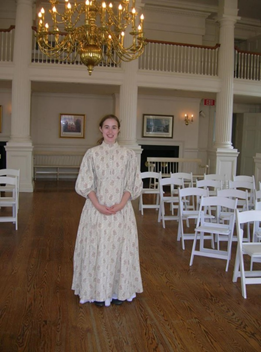
https://museumhack.com/mighty-small-museums/

Museum Memories: Connecticut Landmarks Historic Houses in Hartford

April 25, 2019

In previous blog posts, I started a series of posts sharing memories of museums I have worked at. This week I am continuing this series to share my memories at Connecticut Landmarks where I started to work from towards the end of graduate school to when I moved to Long Island. Connecticut Landmarks, originally known as Antiquarian and Landmarks Society, is a state-wide network of eleven significant historic properties that span four centuries of New England history. It’s mission according to their website is to inspire interest and encourage learning about the American past by preserving selected historic properties, collections and stories and presenting programs that meaningfully engage the public and our communities. I worked as an educator and tour guide of two historic houses in Hartford, the Butler-McCook House & Garden and the Isham-Terry House.

The Butler-McCook House & Garden was home to four generations of a family who participated in, witnessed, and recorded the evolution of Main Street between the American Revolution and the mid-twentieth century. At this historic house, I sold admission, gave an introduction to the history of Hartford and the family who lived in the house, and provided a tour of the first and second floor of the house. There are a number of things I have enjoyed sharing about the house; for instance, there is a Bierstadt painting of an Italian village which reminded Reverend McCook and his wife of their honeymoon. Also, I loved sharing and listening to audio recordings of Frances McCook, one of Reverend McCook’s children, who shared memories of living in Hartford, in the house, and her family. Frances was the last living member of the McCook family who lived at the house, and she put in her will that the Antiquarian & Landmarks Society will own the house after her death. In the recordings, for instance, she talked about watching the snow come down with her siblings during the Blizzard of 1888.

In addition to sharing the information about the house with visitors, I also taught school programs, assisted with set up in gallery for monthly Cultural Cocktail Hour, and guided visitors through the garden during the Garden Gala. During my time at the Butler-McCook House, I was a part of the team that worked on revamping the tours by picking a theme of the house and researching the theme for a more engaging visitor experience. Each of us picked one theme to research on our own to present to the rest of the Connecticut Landmarks team, and I chose the Industrial Revolution and its impact on Hartford and the family.

The purpose of the theme I chose for a new tour was to show the Industrial Revolution had an impact on the city of Hartford especially on its residents including the Butlers and the McCooks. I chose five key objects that will support the theme and its purpose including Tall Case Clock which was made approximately 1750 by Benjamin Cheney, and this is an example of a locally made piece that was made before the Industrial Revolution to show the differences between craftsmanship and factory made items. Another example of a key object was the Mill Ledger C, 1818-1826 which was John Butler’s, one of the family’s ancestors’, ledger which recorded payments to men and women who labored in his paper mill; this revealed what the employees were paid for their labor in early industrial work. After selecting key objects, I chose key documents and photographs then created a tour outline highlighting the narrative relevant to the Industrial Revolution theme. While I worked at the Butler-McCook House, I also provided tours and worked programs for the Isham-Terry House.

Isham-Terry House, the lone survivor of a once vibrant Hartford neighborhood, is a time capsule of the genteel lifestyle of turn-of-the century Hartford once owned by the Isham family filled with objects of historical, artistic and family significance including antique furnishings, decorative arts, rare books, and the Terry clocks made famous by their great uncle Eli Terry. Like the Butler-McCook House, there are so many things that I found both interesting and enjoyed sharing with visitors. In this Italianate house, I loved pointing out the high ceilings not found in a lot of modern homes today and each room held numerous treasures that were well-preserved thanks to the two sisters  Julia and Charlotte Isham, who like Frances McCook left the house to the Antiquarian & Landmarks Society after they passed away. One of my favorite rooms was the library with so many books and an impressive fireplace; it once had the Isham’s pet bird that they once kept in their fridge after its death and the sisters decided one day to go to the cemetery to bury the bird with their family and have a picnic. Another room I admired was once a ladies’ sitting room that was converted into the sisters’ brother, Dr. Oliver Isham’s, doctor’s office, and once he died the sisters basically locked the door which meant it was for the most part preserved as it was while Dr. Isham was alive. While I was at Isham-Terry House, I not only gave tours of the house, I also assisted with holiday tours, and a lecture and tour for nursing students.

Both of these historic houses have unique stories to share and I recommend visiting these places if one has the opportunity to do so. These houses also are a part of my journey as a museum educator where I both learned a lot about the significance of local history and practiced what I have learned from graduate school in museum education, history, and historic preservation. Each experience I have had has taught me so much, and I hope to carry on the lessons I’ve learned through current and future endeavors.

Resources:

https://www.ctlandmarks.org/

https://www.ctlandmarks.org/butler-mccook

https://www.ctlandmarks.org/isham-terry

Mon cœur va aux gens de France: Fire in the Notre-Dame Cathedral

Added: April 18, 2019

On April 15, 2019, I saw a Tweet from ABC News that shared a video link to the live coverage of the fire at Notre Dame Cathedral that occurred as renovations were worked on. In addition to the many people in France and around the world, I was affected by the news in a number of ways. From a personal perspective, I have always wanted to someday travel to Paris to visit the most known buildings including the Notre Dame Cathedral. As a child, I watched Disney’s The Hunchback of Notre Dame which was my first exposure to Notre Dame, the novel,  and media interpretation of French history.

When I was in middle school, I started to take French classes. In eighth grade, I had the opportunity to join my classmates for a trip to Quebec and Quebec City. My classmates and I went to meet our French Canadian pen pals we were writing to during our classes. We stayed at the Chateau de Frontenac and in addition to meeting our pen pals in person we explored the city and province learning about its history. After this experience, I continued to learn French in high school and took a France and French Culture class in college. I hoped that one day I would be able to have a similar experience when I go to Paris. During the live coverage, the memories from school and the Quebec trip flashed through my mind. At the time, I had the scary thought of what would happen if the fire was not put out in time. I am happy that the fire was put out, and I hope that Notre Dame will continue to awe and inspire many Parisians, French persons, and people around the world.

As a public historian and a museum professional, I understand the significance of what was lost in the fire and the challenges that arise during and after a fire. The cathedral is a 13th century building that was restored a number of times over the centuries, and once we lose a part of history no matter the effort we put in to recreate it we would not be able to get it back. We should not take for granted the history that is left behind, and our work as historians preserving historic places and collections is significant in keeping history around for future generations to understand our past. When I watched the live coverage, I posted on Twitter expressing my sadness for what was lost:

This is heartbreaking! I hope everyone is safe from the fire. I can imagine how much time, money, and dedication it will take to restore this cathedral after this sad event. #publichistory #MuseumEdChat #History #NotreDame

I kept myself up to date on the news of Notre Dame and the efforts that are made to protect its history. I read articles and posts from a number of outlets such as the Boston Globe, the Washington Post, and National Public Radio. One of the posts from the Art Newspaper, for example, revealed that there were a number of items from Notre Dame’s collections were retrieved from the cathedral. In the article, Anny Shaw wrote that some of the most valued objects including Holy Crown of Thorns, believed to have been placed on Jesus’s head during his crucifixion, and the 13th-century tunic of Saint Louis were stored at the Hotel de Ville overnight then transferred to the Louvre for safe keeping. These articles and the reactions from people on the internet about this tragedy reveal what connects us all together.

The fire at Notre Dame Cathedral reminds all of us that we have a connection to old places and we should come together to help preserve them. In an article from National Trust for Historic Preservation called “Why the Cathedral of Notre Dame Matters”, Thompson Mayes recounted his own reaction to the fire and reminded readers that the Notre Dame serves as a French national identity as well as a witness to numerous events in history for centuries. Mayes also pointed out that

We feel this loss because we recognize these places do something few other things can. They remind us that we are all part of humanity and the world. They expand our notion of ourselves beyond our treasured individual memories and national identity to give us an expansive sense of shared humanity around the globe. Notre Dame reminds us that we are collectively part of a continuum across the generations, past, present, and future, and across the world.

I have seen a number of examples of museums share their empathy for the French people. For instance, I saw a statement from the Barnum Museum in Bridgeport, Connecticut post on their Facebook page written in both English and French to reach out to the French people to express their empathy especially since they are going through their own path of disaster recovery and the importance of historic places. I have listed relevant links about Notre Dame in the resources section I have been reading to keep myself informed. I hope that someday we will look back at this moment and see it as a part of its long history it has survived. In the meantime, I will watch for news coverage and articles on the restoration and preservation efforts of Notre Dame.

What was your reaction to the fire at Notre Dame?

Resources:

Chateau de Frontenac: https://www.fairmont.com/frontenac-quebec/?cmpid=msn_lcf_search-frontenac_quebec-brand-us-revsh&utm_source=msn&utm_medium=cpc&utm_content=lcf&utm_campaign=search-frontenac_quebec-brand-us-e-revsh

https://savingplaces.org/stories/why-the-cathedral-of-notre-dame-matters?

https://www.theartnewspaper.com/news/louvre-plans-to-take-precious-works-rescued-from-notre-dame

https://www.nationalgeographic.com/culture/2019/04/many-historic-icons-face-same-threats-notre-dame-cathedral/

https://www.washingtonpost.com/outlook/2019/04/15/fire-was-scourge-medieval-cathedrals-they-rebuilt-ashes/?utm_term=.ba3e367999b8

https://www.wired.com/story/the-notre-dame-fire-and-the-future-of-history/?mbid=social_twitter_onsiteshare

https://news.nationalgeographic.com/2015/06/150622-andrew-tallon-notre-dame-cathedral-laser-scan-art-history-medieval-gothic/

https://dailyhive.com/montreal/notre-dame-basilica-cathedral-fire-paris-montreal-bells-ring

https://www.forbes.com/sites/chloedemrovsky/2019/04/15/notre-dame-in-flames-protecting-our-cultural-treasures/#3208d1235f10

https://www.bostonglobe.com/news/world/2019/04/15/paris-notre-dame-cathedral-flames/xxj3cTUPh1XtTMfTte2VNL/story.html?fbclid=IwAR01befd9thoh__2ABZHK7jmICRvdA9nVeBa-7MpznwAJCBMt3CLecxDvxY

https://www.cnn.com/world/live-news/notre-dame-fire/h_de6c51d2088b7bdefceb008a51b20c2c?utm_medium=social&utm_source=fbCNN&utm_content=2019-04-15T18:31:47&fbclid=IwAR2uOXYzLbzkL4fPTpXou29tZnpjgt-zrg0j_StS7-CLc43Rq1BJ1G1_Osc

https://abcnews.go.com/International/fire-breaks-paris-notre-dame-cathedral/story?id=62411000&cid=clicksource_4380645_null_twopack_hedhttps://www.npr.org/2019/04/15/713525879/paris-notre-dame-cathedral-in-flames

Reaction: No Money, No New Ideas Conundrum

April 4, 2019

I’m back! I am officially married and I am back from my honeymoon. Thank you all for your patience and support while I took time off to make final preparations for the wedding. My husband and I went into New York City to spend our honeymoon, and we did a number of things we have not done before in the City such as going to see The Phantom of the Opera and Hamilton, visited the Fraunces Tavern Museum (stay tuned for a blog post about this museum), and visited the Statue of Liberty and Ellis Island Museum. After we came back from the honeymoon, I came across another post on the Leadership Matters website about an important conundrum that is facing museums and non-profit organizations: no money, no new ideas.

Joan Baldwin wrote about how money and new ideas are important for museums. As museum professionals, we should understand that we could not have one or the other. If we focus too much on bringing in money then we would potentially lose out on new ideas that can keep visitors coming back for more of what we offer. If we focus on too many new ideas, we may not have enough money to support all of these ideas. It is a conundrum we are all familiar with, and it is worth discussing especially as we prepare for new museum professionals to emerge in the field.  One of the takeaways that stuck with me when I read the post was how the right balance between money and new ideas can make a difference. She pointed out that money is important and can ease some worries,

But an organization can be really rich and also really boring. Surely you’ve been to some of those. They are beautifully presented, but stiff, still, and flat. There is, to quote Gertrude Stein, “No there there.” But there are other organizations where, without warning and often without huge budgets, you’re challenged, confronted by things you hadn’t thought about before or presented with memorable narratives. They are the places you remember. They are the ones that stick with you.

One of the reasons I have worked in small museums is how unique the narratives are, and the staff that work with a limited budget are faced with the challenge to keep their exhibits and programs both relevant and interesting for visitors to make numerous trips back to them. I have written about museums I previously visited, and the majority of the ones I write about are those that face the challenge everyday to keep people invested in the narratives. For instance, in a post called Museum Memories: Stanley-Whitman House, I wrote about how the narrative of the house not only shares the history of the families that lived in the house but the history of the town of Farmington; the Stanley-Whitman House is one of the places that continues to find ways to bring attention to its narrative and its significance in the community.

Another point that I took away from the post is the significance of having creativity within the museum. Baldwin revealed in her post that

Imagination and ideas are a museums’ biggest tools. Otherwise you’re just a brilliantly-organized storage space. And yet how do you get out of the scarcity mindset? Practice. Truly. And start small.

It is true that the biggest tools that we can use as museum professionals are our imaginations and ideas. This is also why it is important all of us should take self-care seriously when it comes to using our imaginations, ideas, and creativity. If we continue to work while we burnout, we will not be able to come up with fresh ideas we need to help our museums keep running. Also, it is important that we participate in professional development and networking programs to get inspiration for our own ideas. As the saying goes “Practice makes perfect”, and it definitely applies to us as museum professionals attempting to use our imaginations and ideas for our museums.

I also read the advice Baldwin left for leaders and board members, and I try to follow each advice in my own practice as a museum professional. For instance, I try to model respect and treat everyone’s ideas as doable especially when I work with volunteers who are passionate about the work we do and they bring up ideas that may be helpful for the museum. I think this is what all museum professionals should do no matter what title they hold because if we keep shutting down each other’s ideas we may not be able to have the leaders we need for the future of the museum field. Also, I pay attention to and try to read as much reading material I can get my hands on to expand my knowledge in the museum field and beyond to get inspiration.

I read the advice Baldwin gave for board members, and this advice is important for all board members to follow. Baldwin provided a list of advice she had for board members who may be reading the post:

If you’re a board member:

Model respect and treat everyone’s ideas as doable even if they’re not actionable in the moment.

Know what matters. Understand your organization.

Invite a different staff member to your board meeting every month. Ask them what they would do if you gave them a million dollars. Listen. (And ban the eye-roll.)

Devote some time as a group to talking about ideas as opposed to what’s just happened, what’s currently happening or what will happen. How can you raise money for an organization if you’re not excited about what it’s doing?

Think about ideas as cash catalysts.

All of these points are wonderful and should be followed to not only help the museum but also develop a better relationship between the staff and board. For instance, I think it is a wonderful idea for board members to invite a different staff member to board meetings each month. Staff and board will be able to learn from one another about each other’s perspectives, and help one another come up with ideas that could be practical to execute for the museum. Another quote I would like to leave here is what I hope everyone will consider:

If you’re a leader or a board member, you’re role isn’t to maintain the status quo. You want more than mediocrity, don’t you? You’re a change agent, and change doesn’t have to come in a multi-million-dollar addition. Sometimes it comes in a volunteer program that models great teaching, a friendly attitude and deep knowledge.

It does not take much to create change in a museum, and we have a responsibility as museum professionals to figure out ideas we can use to help our museums move forward.

Resource:

https://leadershipmatters1213.wordpress.com/2019/04/01/the-no-money-no-new-ideas-conundrum/

Museum Memories: Stanley-Whitman House

February 21, 2019

A couple of weeks of ago I wrote about my memories of an internship I did with Connecticut’s Old State House. To continue the series of museum memories of my career, I started a museum educator position at the historic house museum, Stanley-Whitman House, in Farmington Connecticut while I was earning my Master’s degree in Public History at Central Connecticut State University. Stanley-Whitman House, according to their website, is a living history center and museum that,

teaches through the collection, preservation, research, and dynamic interpretation of the history and culture of early Farmington. Programs, events, classes, and exhibits encourage visitors of all ages to immerse themselves in history by doing, acting, questioning, and engaging in Colonial life and the ideas that formed the foundation of that culture.

It is located in the historic center of Farmington, and centered on the ca. 1720 National Historic Landmark house which is furnished with period antiques to reflect the everyday activities of Colonial life in Connecticut. Outside the house, there are period raised bed gardens, an apple orchard, and heritage stone walls. In 2004, the museum added a building that houses public service areas including a modern classroom, a period tavern room, post-and-beam Welcome Center, research library, exhibit gallery, and collection storage area.

While I was working as a museum educator at the House, I got to wear a costume in which I taught education programs for school groups between kindergarten and fifth grade. The programs I taught focused on educating students about life in the Colonial era and about the Native American life in Colonial Farmington. Each program had different stations the students spent time learning various aspects of colonial life, and rotated throughout the house and history center. For older students, I taught them how to cook recipes and I demonstrated how the food was cooked over the hearth.

During these programs, I learned early on about the importance of flexibility. School buses do not always arrive on time so when school groups arrive late myself and other educators have to modify our lessons to make sure the students get as much out of the program as possible. I also learned about how to handle the unexpected. When a group of fifth graders were acting up during a cooking lesson and after a number of times we told them to behave, one of the students got hurt as a result so I quickly raised my voice so the entire group can hear me tell everyone to stop what they were doing. As I continued my career, I understood there will be times unexpected things will happen and I would need to be able to be quick on my feet to handle the situation.

In addition to educating school groups, I also worked on a couple of projects that not only contributed to the Stanley-Whitman House but also fulfilled my requirements in the Master’s program. For instance, I took a Curatorship course and one of the requirements was to create an exhibit for a museum or gallery with classmates. A couple of classmates and I decided to work on an exhibit for the Stanley-Whitman to go along with their symposium In Plain Sight which focused on the history of slavery in Connecticut before the 1790 census. We used the resources available in the Stanley-Whitman House’s collections in the lower levels of the history center to research the slaves who lived in Farmington. According to the summary I wrote about the project, once we completed the research

The next steps for the exhibit were discussed during one of our group meetings after we shared what we found in our research. For instance, we discussed editing the biographical information found before creating the text panels. Then we discussed the possibility of adding some photographs related to slaves in Farmington and where they lived in the town. Once the exhibit is set up, we will be able to fulfill the Stanley-Whitman’s house mission for the symposium and our experiences in curatorship.

Another example of a project I worked on for the Stanley-Whitman House and as a requirement for my Master’s program was a capstone project as a final requirement for earning my degree.

I created a lesson plan according to the requirements of Teaching with Historic Places which uses historic places in National Parks and in the National Park Service’s National Register of Historic Places to enliven history, social studies, geography, civics, and other subjects to help teachers bring historic places into the classroom. According to the abstract I created for my capstone project

It focuses on eighteenth century New England women and it takes a specific look at the lives of two women who lived in the Farmington, Connecticut, Mary Steele Smith and Susannah Cole Whitman. Both were economically comfortable, two white New England women who were members of the First Congregationalist Church, but the lesson includes background information about the history of Farmington and about women of different social and economic status to inform students that not every individual who lived during the eighteenth century lived the same way Mary and Susannah lived. This lesson plan will aid school-age children in becoming more aware of the study of Early American women’s history and its significance to the overall local and American eighteenth-century history.

After I completed the project, I submitted it to the committee for approval and I gave a copy for my academic advisor to keep for her records and for the director of the Stanley-Whitman House at the time.

My experiences at the Stanley-Whitman House were important to me because they were a part of the beginning of my career as a museum educator and the lessons I learned here I carry throughout my career. All of my memories at the museums I work with guide me through my career and help me become a better museum professional.

Announcement: After next week, I will not be posting new material for the blog because I am going to focus more on my wedding planning since my wedding is a month away. I will try to share previous posts when I can.

Check out:

http://www.stanleywhitman.org/

In Plain Sight: http://stanleywhitman.org/Calendar.Details.asp?ID=484&Cat=Visit https://www.nps.gov/subjects/teachingwithhistoricplaces/index.htm

Valentine’s Day Celebrations in Museums

Added to Medium, February 14, 2019

A lot of us had been celebrating Valentine’s Day today in varying ways, and museums have been as well! We as museum professionals recognize that there is potential for visitors to celebrate within our museums so we open our doors and have programs, activities, and many more planned relevant to the holiday. By offering programs and other initiatives, museums have the opportunity to attract more and frequent visitors to come inside its doors to explore what we offer to the community.

The Museum of the City of New York, for instance, had a variety of programs between February 11th and February 14th. There was a love-themed museum wide scavenger hunt that allowed visitors to search through the museum while interacting with the museum and other participants on social media. When they use the hashtag #MCNYVDay on their posts, visitors can be entered in to win a family-level membership. Another example is the Love Yourself Project 10,000 Campaign; according to the Museum’s website:

The Love Yourself Project uses a simple yet beautiful medium, the origami heart, to invite people to participate in the thought provoking experience of asking: “What do you love about yourself?” The campaign encourages people to inwardly explore and discover what they love about themselves. Through this awareness, the Love Yourself Project seeks to plant a small seed and spread the consciousness of self-love.

It is a wonderful reminder that we need to express self-love as well as love for other individuals. As museum professionals continue to remind themselves about the importance of self-care, it is a wonderful reminder for museum professionals as well to be able to love themselves and get the love and care needed.

The Children’s Museum of Manhattan also offered a number of programs for families visiting the Museum. It offered a Stuffed Animal Repair Workshop in which kids can learn how to stitch, stuff, and repair their stuffed animals; they can also sew Valentine hearts onto them if the kids chose to do so. Children could also learn how to make 3D Valentine’s Day Cards using children’s pop-up book techniques.

At the Long Island Explorium, where I work with visitors of all ages, children had the opportunity during the weekend before Valentine’s Day to create messages in a bottle. They used recyclable water bottles and varying materials such as crayons, markers, yarn, ribbon, and stickers to design their bottle. Once they were done with their bottles, they wrote messages on pieces of paper and placed them into their bottles.

Museum Hack, which offers unconventional tours of museums in cities such as New York City, also offered a number of ways couples can celebrate Valentine’s Day. For instance, they offered a private Valentine’s tour for couples to explore a museum and in the city of their choice. The tours can be customized to a variety of interests including Game of Thrones and 19th century French Impressionism. Also, tours are designed to provide a “behind the scenes” look into museums and they include hidden stories about the art and artists, games and activities in the galleries and fun group photos.

Of course I did not list every museum out there that offered Valentine’s Day themed programming since there are so many out there.

Have you visited a museum during the Valentine’s season? Did you visit a museum on Valentine’s Day (this year or in the past)? What did you do in those museums for Valentine’s Day?

Happy Valentine’s Day everyone!

Check these Out:

https://museumhack.com/valentines-day-ideas-museums/

https://www.mcny.org/valentinesday

https://westmuse.org/articles/sharing-love-museums-celebrate-valentines-day

https://cmom.org/tag/valentines-day/

Museum Memories: Connecticut’s Old State House

Added to Medium, February 7, 2019 

I recently have thought about the reasons why I started writing this blog, and one of those reasons was to remember my experiences in the museum field. Each museum I have worked for or done projects with has opened up doors for many opportunities to learn and grow in my career, and I thought that if I share some of my memories of these experiences another museum professional would be able to benefit from them. For this week, I decided to write about some of them at Connecticut’s Old State House in Hartford, Connecticut.

Me at Connecticut’s Old State House

The Old State House’s mission is to reawaken citizen engagement and awareness by offering an authentic, educational and inspiring visitor experience by putting ideas on display in historic rooms that celebrate democracy and citizenship from the past and present. While I was in graduate school earning my Master’s degree in Public History, I got the opportunity to complete an internship with Connecticut’s Old State House.

For one of my assignments, my classmates and I interviewed suggested professionals in the public history field and learn what we could about their experiences in the careers relevant to the interviewees’ career path. Then after we had the interviews we were to write about them and what we learned from their experiences. Since I expressed interest in the museum field as I started the graduate program, I decided to interview Rebecca Taber-Conover who is currently Head of Public Programs & History Day. I met her at the Old State House and asked her about her experiences in the museum field as well as any advice she could give me. At the end of the interview, she told me that there was an opening for an internship and I decided to join them for a summer internship for museum education.

On the first day of the internship, I joined the education team as they taught one of the last school programs of the school year. The school brought over a hundred students of varying grade levels between kindergarten and fifth grade and they were split into groups to explore the Old State House. The group I assisted the educator with was with kindergarten children. We helped the kids create spyglasses using paper towel tubes to use as part of the “I Spy” program where the kids can walk around the Old State House and point out what they “spy” in each room they visited.

During the rest of the internship, I sat in on staff meetings to find out what common questions were asked during tours we did not already have answers for and I used those questions to do research to answer them. I regularly visited the Connecticut State Library to do research, and recorded answers into the Google Doc so we would be able to answer them in the future. Also, in the meetings I also learned about the Farmer’s Market and what goes into planning it. According to the website, the goal of Connecticut’s Old State House Farmer’s Market is

to offer a variety of products from as many farmers and artisan vendors as possible within the available space. We are committed to offering a vibrant marketplace in downtown Hartford where local farmers and artisans can enjoy coming together with the community to share the “best” of what Connecticut has to offer!

At the Farmer’s Market, I handed out flyers for upcoming programs for Connecticut’s Old State House dressed in an eighteenth century style dress. One of the programs that I also sat in on and assisted with is called Conversations at Noon.

Conversations at Noon is a series that provides opportunities to hear about relevant topics about Connecticut history and current events during lunch time at the Old State House. For instance, a couple of the topics covered in previous conversations include “Did Hartford’s Constitution Plaza Hurt or Help the City?” and “Exploring Connecticut and the Slave Trade”. It is also aired on Connecticut Network (CT-N) and on their website. At the Conversations at Noon, I distributed the surveys on how to improve the quality of the series and collected them for review. I also provided tours for visitors during its open hours.

Each tour started with an introductory video that gives an overview of the history of the Old State House. Then once the video has ended I guided groups through unique exhibits including the Museum of Curiosities, and the historic rooms. The Museum of Curiosities started as a portrait studio by Reverend Joseph Steward inside the Old State House in 1796, and a year later a “Curiosity Room” was established which featured wonders and treasures around the world. Another favorite part of the tour was the statue of Lady Justice which was on top of the Old State House in 1827. Also during my internship, I developed a scavenger hunt for children to search for animals painted on the walls of the Education Center.

This internship was an important experience because it was at Connecticut’s Old State House where my passion for museum education developed and my career in museum education began. I am especially grateful for the experiences I had, the memories I developed, and the opportunities that led to where I am today.

What was your experiences like in your internships?

Resources:

Connecticut’s Old State House: https://www.cga.ct.gov/osh/default.asp

Connecticut Network: https://www.ct-n.com/

Reaction: Recognizing the Best in Public History Blog

Added to Medium, January 31, 2019

Since I earned my Master’s degree in Public History, I continue to review sources and read about current developments in Public History. According to my graduate program at Central Connecticut State University, public historians are front-line interpreters bringing historical knowledge to a broad public audience beyond the traditional academic classroom. Public historians expand research skills and content knowledge of traditionally trained historians to incorporate new sources of historical evidence such as oral history and material culture in varied institutions such as museums, government agencies, and heritage destination sites. I recently came across the Backstory website which posted a blog post written by Diana Williams about recognizing various mediums public history is shared.

Backstory, according to their website, is a weekly podcast that uses current events in America to take a deep dive into the past, and each episode provides listeners with different perspectives on a specific theme or subject by giving listeners all sides to the story and then more. For the first time, Backstory is acknowledging the works of public history with a prize. There are numerous public history projects that deserve to be acknowledged and it is wonderful several of them are being nominated for the prize. I did not know that other than museum associations there are recognition of excellence in public history projects, and it makes me happy to learn there is a way our work in public history that is recognized outside of academia.

I am also impressed that there was so much work that went into researching public history project. In the Williams’ blog post, she pointed out that

BackStory lead researcher Monica Blair created the list, thinking broadly about historical mediums, both physical and digital. In addition to online reviews, she looked up reviews in academic journals like “The Public Historian” and general newspapers like “The Washington Post.” For books, she turned to “The New York Times” Non-Fiction Bestsellers List and for podcasts, she used Apple Podcasts charts. Each nominee fell under a broadly conceived definition of American history.

I can imagine that there are so many projects that are out there but have not been acknowledged or noticed. After reading through the blog, there is a lengthy list for each category for the Backstory prize.

A list of categories and nominees is given to show which ones were nominated for this prize. The categories were films, documentaries, podcasts, plays, books, and exhibits and monuments both physical and digital. In the films category, there were 16 nominations which include The Post, Darkest Hour, First Man, Battle of the Sexes, and American Animals. In the documentaries category, there were 21 nominations and they include Rachel Carson: The Woman Who Launched the Modern Environmental Movement, Won’t You Be My Neighbor, Tell Them We Are Rising: The Story of Black Colleges and Universities, and Birth of a Movement. In the podcasts category, there were 23 nominations including Ben Franklin’s World, Omohundro Institute, The New York City Public Library Podcasts, American History Tellers, Wondery, Stuff You Missed in History Class, and Witness, BBC. In the play category, there were seven nominations including American Revolutions: The United States History Cycle, Oregon Shakespeare Festival, Come From Away, and Days of Rage.

In the book category, there were nine nominations which include The Gulf: The Making of an American Sea by Jack E. Davis, Darkness Falls on the Land of Light: Experiencing Religious Awakenings in Eighteenth-Century New England by Douglas L. Winiarski, Hitler in Los Angeles: How Jews Foiled Nazi Plots Against Hollywood and America by Steven J. Ross, and These Truths: A History of the United States by Jill Lepore. In the exhibits and monuments both physical and digital category, there were 31 nominations including The National Memorial for Peace and Justice — Equal Justice Initiative, Black Citizenship in the Age of Jim Crow — New York Historical Society Museum and Library, Echoes of the Great War: American Experiences of World War I — Library of Congress, Righting a Wrong: Japanese Americans and World War II — National Museum of American History, and City of Hope: Resurrection City & the 1968 Poor People’s Campaign — National Museum of African American History and Culture.

Each of these categories, except for the book category, have links to each of the nominations listed to show and describe the projects. The blog post also gave a brief description of the decision process for selecting a project for the BackStory prize.

The hosts of BackStory, Ed Ayers, Brian Balogh, Nathan Connolly and Joanne Freeman, as well as the Senior Producer David Stenhouse were joined by guest judges Chris Jackson (“Hamilton” on Broadway) and Margot Lee Shetterly (“Hidden Figures”) to review the nominees to determine the best project. There was a rigorous debate and ultimately decided and announced The National Memorial for Peace and Justice — Equal Justice Initiative was the winner. The National Memorial, which opened on April 26, 2018 in Montgomery, Alabama, according to the website:

is the nation’s first memorial dedicated to the legacy of enslaved black people, people terrorized by lynching, African Americans humiliated by racial segregation and Jim Crow, and people of color burdened with contemporary presumptions of guilt and police violence.

With so many nominated for the prize, I can imagine that it was a long and challenging process to select one project. Especially in this day in age, The National Memorial is important for all to visit and pay respect, so we will never forget this sad period in our history. I recommend taking the time to review each nomination to learn about what public history projects are out there.

Resources:

https://www.backstoryradio.org/blog/recognizing-the-best-in-public-history/

https://museumandmemorial.eji.org/memorial

https://www.backstoryradio.org/ http://www.ccsu.edu/history/graduate/MA_publicHistory.html

Museums and Technology: Moving Forward into the Digital World

Added to Medium, January 24, 2019

Technology is continuing to be innovative, and museums do what they can to catch up with the latest to attract more visitors. Museum visitors have tons of access to technological items including but not limited to phones, computers, iPads, and laptops. There is also a number of technological advances that we don’t even realize we use on a regular basis such as radio frequency identification (RFID) found on E-Z Passes that help make commuting faster and non-humanoid robots. As our society makes technological advances, museum professionals need to educate themselves about what is out there for their own benefit and for the visitors they serve within their museums.

Museums have varying budgets and spaces available to use on technology. To take advantage of the ever changing technology, we need to figure out what interactive technology should be add to the museum and used by the visitors. There are advantages and challenges museums need to consider when integrating technology and interactive media. In American Alliance of Museums’ article “New Directions in Interactive Media for Museums” it stated that

The challenges of integrating interactive media into the museum experience are manifold. New technologies can engage but also potentially alienate museum visitors who have different cultural backgrounds and varying degrees of knowledge about the art form, history, and ideas involved. But at its best, interactive media that balances the creativity of right-brain thinking with the deductive logic of left-brain analysis can help with the intuitive discovery of unexpected connections and create newfound meaning.

As museum professionals, we should consider the advantages and challenges of incorporating interactive media in our museums and figure out how the technology will benefit potential visitors. Technology literacy is important for museum professionals not only to help visitors engage with programs, exhibits, and what else our museums have to offer but it is important for promotions and other important administrative work to keep our museums running.

The article “Museums and AI: Could Robots Be Your New Coworkers?” gave a couple of reasons why it is important for museum professionals should understand the landscape of Artificial Intelligence:

First, these corporate tools affect every patron of every museum, so ignorance of AI is poor business practice. Museum professionals can make exemplary exhibitions and labels, but without understanding the impact of AI systems on patrons accessing information, we could find ourselves with a dampened reach. Every moment, from the first awareness of the museum, to walking into the building, to likes on the patron’s Facebook post, is affected by AI.

If we remain ignorant of technology, museums will not be able to remain relevant in a changing society. Museum professionals should take the time to learn about how to utilize the available technology, and when we have professional development programs we should take advantage of learning from these programs as we move forward in museums’ futures.

Professional development opportunities not only help museum professionals learn about recent innovations but museum professionals also utilize new innovations to participate in professional development opportunities. For instance, there are podcasts about museums and historic sites from the American Association for State and Local History (AASLH); they have recordings from past conference sessions and livestream current conference sessions. American Alliance of Museums has Museopunks, a podcast for the progressive museum. Each month, host Suse Anderson investigates the work and personalities in and around the museum sector. I will leave these questions up for discussion:

How do you feel about the digital world in the museum? Are we too dependent on technology or are we not taking enough advantage of it?

Resources:

https://www.aam-us.org/2019/01/11/interactive-media-for-museums/

https://soundcloud.com/aaslh-podcasts  

https://www.aam-us.org/programs/about-museums/museopunks/

https://hhethmon.com/2018/08/31/3-reasons-your-museum-should-start-a-podcast/

https://www.aam-us.org/2018/12/26/museums-and-ai-could-robots-be-your-new-coworkers/

https://www.geniusstuff.com/blogs/10-everyday-technologies-you-dont-realize-you-use.htm

How the Government Shutdown Affects Museum Workers

Added to Medium, January 17, 2019

As the government shutdown continues in the United States, federal workers are struggling to financially support themselves and their families. Many museum professionals who work in museums that were not able to be open because of the shutdown are among the federal workers struggling for the past 27 days (as of January 17th). Federal workers are affected in a number of ways by the shutdown.

In a New York Times article, it stated approximately 800,000 federal workers are furloughed or working without pay across the country because of the government shutdown. Each state has been affected in varying ways; for instance outside the capital, states with large numbers of workers for the Departments of Agriculture and the Interior are more likely to feel the shutdown’s effects. Also, nearly the entire staff of the Environmental Protection Agency is furloughed, including hundreds of workers in North Carolina and Illinois. The most recent Washington Journal article pointed out that the partial government shutdown is now the longest in modern history and hundreds of thousands of federal workers have started to miss paychecks. The longer the government shutdown lasts, federal workers will continue to suffer and it will get worse if the shutdown persists.

There are businesses and other organizations that are doing what they can to help all federal workers affected by the government shutdown. During tonight’s #MuseumEdChat Twitter discussion, we talked about what opportunities are out there to help federal workers by offering free or discounted services and expressed who and what we are grateful for as we try to be as supportive as possible to our colleagues going through financial strain. One of the examples shared in the discussion was from phone companies:

Q1. We know the #Shutdown is affecting many people, and that many others are stepping in to provide help. If you know of an organization providing discounts/support share them here. Add a # with the location so people can find them along with #MuseumEdChat

@CabinetofCurios

AT&T, Verizon, Sprint, T-Mobile is willing to work with those affected on fees. Most banks are also willing to work with affected employees including Bank of America, CHase, DIscover, USAA, most credit unions

@CabinetofCurios

A1-Additional. The biggest would be your local food pantry or support organizations. Looking more “global” @WCKitchen. Also, I’ve got Coast Guard family and the fact that this is the first time that armed forces is going without pay bc of shutdown so @CGMutualAssist

Another example is from a university offering free professional development programs for federal workers.

@ERR_Librarian

Replying to @Museumptnrs

#MuseumEdChat A1 #Montclair, NJ

MSU Offers Free Program Friday for Federal Employees During Shutdown; Mikie Sherrill To Attend — https://baristanet.com/2019/01/msu-offers-free-program-friday-for-federal-employees-during-shutdown-mikie-sherrill-to-attend/

In addition to phone companies and universities, there are loan companies offering services for federal workers. According to one of participants in the discussion, there is a loan that federal workers in the Philadelphia and South Jersey area can sign up for:

@charliehersh

Hebrew Free Loan is offering $1,250 no-interest, no-fee loans to federal government workers who are not being paid due to the government shutdown. You don’t need to be Jewish to qualify. More info here: http://www.hflphilly.org/ShutdownLoans.htm

The global museum community is also doing what they can to help federal workers during the government shutdown. I shared a link I found for a GoFundMe page in which MuseumNext is raising money to give Smithsonian federal workers at least a slice of pizza as the government shutdown persists. MuseumNext is a major conference series on the future of museums that takes place annually in Europe, North America and Australia, attracting an engaged, loyal and dynamic audience working in museums, galleries and cultural venues across the globe. According to the page, they stated that they will organize a giant pizza order to deliver those working a lunch on them, which demonstrates that they have the support of the global museum community and that they wish to do something to help. By showing their support, I admire and appreciate that there is a global museum community that will reach out to their overseas colleagues in times of need to do what they can to help and show support.

Outside of the #MuseumEdChat discussion, I also came across a couple of sources to help federal workers as the government shutdown continues to make it harder for them to get basic needs. On the Today show website, Meghan Holohan wrote five ways we can do to help furloughed federal workers during the government shutdown including donating to the food pantry, donate to repair national parks, and call your representatives. Another one I found was from CertifiKid which lists family-friendly government shutdown freebies for federal workers. For example, it lists things to do including:

Monster Mini Golf (Columbia, MD): Free Mini Golf for up to 4 people valid Monday — Thursday until the shutdown ends. Mention CertifiKID and present government ID for each golfer.

There is also a list of restaurants and other entertainment deals to help with the financial burdens federal workers are dealing with, and the list will continue to be updated as soon as they are aware of more deals.

We all need to remember to help one another during these hard times. Federal workers, whether they are in the museums or out of the museums, need as much help as possible to support themselves and their loved ones. If you know someone who is struggling through the government shutdown, please tell them how grateful you are for what they do. Please do whatever you can to help them through these times.

Resources:

https://www.today.com/parents/5-ways-help-furloughed-workers-during-government-shutdown-t146812

https://www.gofundme.com/slice-for-smithsonian

https://www.nytimes.com/interactive/2019/01/09/us/government-shutdown-state-by-state.html

https://www.wsj.com/articles/cities-and-states-with-the-most-federal-workers-affected-by-the-shutdown-11547294400