Significant Resources in the Museum Field

Added to Medium, May 3, 2018

As museum professionals, we continue to develop our education through professional development resources provided in various sources including but not limited to books, websites, blogs, webinars, conferences, seminars, and magazines. We learn so much from these resources, and therefore we continue to use the same ones we continuously use. Museum professionals also seek more resources to use to assist in their practices.

In my blog post Writing about Museum Education: Using Professional Development to Our Advantage, I stated that,

I truly believe professional development is important for all career paths, especially in the museum education field. Professional development in the museum education field have many opportunities to help museum professionals develop their careers to make sure they are up to date with latest theories and skills.

Professional development has many opportunities for all museum professions to develop their careers. There are many options to choose from, and we do not need to stick to one resource to develop our careers and skills. Museum professionals are able to make sure they are up to date with latest theories and skills by seeking networking opportunities.

One of the most important resources museum professionals use is their own experiences as well as experiences of other museum professionals. While we can learn from the materials we gained access to, the best resources are the ones gained from experience and sharing these experiences. By doing our jobs as museum professionals, we have practical knowledge of what occurs on a regular basis in museum practices. Museum educators especially regularly apply skills they learn from the programs they teach; when they teach programs on a regular basis, museum educators learn what methods work or what needs to be improved on a case to case situation.

In the twenty-first century, we have many options for communicating with one another to learn through each other’s experiences. Museum professionals can meet in person at conferences, seminars, and workshops, or online. Whether they are online or in-person, museum professionals can talk with one another to gain inspiration for their own projects or practices.

The benefit of interacting online is that museum professionals can communicate with other museum professionals outside of their region on a regular basis rather than waiting for the next national meet-up. Another benefit I mentioned in my blog post Online Communities: Why They Are So Important for Museum Professionals was

It is important that museum professionals have the opportunity to connect with one another since one of the best ways to continue adapting programs and exhibits is to learn from other museum professionals. Not many museum professionals have the opportunity to meet with others in person for various reasons especially not having enough time and money to invest in traveling to museum conferences and workshops.

If museum professionals are not able to attend conferences and workshops for whatever reason, providing a way to communicate online will help more museum professionals learn from one another to help move the museum field forward.

There are many opportunities online to communicate and learn from other museum professionals. For instance, there are online communities through social media such as the Emerging Museum Professionals group on Facebook, museum groups on LinkedIn, and #MuseumEdChat on Twitter. Each of the examples I listed inspire museum professionals to ask each other questions and seek advice related to the field, and encourage discussion among one another.

In recent months, I discovered that there are also online mentorships programs like the American Alliance of Museum’s (AAM’s) Museum Education Professional Network that provides space for mentors and mentees to communicate with each other. Museum professionals at each career level can apply to be a mentor or mentee to seek advice from one another, and learn from one another’s experiences. Once selected, a mentor and a mentee is matched together based on similar experiences and backgrounds in the museum field to then begin communicating with one another.

Another example of an opportunity online for museum professionals to learn from other museum professionals experiences is the blogs posted on personal websites or museum websites. I have written many blog posts in the past couple of years that continue to gain attention from all of you who have continued to read them (and I thank you for continuing to read each of these blog posts). Also, I have read many blogs from other museum professionals in the field. One of the most recent blog posts I have read came from Anne Ackerson and Joan Baldwin in their blog Leadership Matters.

Their most recent blog post, Museum Leadership: Being vs Doing, discusses the importance of knowing the difference between “being” a museum leader and “doing” your role as a museum leader. They also discussed where museum professionals should turn to if we find ourselves in a situation where we are managing more people than tasks. It is important that all museum professionals understand where they can turn to find information that will help us be effective leaders. We all need to remember that if we find our organizations are not helping us perform well in our roles we should speak up so we will figure out how we can effectively accomplish our goals.

We have unlimited resources that we can gain access to especially for museum professionals in the museum field. Our resources continue to develop as we learn from one another, from books, blogs, networks and online communities, and we move forward with changes based on what we learned. We do not rely on only one resource as the most significant resource since we need to keep our minds open to change as our communities and our field continue to evolve with the times. The museum field is fortunate to have so many outlets we can reach out to learn more about our roles in our organizations.

What resources have been the most helpful for you in your field? Have you participated in online communities like the ones I mentioned in this blog post?

Resources:
http://www.aaslh.org/
https://www.aam-us.org/
https://leadershipmatters1213.wordpress.com/2018/04/30/museum-leadership-being-vs-doing/
Writing about Museum Education: Using Professional Development to Our Advantage 

Online Communities: Why They Are So Important for Museum Professionals 


What Can We Do to Avoid Fraud?

Added to Medium, February 22, 2018

Fraud is a scary topic especially within the museum field. It is a topic not often talked about, and it should be discussed more among museum professionals. Maybe we think that it might not happen but it could happen at any point in any time frame if we are not careful. I do not recall being in a situation that led to fraud in the museum, and while I am thankful that I have not faced something like this I do feel that it is important that all of us in the field especially myself need to know what to do under these circumstances. Since this week is known by the American Association for State and Local History (AASLH) as “Nightmare at the Museum Week”, the webinars and articles they are sharing discussing deaccessioning and fraud inspired this week’s discussion on my blog. The more we talk about fraud, and learn from one another, the more we are able to be more aware of fraud and maybe we will be able to do our best to avoid fraud.

This topic captured my attention more now as a museum professional since I have become more involved in the financial realm of running a museum. I had some experience in keeping track of finances during college when I was a treasurer of two clubs for all four years. Since starting at the Maritime Explorium, I have been asked to be the manager of finances to make sure admissions and other income are adequately recorded and supported to keep the children’s science museum running. The more I get a closer look at the record keeping, the more I knew that the need for accurate record keeping is essential.

I notice more human counting errors when I began reviewing the daily and monthly reports. It is a challenge to go through a lot of previous records and make sure it is accurate, but it is necessary to make sure we have accurate information. If our organizations are not careful, we can be open to more issues down the road.

I reiterate that we should do our best to avoid fraud because if we do not prepare for it by updating our policies and evaluating our museum ethics fraud can sneak up before one realizes it happened. We can take a look at journal articles, magazine articles, and books that discuss fraud to see what would work best for our organizations.

Hugh H. Genoways and Lynne M. Ireland pointed out in their book Museum Administration 2.0 that museums need to keep in mind their professional codes and ethics when running the museum. By doing so, I believe museum professionals have the ability to have the tools they need for fraud prevention. According to Genoways and Ireland, a museum ethics statement is an important moral compass that guide staff and board to fulfill their museums’ missions. When we set up a code of standards for board and staff, we set an expectation that we will run the museum with the public’s interest and trust in mind.

Our museums should take care of our fraud prevention practices so we can maintain our visitors trust in our organizations. One of the examples of resources we can use on fraud and fraud prevention is an article that focuses on embezzlement.

AASLH published an article in their Winter 2017 edition of the magazine AASLH History News about embezzlement written by Max A. van Balgooy. He not only briefly described examples of museums, historic sites, and historical societies that had to face embezzlement, but also went into detail about what embezzlement is and how to detect fraud.

Van Balgooy revealed there was a study done by the Association for Certified Fraud Examiners (ACFE) called the 2016 Global Fraud Study. The study showed that the typical organization loses 5 percent of its revenues to fraud each year. Also, it stated frauds last an average of eighteen months before being detected, and losses rose the longer the schemes continued. Therefore, the faster an organization acts the smaller the losses will be for that organization.

He stated in the article that state and local history organizations can reduce losses and recover more quickly if boards and staff are more informed about the techniques used by criminals and adopt practices that provide obstacles and create transparency. I agree because we would be better prepared if we knew how criminals perform these crimes so we will be able to catch it as soon as possible.

One of the statements that stood out to me in the article was “Don’t Assume an Independent Audit Will Catch Fraud”. It stood out to me because when I thought about it, this makes sense because museum professionals are more aware of the finances and the financial history of their organization. It is the auditor’s job to detect any weaknesses in the financial management system and report that so the staff and board can work on improving this system. When we strengthen our system, we would be able to detect when a fraud may occur.

The most important thing I got out this article was we need to be talking about fraud more often. It is an embarrassing feeling and we do feel betrayed but we need to figure out how to deal with the situation. If we do not involve the authorities or overlook it, we would be letting the criminal(s) free to embezzle other organizations. Discussing it more will help museums and museum professionals feel more comfortable seek help and advice to best prevent from another fraud happening again. AASLH has recently followed this example of discussing the topic more often.

This afternoon, AASLH had a webinar called Fraud at the Museum: Protecting Your Organization from a Devastating Event. According to their webinar description,

Financial fraud can happen to any size history organization, from the very large to the smallest of the small. But it’s only after they become a victim that the vast majority of organizations take steps to protect themselves against fraud.

It is exactly the point that has to come across to museum professionals of all institutions, no matter what type or size of the museum. In the webinar, the guest speaker, Kelly Paxton, discussed how fraud is committed and discovered then proceeded with recommendations for policies and procedures to help prevent financial loss and protect its staff and board members.

I plan on looking at #AASLH Twitter Chat this Friday which discusses deaccessioning and fraud prevention. A few of the questions they will ask participants are:

What are your experiences with fraud or fraud prevention?
What policies do you have in place to deal with potential fraud?
What are your favorite resources for preparing your institution in this and other tricky areas?

These questions will hopefully let museum professionals be comfortable to discuss their experiences and resources they use to deal with fraud or work on fraud prevention.

If more museum professionals become more open to discussing fraud we would be able to help our organizations run better and maintain our visitors’ trust in our ability we can serve as educational institutions.

Have you heard of a situation in which fraud has taken place within an organization? What resources have you read that discussed fraud prevention?

Resources:
Genoways, Hugh H., Lynne M. Ireland, Cinnamon Catlin-Legutko, Museum Administration 2.0, Lanham, MD: Rowman & Littlefield, 2017.
van Balgooy, Max A. “Embezzlement”, AASLH History News, Winter 2017, Vol. 72, #1, 20-25.

How to Find the Balance between Work and Family? An Important Discussion We Need to Acknowledge

Added to Medium, February 1, 2018

Museum professionals who either decide to start or have families of their own or have other dependents need to figure out how they can balance work and life outside of the museum. This balance is what I need to continue to consider as I plan to be married next year, and continue to spend time with family. Finding the right balance is not going to be easy since life is unpredictable.

I knew going in that balancing work and life is a challenge, and I should try to be as flexible as possible. My experience in the museum field has presented a number of instances when I need to figure out how to balance work and family. For instance, it is a challenge to visit my family when they live in other states.

I have an older sister who lives with her husband and two boys in Connecticut, and a younger sister who lives with her husband in Rhode Island. The rest of my family live around the New England area. As a museum professional who works in a small museum, I wear many hats when I assist in running programs and finances. It is hard sometimes when I cannot always go up to visit family as long as I want to. During the holidays, we planned a brunch so all of us are able to spend time together and we are able to spend time with extended family within the same day; this worked well with me especially because my fiancé and I went to brunch at my sister’s then we went back to spend time with his family.

I am grateful for the time I am able to spend with family, and being able to balance museum work and family is important to me. I always look for resources on how to balance museum work and family life since it is never too early to figure out how to plan for the future.

In the past, I came across information about balancing work and family life in the museum field. I kept the information in mind while I was attending graduate school, and beginning my career in the museum education field.

Recently I have been reintroduced to a blog post written on American Association of State and Local History’s website written back in 2016 by Melissa Prycer, the President/Executive Director of the Dallas Heritage Village. The AASLH blog post, “Baby Boom: Motherhood & Museums”, shared two stories about Prycer’s friends and colleagues experiences dealing with balancing work and family, as well as workplace leave policies.

It caught my attention again because now that I am planning more on my future. By reading this blog and other resources, we will be prepared for what we need to know what is going on in the topic of workplace leave policies and motherhood.

I began thinking more about the balance of work and life when I participated in the MuseumEdChat discussion last week on this topic. The hosts of this chat posed questions about this topic and participants answered their questions.

One of the questions that was posed and discussed about was: When you hear the phrase “family friendly workplace,” what does mean to you? When I hear “family friendly workplace”, I think that this is an organization that understands that family takes priority especially when unpredictable circumstances happen such as when one’s child is sick and needs to be brought to the doctor.

Museums and museum professionals also need to acknowledge that there are different types of families that need to be cared for, and when we acknowledge this in our programming our family friendly workplace policies should reflect this fact as well.

A website called Incluseum had written a blog post that discussed acknowledging different types of families called “Including the 21st Century Family”. The 21st century family is a term created by the writer to acknowledge the fact that families are unique, and by using the term family it suggests that we see families as “a nuclear family with two heterosexual legally married parents of the same race and their biological children, residing in the same household.”

The blog post included a list of family-inclusive language words that helps museums be more inclusive to all visitors. For instance, instead of calling adults accompanying children “parents” or “mom and dad”, since it suggests that all children have moms and dads which is not the case, museum professionals should use “grownup”, “adult”, or “caregiver”.

If we pay this close attention to how we treat our family visitors, we should extend the same amount of attention to our own museum professionals’ families.

Since I do not have children of my own yet, it is important that I should learn what other museum professional parents deal with and desire from family friendly workplace policies to prepare for what I may consider in the future. I read other participants tweets responding to questions the hosts posted.

Another question that was posed was: If you could design your dream set of benefits that would give you true “work life fit” what would it look like?

One of the participants pointed out that it is important to make sure museum professionals who dedicate a big chunk of their lives to fulfill the museum’s mission get benefits that include paid family leave, health insurance, and opportunities for professional growth.

During the discussion, Sage, one of the hosts of last week’s MuseumEdChat, shared information from the Institute for Women’s Policy Research on Family and Medical Leave. According to their website, this organization produces reports, fact sheets, and memoranda about the impacts of proposed paid leave laws to inform policymakers, business leaders, and advocates across the country. The information the Institute provides identifies costs and benefits of workplace leave policies to help people understand that these policies do not harm businesses and the economy.

When we take a good look at what our museums have to offer and what museums should do to help us balance work and family, we will be able to successfully accomplish our museums’ goals while being able to make memories with our families and have families of our own if we choose to.

Does your museum or organization provide leave policies and/or services for your families? How do you balance time between work and family?

Resources:
https://iwpr.org/issue/work-family/family-and-medical-leave/
http://blogs.aaslh.org/baby-boom-motherhood-and-museums/
https://incluseum.com/2014/07/07/including-the-21st-century-family/

How Do We Educate Our Students About Charlottesville?

Added to Medium, August 17, 2017

Museum educators continue to prepare for school visits as the new school year approaches. As I was preparing for the upcoming school year, I as well as everyone in this country found out about the white supremacists rally and the attack that occurred on Saturday in Charlottesville, Virginia. It made me sad to learn that this is occurring in our country, and more importantly I thought about the future generations trying to understand how and why this is occurring in our nation. Museums and history organizations made their statements on what has happened in our country and their stand on these tragic events. We, as museum professionals, have this one question in mind: how do we educate our students about what is happening in Charlottesville?

Throughout the museum and education community, I have seen many organizations have spoken about these events. The American Alliance of Museums stated in their newsletter and Twitter account “There is absolutely no place in society for the kind of hatred, racism, and violence that were on display this past weekend, and we offer our deepest condolences to the victims, their families, and the community.”

The American Association for State and Local History also released a statement on the events in Charlottesville. They reinforce the importance of this organization, and what it stands for in this nation. AASLH
“abhors not only the violence of the clash in Virginia, initially over a Jim Crow era statue, but the hateful misunderstanding of history, the cruel misuse of the past, and the willful blindness to the historical record by the forces of white nationalism. As the national professional association for individual members, historical societies, history museums, and history sites that preserve and interpret state and local history, the AASLH stands for open discussion, reasoned research and interpretation, reliance on evidence and current scholarship, and the preservation of historical resources.”

Museums are not the only organizations that have made statements about the events in Charlottesville. Facing History and Ourselves, a nonprofit international educational and professional development organization that engages students of diverse backgrounds in an examination of racism, prejudice, and anti-Semitism to promote the development of a more humane and informed citizenry, released a message as well.

Roger White, President and CEO of Facing History and Ourselves stated in an email sent to newsletter subscribers:
“As educators, our first concern is the millions of young people watching Charlottesville unfold. As we return to classrooms across the United States and the world, we will be called upon to manage difficult conversations about the evil, base bigotry at play. We will need to provide historical and cultural context for the violence, for the references to Nazi language and events, and for the legacy of slavery in the U.S. that underlies the pain we see across the nation today.” Roger White, August 14, 2017.

As I read through these statements, I thought about how we should explain these events to our children and students. It is important to express that we should be accepting of every person within our community. One of the resources I read which I agree with is an article written by CNN’s Jessica Ravitz on the topic of what we should be telling children. According to Jessica Ravitz, we should be proactive, not just reactive; don’t ignore; and empowering kids as well as yourself.

Children should be taught at an early age to appreciate diversity and practice empathy at home, in the classroom, and within their community. Also, it is important for parents, guardians, and teachers to be honest and frank about these events in an age-appropriate way, as well as reassure them they are safe and remind them there is still good in the world. I agree with these tips because we all should be able to make the choice to take a moral stand and do not support hate crimes.

Teachers should be able to encourage students to learn about different cultures and identities in addition to what had happened in our past to understand why we should continue to work at decreasing the hate in our communities and nation.

What should museums do to help educate students about what happened in Charlottesville? Museums need to continue to fulfil their education missions, and inspire people to learn more about the community around them to learn how to appreciate diversity in addition to practicing empathy. According to Paul Orselli’s blog post, “What can museums do to resist?”, now is not the time for museums to be “neutral” or to sit on the sidelines. He has a point that museums should not be neutral because we create a space where people can come together to acknowledge our past and help one another respect and appreciate each individual from all backgrounds through our collections and programming.

Various museum professionals have been vocal about what has happened in our country, and what we should do moving forward. Seema Rao for instance wrote a post for Nina Simon’s blog Museum 2.0 called “How Museums Can Resist Racism and Oppression”. Seema wrote this post in response to a program she participated called MuseumCamp (a summer professional development program at the Santa Cruz Museum of Art & History) in addition to the news on what happened in Charlottesville. Both Nina Simon and Seema Rao started an open Google Doc to assemble ideas for specific things both museums and museum professionals can do to resist oppression.

Some of the ideas from the Google Doc include staff can share their feelings together; have an open ear for those that need to express their feelings, thoughts, ideas, vent, etc.; raise money for organizations that support inclusion; educate themselves on anti-racist terminology, history, activities, and opportunities; and reach out to colleagues in Charlottesville with unencumbered, unquestioning support.

Also, in the Google Doc, museums could, but not limited to, host conversations for visitors; if open conversations are not possible, then provide open talk-back boards (remember to talk back); model inclusion in their programming, work together in regions to create safe spaces for inclusion; and offer space to local NAACP, BLM, SURJ, and other anti-racist groups for their own events, meetings, and public forums.

There is more than one way we can encourage inclusion and diversity, and practice empathy as we have seen in this blog post. I implore everyone, including everyone who reads my blog, to take action however you can and…be good to one another.

While I was reading social media posts about what happened in Charlottesville, and the statements from organizations including American Alliance of Museums and American Association of State and Local History on what happened in Charlottesville, I came across resources that will help all educators approach this topic with students. Here are the following resources I read and recommend everyone to read and use:
Washington Post: https://www.washingtonpost.com/news/answer-sheet/wp/2017/08/13/the-first-thing-teachers-should-do-when-school-starts-is-talk-about-hatred-in-america-heres-help/?utm_term=.6fc22fdfe36f
NPR: http://www.npr.org/2017/08/14/543390148/resources-for-educators-to-use-the-wake-of-charlottesville
Harvard: https://www.gse.harvard.edu/news/uk/17/02/talking-race-controversy-and-trauma
CNN: http://www.cnn.com/2017/08/14/health/talking-to-kids-about-hate/index.html (article referenced in this blog)
Paul Orselli: http://blog.orselli.net/2017/08/what-can-museums-do-to-resist.html?m=1
Museum 2.0: http://museumtwo.blogspot.com/2017/08/guest-posted-by-seema-rao-how-museums-can.html?m=1


What are you and your organizations doing in response to the events in Charlottesville? Do you have ideas on what museums should do?

How to use Food to Create Relevance in Museums

Originally posted on Medium, February 24, 2017.

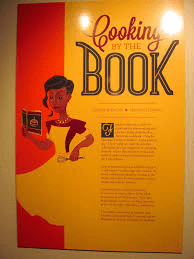
Food is an important necessity people need to survive, and by creating an exhibit or program based on the narrative of food history museums create examples of how people can understand relevance in museums. This week there was a webinar the American Association of State and Local History hosted called Interpreting Food at Museums and Historic Sites, which provided introduction to strategies for using food and food history to develop interpretation with depth and significance, and will make relevant connections to contemporary issues and visitor interests. This webinar inspired me to write about my own experiences when I collaborated with my classmates and Connecticut Historical Society on the exhibit Cooking by the Book: Amelia Simmons to Martha Stewart. Also, I will discuss how the study of food history is continued to be discussed since I first approached the subject during graduate school.

During my second semester of my first year of graduate school, I took a course on Museum Interpretation in which the major assignment was creating an exhibit at Connecticut Historical Society using food as the theme. My classmates and I were introduced to the project at the beginning of the semester, and my professor assigned books to provide background information on food history; one of the books was Warren Belasco’s Food: The Key Concepts (Bloomsbury Academic, 2008) which served as an introduction to the study of food studies and an essential overview to the increasingly critical field of enquiry. Other books assigned were about food and food preparation in different centuries in America.

In my records, I also found my notes on the justification of creating an exhibit based on food for Connecticut Historical Society. They argue that food is a part of history that individuals can identify with as being universally relevant. According to my notes, food is an essential part of life for everyone needs food to survive, and more than that food can unite families and larger communities; food can also conjure powerful memories for individuals whether it is a yearly holiday meal tradition or cooking in the kitchen with a relative. My justification notes also stated that the exhibit will provoke questions about the differences in food history as it relates to class and gender within Connecticut’s social structure as well as challenging visitors to think about their own personal experiences with food. This is what my teammates and I had in mind when we created the original proposal presented to the committee at Connecticut Historical Society.

To create the proposal, in addition to figuring out a way to present food history in Connecticut, we also picked out objects that represented food history and our idea for the exhibit. We originally came up with an idea that was like the Upstairs/Downstairs concept when creating the Connecticut food narrative. Then we included the idea of telling Connecticut food history throughout time from the 18th century to current period. We then looked through Connecticut Historical Society’s collections that we felt best represented the narrative we believed will be presented in the exhibit. For instance, I oversaw picking out items from the eighteenth century and one of the pieces I chose to include in our proposal was a ceramic bowl that was made and used between 1730 and 1770.

After selecting our items for the proposal, we also had to figure out how to include an interactive segment in our exhibit to allow visitors to engage with the historical narrative. A couple of ideas we had include a tea etiquette practice in which a table and chairs are set up with a container of all the necessary items for the tea setting (photocopies of the directions for a Victorian tea setting would be provided and visitors would then attempt to properly set the table for tea based on the directions). The second idea we came up with was we would provide reproductions of community cookbooks from the Connecticut Historical Society’s collections for the visitors to look through.

When our class had the opportunity to present our proposals, my teammates and I presented our idea to a committee of Connecticut Historical Society staff members to determine which group’s exhibit idea they will move forward with. Each member of my group presented two different sections of our exhibit idea, and I presented the very first section when visitors enter the exhibit space as well as the interactive elements section to the committee. The first section was called “Cooking for a New Nation” which would feature Amelia Simmons’ American Cookery (which was the first cookbook published in America). The book would have been used as a representation of how women cooked in eighteenth century America and the narrative would have described the women’s and servants’ roles in the kitchen during this period; when discussing these roles, the narrative would also discuss the separation between servants and household was emerging in the eighteenth century as well as the transition from colonies to a new nation. Then I described the objects that would be selected for display in this section. After the rest of the sections were presented, I introduced the interactive element for the exhibit we brainstormed for the proposal.

Some time passes, and our professor announced that the committee decided to choose our group’s idea for the exhibit with some suggested changes. The exhibit was changed to focus more on the time line of cookbooks published in the United States and discuss food history in America (especially Connecticut) in each century beginning with Amelia Simmons’ American Cookery and ending with Martha Stewart’s cookbooks. It was named Cooking by the Book: Amelia Simmons to Martha Stewart and we proceeded with selecting the objects and collaborating with the University of Hartford art design students to design the exhibit labels and space. My group oversaw the interactive element of the exhibit; the interactive element was changed to providing copies of various recipes that came from the cookbooks displayed in the exhibit, and presented the opportunity for visitors to write their own recipes and place them in a box. We each took a cookbook and selected the recipes we would be interested in using then narrowed down the options to a few of them. Cooking by the Book: Amelia Simmons to Martha Stewart eventually opened in January 2013, and it ran from January 18, 2013 to April 13, 2013.

Since then I did not see much of the history of food presented in a museum setting until I came across Michelle Moon’s Interpreting Food in Museums and Historic Sites which was published by the American Association of State and Local History in 2015, and the basis of this past week’s American Association of State and Local History (AASLH) webinar. Moon’s book argued that museums and historic sites have an opportunity to draw new audiences and infuse new meaning into their food presentations, and food deserves a central place in historic interpretation. Her book provides the framework for understanding big ideas in food history, suggesting best practices for linking objects, exhibits and demonstrations with the larger story of change in food production as well as consumption over the past two centuries. She also argues that food tells a story in which visitors can see themselves, and explore their own relationships to food.

I also came across Linda Norris’ blog post “Building a Learning Culture: Food Included” on her blog The Uncatalogued Museum which discussed her experience working with the board and staff at the American Swedish Institute in Minneapolis, Minnesota on creative practice in context of interpretive planning. The American Swedish Institute decided to include stories of all immigrants not only Swedish immigrant stories. To assist with creative practice including in interpretive planning, there are lessons that each institution needs to learn to connect with each other and with their communities. Norris introduced lessons from this experience including good ideas come from everywhere so it is important to cast a wide net to gain knowledge, and making time to think together is especially important.

Also, it is important be open to collaborate with people in the community to develop new collaborations and deepen other partnerships. If the American Swedish Institute did not learn that lesson, then they would not have learned about a restaurant in their community that shows appreciation for Bollywood dance and shows customers how to perform them. She also talked about the experience influencing the staff to schedule regular fika, or Swedish coffee break, with baked goods to spend some time from a busy day and connect with each other. For more information about her experience, the link to her blog can be found here: http://uncatalogedmuseum.blogspot.com/2017/02/building-learning-culture-food-included.html.

These previous examples show how food presentations in the museum field has evolved in the past few years. By sharing my previous experience on food presentation and the most current experiences on food and culture, I provide some examples of how visitors can make connections to their own memories related to food. I will soon be attending a New York City Museum Educators Roundtable (NYCMER) program called Lessons in Equity from Culturally-Specific Institutions: Beyond the “Target Program” at the Museum of Chinese in America on creating a diverse environment in the museum. The program will also include a closer look at the special exhibition Sour, Sweet, Bitter, Spicy: Stories of Chinese Food and Identity in America. When I heard about this program the first time, it reminded me of the many family meals I have had during my childhood and in my adulthood trying various Chinese food dishes. I will continue the discussion on food history and how individuals can to share my experiences after I attend this program.
Do you think your museum or institution would be able to include food history in its exhibits or programs? What is your most powerful memory that comes to mind when you think of food? Have you attended a program or exhibit that discusses food history or a subject related to food?


Professional Development: Shared Authority and Relevance of Education

Originally posted on Medium, February 16, 2017. 

This week I attended a couple of professional development programs on shared authority through the American Association of State and Local History (AASLH) called Peb Yog Hmoob Minnesota: Sharing Authority and Building Relationships with Your Communities and on education called The Relevance of Education through the American Alliance of Museums (AAM). The AASLH program was a case study of the Minnesota History Center and the Hmong community members’ relationship, and how they worked together to create an exhibit in 2013 on the Hmong culture anchored on the 40th anniversary of the first Hmong refugees’ arrival in Minnesota. The Relevance of Education program was a discussion based on the Committee on Education’s Excellence in Practice: Museum Education Principles and Standards that was released in 2002 and revised in 2005, and the program tackled questions including What has changed in the 15 years since its publication? How has the document impacted the field? How do the principles and standards hold up over time? In what way would the document be different if it was written today? These programs are significant to the practice of museum education since both topics discuss how to adapt the field to a changing society.
The concept of shared authority is certainly not a new one in the museum field but is continually discussed to be relevant in our evolving communities. While I was in graduate school earning my Master’s degree in Public History, I did some research in 2012 on shared authority between museum officials and the public by presenting the challenges in interpreting history with articles and case studies found in my research. Shared authority is a partnership between museum professionals and outside parties to work on projects for the public. I discussed in my presentation the positive impacts and the challenges shared authority has on museum staff.


Positive impacts shared authority presents includes encouraging experts to engage with the world around them; encouraging museums to stretch out beyond their communication channels and include others to interact more with the projects; visitors can engage deeply with the exhibits and museum experts are still able to share expertise in the collaborations. Partnerships also bring as many challenges into developing projects as they bring positive impacts. For instance, it is hard to please each visitor, and therefore it is important to have as balanced input from both museum professionals and visitors or outside parties as possible to have a successful program or exhibit. As we continue to work with others within our communities, our involvement in the community is increasingly becoming more significant as it is demonstrated in AASLH’s shared authority professional development program.


The presenters in the Peb Yog Hmoob Minnesota: Sharing Authority and Building Relationships with Your Communities program were Dan Spock (the Director of the History Center Museum and Exhibitions & Diversity Initiatives at the Minnesota Historical Society), Wameng Moua (the publisher of “Hmong Today,” a community newspaper and the voice behind HMONG-FM, a radio variety show focused on the Hmong), Sieng Lee (exhibit designer for the Peb Yog Hmoob/We Are Hmong Minnesota exhibit/visual artist), and Nicholas J. Hoffman (Managing Director of Education and Visitor Experience at the Missouri History Museum in Saint Louis, Missouri). The program discussed how the idea for the exhibit began and went through the entire process of creating this exhibit. It also revealed how museums can overcome the lack of diversity and diverse viewpoints within historical interpretation.


Before the exhibit was added to the Minnesota History Center, there was a lack of diversity that was in the exhibits as well as a lack of items that reflected what the community was really like in St. Paul. One day a committee from their local Hmong community, led by Wameng Moua and Sieng Lee, approached the History Center with a huge binder of photographs and materials of Hmong history. The committee asked this museum for full collaboration on this project, since they were concerned about having their impact on the state lessened in the eyes of MNHS’ visitors, by sharing curatorial control with Hmong community representatives from a list put together of a good mix of people that would form an advisory committee to discuss ideas. A few examples of what the advisory committee discussed include figuring out what do the people want to see (and it was decided they will tell the whole story of the culture), put together what the narrative would be, and the layout of the exhibit throughout the galleries.


The challenges that they faced while creating this exhibit was figuring out what objects to include and exclude in the exhibit, and where these objects would be placed in the exhibit. These challenges are always going to be present in every institutions’ exhibit planning, and it especially includes project collaborations with individuals outside the institution; the best way to approach these challenges is to stick with the narrative chosen for the exhibit then base decisions on that narrative. The presenters stated something similar in their discussion amongst other things they took away from this experience.


Some of the advice they present include the whole staff must be on board with doing things a little differently than what they normally do, and maintain authenticity for projects especially when presenting someone else’s culture within an exhibit. Also, they say to hit the streets and be open to learning all aspects of the community. It is also important to keep up with the evolving history of the community; exhibits like this one must be reflective of what the community is today. If an institution ignores the community surrounding it and does not acknowledge the evolution of a community, then the institution will not be supported by the community. The exhibit should also be created to attract each member of the community; for instance, an interactive element of a farmer’s market was added for children to learn about the food in the culture in English and Hmong by scanning the food to visually see the names associated with them. Each of the presenters also discussed what happened after the exhibit opened to the public, and how the History Center was affected by the exhibit.


During the exhibit opening, the staff noticed that there was a positive reaction to the exhibit. The exhibit also lasted longer than they were expecting; it ended up running for six months after the exhibit opening. After the opening, the staff conducted visitor research to find out how this exhibit affected the museum. According to the visitor research, the number of Asian visitors had quadrupled and a lot of them were under thirty years of age which means these individuals wanted to learn more about their history and their community. The exhibit also inspired to continue to develop new relationships with more people in the community. For instance, the exhibit led to the creation of Asian Pacific Heritage Day which celebrated various Asian cultures represented in the St. Paul community and currently they are working with Native American communities. Shared authority is a part of maintaining relevance in education, and the American Alliance of Museums’ The Relevance of Education program continues the discussion of learning to continue adapting the museum education practice.


The Relevance of Education program was hosted by Greg Stevens and moderated by Timothy Rhue II (Senior Informal Education Specialist at the Space Telescope Science Institute, Baltimore, MD and Communications Chair in EdCom). The panelists for this discussion were Jim Hakala (Senior Educator at the University of Colorado Museum of Natural History in Boulder, CO), Sage Morgan-Hubbard (Ford. W. Bell Fellow for Museums and P-12 education at AAM), and Mary Ellen Munley (Principal at MEM & Associates in Bennington, VT). After providing links to the original 1990 Statement on Professional Standards for Museum Education and the 2002 (revised in 2005) Excellence in Practice: Museum Education Principles and Standards for our reference, the discussion began with this question: How do these principles apply today? It was agreed that the principles in museum education need to be updated on a regular basis instead of addressing the need 15 years later.


Another point that was mentioned in the discussion was our institutions are constantly evaluating our communities and because of this we cannot stay static. Also, our institutions make efforts to make connections within our communities as well as include community members in collaborated projects to create a shared space for multicultural groups to get together in. The discussion also pointed out that our roles as museum professionals transitioned from about education being about what we want the public to know to serving the public by having the responsibility to earn the recognition of how important our institutions are.


Then we also need to acknowledge how we now define museum educators in the museum community. The term “museum educator” has a different definition at each institution. Based on my experience, I have noticed that museum educators can describe individuals who specifically teach school programs as well as museum staff in general that are dedicated to their institution’s mission in education. As a museum professional, I have had different titles at each museum I work for. For instance, at Stanley-Whitman House my title was “Museum Teacher”; at Connecticut Landmarks, when I started there it was simply “Tour Guide” but as I and my previous co-workers became more involved with interpretation and creating our own ways of presenting the material the title changed to “Museum Interpreter”; at Noah Webster House & West Hartford Historical Society, my title was “Museum Teacher”; and at the Long Island Museum my title was “Museum Educator” and yet my role included not only teaching school programs but also I was responsible for administrative tasks including mailing flyers and booking school programs as well as assisting running family and public programs. Since we include outside parties collaborate with museum staff, we allow their contributions to define their relationships as being co-curators, co-authors, and co-educators within our museum community. As a result, we need to keep in mind that the terminology for museum educators will change based on what the institutions and communities value in our society.


Another question that was addressed in the discussion was: How do the principles and standards hold up over time? The panelists discussed that the principles had a theoretical base work but it does not provide an example of applied best practices. Also, they stated that the basic principles were there all along but the interpretation changes over time. I agree with that statement because the principles do address ways to engage audience members of various backgrounds that would theoretically work in the museum setting, and yet our institutions learn to adapt and change with our society and because of these changes we view these education principles differently. Since our policies continue to change we need to be able to understand that we will not be able to get our programs right the very first time and that we need to be able to leave room for adjusting our programs based on audience members’ reactions and interactions with the programs. The next question on our minds would then be: What are the next steps?
Do we need to write another document to reflect what is going on now in museum education practice? The panelists concluded that the principles do need to be readdressed to reflect the changes that have been made since it was written in 2002 and revised in 2005.


Then we need to also address how the museum education field as its own community will support each member as we allow it to evolve with the changing society. Mary Ellen Munley had stated that she noticed there is what she calls an “isolation in practice” or in other words we do not have the time to catch our breath let alone get together to figure out what we need to do collectively as our own community. I see where she is coming from since as museum professionals we continue to create and implement programs, maintain and protect our collections, and run our administrations there is little time to stop and figure out our communities in practice.


However, I also see that there are moments where we can stop and develop our skills as professionals as well as connect with our community. For instance, there are opportunities for museum educators to develop their skills with state museum educator roundtables (like Connecticut Museum Educators Roundtable and New York City Museum Educators Roundtable), and the national group Museum Education Roundtable that offer resources and programs to allow them to be involved in the practice. Also, there are other ways that museum professionals can connect with the community and develop our skills including writing blogs about our experiences and joining various organizations that will help both parties grow and develop. The challenge is to finding the right balance so we would be able to both run our institutions and continue to grow with our community.


What is your opinion on how museum education is changing? Have you read Excellence in Practice? What are your answers to the questions I posted from the program? Do you have an example of shared authority that has occurred involving your institutions? What worked and what did not work?