How to Lead a Professional Development Program: Reflections of My Experience Presenting One on Gender Equity

Added to Medium, March 8, 2018

On Monday, March 5, 2018, I have had my first professional development program that I have presented for the field. The program was the Long Island Museum Association Roundtable, hosted by Preservation Long Island, called “Lessons from the Workplace: Women in the Museum”. I presented at this program with Anne Ackerson, who co-founded Gender Equity in Museums Movement in 2016. It was a wonderful experience, and I learned a lot from the process of arranging it to presenting the program.

This process began last year when I met with a then board member of the Long Island Museum Association (LIMA) at a previous Roundtable program to propose an idea for a future Roundtable program. Since I then recently joined Gender Equity in Museums Movement, I thought it would be a good idea to bring awareness of gender equity to my colleagues on Long Island. For the next few months, I discussed the idea with various LIMA board members and presidents and figure out when the roundtable should be scheduled.

After proposing this idea, I kept in contact with the then LIMA board member until he retired from the museum field. I continued the conversation with the remaining board members. A date was finally set for March 5th, 2018.

While having discussions with the LIMA board members, I informed the rest of the GEMM coalition that LIMA is interested in having a program about gender equity. Since I have not been involved with GEMM for very long and that it was the first presentation I have had since graduate school, I asked during one of the GEMM meetings if anyone is interested in coming down to Long Island to help with the presentation. Anne Ackerson volunteered to help with the presentation by collaborating together on the presentation and driving down to Long Island to co-present with me.

She and I determined that it would be best to edit an existing PowerPoint presentation so we would not necessarily need to re-invented the wheel. GEMM committee members have volunteered in the past to present at similar programs to promote the coalition and discuss gender equity issues.

Anne and I continued planning the roundtable meeting by talking with LIMA board members about logistics. For promotional materials, we were asked to send information about ourselves, the program, and about GEMM. Both of us emailed our biographies and the summary of the program we will present the day of the presentation.

Because I am also a LIMA member, I received the email newsletter that promoted our program. The LIMA board decided that the program will be presented at the organization Preservation Long Island in Cold Spring Harbor; located in the Methodist Episcopal Church, Preservation Long Island is a not-for-profit organization committed to working with Long Islanders to protect, preserve, and celebrate our cultural heritage through advocacy, education, and the stewardship of historic sites and collections. According to the email newsletter, our program would begin with check in and coffee at nine in the morning. Then our program would begin at nine-thirty, and would last until twelve thirty.

Since we had a PowerPoint presentation that typically are for shorter programs, Anne and I decided we would figure out how to fill the rest of the time. We decided it would be a good idea to see if there are museum professionals on Long Island who are willing to participate in a panel to answer questions from us and the audience. If we were not able to have panelists, we would fill the time with time dedicated to questions and answers from the audience and small group discussions.

Small group discussions would allow audience members to divide into small groups to answer questions we provided on handouts so after they discussed the answers to the questions they will write the answers down. A few of the questions that were on the sheet include:

“What does your board do to advance gender equity within your museum? What can or should it do?”
“How does your museum eliminate gender bias in board or volunteer recruitment, and in hiring staff?”
“How would a statement of organizational values be useful in addressing equity in your museum?”

After the small group discussions were finished, we would collect at least one handout from each group so that the responses will be used for future publications from the coalition on gender equity issues.

We were able to have museum professionals participate in the panel, and because of this we also decided to break down time dedicated to the presentation, panel, and small group discussions so we would be able to keep track of the time for the program.

Anne arranged to have panelists from organizations on Long Island to join the roundtable and participate in the discussion on gender equity. On the day of the program, we were able to have four female museum and former museum professionals to participate in the panel.

The first participant was Sarah Abruzzi who is an accomplished executive and fundraising professional with 20 years of experience in the non-profit sector. She served as Director of two museums and worked in all aspects of museum operations including education, collections management, volunteer coordination, fundraising, communications, and government relations. Now Abruzzi serves as Director of Major Gifts and Special Projects at the Long Island Museum in Stony Brook.

Then the next participant was Barbara Applegate who is the director of the Steinberg Museum of Art at Long Island University where she developed and presented exhibitions, many of them were made in collaboration with other institutions, and oversaw the development of special websites based on the Museum’s collection. Recently, she oversaw construction for the museum at a new campus location.

Marianne Howard, the Grant Writer for Mercy Haven in Islip Terrace, is another panel participant. Howard was previously the executive director for the Smithtown Historical Society, and she has held leadership positions among both museums and social services agencies in both New York City and on Long Island. She now works for Mercy Haven in Islip Terrace which is a non-profit organization which provides temporary and permanent housing and supportive services to those in need across Long Island.

Last but not least, Tracy Pfaff participated in the program as one of the four panelists. She became the Director of the Northport Historical Society in 2016, and before that she worked in a for-profit fine arts gallery, and she has interned at museums in Peru and Wyoming. Pfaff is the incoming co-president of LIMA with Theresa Skvarla. Once we were able to determine who would be able to participate in the panel, Anne and I discussed the schedule for the day as well as what should be divided among the two of us.

We decided to have the PowerPoint presentation at the beginning of the program which would last about fifteen to twenty minutes. Our presentation in the beginning was our welcome to the program as well as an overview of gender equity issues. The presentation has fourteen slides, and we made the decision to split the slides between the both of us.

Then the panel discussion would last for about forty minutes. Each of the panelists had opportunities to select questions they would like to address, and therefore not every panelist has to respond to every question. Nine questions were developed but we kept in mind that we may not be able to get to all of the questions. A couple of examples of questions that were addressed to the panelists are:

“Share an example of gender bias or inequity that affected your career and what you did about it.”
“What would you like to see our professional associations do to address gender bias? Is there a role for funders to advance the conversation?”
“In looking across the museum sector, where do you see the greatest positive movement to address gender inequity (i.e., collections, workforce and hiring, exhibits, etc.)”

Anne and I also decided to divide the questions between us so each of us would be able to ask questions to the panelists. We also allocated time for audience members to ask the panelists questions related to gender equity and the museum field.

Then we allocated time for a break so audience members can spend their time doing such as checking email, and get more coffee and pastries. During our conversations, we also decided to include a role playing activity after break and before the small group discussions.

Role playing activities would allow volunteers from the audience to play roles we give each pair and they will act out a scenario related to gender equity. We would allow up to five minutes of role playing then open it up to the audience to see how the situation could be handled differently or what their impressions were about the scenario. Also, we decided to have four different scenarios prepared for the program but we will start with two scenarios then see how much time is available.

Once the role playing and small group discussions are completed, we would wrap up the program by asking the audience to share a little bit of what their groups discussed and thanked them for coming out to hear our presentation and participate in our discussion.

A few days before the program, Anne and I spoke on the phone to finalize details for the day. We both agreed that it is important that we should be flexible and play by ear how we should proceed with the program to make sure the program is on schedule and to make sure our panelists and audience members are comfortable.

On the day of, I arrived early to take a look at the space we would be presenting in. Anne and I decided to take a few chairs from the first row to allow the panelists to sit there during the panel discussion and allow them to move to the back during the PowerPoint presentation. Also, we set up the PowerPoint presentation and mingled with museum professionals who have arrived for the program.

There were about between twenty and thirty museum professionals who arrived for the program which is more than Anne and I were expecting. We were very happy with the turn out, and we were also happy that many of them engaged with us, the panelists, and with each other about gender equity. Many questions, comments, and concerns were brought to us and we were able to answer to as many of them as possible. The discussion among the small groups was especially lively and we were able to collect many worksheets so we are able to use these answers for future publications.

There were some technical difficulties such as the microphone feed occasionally turned on and the lighting of the presentation made it a little hard to see the PowerPoint. I knew that we cannot always plan for everything, but we were flexible enough to continue on with the program. For instance, instead of using the last slide to share the small groups discussion we turned off the computer since we already had the questions on the handouts we gave audience members.

Overall, we had a very positive response from the program participants. We received many thanks from individuals we spoke with throughout the program. Also, I received congratulations from my colleagues and former colleagues I knew who attended the program. We also had many of them sign up to receive more information about GEMM, and we sent them the March newsletter we just sent out to other GEMM followers.

I learned a lot from this experience, and I am very proud to have arranged the program, been in the process, and in the program.

A special shout out to Anne Ackerson who has been so helpful during the process, and I thank you again Anne for everything leading up to and during the program.

What has your experiences been like presenting in professional development programs? Is there any advice you would give other professionals who start planning their own professional development programs?

A Closer Look into Museum Volunteers and Volunteer Programs

Added to Medium, January 25, 2018

Museum workers are valuable to museums, especially those who volunteer their time to help the museums run. During my experience as a museum educator, I have worked with volunteers as well as participated in professional development programs about volunteers and volunteer programs.

As I am in the middle of helping rewrite the Three Village Historical Society’s docent manual, I thought about my previous experiences and professional development I participated in. In one of my previous blog posts, “Professional Development Programs: Managing Your Museum’s Online Reputation and Evaluating Volunteers and Volunteer Programs”, I wrote about my previous experiences working with volunteers and working as a volunteer in my early career. A couple of my most recent experiences working with volunteers were previously managing volunteers for school programs at the Long Island Museum, and writing down records of sailing tour hours at the Long Island Maritime Museum.

At the Long Island Museum, I oversaw scheduling volunteers to assist with larger school programs based on their availability and discussed with them what the students got from the lessons. Then at the Long Island Maritime Museum, I volunteered for a school tour, collected admission for a Boat Burning event, Past Perfect data entry and preserving books by scanning pages, and working at the visitor services desk. Based on my perspective, I can understand what volunteers need to complete their goals as well as making sure their work accomplishes work museums’ need to accomplish their mission.

To make sure we understand what we should expect from our volunteer programs, it is important to learn from colleagues through professional development programs and written information such as books and articles.

One of the professional development programs I attended was the American Alliance of Museums’ EdComVersation. The EdComVersation I attended was called “Evaluating Volunteers and Volunteer Programs” with several presenters giving case studies of how volunteer programs are run at different museums or organizations. Each case study provide advice on how we can run our volunteer programs and make sure we utilize volunteers’ time to everyone’s advantage. Museums should evaluate the volunteers and the volunteer programs since evaluations can help give volunteers information they need to do better work and can help museums nab problems early (problems with program or problem volunteers). Also, by evaluating volunteers and volunteer programs it conveys appreciation and reinforce value of volunteers; motivates volunteers to do both their personal best and give positive impact on the museums; and it allows museum to improve volunteer program.

Another resource that is good to learn about managing volunteer programs and working with volunteers is a book Recruiting and Managing Volunteers in Museums: A Handbook for Volunteer Management by Kristy Van Hoven and Loni Wellman. In their book, Van Hoven and Wellman discussed what museum volunteers are and the importance of museum volunteers especially today. Van Hoven and Wellman gave solid advice on volunteer recruitment, communication, and retention strategies. They answered various questions about volunteers including: What are new volunteers looking for? How can you develop a successful relationship with potential volunteers? How can your museum support a robust and active volunteer program? How do you reward volunteers and keep them for the long term? How can you meet volunteers’ needs and still benefit from their work?

Their book also provided sample documents for managing volunteer programs. It has a sample of a volunteer job description and a volunteer application. There are also samples of volunteer interview questionnaire, volunteer evaluation forms, recognition letters, and certificate of recognition. I have also found another resource that is helpful with museum volunteer programs.

The resource I found is a technical bulletin called Building a successful museum volunteer services program written by Robbin Davis who is a Volunteer and Marketing Manager at the Oklahoma Museum of History. According to Davis, the questions that volunteers think about when considering volunteering at a museum are: how do they fit into the picture, how can they be useful and how much time will it take? Can they give tours? Can they work with artifacts? Can they interact with the public? Are there social activities? Does it cost?

Davis also went into specific details about how to build volunteer programs. For instance, Robbin discussed incorporating the mission statement in the volunteer program. In the bulletin, it stated that

A mission specific to the Volunteer program should frame the program within the context of the overall museum mission. Make sure it is attainable and a staff decision. If the volunteer program is already established, let the volunteers help create the mission or “freshen” up an existing one.

By incorporating the museum’s mission, potential volunteers will be able to see how they would be able to contribute to the museum and what the museum stands for.

The technical bulletin also discussed the importance of having a volunteer reference manual, marketing materials to promote the volunteer program, and forms for volunteers to fill out. Also, it stated that there are important questions that need to be asked as a volunteer program is being developed such as

Who does your museum serve? What is the volunteer history of the museum? Have there been volunteers before? How were they utilized? What kind of program was it? Was it effective? Why? Why not?

When museum staff figure out the answers to the previously stated questions, they will be able to have an effective and successful volunteer program that will generate dedicated volunteers to help museums fulfill their missions.

Museum volunteers are significant in helping museums function. Volunteers have skills that can be useful in various aspects within the museums’ departments. By focusing on establishing a successful volunteer program, museums are able to not only provide opportunities for positive experiences for volunteers but they will be able to promote your organizations.

What is your relationship with your volunteers like? What ways does your organization recognize its volunteers?

Resources:
Van Hoven, Kristy and Loni Wellman, Recruiting and Managing Volunteers in Museums: A Handbook for Volunteer Management, Lanham, Maryland: Rowman & Littlefield, 2016.
“Professional Development Programs: Managing Your Museum’s Online Reputation and Evaluating Volunteers and Volunteer Programs”
Building a successful museum volunteer services program

Our Museum Plans for 2018

Added to Medium, January 4, 2018

Happy New Year! I am back to writing more on this blog after taking time to celebrate the holidays and work on holiday activities with museum visitors. We are officially in 2018, and there is so much to hope to accomplish this year in museums.

For instance, I hope to continue molding my skills as a museum education professional and help my field become a more inclusive field. With the museum field continuing to grow, we learn from one another about how we can serve our communities and help our colleagues fulfill their personal and professional goals. I am thankful to all of you who have continued to read my blog posts, and reading what I have to say about the field.

We all gather together in person and online to share what we learned in the field, and it is important to work together to move the museum field forward. Many museum professionals have been discussing their wishes and resolutions for 2018.

For instance, there are museum professionals that expressed their wish to dedicate time to read more books in the field. In the Sustainable Museums blog, they talked about one of the books that are written about the future of museums.

The author did a short book review of The Future of Natural History Museums, edited by Eric Dorfman and published by Routledge for the International Council of Museums (ICOM). According to the blog post, The Future of Natural History Museums takes a look at “where natural history museums have been, are right now, and may rightly go if their staff and leaders are courageous enough to venture forth in the manner humanity requires.” While this book is for and about natural history museums, the arguments presented in the book can be easily widen to all types of museums since it is our responsibility as a field to provide research and discussion about what we all can do to preserve our planet’s future.

Other museum professionals also focus on what we can do as a museum community to continue to improve visitors awareness of what we offer.

On the Wilkening Consulting website, Susie Wilkening pointed out what museums need to do based on the survey results from the 2017 Annual Survey of Museum Goers. She revealed that we have to do much better identifying extrinsic motivations for learning, meeting those needs, and articulating them in our promotional materials. Also, Wilkening stated that museums need to be able to express their practical impact in the community. In other words, museums should find out how museums philosophically matter to people in the community not just as an assessment tool. She argued that museums are likely to open more minds, cultivate compassion and empathy, and create connection and community.

Creating a connection with the community can also include working on establishing the museums relationship with colleges and universities.

In the article “Imagining What Museums Might Become” written by Seph Rodney, they wrote about a multifaceted conversation on the future of museums that took place at the CUNY Graduate Center, and noted some of the contrasting and competing visions for what the museums might become. According to the article, the CUNY Graduate Center hosted a discussion on the Next Generation of Museums answering questions of that museums can be and what they should be.

The four panelists Ken Arnold, Svetlana Alpers, Jeff Levine, and D. Graham Burnett approached the question from distinct, and sometimes opposed, vantage points, according to the article. Each panelists shared their perspectives in the museum field, and gave their opinions on cultivating the relationship between museums and universities.

Ken Arnold, who is the director of the Medical Museion in Coopenhagen and creative director at the Welcome Trust in London, gave a presentation that argued “museums can provide wider audiences and can mount deeper and more well-researched exhibitions when partnered with a university.”

Meanwhile Svetlana Alpers, a professor emerita at the University of California, Berkeley, stated that she wasn’t entirely sure “the new generation of institutions are indeed museums at all.” She explained her perspective, which mainly is from an object-based background, using historical examples including the Victoria and Albert Museum in London to talk about how museums were once havens for learning craft (such as weaving) to contrast them with new institutions such as The Shed (New York’s first multi-arts center designed to commission, produce, and present all types of performing arts, visual arts, and popular culture), which seem structured as platforms for a variety of types of social, intellectual, and playful interactions.

This article presented interesting perspectives that are worth continuing the discussion. Museums have so much to offer to our audiences and visitors need to be more aware of what we offer.

Museum professionals have also express the importance of not only taking care of our relationships with our communities but we also need to maintain our relationship between our museums and the staff/boards that work within them.

Anne Ackerson and Joan Baldwin’s Leadership Matters blog discussed their wishes for 2018 in the museum field. Some of the wishes they expressed in their post include:

Museums commit to an open, fair, equitable hiring process; that they cease posting jobs without posting salaries, and that they stop insisting on a graduate degree for every position.

Museums make time to hit pause, to plan, to think big, fight mediocrity and encourage community engagement. Consider how you will nourish creativity among your staff.

All museums articulate their organizational values and figure out tangible ways to live by them….every day. Doing so will keep them agile and responsive.

That museums remember that empathy isn’t just for the visiting public; it belongs in the workplace and boardroom too.

These are wishes I also have for our field in 2018. I expressed similar wishes in one of my previous blog posts about the new year, and I reiterate here that if we help museums improve as a workplace we will be more effective within the community.

Even at the beginning of the new year we delve into serious topics in the museum field we need to address. Since it has been announced that The Met is changing their admissions policy that will be instated on March 1st, there has been discussion about ticket fees for visitors to access museums’ exhibits and programs among the museum professionals. This decision has made us take a look at our own museums and evaluate what works for our financial operations. There is no one simple answer for every museum since we are all different museums that operate in various ways. I will continue this discussion in next week’s blog but this is a thought that we need to keep in mind as we make resolutions for our museums.

What are your hopes for your museums or organization in 2018?

Resources:
https://sustainablemuseums.blogspot.com/2018/01/start-new-year-with-intellectual-bang.html?spref=tw
http://www.wilkeningconsulting.com/datamuseum/conclusions6
https://leadershipmatters1213.wordpress.com/2018/01/02/looking-forward-leadership-matters-wishes-for-2018/
https://hyperallergic.com/417976/imagining-what-museums-might-become/?utm_source=twitter&utm_medium=social&utm_campaign=sw

Reflections on Museum Education in 2017

Added on Medium, December 21, 2017

2018 is quickly approaching, and I have been thinking about what has been accomplished in the museum field in 2017. I looked back on blog posts I have written about what I anticipated for 2017, and there has been new developments that I did not anticipate but I am proud of what I have accomplished and I look forward to what the next year has in store.

There are some examples I list here but are not limited to of what I have accomplished this year in my professional career so far are what I am especially proud of.

I started working with the Maritime Explorium, a children’s science museum on Long Island. Since I started there, I not only worked on museum programming and museum education programming I began work on administration tasks to assist in running the museum. An example of a program I work in is a pre-school program, Little Sparks, which allows children to play while learning STEM lessons.

I began working with an Education Committee at the Three Village Historical Society to assist in revamping school programs and docent manual. In addition to researching for the programs and manual, I observed an education program delivered at a high school to see what can be improved on.

I have written this blog for over a year now, and it continues to be a learning experience I enjoyed. So many of you have expressed your views and opinions on the topics I introduced. Many also have shared the posts I made to help continue the discussion, and I am very grateful to all of you who read and share them.

There is more I still need to accomplish in my professional career but I am proud of how far I came. I hope to keep moving forward in my career and help the field continue to grow.

The museum field has been moving forward as well. While we still have a long way to go, our work as museum professionals showed the community we are working towards being more relevant. Also, we have been more vocal on things that we need to work on as a field especially equity, diversity, and how to have better working conditions to encourage individuals to stay in the field. There has been so many things that have happened this year for museum professionals.

Museum professionals, especially in the past few months, have been discussing what the future would be like for museums. Not only have museum professionals discussed the future of museums on American Alliance of Museums Alliance Labs and Museum magazine but many other museum blogs and websites continue the discussion as well. I recently came across the Museum Id magazine website, an international magazine which shares progressive thinking and developments in museums globally.

According to their website, Museum Id is an influential magazine and global conference for museum professionals since 2009. It is dedicated to serving the international museum community and is designed for museum professionals interested in a more innovative and open approach to professional inquiry and development.

The Museum Id magazine features a collection of various articles about the future of museums called the #FutureMuseum Project (I included the link in the Resources section below).

Some of the titles that were shared in the #FutureMuseum Project include Increasing Diversity And Helping To Establish A Sense of Ownership; Not Just A Building, But Building Community; Collaboration And Well-Being; Agile, Accessible, And Distinct; Engaging Audiences More Deeply; Retaining Their Sense of Public Service; and Museums As Young Learner’s Classrooms.

Each of the articles focus on museums working towards making their institutions more accessible to its audiences as well as more engaging within the community. The articles were written by museum professionals who contributed to the project by writing the short articles and sending them to the magazine via email.

As a field, we continue to work together to improve our museums and our communities. We also need to be reminded to be thankful for the museum colleagues we work with, for our visitors who come to use our resources and participate in our programs, and the community partners that we collaborate with to work towards making our communities better places to be in. I am proud to be working in this field, and I hope we continue to make progress in the New Year.

I decided that this would be the last blog post for the year 2017 because I will be spending time with family for Christmas and running children’s activities to celebrate the New Year. I will be updating my website with more resources I came across to help other museum, non-profit, and education professionals. I look forward to what is in store for 2018.

What are your personal and/or professional resolutions for the New Year? Do you have anything your institution is doing that you are looking forward to?

To those who are celebrating, Merry Christmas! Happy Holidays! Happy New Year!

Resource:
http://museum-id.com/the-futuremuseum-project-what-will-museums-be-like-in-the-future-essay-collection/

Online Communities: Why They Are So Important for Museum Professionals

Originally added on Medium, December 7, 2017

One of the best ways for museum professionals to fulfill their professional growth is to learn from each other through online communities. I follow and participate in the Facebook group Emerging Museum Professionals and in #MuseumEdChat on Twitter. There are many Emerging Museum Professionals Facebook groups for local museum communities, and there is one that covers emerging museum professionals all over the nation, the National Emerging Museum Professionals group. While I do follow many local emerging museum professional groups in New England and New York, I mainly focus on the national group to be able to hear from other museum professionals to gain more perspective on the museum field on a national level. Since museums are utilizing social media to get visitors and potential visitors attention, it makes sense that museum professionals take advantage of social media to communicate with one another.

It is important that museum professionals have the opportunity to connect with one another since one of the best ways to continue adapting programs and exhibits is to learn from other museum professionals. Not many museum professionals have the opportunity to meet with others in person for various reasons especially not having enough time and money to invest in traveling to museum conferences and workshops.

When we have online discussions, we are able to connect with many museum professionals from around the country and in some cases around the world. Also, we are able to get inspirations for our own practices including but not limited to programs, exhibits, collections policies, and administrative practices.

According to their Facebook group, the National Emerging Museum Professionals network envisions communities in which museum professionals make meaningful connections within and across backgrounds, disciplines, and institutions by: providing leadership, responding to changing needs, enriching experiences, growing capabilities, sharing resources, advocating for the museum profession, connecting groups on a local and national level.

In the National Emerging Museum Professionals group, there are many topics discussed among participants in the group. Some examples include but not limited to resume help, volunteer recruitment, advice on how to write a collections management policy, how volunteers can be recognized/appreciated, and looking for inspiration for youth programming. Any of the members post questions or discussion points posed to other participants in the network, and many give their responses based on their experiences.

I find these discussions helpful because I find out what other museum professionals have done in similar projects I have worked on at the time. I participate in the discussions and I also save conversations on Facebook so I can refer to them later to get some inspiration for my work in the museum field.

As well as Facebook, I also participate in the #MuseumEdChat discussions on Twitter. Museum Ed Chat hosts discussions usually on Thursdays from 8pm to 9pm to chat about museum education in addition to general museum topics. Each account holder of the MuseumEdChat account takes turns hosting the chat, and the topics vary on each discussion. The discussions begin with questions posed by the host and those who are participating live can respond with their answers. If one could not participate in the discussion live, they are encouraged to still answer the questions on their Twitter page and use the hashtag to make sure their responses are noticed by other followers. This Twitter discussion is open to all museum professionals not just museum educators since we all work towards the mission to educate the public using the resources we have in our collections and programs.

I participated in tonight’s #MuseumEdChat discussion which was about reflecting on this past year and what we hope to accomplish next year. One of the questions included: What are you most proud of from work this year? My response to this question was “I am the most proud when I see a smile on a kid’s face, and thank me for all the help I give them. I especially love it when they give me little gifts to show how they really appreciate the time they spent in a program.”

Another example of the questions posed in tonight’s discussion was: What are some big themes you noticed in the field in 2018? I knew that there are many themes that are discussed in our field especially within the past few months but I decided to respond with “I noticed that one of the big themes this year is how we should strengthen our connections with schools and other departments in the museum field. I hope we continue discussing this theme as well as many other themes in 2018.” It is important that we establish and strengthen our connections to pursue our missions and help others within our communities.

Other big themes I noticed stood out to me since these have been recently talked about and are especially relevant for the upcoming year. According to Seema Rao, for instance, she stated “Burnout and learning to handle change seemed like big themes of the year; and frankly, some people figuring out if they should leave the field.” It is challenging to stay in the field in our current state in the economy, and it is easy to feel less motivated so finding ways to inspire us is especially important. I am glad that we continue to have this discussion, and it is an important topic to continue talking about in 2018.

I also believe that we need to work on being able to take the time to focus on ourselves and think about our practice as museum professionals. I was glad to see that another participant in the discussion pointed this out tonight. One participant pointed out that “Finding consistent time to reflect on my practice, students’ work, and the overarching state of the field. In some ways that is my job, but I’ve been busy with other things the past six months. Carving out think time: the biggest priority for the coming year.”

When I read that statement, I kept thinking about how there are so many things I need to think about in my own practice and what is going on in the field. A lot of times I have been busy with many things both personally and professionally that I think there is not enough time in the day to do so. I am glad that I have been writing in my blog for over a year now since I am able to take this time to write about what is going on and react to what is happening. There is so much out there that I do not always have the time to write about all of it so I try to read as much as I can. I think we all need to remind ourselves to take that time and learn how we can be better museum professionals.

We should take advantage of our online connections, and see what we can learn from the experiences as we continue to move the museum field forward.

What social media discussions have you find the most helpful in your work? Are there other social media outlets you follow that offer similar help in your work?


How Can I Grow in the Museum Education Field

Originally on Medium, November 30, 2017

Museum education has been a passion of mine for a long time, and I continue to find opportunities to develop my career. One of the most important lessons I have learned in my career is to connect with other museum professionals since we learn best about the field when we talk with others who understand the field. After Thanksgiving weekend, I attended a professional development program on museum education career. The program I attended was New York City Museum Education Roundtable’s (NYCMER) Career Growth in Museum Education located at the Brooklyn Historical Society. I was inspired by the NYCMER Career Growth in Museum Education program to think more about my museum education career and how I could move forward in my career.

I reflected on how my museum education career has been going since coming to Long Island, and while it was not easy I learned so much so far from this experience. After I began the next phase of my career on Long Island, I learned that I needed to know more about the administration side of the museum realm in addition to doing well as a museum educator. Since then, I was able to learn more through experience on the job and professional development. It is especially not easy to move forward in the field when there is so much that needs to be improved on to help me and my colleagues stay in the field; I seize opportunities when I can and find ways to utilize my skills to be a better museum professional. We need to find a middle ground in our field that will help us fulfill our personal needs in addition to our professional needs. These were the thoughts I reflected on as I participated in the NYCMER program.

While we were in Brooklyn for the program, participants listened to presentations on what is inspiring museum workers to leave the field and had the opportunity to contribute in small group discussions.

Claudia Ocello, who co-authored the blog post I referenced in one of my previous blog posts called “Leaving the Museum Field”, discussed some of the results Ocello, Sarah Erdman, Dawn Salerno, and Marieke Van Damme found in the survey. Ocello began her presentation with the question: Why are great museum workers leaving the field?

She shared information that was included in the blog post including results from the survey that addressed the question: what could museums do to get you to stay? According to the results, 51 percent of those who participated in the survey said better pay would encourage them to stay while more support (i.e. more staff, budget, and projects) and advancement opportunities tied at 23 percent. Other responses survey participants stated to answer the question included having paid internship opportunities (one percent) and benefits (13 percent). These are very important responses because there are not many opportunities for museum professionals to be able to support themselves during this poor period in our economy.

During the presentation, Ocello pointed out that our field is not alone in wanting to change our current financial situation. She revealed that she found in a national survey on the ladder website that 71 percent of people in our country are actively looking for another job. While we are not able to have immediate results, there are things we need to do and work on now.

Ocello stated that we need to as individuals and what museums as institutions need to do to maintain a healthy work environment. As individuals, we need to take care of ourselves, be realistic, and give ourselves credit for the work we do. This is really good advice since we do have a hard time remembering that. I especially sometimes forget about this advice. I get involved in so much that a lot of times I wonder how exactly I am going through my day and getting things done.

Our institutions should also encourage its museum professionals to take advantage of professional development opportunities and mentorships for all levels in the field. We can learn so much from these opportunities not just for the museum professionals’ benefit but can also help museums get inspired to revitalize programs, exhibits, and well-being of the collections. It is also important for museums to look critically at benefits, pay, and work/life balance as well as committing to diverse hiring. Museums need to find a way to keep their professionals in a healthy work environment that will assist them in their well-being since if we keep overworking with less support from our institutions it will be harder to encourage us to stay working in the museum field. Also, museums should reflect on the fact we live in diverse communities and our institutions should be able to represent our communities by bringing in more diverse museum professionals onto our staff and board.

After the presentation, we participated in a small exercise to see what position title is based on the bullet points in the job descriptions. We were also given the opportunity to meet with one or more of the group facilitators to talk more about career growth and sought advice. I had the opportunity to participate in a group discussion facilitated by Daniel Zeiger who is the Assistant Director for Children and Family Learning at the American Museum of Natural History. While we asked questions and shared our experiences Zeiger told us about how he ended up in his position, and gave us some advice on career growth.

Some of the advice we heard include being able to understand museum operations such as finances and strategic planning. Another bit of advice is to seize for opportunities. Since taking on more responsibilities at the Maritime Explorium including financial operations, I thought it was great advice because by working on museum operations in addition to on education I became more aware of how my work as an educator contributes to the larger operation of the museum. Also, by being able to have a number of additional skills more opportunities will open for us to show ourselves and our museums what we are capable of. We should be able to learn from each other and help each other move our field, as well as our personal wellbeing, forward.

What do you do to help your career grow? What professional development programs do you participate in? How do you feel about your own career growth?

Resources:
http://labs.aam-us.org/blog/leaving-the-museum-field/
https://www.theladders.com/p/25789/majority-unhappy-at-work

Why We Need to Be Prepared: Resources on Preparation for Natural Disasters for Museums

Added on Medium, September 7, 2017.

In the past couple of weeks, we were either preparing for and assisting others in preparing as well as helping people in the aftermath of Hurricane Harvey (August 25, 2017-September 2, 2017) and now Hurricane Irma. Since these natural disasters occurred, the museum community continues to support those museums that had been through these hurricanes by sharing resources on how museums can prepare for these storms like Hurricane Harvey and Hurricane Irma in addition to offering whatever we could to help those museums and the communities surrounding them. I was one of the museum professionals who shared resources on how to prepare for natural disasters; in my last blog, I stated that I have gathered resources and posted them on my website for those who want to learn more.

As a community of museums, we need to recognize that we should be able to be prepared for whatever storm or natural disaster that comes into our area. Many of the items in our collections are irreplaceable, and without the protection we need (insurance and preservation procedures) we could lose a part of our past that we may never be able to recover.

We have various organizations and resources that offer ways to help protect and preserve items on the national and state levels. The Documentary Heritage and Preservation Services for New York, for instance, is a collaboration between two long-running New York programs dedicated to service and support for archival and library research collections throughout the state, and is supported by the New York State Archives, New York State Library, Conservation Center for Art & Historic Artifacts, and the New York State Education Department.

The Documentary Heritage and Preservation Services for New York offers various resources to assist museums and other organizations on preserving items in their collections. Back in June, I participated in a workshop called Disaster Response and Recovery: A Hands-On Intensive.

This workshop was an all-day program that allows participants to not only listen to advice from the experts affiliated with the Documentary Heritage and Preservation Services for New York but it also provided an opportunity to practice what we have learned through hands-on salvage activities. Participants were also given folders with additional information that can be referred to later on after the program has been completed. Inside the folders, there were pieces of information about the Documentary Heritage and Preservation Services for New York including what the organization is and the programs it offers especially educational workshops.

The folders also included additional information on disaster response and recovery. One of the pieces of information include guidelines for boxing wet books for freezing, and freezing and drying of book, paper, and photographic materials information and guidelines packet. Inside the folders, there were also additional information to supplement the presentation including information about the Incident Command System (the team that is gathered to respond and recover items after a disaster), and what we would need to recover specific type of items such as books, paper, CDs/DVDs, parchment/manuscripts, microfilms, black and white photographic prints, and textiles.

We were also given copies of the PowerPoint presentation to both refer to after the workshop and to take down additional notes on information they mentioned that were not brought up on the slides.

Also, it provided an agenda for the day’s workshop and information about the workshop speakers as well as a directory of museum professionals who attended the workshop.

In the morning, after a brief introduction, we were introduced to a few topics. The experts discussed the Incident Command System, Personal Safety, Site Assessment Techniques, Knowing When to Contact a Vendor, and Basic Salvage Techniques.

One of the first things the speakers pointed out that need to be done is to make human health and safety a priority. It is important to check in on the staff’s emotional and physical state since we should care about the individuals we work with to fulfil our organizations’ missions. Afterwards, the staff has to gather personal protective equipment (PPE) such as aprons, boots, gloves, goggles, and hard hats before approaching the situation.

The next steps in the recovery process are to assess the situation, prevent further damage, have a collections salvage, and return to as normal practice as possible. Each staff member should be assigned to different roles to record the damage, retrieve the items, and recover the items using appropriate techniques to best preserve the various types of items in the collections.

After a short break, we continued learning more about disaster response and recovery. We started to learn about the functional activity we would be participating in, and each part of the activity has a number of steps. For instance, we have to assess the site, assign roles, gather the supplies, and then set up the triage areas.

Once we assigned the roles to our team members, we proceeded to perform the salvage of items provided by the experts using the techniques we learned. After a lunch break, we continued the salvage but switched roles so each team member was able to practice what they have not done before the break.

In addition to this workshop, I also plan on gaining more resources from a webinar I found, hosted by the Texas Historical Organization, called Webinar: Responding to Hurricane Harvey. During this webinar, Rebecca Elder of the National Heritage Responders and Lori Foley of the Heritage Emergency National Task Force will host a discussion about emergency response. The discussion also includes opportunities to ask questions on emergency response, salvage, and recovery.

I recommend signing up for this webinar if your institution was affected by Hurricane Harvey and Hurricane Irma. I also recommend signing up if you are curious about what resources are available for emergency responses.

During these times, we need to be there for each other and help support each other however we can. I decided to write about hurricanes and natural disaster recovery processes as a way to offer help to those who need resources on how to preserve their collections. My thoughts are with those still recovering from the aftermath of Hurricane Harvey and those who are in the middle of Hurricane Irma.

What resources have you came across for natural disaster recovery processes? How does (do) your organization(s) prepare for and recover from natural disasters?
Here are some resources I referred to in my blog and a link to resources I gathered on my website on natural disasters:
Documentary Heritage and Preservation Services for New York: http://dhpsny.org/
https://register.gotowebinar.com/register/1686939294244406785 (webinar I referred to in the blog)
Northeast Document Conservation Center: https://www.nedcc.org/
and the NEDCC article: https://www.nedcc.org/free-resources/preservation-leaflets/3.-emergency-management/3.8-emergency-salvage-of-moldy-books-and-paper
Virginia Association of Museums: http://www.vamuseums.org/page/DisasterResources
My website and the resource pages I gathered for visitors: https://lookingbackmovingforwardinmuseumeducation.wordpress.com/resources/articles-I-am-reading/


How to Make Educational Programs Accessible?

Added to Medium, August 31, 2017

Museums prepare school programs for the upcoming year, and we figure out how to make these programs accessible for all students of various capabilities. There are different ways museums have developed programs that are accessible for all learners. For instance, museum programs are developed to be easily adapted to all ages and capabilities. Another way is specific programs can be developed to be geared towards specific capabilities. Many museums have a combination of programs geared to be easily adapted and towards specific capabilities.


It is important to be able to have different types of programs that can be adapted to all individuals with various capabilities as well as those geared towards different capabilities because each individual learns in different capacities and there should not be limitations to what they can participate in. Also, not many museums have the resources to create costly programs geared to people who need to learn in different ways including, not limited to, those with visual impairments, hearing impairments, and memory loss.


I learned additional information about accessible programming at this past year’s New York City Museum Educators Roundtable (NYCMER) conference. The theme of the conference was “Inclusivity: From Within & Beyond”, and it was located at the School of Visual Arts.
When I was at this past year’s NYCMER meeting, I attended a session that discussed various accessibility programs. This session was called “Resource Workshop: Designing Accessible Materials”, and it was presented by Miranda Appelbaum (from the Lincoln Center for the Performing Arts), Lara Schweller (from The Museum of Modern Art), Beth Ann Balalaos (from the Long Island Children’s Museum), Ellysheva Zeira (from the Lower East Side Tenement Museum), Charlotte Martin (from the Intrepid Sea, Air & Space Museum), Emmanuel von Schack (from the National September 11 Memorial & Museum), and Roberto Chavez (from the New York Transit Museum). It was a workshop in which I participated in various micro-workshops where I learned more about designing social narratives and visual schedules, tactile objects, training resources, and digital resources.


During the Resource workshop, the presenters handed out various documents to assist participants in learning about how to create our own programs. For instance, one of the handouts we received was called “Creating Resources for People who are Blind or have Low Vision”. On the handout, it gave advice on verbal descriptions including having a plan in which the programs provide a verbal description interwoven with a story; use specific words in the description including composition, color, texture, pattern, and relative size; and be able to choose a few important features and consider the best way to order the information to not overwhelm the audience.
The handout also shared the best practices for objects. According to the handout, the best practices for objects are show and tell, give clear instructions, connect to the object’s physicality by asking the visitors feel an object’s weight and texture for instance, set a time limit with the kids, and be selective. There was also a DIY Object Ideas section in the handout that provides ideas to assist in teaching these programs.


These ideas include the use easy to find craft/household supplies including puffy/fabric paint, plastic lace, and restaurant squeeze bottles, jars and mesh (for smells). Another idea on the handout was to check out the Lighthouse Guild Shop where it has items such as bump/locator dots which can be used for all sorts of things and ‘High Mark’ tactile pens. One of the most important advices the presenters and handout provided was to not be afraid to try new things since one can always ask for feedback from participants with new methods and materials.


In addition to programming, it is also important to be able to provide resources easily accessible for all visitors. One of the ways to provide resources easily is an accessible website that make accessibility information easy to find on your institution’s homepage; it is also important to include a statement about your institution’s accessibility commitment, highlight the resources your institution provides, and to keep your website up-to-date with accessibility web standards.


Also, it is important to have visible signage about accessibility features visible to the public. In addition to visible signage, it is especially important to train staff to share information about accessibility features and to train staff with disability equality awareness in mind.
There should also be universal options provided for visitors when they come to the museums or institutions. In other words, it is important to integrate accessibility into every museum resource, to make accessibility options available to all users when possible, and to create kits and content for exploring exhibitions and object information in different ways. It is also important to opt for a Universal Design for every individual to be able to use to comprehend the material museums offer.


There are ways to have cost effective programs for accessible programming.


At the Long Island Museum, for instance, there is an In the Moment program that uses limited resources to educate individuals with Alzheimer’s, dementia, and memory loss on the museum’s collections as well as help them with their memories. Each booked program is changed depending on which exhibit a group is interested in seeing. For instance one program would be interested in viewing an exhibit in the Carriage Museum building while another group would be interested in seeing the latest exhibit in the Art Museum building.


When the program is booked for inside the Carriage museum, various props representing the parts of a carriage from the collections are shared with participants. By allowing the participants to feel the props they will be able to begin to understand the significance of these items. For instance, they understand how heavy the materials made for the carriage and why these materials have to be the best quality.
In the Art Museum, some participants viewed the Long Island in the Sixties exhibit. Songs from the 1960s were selected and downloaded based on the different parts of the exhibit. They were also able to sit and look at pre-selected displays to view and discuss about. During both experiences, participants were able to bring pictures home of what they saw at the museum to share with loved ones and inspire continued discussion about what they saw during their visits.


Both types of In the Moment programs encourage participants to discuss what they see and remember from the past. When asked questions, participants share sometimes personal memories and observations. The purpose of these activities is to inspire them to talk and interact with their surroundings.
As we continue to keep up to date on accessibility standards, we should also be able to appeal to a wider audience through programming accessible for all types of learners.


What kinds of accessible programs have you learned about? Are there any methods that your institutions have practiced? What worked and/or what were the lessons learned from those experiences?
Announcement: On my website, I have included more resources especially about how to prepare for natural disasters and museums reactions to Hurricane Harvey. Take a look at https://lookingbackmovingforwardinmuseumeducation.wordpress.com/resources/articles-I-am-reading/

How Creativity is Necessary in the Museum

Originally posted on Medium, June 8, 2017.

What is Creativity? Why is it so important to have creativity in our practice as museum professionals? Questions like these two are what we ponder every day to fulfill our museums’ missions and our career goals. Creativity allows us to be able to express ourselves and provides another outlook on the world around us. Museum professionals especially need to express their creative sides to help their organizations continue to grow and adapt to their changing communities. This is not a new topic but we can always learn something new when we express our creative side. I learn a lot when I allow to express my creative side whether it is drawing, writing, or making projects; and I use my experiences inside and outside of museums to inspire me to create something different and sometimes the same subject from a different perspective.

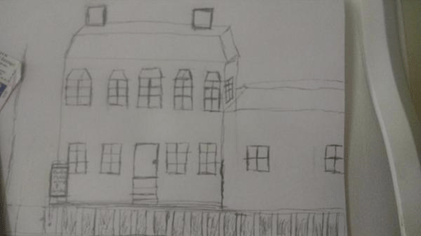
Since I was young, I made various drawings of many things including animals and landscapes. As I developed my interests in museums, I began drawing museums I have been to and museums I have worked with. For instance, I drew the Butler-McCook House in Hartford, the Stanley-Whitman House in Farmington, Connecticut, Noah Webster House in West Hartford, and Connecticut Historical Society. I drew many of these drawings from my own memory, and one was drawn using a photograph as reference. Also, I used either pens or pencils to make my drawings (depending on which utensil was available at the time). I learned to use my creativity to assist in my museum experience, and I continue to use references from books and professional development programs discussing creativity.

Connecticut Historical Society, pen, drawn 2015

  Noah Webster House, pen, drawn 2015

Stanley-Whitman House, pen, drawn 2014

Butler-McCook House, pencil, drawn 2014

One of the resources I used and continue to use is Linda Norris’ and Rainey Tisdale’s Creativity in Museum Practice to help me get inspired. Norris and Tisdale express the importance of allowing creativity to inspire work in the museum no matter which department they work from. In their book, they state that they believe “the daily life of museum workers behind the scenes both needs and deserves more attention in order for museums to reach their full potential.” Norris and Tisdale shared colleagues’ stories from across the museum field of what creative practices have worked for themselves and their museums. Also, they shared their own tips on how to jumpstart one’s creative practice using no-cost or low-cost activities. Throughout the book, Norris and Tisdale discuss many ways museum professionals can find creativity in their daily tasks, and use whatever inspiration they find in the environment they are surrounded by. The style of this book is written as both a textbook and a workbook to help museum professionals spark their own creativity.

Norris, Linda and Rainey Tisdale, Creativity in Museum Practice, Walnut Creek, CA: Left Coast Press, 2014.
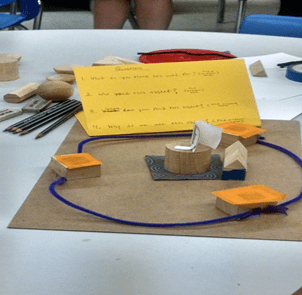
One of the professional development programs I participated in was a NYCMER workshop in October called “Exhibition Designs for Educators” at El Museo del Barrio. This program was an example of how educators can learn to express their creativity to design exhibits and programs simultaneously. There was a challenge in which we were not told what the object was, and we were expected to create an exhibit with an unknown artifact (what appeared to be a cement block). The group I worked with received the prompt to create this exhibit as a warm and friendly environment; we brainstormed various ways we could create the exhibit using the prompt. For more information about this activity, check out the post “Writing about Museum Education: Using Professional Development to Our Advantage.” By brainstorming together as a group, we were able to express our collective creative experience that led to the concept we designed.

“Exhibition Designs for Educators” Activity, October 2016
Creativity is especially used in museum education programs to not only entertain its audiences but to educate them on the subject matter of the museums’ expertise including but not limited to art, history, and science.

There are many examples of when I used creativity as a museum education professional. For instance, while I was working in historic house museums in Connecticut, I taught and assisted participants in making crafts and cooking recipes for school and camp programs. One of the crafts I helped kids make were cornhusk dolls during the summer camp program at Noah Webster House & West Hartford Historical Society which not only was a fun activity but they also learned about what kinds of dolls kids during the eighteenth century played with and created themselves to find ways to entertain themselves. I have also helped fifth grade students make apple pies and Irish-style mashed potatoes at the Stanley-Whitman House in Farmington. At Connecticut Landmarks Butler-McCook House, I helped kids create Samurai helmets out of gift wrap and yarn during the New Year’s Eve celebration, First Night Hartford. The Samurai helmet activity was inspired by the Samurai armor that the McCook family have in their old 18/19th century house; Reverend McCook and his daughter Frances traveled to many places on the way to and from China to visit another daughter Eliza, and one of the places they visited was Japan where he purchased the Samurai armor to bring back to Hartford.

One of the most recent examples include creating activities for kids to participate in during down time in school programs and during general tours at the Long Island Maritime Museum. I created activities such as cross word puzzles, word searches, matching games, and a scavenger hunt. To create these activities, I used information about the Long Island Maritime Museum and the maritime history it shares with its visitors. For instance, I created a crossword puzzle about one of the historic buildings on the museum’s property called the Rudolph Oyster House based on the information about the Oyster House and oyster business; the Rudolph Oyster House was built in 1908 by William Rudolph for his oyster company established in 1895, and it was used as an oyster culling and shucking house until 1947 and was acquired by the Long Island Maritime Museum in 1974.

Another example of activities I created was a breeches buoy search to teach participants the parts of the breeches buoy, an early contraption that pulled victims from shipwrecks, by writing down the names of the parts next to the corresponding letter (I included a word bank so they see the appropriate names). The next example of activities I created is a Name These Boats activity that challenges participants to use their memories of the boats stored in the museum’s Small Craft Building. I included a word bank to limit the possibilities, and participants would write down the name of the boat next to the photograph of a boat.

I also had the opportunity to observe a children’s program that the Maritime Explorium in Port Jefferson participated in. Children created sound-sandwiches for them to take home and play music on by blowing into them like harmonicas. The sound-sandwiches were made with tongue depressors, two pieces of straw, and rubber bands. To make them, one of the two tongue depressors needs a large rubber band wrapped around it from one tip to another; then the two tongue depressors and two small pieces of straw are tied together with smaller rubber bands at the ends. Sound-sandwiches can be adjusted until a humming or vibrating sound is heard. This was not only a fun activity for children to participate in but they also learned how to create sound by using the materials they were given.

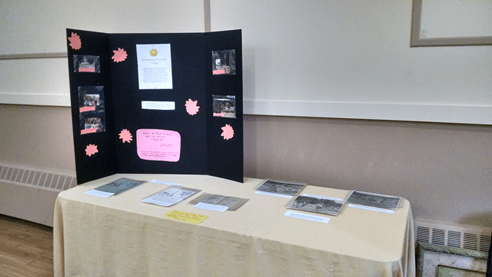
Last weekend I created another exhibit for my childhood church to share the community’s summertime fun since the season would be around the corner soon and I wanted this exhibit to focus more on the parishioners as well as their interactions with the community around them. I included photographs from the Summer Festival the church participated in in 1975, and photographs from a Church picnic that took place by the beach in the 1960s. I also included bulletins that included announcements of activities planned for the summer, ways to get involved in the community, and current events to remind parishioners to be good Christians and learn more about the issues discussed as a result of events. I designed little suns to decorate the exhibit with to represent summer. This exhibit is an example of how creativity is especially useful during the exhibit design process.

Summertime Fun with Trinity exhibit, opened June 4, 2017
Tomorrow I am also participating in another professional development program about creativity, Creativity Incubator. It is a New York State Council on the Arts (NYSCA)/ Greater Hudson Heritage Network (GHHN) Partnership Program which encourages museum staff to test out experimental interpretive approaches through hands-on activities. I will travel to the Raynham Hall Museum in Oyster Bay, New York where it is being hosted. Creativity will continue to be a significant part of our work as museum professionals, and we need to find ways to inspire creativity in our work and inspire creativity with our visitors.

What ways have you found to inspire creativity work for you? Do you have a favorite moment where you accomplished a creative project, museum-related or not? Have you been inspired by something outside of the museum field that helped you complete a project?


Reflections on the NYCMER 2017 Conference

Originally posted on Medium, May 25, 2017.

On Monday, I went to New York City to participate in the New York City Museum Educators Roundtable Conference located this year at the School of Visual Arts. This is my second NYCMER conference I have attended since coming to New York, and both times I enjoyed the learning experience each one offered. Last year I attended with a team and this year I attended on my own. This year’s theme was “Inclusivity: From Within and Beyond” which discusses inclusion and diversity in the museum education field in New York. As with each conference I have previously attended, it was very hard to pick which sessions to attend and I wish I would be able to multiple myself to attend each session offered. The total amount of sessions presented at NYCMER was about 27 sessions, and that does not include the poster session and peer group meet & greet over treats sessions. In this post, I will go into some depth of my experience the second time around providing the highlights of the day, and my experience participating in networking events.

In the morning, I traveled to the train station to take the train into New York City for the conference. Once I arrived at the School of Visual Arts, I checked in, received the schedule, wrote out my name tag, and attended the Keynote Session. The Keynote Session is a session that announces NYCMER business and introduces the conference’s theme. Also, the Keynote also included a discussion about this year’s conference theme with speakers Amy Bartow-Melia (the MacMillan Associate Director for Audience Engagement at the National Museum of American History), Laura Huerta Migus (the Executive Director at the Association of Children’s Museums), and moderator Esther Jeong (Global Tech Diversity Business Partner at Google). The discussion and speeches talked about building a diverse museum workforce where the realities of museology were discussed and the case study of the American History Museum on how the museum developed exhibits and programs that defined what it means to be an American. After the Keynote Session, I attended the first session in one of the School of Visual Arts buildings.

Rainy Train Ride into the City

My name tag from the NYCMER conference

The session I attended was called “Designing Professional Development Experiences which Increase Inclusive, Visitor-centered Teaching”. I enjoyed this session especially because it started with a brainstorming game for how we learn as learners; those include but not limited to retention, visual guides, experiential learning, auditory reflection, and team building. The presenters from the Guggenheim Museum presented examples of ways to create opportunities for educators to learn from their audience or community, and presenters from the Children’s Museum of the Arts based their professional developments on grant goals and the museum’s goals to identify internal best practices with consultants, design sustainable peer to peer learning structure, change practices and institutional approaches, identify tools that benefit all children and empower all staff. After that conference, I met with peers to go have lunch and we traveled the area to find out where to have lunch; we also stopped to admire puppies as we looked at places to eat.

Puppies I saw while looking for a place to eat for lunch
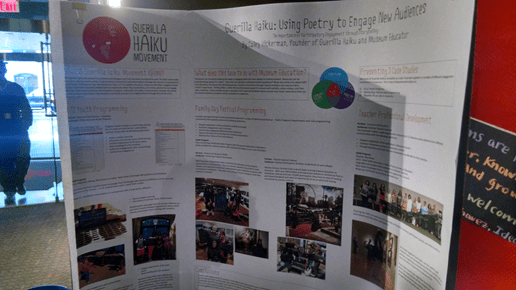
Once we had lunch, I went to the Poster Session which is where professionals give informal presentations on aspects in the museum education field. For instance, one of the posters I saw was for the Guerilla Haiku Movement which presents the argument that poetry can be used to engage new audiences. There is also an activity which challenges participants to create a haiku with 17 syllables about what we learned at the conference so far and our perspectives on museums. I had created one that had one less syllable which states: “Museums provide a learning environment for all learners.” All learners are, by definition, inclusive and it is important that every person who visits museums can learn what they have to offer.

Guerilla Haiku Movement Poster, Poster Session

Haiku I created during Poster Session

The third session I attended after seeing the posters and networking with colleagues was Resource Workshop: Designing Accessible Materials. This workshop was divided into a few sections where each presenter shared their experiences and handed out resources for participants’ references. Then the fourth and last session I attended was The Challenges of Confronting Difficult Content. In this session, the presenters from the National 9/11 Memorial and Museum discussed the school programs they developed and explained how their lessons approached difficult content. This session was interesting since these programs provided a way for students from third grade to seniors to express their thoughts on the events through art and discussion. The takeaways from the session are to address the common question: How to translate difficult content in ways that allow all visitors to correct with sensitive subject matter? And the second takeaway was as a differentiated and inclusive practice, strategy transcends content by incorporating storytelling and historical contents and current resonances/present day connections. Once the session ended, I attended the concluding reception at the Revel Restaurant.

The Revel Restaurant provided a place for NYCMER participants to network and unwind after a long day of attending sessions. The closing reception was a cocktail hour and hors d’oeuvres event where I could meet more museum professionals. I enjoyed meeting everyone who I made valuable connections with both during the sessions and the concluding reception. The conference experience I have had in the past has always made me feel inspired and fulfilled in gaining knowledge and making meaningful connections, and this conference is no exception. I have enjoyed the NYCMER conference, both last year’s and this year’s, and I look forward to the next one.

What are your favorite parts of a conference or conferences you have attended? Is there a session that made you reflect on your own experiences as a museum professional (or professional of your chosen field)?