Why Self-Care is Important for Museum Educators

Added to Medium, June 7, 2018

Self-care has become an increasingly important topic of discussion in the museum field, and we need to express why museum educators especially need to take the care they need. I recently have been in a situation that I needed self-care to help myself get back to where I need to be as a museum educator. Because of recent events, I began to review information I have about self-care and museums.

One of the posts I came across was Seema Rao’s “Focusing on Self-Care is Good for Business” in which she summarized a keynote talk Rao gave at the Pennsylvania Museums Association conference in April. I also read her book Objective Lessons: Self Care for Museum Professionals in the past, and I decided to re-read the book in light of recent events. While there are many resources online that have self-care and self-help, it is overwhelming to dedicate time to sit down and read through every material.

Earlier tonight I hosted #MuseumEdChat on Twitter and since I was hosting I decided to come up with the topic about self-care and develop the questions for the topic. I thought that I would learn more about the current status of self-care in museums by asking the questions I had to the Twitter community. After an hour-long discussion, I found so many great responses to these questions and what I found is that we need to continue to promote self-care and the significance of self-care among museum professionals of all levels.

The first question I asked was “How would you describe self-care?” because while everyone needs self-care at some point or another not everyone would have the same definition depending on the circumstances of why they need self-care. One of the first responses I came across that I think perfectly sums up what self-care is in general is:

To me, self-care is having the time and patience to actively care for your overall health (physical, mental, emotional, social, spiritual)

We all need time and patience to provide ourselves with the self-care we need to keep ourselves moving forward. The key, however, is finding the time to do so and not many museum professionals have that opportunity because some managers do not see the value of self-care.

A couple of tweets mentioned this dilemma. One tweet pointed out that “Self-care can be hard for staff who don’t have paid time off or vacation.” Another tweet also said,

Self-care is hard in sector w/ so much of the staff working on term-limited/ hourly wages in precarious jobs. Self-care can be seen as a waste by managers, who put pressure on junior staff to be super productive ALL THE TIME.

There are not many job opportunities that are full-time for museum professionals which provide benefits that will help us with self-care. These situations are a part of a bigger issue in the museum field that we continue to work towards so self-care would be acknowledged by managers, directors, and board of directors and trustees.

Rao has also stressed the importance of self-care in her post “Focusing on Self-Care is Good for Business”, and made an argument for managers to pay attention to this need for not only for their staff but for the managers as well. She stated that burnouts are high in the museum field because of the long hours with little pay and no time to recharge. Her post also directly addressed the managers to set examples for self-care:

Managers need to be honest about their own struggles with burnout and share their strategies to counteract these feelings. Sharing challenges is not a sign of weakness. A good leader is a human who is worth following, flaws and all; a boss is a person who you have to work for.

Our work culture in this society promotes the idea that having challenges are signs of weakness in managers. However, that is not true at all because we are all human and knowing how to deal with challenges and flaws is what makes great leaders a person worth following. A few responses on Twitter also pointed out that they either do not know how to or do not know how to find time to do self-care.

I have said this on Twitter and I will say again here that I don’t think everyone is good at self-care at times because sometimes it is hard to find the time to take care of ourselves. It will take a lot of practice for all of us to practice and promote self-care. Some individuals have shared what we can do to promote the importance of self-care.

One of the tweets talked about promoting workshops and activities for staff with special guests such as individuals from government or higher education agencies. I agree with this suggestion because by having programs like the ones suggested it would start to make discussions about self-care easier for museum professionals and opens up communication about self-care with managers and directors. Another tweet reiterated the sentiments I have about self-care:

All museum professionals, no matter the position, need to foster an environment of caring and understanding. If there is a need to promote self-care at work, professionals need to feel that they can open up and be honest about what they need.

After the #MuseumEdChat discussion, I was reassured that I am not alone in my own struggles to find time for self-care and balance work with much needed self-care time. I was also reassured that this is a topic that we all need to continue to discuss as we continue to find ways to improve the museum field. Self-care is different for every individual in the museum field, and it is necessary for every museum professional on all levels to take care of themselves.

I leave you all with a couple of questions that I have asked on Twitter’s #MuseumEdChat discussion that we all need to think about and share with all museum professionals in the field:

If you were going to explain to your manager and/or colleagues about self-care, how would you explain why it is important for all museum professionals, including museum educators? Please share what you and your co-workers do, or would like to do, for self-care. What method is most helpful for you? What can we do to spread more awareness to the need of self-care?

Resource:
http://brilliantideastudio.com/selfcare/focusing-on-self-care-is-good-for-business/
Social Media Journalists at Conferences: My Experience As One At NYCMER 2018

Added to Medium, May 24, 2018

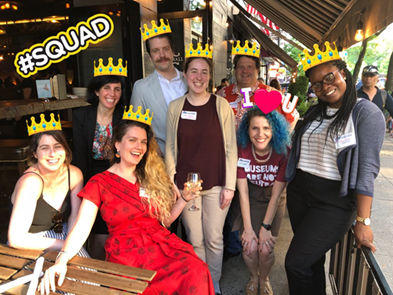
At each conference I have attended, and of course I am sure everyone reading this post felt this way as well, there are so many sessions I have wanted to attend but I could not be in more places at once. Twitter began to provide opportunities to share information from conferences on the social media platform. This year the NYCMER conference, React & Respond: The Next Steps, held at Teachers College at Columbia University this past Monday (May 21st) had social media journalists sharing their impressions about the conference and the highlights of each sessions. Rachel Ropeik, the Social Media Coordinator for NYCMER, asked myself and other NYCMER members to join her team of social media journalists.

NYCMER Social Media Journalists, Courtesy of Rachel Ropeik, Social Media Coordinator, NYCMER via Twitter
We were asked to cover the conference via Twitter by tweeting our impressions of and thoughts about the keynote session and the rest of the conference sessions. I attended the sessions, and then I tweeted some highlights of the sessions I chose to attend. All of the social media journalists, and other NYCMER conference participants following on Twitter, used the hashtags #NYCMERsmj and #NYCMER2018 to participate in conversations on the social media site. We also included photographs we took during the conference to give followers visuals of what we covered in the sessions we participated in. In this blog post, I included some of my tweets I shared during the conference for each session I participated in with brief descriptions.

This year’s NYCMER conference began with a keynote that discussed this year’s theme: React & Respond: The Next Steps. The keynote was moderated by Keonna Hendrick who is School Programs Manager at the Brooklyn Museum, cultural strategist, educator and author, nurturing equity through art and museum education. Hendrick posed questions to the keynote participants Gonzalo Casals and Annie Polland. Gonzalo Casals is the Director of the Leslie-Lohman Museum of Gay and Lesbian Art. His experience ranges from innovative cultural programming and authentic community engagement strategies to progressive cultural policy. Annie Polland is the Executive Director at the American Jewish Historical Society (AJHS). Previously, Polland served as the Senior Vice President for Programs & Interpretation at the Lower East Side Tenement Museum where she was responsible for developing programs and content for over 250,000 annual visitors.

Lindsey Steward‏ @Steward2Lindsey 9:04 AM – 21 May 2018
Welcome to this year’s #NYCMER2018 I’m looking forward to learning more about today’s theme 🙂 What are your thoughts about this year’s theme? #NYCMERsmj

Lindsey Steward @Steward2Lindsey 21 May 2018, 9:23am
I’m also glad that NYCMER is requiring salary information in job postings. It is important for us to show our support for equity and best practices in salary sharing and negotiations #NYCMER2018 #NYCMERsmj

Lindsey Steward @Steward2Lindsey 21 May 2018, 9:49am
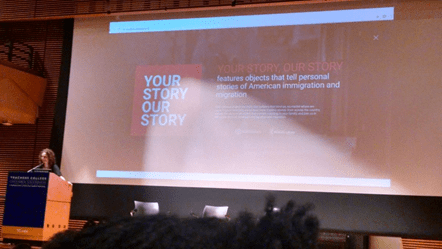
Allows people to upload pictures that tell their immigrant stories. What a great idea to be able to share and identify with people’s stories #NYCMERsmj #NYCMER2018


Lindsey Steward @Steward2Lindsey 21 May 2018, 9:56am

Interesting thought: If you could create a poem or an inscription on the Statue of Liberty today, what would it say? #NYCMERsmj #NYCMER2018

Lindsey Steward @Steward2Lindsey
I think board of trustees should also participate in programs and conferences like @NYCMER This will also help staff and board work together especially on diversity. It is unfortunately not surprising when no one said they were from a museum board. #NYCMER2018 #NYCMERsmj
10:48 AM – 21 May 2018

The first session I attended was Virtual Field Trips: Traveling Through Time and Space to Connect Museums and Audiences. During this session, Frantz Lucien, an educator at the Intrepid Sea, Air, and Space Museum who specializes in community outreach and engagement, and Charissa Ruth, a freelance educator whose resume includes the Intrepid Museum, the Brooklyn Botanical Garden, the Brooklyn Public Library, and the Cooper Hewitt Museum, discussed their experience with virtual field trips. Lucien and Ruth discussed the benefits and challenges of running and planning virtual field trips. They also performed a demonstration what a virtual field trip is like by giving us a brief demonstration of what it would be like to be in space without wearing a space suit.

Lindsey Steward @Steward2Lindsey 11:29 PM – 21 May 2018
A test to see how Virtual Field Trips work via Skype #NYCMERsmj #NYCMER2018

Lindsey Steward @Steward2Lindsey 1:13 PM – 21 May 2018
Lindsey Steward Retweeted Paul Orselli
Paul, I think there should be required professional development programs for museum leaders, directors and board of trustees, to talk about salary and the importance of having salary information included when searching for a job candidate. #NYCMERsmj #NYCMER2018
Paul Orselli @museum_exhibits
#NYCMER2018 Food for thought over lunch: How can we get ALL orgs to require salary ranges on job postings? #NYCMERsmj

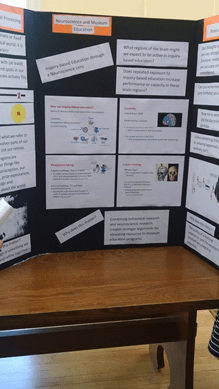
During the lunch break, I attended poster sessions that shared various brief information related to this year’s theme. One of the most interesting poster sessions I attended is Neuroscience and Museum Education. Megan Kuensting from The Met’s School Programs team shared some highlights gleaned from her Master’s program in Neuroscience and Education at Columbia University Teacher’s College, including questions about the potential for inquiry-based education to reduce student stress.

Lindsey Steward @Steward2Lindsey 21 May 2018, 1:37pm
Check out this fascinating information about Neuroscience and Museum Education! #NYCMER2018 #NYCMERsmj

The second session I attended was Beyond White Feminism: What Stands Between Museums and True Gender Equity: A Journal of Museum Education Facilitated Dialogue presented by Alicia Greene, the Community Engagement Program Developer for Boston Children’s Museum, and Margaret Middleton, the exhibit designer and museum consultant with over ten years’ experience in the museum field. In this session, we brainstormed topics about our concerns in the museum workplace in addition to discussing the upcoming edition of the Museum Education Roundtable’s Journal of Museum Education. An important take away from the session is that Museums still struggle to achieve gender equity in the workplace and the fight for representation in the galleries continues.

Lindsey Steward @Steward2Lindsey
This is to keep in mind when thinking about equity and resolving issues within the system put in place in museums. #NYCMER2018 #NYCMERsmj

The third session I attended was Making Room: Creating and Sustaining Effective and Inclusive Learning Environments presented by a former instructor and a current Museum Education Program Director at Bank Street College of Education, Cynthia Copeland and Cathleen Wiggins. This session was a participatory workshop which model interactive techniques and activities where participants explore scenarios and potential outcomes relevant to their communities.

Lindsey Steward @Steward2Lindsey 21 May 2018, 3:45pm
I love this quote! Everyone should feel like they are represented in the storytelling process. #NYCMER2018 #NYCMERsmj

I enjoyed this year’s NYCMER conference, and I thought it was a great idea to start having a team of social media journalists share information from the sessions. At first I was concerned that it would be a challenge to participate on Twitter and during the sessions at the same time. I decided to make a couple of tweets during the sessions then I tweet my reactions after the session ended. There was a lot of great reactions on the sessions at the NYCMER conference, and if you are interested in reading more tweets from the conference go to Twitter and look up #NYCMERsmj and #NYCMER2018.

How do you feel about having social media journalists during conferences? Does following conversations on Twitter make participation easier?


Significant Resources in the Museum Field

Added to Medium, May 3, 2018

As museum professionals, we continue to develop our education through professional development resources provided in various sources including but not limited to books, websites, blogs, webinars, conferences, seminars, and magazines. We learn so much from these resources, and therefore we continue to use the same ones we continuously use. Museum professionals also seek more resources to use to assist in their practices.

In my blog post Writing about Museum Education: Using Professional Development to Our Advantage, I stated that,

I truly believe professional development is important for all career paths, especially in the museum education field. Professional development in the museum education field have many opportunities to help museum professionals develop their careers to make sure they are up to date with latest theories and skills.

Professional development has many opportunities for all museum professions to develop their careers. There are many options to choose from, and we do not need to stick to one resource to develop our careers and skills. Museum professionals are able to make sure they are up to date with latest theories and skills by seeking networking opportunities.

One of the most important resources museum professionals use is their own experiences as well as experiences of other museum professionals. While we can learn from the materials we gained access to, the best resources are the ones gained from experience and sharing these experiences. By doing our jobs as museum professionals, we have practical knowledge of what occurs on a regular basis in museum practices. Museum educators especially regularly apply skills they learn from the programs they teach; when they teach programs on a regular basis, museum educators learn what methods work or what needs to be improved on a case to case situation.

In the twenty-first century, we have many options for communicating with one another to learn through each other’s experiences. Museum professionals can meet in person at conferences, seminars, and workshops, or online. Whether they are online or in-person, museum professionals can talk with one another to gain inspiration for their own projects or practices.

The benefit of interacting online is that museum professionals can communicate with other museum professionals outside of their region on a regular basis rather than waiting for the next national meet-up. Another benefit I mentioned in my blog post Online Communities: Why They Are So Important for Museum Professionals was

It is important that museum professionals have the opportunity to connect with one another since one of the best ways to continue adapting programs and exhibits is to learn from other museum professionals. Not many museum professionals have the opportunity to meet with others in person for various reasons especially not having enough time and money to invest in traveling to museum conferences and workshops.

If museum professionals are not able to attend conferences and workshops for whatever reason, providing a way to communicate online will help more museum professionals learn from one another to help move the museum field forward.

There are many opportunities online to communicate and learn from other museum professionals. For instance, there are online communities through social media such as the Emerging Museum Professionals group on Facebook, museum groups on LinkedIn, and #MuseumEdChat on Twitter. Each of the examples I listed inspire museum professionals to ask each other questions and seek advice related to the field, and encourage discussion among one another.

In recent months, I discovered that there are also online mentorships programs like the American Alliance of Museum’s (AAM’s) Museum Education Professional Network that provides space for mentors and mentees to communicate with each other. Museum professionals at each career level can apply to be a mentor or mentee to seek advice from one another, and learn from one another’s experiences. Once selected, a mentor and a mentee is matched together based on similar experiences and backgrounds in the museum field to then begin communicating with one another.

Another example of an opportunity online for museum professionals to learn from other museum professionals experiences is the blogs posted on personal websites or museum websites. I have written many blog posts in the past couple of years that continue to gain attention from all of you who have continued to read them (and I thank you for continuing to read each of these blog posts). Also, I have read many blogs from other museum professionals in the field. One of the most recent blog posts I have read came from Anne Ackerson and Joan Baldwin in their blog Leadership Matters.

Their most recent blog post, Museum Leadership: Being vs Doing, discusses the importance of knowing the difference between “being” a museum leader and “doing” your role as a museum leader. They also discussed where museum professionals should turn to if we find ourselves in a situation where we are managing more people than tasks. It is important that all museum professionals understand where they can turn to find information that will help us be effective leaders. We all need to remember that if we find our organizations are not helping us perform well in our roles we should speak up so we will figure out how we can effectively accomplish our goals.

We have unlimited resources that we can gain access to especially for museum professionals in the museum field. Our resources continue to develop as we learn from one another, from books, blogs, networks and online communities, and we move forward with changes based on what we learned. We do not rely on only one resource as the most significant resource since we need to keep our minds open to change as our communities and our field continue to evolve with the times. The museum field is fortunate to have so many outlets we can reach out to learn more about our roles in our organizations.

What resources have been the most helpful for you in your field? Have you participated in online communities like the ones I mentioned in this blog post?

Resources:
http://www.aaslh.org/
https://www.aam-us.org/
https://leadershipmatters1213.wordpress.com/2018/04/30/museum-leadership-being-vs-doing/
Writing about Museum Education: Using Professional Development to Our Advantage 

Online Communities: Why They Are So Important for Museum Professionals 


Museums Prove that Education is for Everyone

Added to Medium, March 15, 2018

As museum professionals, we need to help visitors and other individuals outside of the museum field understand the significance of education and the museums’ role in education. I have reiterated its importance in the museum field in previous blog posts but it is an important point that needs to be reiterated especially when we need to show that education is for everyone. The latest edition of American Alliance of Museum’s Museum magazine is dedicated to education by discussing all-ages programming in museums.

In a message from the President and CEO Laura Lott, she stressed that as an Alliance we need to find new ways to engage the education community and share our resources. We need to make sure individuals outside of the museum field are aware of what we can offer to help people of all ages see what museums have to offer especially through educational programs. Also, we need to show that our educational programs are not limited to school field trips. We should show our visitors and other individuals not familiar with museums that our programs are created to engage with all ages. A couple of articles that show examples of programming for all ages include cultivating lifelong appreciation of museums through teen programs, and about early education programs and how they make sense for all types of museums.

There is also an article written by Ericka Huggins and Kevin Jennings, two keynote speakers for the 2018 Annual Meeting & MuseumExpo in Phoenix, encourage museums and museum professionals to create more inclusive education programs. Huggins is a human rights activist, poet, educator, Black Panther Party leader, and former political prisoner. Jennings is the new president of the Tenement Museum and is the co-founder of LGBT History Month. In their article called “Who Will Tell My Story?”, Huggins and Jennings share some of their thoughts on the power of storytelling, and how important it is to be authentic and inclusive in this work.

Both of them shared their experiences through storytelling and shared important facts that museums should think about moving forward in education. Huggins pointed out that we can learn to be global citizens by making sure museums support the larger community in thinking beyond nation-states. Jennings stated that he believed museum professionals should take a hard look at what stories we tell and don’t tell, and consider what that says about whose lives we feel matter. Huggins’ and Jennings’ statements are important considerations because we all need to remember we have a significant impact within our communities and we should work together to be more inclusive.

Conversations about museums proving education is for everyone, and inclusion, has recently been taking place though online discussions such as today’s EdComVersation through the American Alliance of Museums and the Twitter discussion #MuseumEdChat. Both of these online platforms have discussed social justice and museums by discussing the importance of inclusion and diversity within our museum community from the staff to the visitors.

Today, I participated in an EdComVersation discussion about engaging audiences as socially responsive museums. It was hosted by Rebekah Harding, Associate Director of Learning and Engagement at the Ronald Regan Presidential Foundation and Institute, and Sheri Levinsky-Raskin who is the Assistant Vice President, Education & Evaluation at the Intrepid Sea, Air & Space Museum and the Chair for Professional Development for AAM’s Education Committee (EdCom). The guest speaker was Monica O. Montgomery Nyathi who is the founding director and curator of Museum of Impact the world’s first mobile social justice museum, inspiring action at the intersection of art, activism, self and society.

According to the EdComversation event webpage, Monica believes that museums can best engage their audiences when they catalyze socially responsive practice, acting as conveners, sites of conscience and spaces that welcome difference. To prepare for the discussion, we were given links for pre-reading material including my blog post “Reaction to Article: Museums transition from institutions of elite to places that ‘promote humanity’” which made me glad because I am always happy to see how individuals especially museum professionals benefit from continuing important discussions using resources such as the ones I provide.

During this program, we discussed how to embrace the needs and nuance of modern audiences, and how educators and front line staff can fuse informal educational with the wave of social activism the world is experiencing, to create space for awareness, inspiration and understanding of social movements. We used a new format called Zoom, which allowed all participants to not just type in their questions and responses, but they could also use their computers’ microphone and video camera to participate in discussions.

Zoom also had a feature that allowed us to form smaller groups to chat with each other to address questions such as:

How does your institution incorporating current events or social activism into the lesson, tour or discussion? How might you incorporate more of this?

What forms can socially responsive museum practice take? How have you observed it in local and national museums in the field? How have you observed it in your own?

What are the possibilities of celebrating and explore issues around material culture, power and untold stories, to honor visitor voices, challenging apathy and illuminating ideas?

I enjoyed this format because it allowed me to get to know other museum professionals I would not have been able to with the old format of listening to speakers and typing questions into a chat feature. The old format seemed to lead to passive participation. While this is a new feature and it would take some getting used to, I see the potential in having a more interactive experience in these discussions.

One of the statements that stuck with me was when said “museums are a partner for learning and enrichment but shouldn’t be overshadowing- if you want to know what audiences want- ask them and involve them”. We need to establish and maintain our relationships between museums and our audiences to understand what we all want from our experience in educating ourselves about social justice and social movements.

This discussion was continued during tonight’s #MuseumEdChat on Twitter. Participants answered a number of questions about social movements, and continued to discuss these questions within the hour and beyond the hour discussion. One of the questions asked was: Why should museums connect with visitors through social movements?

I believe that museums should not only remain relevant in today’s community by connecting with visitors through social movements but museums can provide resources that will help visitors get educated about the issues social movements address. I have also read other responses to this question, and one of the responses that stood out to me was:

Because social movements are an important part of the human experience! They are part of what drives change in societies across time, cultures, etc. By engaging w/current social movements we can teach empathy and appreciation for movements of the past.

This response stood out to me because it is true that all social movements, in the past and present, are part of the human experience. Many changes within our society were made because of the social movements that occurred. Social movements today are getting a lot of attention and inspiring more discussion on what changes we need to make in our community and in our government.

Another example of the questions asked during the #MuseumEdChat discussion was: What makes a good partnership with an audience successful? I believe successful partnerships with an audience need to have open communication and build the trust between museums and its audiences so visitors are more likely to turn to museums to learn about the issues and the past to understand the present social movements.

What we should all take away from reading the latest edition of Museum magazine, and from what participants in the discussions talked about, is museum professionals and people outside of the museum field need to work together to find out how we can show them educational programs can be for all ages. We can also show them that not only our educational programs can be for all ages but we can also reveal that we are safe spaces to discuss social justice.

Do you have examples of educational programs in museums that are geared towards all-ages? How does your organization discuss social justice among the staff and/or visitors?


How to Find the Balance between Work and Family? An Important Discussion We Need to Acknowledge

Added to Medium, February 1, 2018

Museum professionals who either decide to start or have families of their own or have other dependents need to figure out how they can balance work and life outside of the museum. This balance is what I need to continue to consider as I plan to be married next year, and continue to spend time with family. Finding the right balance is not going to be easy since life is unpredictable.

I knew going in that balancing work and life is a challenge, and I should try to be as flexible as possible. My experience in the museum field has presented a number of instances when I need to figure out how to balance work and family. For instance, it is a challenge to visit my family when they live in other states.

I have an older sister who lives with her husband and two boys in Connecticut, and a younger sister who lives with her husband in Rhode Island. The rest of my family live around the New England area. As a museum professional who works in a small museum, I wear many hats when I assist in running programs and finances. It is hard sometimes when I cannot always go up to visit family as long as I want to. During the holidays, we planned a brunch so all of us are able to spend time together and we are able to spend time with extended family within the same day; this worked well with me especially because my fiancé and I went to brunch at my sister’s then we went back to spend time with his family.

I am grateful for the time I am able to spend with family, and being able to balance museum work and family is important to me. I always look for resources on how to balance museum work and family life since it is never too early to figure out how to plan for the future.

In the past, I came across information about balancing work and family life in the museum field. I kept the information in mind while I was attending graduate school, and beginning my career in the museum education field.

Recently I have been reintroduced to a blog post written on American Association of State and Local History’s website written back in 2016 by Melissa Prycer, the President/Executive Director of the Dallas Heritage Village. The AASLH blog post, “Baby Boom: Motherhood & Museums”, shared two stories about Prycer’s friends and colleagues experiences dealing with balancing work and family, as well as workplace leave policies.

It caught my attention again because now that I am planning more on my future. By reading this blog and other resources, we will be prepared for what we need to know what is going on in the topic of workplace leave policies and motherhood.

I began thinking more about the balance of work and life when I participated in the MuseumEdChat discussion last week on this topic. The hosts of this chat posed questions about this topic and participants answered their questions.

One of the questions that was posed and discussed about was: When you hear the phrase “family friendly workplace,” what does mean to you? When I hear “family friendly workplace”, I think that this is an organization that understands that family takes priority especially when unpredictable circumstances happen such as when one’s child is sick and needs to be brought to the doctor.

Museums and museum professionals also need to acknowledge that there are different types of families that need to be cared for, and when we acknowledge this in our programming our family friendly workplace policies should reflect this fact as well.

A website called Incluseum had written a blog post that discussed acknowledging different types of families called “Including the 21st Century Family”. The 21st century family is a term created by the writer to acknowledge the fact that families are unique, and by using the term family it suggests that we see families as “a nuclear family with two heterosexual legally married parents of the same race and their biological children, residing in the same household.”

The blog post included a list of family-inclusive language words that helps museums be more inclusive to all visitors. For instance, instead of calling adults accompanying children “parents” or “mom and dad”, since it suggests that all children have moms and dads which is not the case, museum professionals should use “grownup”, “adult”, or “caregiver”.

If we pay this close attention to how we treat our family visitors, we should extend the same amount of attention to our own museum professionals’ families.

Since I do not have children of my own yet, it is important that I should learn what other museum professional parents deal with and desire from family friendly workplace policies to prepare for what I may consider in the future. I read other participants tweets responding to questions the hosts posted.

Another question that was posed was: If you could design your dream set of benefits that would give you true “work life fit” what would it look like?

One of the participants pointed out that it is important to make sure museum professionals who dedicate a big chunk of their lives to fulfill the museum’s mission get benefits that include paid family leave, health insurance, and opportunities for professional growth.

During the discussion, Sage, one of the hosts of last week’s MuseumEdChat, shared information from the Institute for Women’s Policy Research on Family and Medical Leave. According to their website, this organization produces reports, fact sheets, and memoranda about the impacts of proposed paid leave laws to inform policymakers, business leaders, and advocates across the country. The information the Institute provides identifies costs and benefits of workplace leave policies to help people understand that these policies do not harm businesses and the economy.

When we take a good look at what our museums have to offer and what museums should do to help us balance work and family, we will be able to successfully accomplish our museums’ goals while being able to make memories with our families and have families of our own if we choose to.

Does your museum or organization provide leave policies and/or services for your families? How do you balance time between work and family?

Resources:
https://iwpr.org/issue/work-family/family-and-medical-leave/
http://blogs.aaslh.org/baby-boom-motherhood-and-museums/
https://incluseum.com/2014/07/07/including-the-21st-century-family/

What Can We Do About Admission Fees to Our Museums?

Added to Medium, January 11, 2018

In the 1970s, the Metropolitan Museum of Art developed an admissions policy that allowed all visitors could pay what they wished or what they were able. However, according to National Public Radio, beginning March 1st adults who live outside New York state and who are out of school will have to pay $25 to enter the museum; seniors will pay $17, students outside the tri-state area will pay $12, and children under 12 will still enter for free.

Since The Met’s Admission policy change was announced, the museum community has talked about the debate on admission rates for museums. When I heard about the change in the admissions policy, I had mixed reactions to the news. On the one hand there is a risk of alienating potential visitors from having access to museum’s exhibits and programs, and on the other hand I understand that securing funding for museums is never easy.

It has been a week since the announcement was made, and I read a number of articles as well as blog posts about it. Also, I participated in a discussion with other museum professionals in the field. After reading about and discussing this announcement, I do have mixed feelings on it still but, like everyone else discussing it, it made me think more about the admission fee issue and about my experiences dealing with admission policies. As a museum professional, I have heard so many visitors opinions on admission fees being too high and too low.

Many museums have different admission policies based on their operation budgets and funding they may or may not receive from donors and sometimes the government. The decision on what the admission prices to museums is not an easy one to make. Many museum professionals and visitors debate over what would be an appropriate amount to pay admission to museums.

Seema Rao stated on her website Brilliant Idea Studio in her blog “Let them Eat Cake (Instead of Visiting the Met): The Problems with the Metropolitan Museum’s Ticket Fee” her thoughts on the Met’s change in the admission policy. One of the points she stated about the issues it raises for her was on a museum’s value vs. cost; she described three types of museum visitors and pointed out that museums need to understand that fees mean different things to different people.

Last week I participated in the MuseumEdChat discussion where we talked about admission fees for museums. For those not familiar with MuseumEdChat, it is a group discussion that takes place on Thursdays on Twitter. The moderator asked participants questions based on the admission fees topic.

One of the questions asked was: What are your thoughts about ticket fees? I responded with,

A1 1/2 I think it depends on the museum because each museum has different budgets, and amounts of revenues. Some museums depend heavily on admission sales and others depend on admission sales a little less since they may have more assistance from grants #MuseumEdChat
A1 2/2 It is hard to tell all museums to stop ticket sales since no museum is exactly the same as another. #museumedchat

I was asked if there are factors that help the museum make the ideal decision on ticket fees. In response I stated that,

Museum professionals should collaborate with their financial department colleagues to look at current/past records and the trends between increases/decreases in ticket fees. If we know where we came from financially, it would be simpler to know how we can proceed #museumedchat

It is important for colleagues to collaborate with one another to keep the museum fulfilling its mission. Museum departments can learn how to help their museum function by learning about finances from their financial departments or from other resources if there is no financial department. We would have a better understanding of how museums function by learning about grants, fundraisers, income reports, et. al.

Another question that was asked during the MuseumEdChat was: What is the ideal role of education in fundraising? During the conversation I pointed out that

Education can show the responses and reactions of both staff and visitors who participate in museum programs. By sharing these responses/reactions, we can make an argument on how funding is significant in running a program (time and supplies for example) #museumedchat

When I was at the Long Island Museum, I and the rest of the education department gave a presentation to the Board about the programs that have occurred and ones that were coming up. We shared results of participants reactions, and the statistics of how many people have attended the programs and the amount of revenue each program generated. By giving a presentation to a Board of Directors and donors in a meeting or fundraiser, education departments have the opportunity to show how their programs benefit the museum. The Met was not the only museum that is looking into changing its admission fees.

Other museums have also considered changing their admission prices as well. The Museum of Science and Industry and the Chicago History Museum, for instance, are seeking approval from the Chicago Park District for admission-fee increases. Both of the museums are asking the Park District Board to vote on raising general admission fees effective on February 1st to help offset increased costs in building maintenance and operations.

In the end, the debate over admission policies are not easy to come to a conclusion on this subject. Museum professionals should keep in mind all aspects of funding, including admission fees.

What was your reaction to the Met’s change in admission policy? How do you feel about museum admission fees?

Resources to What I Referenced and Read on the Admission Fee:
www.chicagotribune.com/news/ct-met-museum-admission-fee-increase-20180108-story.html
http://www.vulture.com/2018/01/the-mets-admission-fee-hike-points-at-a-much-bigger-problem.html?utm_source=tw&utm_medium=s3&utm_campaign=sharebutton-b
https://brilliantideastudio.com/museums/let-them-eat-cake-instead-of-visiting-the-met-the-problems-with-the-metropolitan-museums-ticket-fee/
https://www.nytimes.com/2018/01/04/arts/design/met-museum-admissions.html?smid=tw-share&_r=0
https://www.nytimes.com/2018/01/04/arts/design/the-met-should-be-open-to-all-the-new-pay-policy-is-a-mistake.html
https://www.npr.org/sections/thetwo-way/2018/01/04/575751847/the-met-is-set-to-snap-nearly-5-decades-of-pay-as-you-wish-tradition?utm_source=dlvr.it&utm_medium=twitter
https://brilliantideastudio.com/art-museums/nickles-dimes-and-tough-times-the-relationship-between-visitors-revenue-and-value/
https://www.colleendilen.com/2018/01/10/mets-admission-price-will-not-hurt-accessibility-may-help-data/

What Museums Hope For 2018

Added to Medium, December 14, 2017

As 2018 approaches, I have been thinking more about what I hope the museum field will accomplish in this upcoming new year. What I hope for 2018 as a museum professional is to have an improved work environment in the museum community and continue our work to have more inclusive accessible museum programming. We need to continue to remember we are a changing society and our practices need to reflect our communities wishes to remain relevant.

Museum professionals especially throughout social media such as Twitter have been thinking about what they hope for 2018. On Twitter, there is a hashtag being shared: #museumtrends2018. There has been a lot of discussion about what the future of museums can be, and I hope we can make the changes and adaptations needed to continue to collaborate within our communities and around the world.

American Alliance of Museums magazine, Museum, has recently discussed about the future of museums in their most recent edition, Museum 2040. I previously discussed this edition in a previous blog post “Creating an Environment-Friendly World with Museums” which focused on the museums encouraging our communities to work towards a more environmentally friendly world. While this edition of Museum magazine was written as if we are in the year 2040, the information presented in the magazine can inspire museum professionals to take actions that would help create an environment-friendly community. Our world continues to change, and museums as well as any institution also need to recognize this change and learn how to change with it.

We need to consider changes we need to make on a personal and professional level as well to help ourselves be in a healthy environment. Many museum professionals have gathered together to think about what we want to work towards in 2018. Seema Rao posted a survey last month on Twitter asking museum professionals what trends we are most likely working towards for 2018.

According to the survey results, the themes for 2018 trends in museum education are equity and inclusion, workplace issues, and visitor-centered experiences. Some of the trends in the equity and inclusion include fostering relevance, social justice, and museum ethics. Workplace issues in the survey results include money, jobs, and stress. The visitor-centered experiences shared in the results include digital experiences, skill development, and student and family programs.

When I read about the survey results, I was not surprised to see these main themes and trends for 2018. Each of these themes are especially important for the museum professional community who continue to find ways to make their institutions relevant to our continuously changing society. We are recognizing that our society is more politically correct than when museums first appeared in our nation, and we understand that we need to reflect this in our staff, board, and museum practices.

It is particularly hard for many museum professionals to stay in the field in its current work condition. Since we are discussing this more in recent months I hope for our field that we continue this discussion and work on making the changes we need to fulfill our personal and professional expectations for our museum work.

Our work in the museum also needs to adapt to our visitors and potential visitors needs for an engaging museum experience. As technology continues to make advances, museums try to adapt to these changes by creating digital programs that allow more opportunities to interact with museums’ collections and narrative.

The survey continued with more specific results that revealed we are most likely not going to see immediate results within the next five years.

Rao pointed out that museum education in 2018 would like to offer visitors a high-quality, inclusive experiences but feel real challenges in order to do so like funding and training. Also, survey respondents indicated that museum educators do not foresee that the problems in the field will improve in the next five years since there were real concerns about balancing technology and collections-based experiences and there were also real fears about challenges for the future in terms of funding and staffing.

Current conditions in our field such as the lack of proper funding and training do prevent us from providing high-quality and inclusive experiences. We continue to argue our case for museums needs to have appropriate funding during Museum Advocacy Days, and by continuing our discussion on these days in Washington D.C. each year we increase awareness as well as inspire measures to increase funding.

I do not believe that all of the challenges we face as museum educators will be resolved overnight. If we continue to plead our case and continue this discussion, we would be able to work towards having better experiences in addition to sufficient funding and staffing. Since we do not know how much we can accomplish at this moment, we also see what survey participants say could be trends in 2022.

Museum educators, according to Seema Rao, pointed out in the survey that there was a greater disparity in themes for the 2022 trends since predicting so far out is more challenging. For 2022, the museum education field would perhaps be facing possible obsolescence, increasing equity, developing engaging experiences, and changes in technology.

It is hard to predict what may happen a few years down the road but I can see our museum community continue to work towards making museums more relevant in a changing society. I look forward to finding out what we accomplish in the upcoming year and I hope that museums continue to work towards relevant programming as well as better working environment.

What do you hope for 2018? Do you have New Years resolutions for yourself professionally?


Resources:
https://medium.com/@steward.lindsey/creating-an-environment-friendly-world-with-museums-b2e0a7f77556
http://www.aam-us.org/resources/center-for-the-future-of-museums/museum-2040
https://brilliantideastudio.com/art-museums/museum-education-2018-trend-forecast/

Online Communities: Why They Are So Important for Museum Professionals

Originally added on Medium, December 7, 2017

One of the best ways for museum professionals to fulfill their professional growth is to learn from each other through online communities. I follow and participate in the Facebook group Emerging Museum Professionals and in #MuseumEdChat on Twitter. There are many Emerging Museum Professionals Facebook groups for local museum communities, and there is one that covers emerging museum professionals all over the nation, the National Emerging Museum Professionals group. While I do follow many local emerging museum professional groups in New England and New York, I mainly focus on the national group to be able to hear from other museum professionals to gain more perspective on the museum field on a national level. Since museums are utilizing social media to get visitors and potential visitors attention, it makes sense that museum professionals take advantage of social media to communicate with one another.

It is important that museum professionals have the opportunity to connect with one another since one of the best ways to continue adapting programs and exhibits is to learn from other museum professionals. Not many museum professionals have the opportunity to meet with others in person for various reasons especially not having enough time and money to invest in traveling to museum conferences and workshops.

When we have online discussions, we are able to connect with many museum professionals from around the country and in some cases around the world. Also, we are able to get inspirations for our own practices including but not limited to programs, exhibits, collections policies, and administrative practices.

According to their Facebook group, the National Emerging Museum Professionals network envisions communities in which museum professionals make meaningful connections within and across backgrounds, disciplines, and institutions by: providing leadership, responding to changing needs, enriching experiences, growing capabilities, sharing resources, advocating for the museum profession, connecting groups on a local and national level.

In the National Emerging Museum Professionals group, there are many topics discussed among participants in the group. Some examples include but not limited to resume help, volunteer recruitment, advice on how to write a collections management policy, how volunteers can be recognized/appreciated, and looking for inspiration for youth programming. Any of the members post questions or discussion points posed to other participants in the network, and many give their responses based on their experiences.

I find these discussions helpful because I find out what other museum professionals have done in similar projects I have worked on at the time. I participate in the discussions and I also save conversations on Facebook so I can refer to them later to get some inspiration for my work in the museum field.

As well as Facebook, I also participate in the #MuseumEdChat discussions on Twitter. Museum Ed Chat hosts discussions usually on Thursdays from 8pm to 9pm to chat about museum education in addition to general museum topics. Each account holder of the MuseumEdChat account takes turns hosting the chat, and the topics vary on each discussion. The discussions begin with questions posed by the host and those who are participating live can respond with their answers. If one could not participate in the discussion live, they are encouraged to still answer the questions on their Twitter page and use the hashtag to make sure their responses are noticed by other followers. This Twitter discussion is open to all museum professionals not just museum educators since we all work towards the mission to educate the public using the resources we have in our collections and programs.

I participated in tonight’s #MuseumEdChat discussion which was about reflecting on this past year and what we hope to accomplish next year. One of the questions included: What are you most proud of from work this year? My response to this question was “I am the most proud when I see a smile on a kid’s face, and thank me for all the help I give them. I especially love it when they give me little gifts to show how they really appreciate the time they spent in a program.”

Another example of the questions posed in tonight’s discussion was: What are some big themes you noticed in the field in 2018? I knew that there are many themes that are discussed in our field especially within the past few months but I decided to respond with “I noticed that one of the big themes this year is how we should strengthen our connections with schools and other departments in the museum field. I hope we continue discussing this theme as well as many other themes in 2018.” It is important that we establish and strengthen our connections to pursue our missions and help others within our communities.

Other big themes I noticed stood out to me since these have been recently talked about and are especially relevant for the upcoming year. According to Seema Rao, for instance, she stated “Burnout and learning to handle change seemed like big themes of the year; and frankly, some people figuring out if they should leave the field.” It is challenging to stay in the field in our current state in the economy, and it is easy to feel less motivated so finding ways to inspire us is especially important. I am glad that we continue to have this discussion, and it is an important topic to continue talking about in 2018.

I also believe that we need to work on being able to take the time to focus on ourselves and think about our practice as museum professionals. I was glad to see that another participant in the discussion pointed this out tonight. One participant pointed out that “Finding consistent time to reflect on my practice, students’ work, and the overarching state of the field. In some ways that is my job, but I’ve been busy with other things the past six months. Carving out think time: the biggest priority for the coming year.”

When I read that statement, I kept thinking about how there are so many things I need to think about in my own practice and what is going on in the field. A lot of times I have been busy with many things both personally and professionally that I think there is not enough time in the day to do so. I am glad that I have been writing in my blog for over a year now since I am able to take this time to write about what is going on and react to what is happening. There is so much out there that I do not always have the time to write about all of it so I try to read as much as I can. I think we all need to remind ourselves to take that time and learn how we can be better museum professionals.

We should take advantage of our online connections, and see what we can learn from the experiences as we continue to move the museum field forward.

What social media discussions have you find the most helpful in your work? Are there other social media outlets you follow that offer similar help in your work?


What Can We Learn from International Museums? Encouraging A Global Relationship Between Museums

Added to Medium, October 26, 2017

When I began my career as a museum educator, I learned about various local, regional, and national organizations that provide professional development and other resources for museums. As I continue my career in the museum field, I also learned more about international museum organizations that offer similar resources for museum professionals around the world. I understood that museums can benefit from meeting with other museum professionals to share ideas and learn from each other about various museum operations especially education programming. Museums and museum professionals have opportunities to gather and learn from one another to keep developments in the field moving forward.

During tonight’s #MuseumEdChat on Twitter, myself and other participants emphasized the importance of learning from other professionals in the field. One of the participants, on answering a question about mentorship, pointed out that “people with varying areas of expertise need to mentor you through different issues”. There are so many professionals with various areas of expertise we work with that it is important to collaborate and seek guidance.

Another participant also thought about “colleagues in museums in other countries who literally risk their lives to preserve culture.” Museum professionals in many countries are dedicated to preserving culture, and work together to provide resources to help one another.

If we continue to engage with museum professionals both within our country and outside of the country, we will not only have a better understanding of one another we will also be leading by example on dealing with current issues in the world.

I was first introduced to international organizations when I learned about MuseumNext.

Museum Next is an organization that began in 2009 with the question “what’s next for museums?” They discovered that the answer to this question is as varied as the people who are building it. This organization builds a global community of museum leaders, innovators and makers who champion future thinking in museums. MuseumNext has led to collaborations that span the globe, and the influence of this passionate community can be seen in action in museums all over the world. It offers conferences held throughout the year in Europe, North America and Australia to offer participants the opportunity to hear inspiring presentations, pick up career skills in expert hosted workshops and network with fellow delegates.

When I began writing my blog, I began to learn more about international museum organizations through LinkedIn and other social media outlets such as Museums Association and the International Council of Museums (ICOM).

Museums Association is a UK based organization that inspires museums to change lives. It is the oldest museums association in the world (set up in 1889) based in London, and is independently funded by memberships. Their memberships are made up of museum professionals, institutions and corporate members. Museums Association values a lot in making museums have impacts on lives. This organization values having the courage to say what they believe; passion about delivering diversity and equality; working collaboratively, inclusively, and ethically; and lead change by example. The Association advocates for museums, sets ethical standards and runs training and professional development for members wishing to further their careers.

Museums Association is governed by a board of trustees from all parts of the UK museum community, elected by MA members. It runs various professional development programs, including conferences, and mentoring and regular training events.

The International Council of Museums (ICOM) is an organization created in 1946 by and for museum professionals with more than 37,000 members and museum professionals who represent the global museum community. A diplomatic forum made up of experts from 141 countries and territories was formed to respond to the challenges museums face worldwide. ICOM carries out international missions thanks to international mandates in association with partners including UNESCO, INTERPOL and the World Customs Organization (WCO). Also, ICOM is committed to providing cultural institutions with the necessary support and risk prevention tools when faced with conflict situations or natural disasters.

ICOM also organized International Museum Day, a worldwide event held around May 18th which aims to increase public awareness of the role of museums in developing society since 1977. Participation in International Museum Day promotes greater diversity and intercultural dialogue among the international museum community, and each year ICOM identifies a theme for the event. I have spread awareness of this worldwide event for years since I discovered it early on in my career. This past year’s theme was “Museums and contested histories: Saying the unspeakable in museums” which focuses on the role of museums that, by working to benefit society, become hubs for promoting peaceful relationships between people.

In addition to previously mentioned, ICOM also operates thirty international committees on a range of museum specialties, who conduct advanced research in their respective fields for the benefit of the museum community. Some of the committees include CECA – Education & Cultural Action, DEMHIST – Historic House Museums, ICOM-CC – Conservation, and ICFA – Fine Arts.

There are so many international museum organizations out there that emphasize the importance of museums and what they offer.

On the social media outlets, I have had discussions with museum professionals from various countries including but not limited to Uganda and Nigeria; there have been sharing points of view as well as sharing advice during these conversations. By connecting with museum professionals outside the country, I learn more about the museum field on a larger scale and appreciate so much diversity our world has to offer; we could (and should) celebrate what all of us in the world have to offer.

Do you know of other international museum organizations? What has your experience like connecting/networking with international museum professionals?

Resources:
http://www.museumsassociation.org/home
https://www.museumnext.com/
http://icom.museum/

Anniversary Special: One Year of Writing about Museum Education

Added to Medium, October 19, 2017

As a way to celebrate both the one-year anniversary and my birthday tomorrow, I decided to reflect on the past year and share plans moving forward for the blog. It has been exactly a year today since I started my first blog entry on Medium, and so much has happened since then. When I began my blog, I talked about how I became the museum educator I am and what led me to start writing it. I stated in my blog,

This story will continue not only with a discussion about my experiences in greater detail but I also will discuss recent topics in the field as well as recent books and journal articles I read. I also will write about conferences and workshops I attended. What I hope to accomplish with this blog is to give educators and aspiring educators both a personal account of and resources on the museum education field.

Now a year later, I kept my promise and discussed recent topics in the field including museum professionals leaving the field and what to do to make the field more appealing to stay in. Also, I discussed what I have been reading and discussed topics based on what I read in books, journals, blog posts, and articles. I briefly discussed my professional development experience in the blog.

Since I started the blog a year ago, I have met with many people who have expressed their thoughts, opinions, and insights on the ideas I shared. I shared my blog posts each week on social media outlets LinkedIn, Facebook, and Twitter to reach out to people especially other museum professionals. Especially on LinkedIn, I read many comments, opinions, and insights to the topics I discussed. I am thankful for everyone who has read and responded to this blog since you all gave me insights on your perspectives on the museum field and continued the discussion on these topics. Also, I thank those who reached out to ask me questions and for my advice. When you respond to these blog posts, I am able to not only know what you thought about the current topic we are also able to learn from one another to keep moving our field forward. Because of this blog, I have also became even more involved in the field than before I started writing.

Ever since I began writing this blog there have been many developments including meeting new people, joining Gender Equity in Museums Movement (GEMM), and creating a new website to promote the blog in addition to sharing resources I come across.

After writing about gender equity in the Lunch with NEMA program, I was asked if I would be interested in joining Gender Equity in Museums Movement (GEMM) which is dedicated to educating museum professionals about gender equity and assisting museum professionals in discussing gender equity among colleagues. In addition to this, I created a website that is used as my professional reference and where I promote my blog.

When I created my website, https://lookingbackmovingforwardinmuseumeducation.com, I hoped to promote not only my blog but to also promote my expertise by sharing resources I refer to and open communication with viewers to discuss topics on museums. I designed my website so visitors can see an abbreviated version of my resume, and if they are interested in learning specific experiences there is a contact page where they can ask me to send them a copy of my resume. Also, my website has various resources organized into various topics including education and interpretation, educational resources, books on museums and public history, and blogs I read. These are resources I share that show I keep up to date on current topics and trends in the field. While I update my website, I also check on the number of individuals who have accessed my website.

I have seen people who have visited my website come from not only within the United States but from many countries around the world. There were individuals from Iceland, Israel, Ghana, South Africa, Australia, Canada, Japan, India, Spain, Germany, Ireland, China, Bangladesh, New Zealand, United Kingdom, Brazil, Peru, Russia, Switzerland, and Italy. When I saw the amount of people from different countries visiting my website, I saw the potential in continuing to make my website grow and reach out to more people.

I have learned a lot in this experience and I am thankful for each moment that led me to this point in my career.

Moving forward, I have additional ideas and projects I am continuing to work on. Since I realize there is international attention to this website as well, I will look out for resources that discuss international museum topics to add to my website.

While I have posted for the most part only once a week, I know that there is so much I want to write about so I want to write more than once on a regular basis. In order to do so, I want to make sure this blog and website can be financially supported to keep it running. I will launch my Patreon page to help support my website and blog.

Patreon, for those not familiar with the website, is a membership platform that provides business tools for creators to run a subscription content service, as well as ways for artists to build relationships and provide exclusive experiences to their subscribers, or patrons. It is popular among YouTube video makers, artists, writers, podcasters, musicians, and other creators who post regularly online.

On my Patreon page I encourage all to make a contribution to help support the blog and website, and/or share my page with others. There are a number of rewards you can earn when you contribute which are: acknowledgement on my website, send information you come across to me on museums and history, and make requests for what I should write about for the blog. When you make higher contributions, in addition to the previously mentioned rewards we can arrange for an hour meeting, a two-hour meeting, or an unlimited meeting for either a meet and greet or seek consulting advice.

My goals are when I reach 50 patrons contributing I will post two blog entries per week instead of once per week. As more patrons contribute to my blog and website, I will increase the number of blog entries per week.

I encourage visiting and sharing my Patreon page, listed here: https://www.patreon.com/lindseysteward

Thank you all for your continued support during the past year, and I hope you all continue to read as I continue to give educators and aspiring educators both a personal account of and resources on the museum education field.