In preparation for the workshop next week, NCoC and Museum Leaders: Scenario Planning for the 2020 Election and its Aftermath, the MuseumEdChat Twitter conversation focused tonight’s discussion on what role museums could play as 2020 comes to a close post-election. The National Conference on Citizenship (NCoC) dedicate their work to strengthen civic life in America by connecting people together through a nationwide network of partners involved in a cutting-edge civic health initiative, their cross-sector conferences and engagement with a broad spectrum of individuals and organizations interested in utilizing civic engagement principles and practices to enhance their work. With this partnership, museum leaders and thinkers are virtually gathering together to support museum staff and imagine the roles museums, as trusted civic institutions, can play in whatever 2020 has left in store.
The Twitter discussion explored four areas of museum work with the theme of community in each question. For those who are not familiar with #MuseumEdChat, discussion hosts and participants used the Q1/A1 format and the #MuseumEdChat hashtag in replies in order to be seen by all participating in the discussion.
Because Twitter at the time of this post was not letting me, and as I suspect other participants, post our responses to the questions I am posting my answers to this blog post. Here are the following questions and answers for tonight’s discussion:
Q1. Operations: What should concern museums regarding their operations and serving their community after the election? Is your museum discussing this at all? #MuseumEdChat
I think it is important to figure out the decisions that would be best for each individual museum on how they will operate and serving the community since each museum is different and the communities they serve have their own needs to attend to. Museums should be discussing with one another what could be the best approaches for within the museum and community, and the individual museum will use what was discussed to figure out what approach works best for their own institution.
Q2. Messaging: What ideas, messages, publicity, etc. could museums share with the community that would be valuable right now *and* post-election? #MuseumEdChat
I tested posting to Twitter by attempting to send this answer as a response: A2 I think museums can share resources that would best educate the public about what the issues we are voting on and set up programs & statements on what the next steps would be for museums and how they’ll continue to work on serving the community now & post-election. #MuseumEdChat
Q3. Programs: What kinds of programs would you like to see #museums do for the community post-election? (Again, think about those scenarios…)
I would like to see museums plan programs for the community that focus on mental health to help people in the community deal with how the pandemic and the election has impacted them these past months.
Q4. Staff care: How could museums help staff practice self-care and provide for them given the potential election outcomes and the role of the #museum post-election? #MuseumEdChat
Museum leaders should dedicate some time in the day for staff to practice self-care whether each staff member wants to practice by themselves or practice self-care together. There should be focus on letting staff figure out how to care for themselves as well as their families to prepare for the impact the election results will have on what is happening in their own lives.
I plan on attending this workshop coming up on October 21st from 3pm-5pm EST to better educate myself and participate in the discussion on how museums can best serve the community post-election.
The following links are where you can participate in the discussion and to learn more about National Conference on Citizenship:
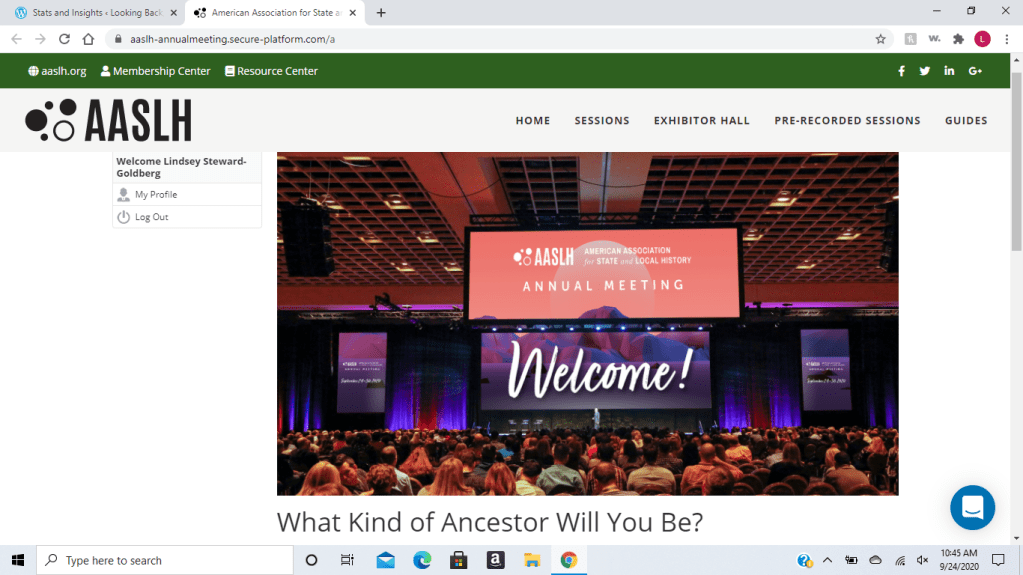
Earlier today was the first day of the virtual American Association for State and Local History (AASLH) conference. This year’s theme is “What Kind of Ancestor Will You Be?” It was an engaging and thought provoking first day with sessions focusing on being aware of our blind spots in terms of diversity and we could learn more about women in history through generations. I have included some tweets I released throughout the first day below with brief explanations of what session each tweet is referring to. The first thing I will address is
Thank you @AASLH for all of your efforts in transitioning this year's conference from an onsite one to a virtual conference. #AASLH2020
AASLH’s staff worked really hard to make this year’s conference a virtual one. Originally, this conference was going to be in Las Vegas, Nevada. If it were still in Las Vegas, I would not be able to go since I would not be able to afford the airfare in addition to the hotel and conference rate. While I do like to be in person when I participate in professional development programs, I like that by making this year’s conference virtual it is a little more accessible for more people to participate in. Also, at the time I was attending the first session there were 2,245 conference attendees and I believe it was at least more than half of the conference attendees that attended last year. Since the conference is online this year and that I was able to receive a scholarship to attend, I decided to attend this year’s conference to learn more to develop my skills as a museum and history professional. I also thought about my answer to this year’s conference theme:
What kind of ancestors do we want to be? I would like to be the ancestor that continues to learn and grow from the person I was yesterday. #AASLH2020
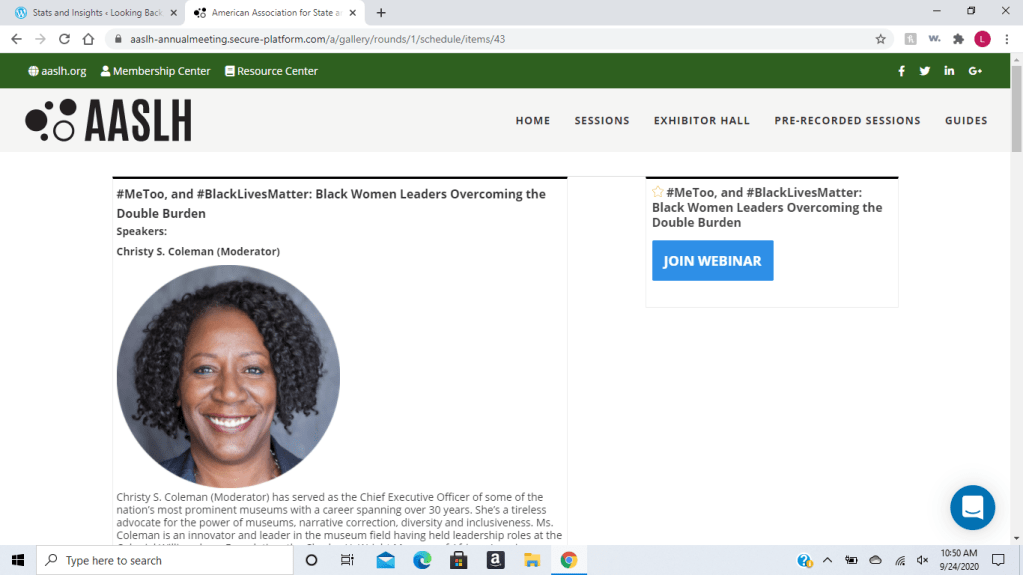
One of the sessions I attended was #MeToo, and #BlackLivesMatter: Black Women Leaders Overcoming the Double Burden. In the session, the speakers revealed a number of disturbing statistics on how many people make up the museum leadership in the entire country:
"4 percent of museum leadership are women of color" Our field needs to do better. #AASLH2020
Meanwhile 85 percent of the individuals in museum leadership roles are white men. This shows that we still have a way to go to making the museum field more diverse. We should not expect that when we fulfill one criteria for diversity our work is done because our society is continuously changing, and we need to continue to learn how to be better organizations.
Important takeaway: do not expect that hiring one person of color will solve your diversity problem. #AASLH2020
Another session I attended was Generations of Women: Complicating Traditional Timelines which focused on three case studies of researching women’s history through using sources found from census records, books, articles, et. cetera and generations of their families. The speakers discussed how keeping track of what happened in history through generations rather than dates because people can relate to generations since we all belong to generations.
"We all belong to generations" on generations vs. dates #AASLH2020
The previously listed sessions and tweets were just a sample of what I did today. I learned so much, and I look forward to learning more in the next few days (until September 30th).
Follow me on Twitter, @Steward2Lindsey, to see my thoughts and reactions in real time. If you would like to attend the conference, click on the AASLH conference page.
Last week I participated in the American Alliance of Museums’ (AAM) first virtual conference, and I began describing my experience in last week’s blog post. I thought that this week I will not only continue to describe my experience at #AAMvirtual but will discuss the virtual conferences in general. After the first day of #AAMvirtual, I attended more sessions from June 2nd to June 4th with an additional session added to address the Black Lives Matter movement.
On June 2nd, in addition to the general session, I attended the sessions: Engagement Strategies During Times of Low (or no) Attendance, Museum-Goers & The Pandemic: New Research, and Pivoting Your Programming: Virtual and Other Unique Options for Small Museums. Also, there were virtual networking events that were divided into four groups: Career Management, Creativity and Innovation, Diversity, Equity, Accessibility, and Inclusion (which was cancelled since the format of the happy hour did not fit the needs of the field), and Emerging Museum Professionals. The general session featured a keynote from Lonnie G. Bunch III, the 14th Secretary of the Smithsonian, and a discussion with representatives from the Ford Foundation, John S. and James L. Knight Foundation, MacArthur Foundation, and Andrew W. Mellon Foundation. Their discussion explored how museums can contribute to a prosperous, just and equitable future as society struggles with intractable social, environmental and economic problems; what priorities and issues are most important to the funders of museums today and into the future; and how will philanthropy become more equitable and inclusive and how will this affect the funding for all types of museums?
In the Engagement Strategies During Times of Low (or no) Attendance session, the speakers took a closer look at how museums can engage with their audience during times of low, no, or altered attendance. This session had speakers Cara Seitcheck (Smithsonian Institution), Rebecca Peterson (Vizcaya Museum & Gardens), and Zachary Wnek (Latah County Historical Society) leading the discussion with participants. The discussion focused on three major ideas which are audience outreach and engagement through digital and virtual means; a crash course on digitization and digital preservation policy as a way of engaging your audience through sharing collections; and an abbreviated guide to hosting awesome outdoor events to put your audience at ease (and allow them physical distance). Also, the discussion took a closer look at the challenges and opportunities involved through the lens of historic sites.
Meanwhile in the Museum-Goers & The Pandemic: New Research session, Susie Wilkening of Wilkening Consulting has been conducting ongoing qualitative research with museum-goers and snap polling the broader U.S. population to assess attitudes toward museums, their value, and their support. Wilkening Consulting is conducting an ongoing qualitative research with museum-goers and snap polling the broader U.S. population to assess attitudes toward museums, their value, and their support. During the session, Wilkening shared the latest results from the research and discussed with the rest of the participants on how these findings can inform how our museums engage our audience virtually and how to reopen with museum-goers’ interests in mind. In the Pivoting Your Programming: Virtual and Other Unique Options for Small Museums session, participants listened to examples of how small museums are continuing to connect with their audiences, even when COVID-19 forces museums to shut their doors, from the session speakers; the speakers were Ann Bennett (Laurel Historical Society), Lin Nelson-Mayson (Goldstein Museum of Design), Marjory O’Toole (Little Compton Historical Society), Rachel Regelein (Log House Museum), and the discussion was moderated by Janice Klein of EightSixSix Consulting. Since in the last blog post I mentioned that I had previous plans before receiving my email that I had the reduced conference fee, I was not able to attend morning sessions in the next couple of days.
On June 3rd, the sessions I attended were The Future of Museum Evaluation after COVID-19 and Racism, Unrest, and the Role of the Museum Field. The Future of Museum Evaluation after COVID-19 session included a discussion addressing the question: How will the COVID-19 pandemic impact the ways we conduct research and evaluation? Also, they discussed about how we may need to change our data collection efforts at our museums after our doors reopen. A recently added session, Racism, Unrest, and the Role of the Museum Field session was led by Dr. Johnnetta B. Cole (National Council of Negro Women, Inc. and Baltimore Museum of Art), Lonnie G. Bunch III (14th Secretary of the Smithsonian Institution), and Lori Fogarty (Oakland Museum of California). A number of questions were addressed during this serious discussion such as: As museums set their sights on financial recovery and reopening, how do we ensure that we are centering equity and prioritizing the needs of our country’s black and brown communities and colleagues? How do we create a space for healing, and building authentic relationships across difference? How do we use what is an unbearable time for many, to come together in solidarity and use the strength of the museum field to fight racism across the country?
On June 4th, I attended the following sessions: Small Museum Boot Camp: Organizational Management and International Hot Topics: Discussions from Kyoto. In the Small Museum Boot Camp: Organizational Management session, they pointed out that it is especially important to understand the basics of organizational management to help prepare for and guide your institution through a crisis. Since the session was created to meet the needs of small museums, it provided a fast-paced introduction to the main areas of management, including long-range and emergency planning, best practices, and legal requirements. The International Hot Topics: Discussions from Kyoto session introduced issues that were raised at the 2019 International Council of Museums (ICOM) general conference in Kyoto, Japan such as climate change, disaster resilience, and cultural heritage preservation; inclusion, diversity, and decolonization; and immigration, and ethical dilemmas. Each of them was amplified by the pandemic and the search for the new definition of museum. Once the virtual conference had concluded, I thought about each of my experiences at the conferences on the virtual platform and how museum associations have numerous considerations when working on transferring on-site to online.
They need to consider what platforms they would use to host speakers, sponsors, and attendees. The New York City Museum Educators Roundtable (NYCMER) decided to use the Hopin conference platform which I shared in the blog post the demo on how to use the platform. We were encouraged as participants to watch the demo ahead of the NYCMER conference to learn how it worked. Navigating the NYCMER conference felt easier to interact with, and it made me wonder if the conference were on more than one day would the experience feel the same way as it did on a one-day conference. The American Alliance of Museums’ conference, since it is a multi-day conference, had a different experience; it is easy for many museum professionals to get Zoom fatigued after a while. AAM decided to use a virtual platform through CommPartners, which helps organizations conceive, develop and fulfill their education strategy by providing a wide range of online education services including curriculum design, instructional design, webinars, webcasts, livestream programs and virtual conferences . The main learning platform they developed is Elevate Learning Management System (LMS) that helps enable, empower and engage users with contextual learning opportunities enriched by peer collaboration to form dynamic experiences.
Both AAM and NYCMER dealt with various things that they worked on once they learned about attendees experiences throughout the conferences. NYCMER conference committee members made sure that they extended the networking timed one on one sessions up to five minutes when attendees had raised concerns that the initial two minutes was too quick to have a full conversation with other attendees. I myself have begun conversations with museum professionals, and have all of the sudden the conversation ended abruptly leaving conversation topics incomplete. During the AAM conference, I heard about some attendees having hard times logging into sessions and not having a place outside of moderated open-ended chats and networking events to talk with more museum professionals. The staff worked hard to help attendees with technical issues and created a networking tab towards the later half of the conference.
The American Alliance of Museums and the New York City Museum Educators Roundtable conferences were the only virtual conferences I have attended so far since many museum associations have decided to move their on-site conferences online. I received an email from the American Association for State and Local History (AASLH) earlier this month which stated,
Due to the ongoing uncertainties of the COVID-19 pandemic, AASLH will hold its 2020 Annual Meeting this fall online instead of gathering in person in Las Vegas…
…We appreciate the hard work of the 2020 Host and Program committees, and we hope to carry as much of that forward as possible. The conference theme, even more relevant now than when it was selected, remains the same: “What Kind of Ancestor Will You Be?” Although it is disappointing not to gather in person this fall, the flexibility of an online format gives us the chance to offer greater relevancy. The conference will address questions that are emerging from the pandemic, such as defining what history institutions will look like and how they will operate in and after the recovery. We will also continue to examine the unique roles that history museums, historic sites, historical societies, and other history organizations, including AASLH, must play in combating racism, among the nation’s most deep-seated societal challenges.
The AASLH Annual Meeting is usually held in August or September each year, and this year it was originally going to be in Las Vegas, Nevada before moving the Annual Meeting online. The New England Museum Association (NEMA) also made an announcement that they were moving their onsite conference that was planned to be in Newport, Rhode Island to online. Also, NEMA decided to change the conference theme to Who Do We Think We Are Now? By updating the conference theme, they stated that it is an opportunity for our field to come together and share lessons learned, emerging best practices, and think tank solutions for the challenges ahead. I look forward to finding out how they will engage attendees in discussions about the museum and history fields and how they will address the pandemic and Black Lives Matter movement in their sessions.
If you have experienced virtual conferences or any online professional development program, what are your impressions of the experiences?
In addition to providing museum virtual experiences for visitors, staff, directors, and boards need to figure out how to adapt their operations to the virtual world under fast changing circumstances caused by the pandemic. This past week I participated in a couple of American Association State and Local History Conversation webinar series focusing on what next steps museum staff and boards could do to keep their museums running. I attended AASLH Conversations: Leadership, Boards, and the COVID-19 Crisis that focuses on how leadership should respond as the pandemic continues to effect the world, and I attended AASLH Conversations: Planning for an Uncertain Financial Future to figure out how to develop a financial plan for our museums as we face this unprecedented situation. The information I will share in this post are developing resources and are important takeaways from each one I participated in. What all museum professionals should remember is that, like many of us in and out of the museum field, we are all still learning and adapting to the ever-changing circumstances around the world.
There are many considerations museum professionals have to make decisions when facing this pandemic including keeping communication clear between museum leaders, staff, and board members. During the AASLH Conversations: Leadership, Boards, and the COVID-19 Crisis, some of the most important points made was that it is important to be transparent about the realities with your board and team, be compassionate to others and yourself by stepping back when needed, and be creative as well as flexible to figure out the solutions. The speakers Christy S. Coleman (the CEO at the American Civil War Museum) and Katherine Kane (the former Executive Director at Harriet Beecher Stowe Center) emphasized that: business as usual will not work. It is important to acknowledge that museum leaders have to operate differently and find out how to serve the community. Also, both staff and boards are scared about the pandemic on both the professional and personal level, and as leaders we have to address the hard stuff and explain what we are planning to keep communication open to all. Museum leaders need to recognize that they should adjust their time to virtually meet with board members since they have their own work and families they need to take care of on top of dealing with the pandemic; meanwhile, staff members need to know whether or not they will be laid off, furloughed, or pay/hour reductions. Museum professionals also need to consider their museum financial plans and figure out what their next steps are based on their past and current financial reports.
Becky Beaulieu, the director of the Florence Griswold Museum and author of Financial Fundamentals for Historic House Museums (2017), was the speaker for the AASLH Conversations: Planning for an Uncertain Financial Future in which she shared her insights and advice. Beaulieu pointed out that we are facing an unprecedented time, and because of this the webinar like the previous one was focused on creating a discussion in which she will share her thoughts and answers to participants’ questions based on her expertise. She described in detail about business interruption plans (emergency plans for when something unexpected happens especially a pandemic), and shared three important things that need to be clear when developing a business interruption plan: what is your team and their responsibilities (i.e. who is writing the checks, contacting vendors and sponsors for events, etc.), what is your recovery time, and what are your core operations. Also, she stressed that it is important during this unprecedented time to create a source for all staff members to access resources from the museum community to inspire your own plans. Another important takeaway is to make sure to figure out what your plans A, B, and C are when considering cuts and funding options (i.e. insurance, grants, and for only the last resort-endowments). Museum professionals have difficult decisions to make during this time to make sure we continue to serve our communities, and having these conversations on a regular basis with other museum professionals within the field will help all of us during the pandemic.
One of the ways all professionals, especially museum education professionals, should take advantage of professional development opportunities is taking courses that will develop skills we use in our professions. Sometimes it is more convenient to take online courses that allow museum professionals to schedule their coursework around their available time. Online courses provide opportunities to connect with other individuals when one is not able to get that experience in a regular course. There are many options to explore for online courses especially for museum education courses.
The most recent example of options I came across is from MuseumDev, which offers 4-week courses for museum professionals taught by subject experts with specialized skills and practical experience. MuseumDev courses are offered to those who are currently employed in a museum and want to broaden their skill set, on the job market for museum positions and want to gain a competitive advantage, considering a career in museums or a museum studies degree and want to investigate the field more, and in allied professions and think these courses would benefit their career (such as collectors, dealers, artists, educators, and technologists). These pass/fail courses expect students to spend about 16 hours on coursework, and they are taught asynchronously which means students can complete assignments as well as participate in discussions on their own time.
One of the classes MuseumDev offers is on inquiry-based and museum education which offers a collaborative atmosphere to explore key ideas through discussions, small group work, and independent research such as theories of learning, motivation and flow experiences, and the role of questions and information. When students take this course, they will hopefully gain confidence in contemporary museum education practice, build practical skills in teaching with objects, improve group facilitation skills, and become familiar with trends and issues impacting the field.
Also, the American Association for State and Local History offers online courses that usually last between four and six weeks. The courses offer each students a change to engage deeply with subject material over an extended period of time, all at their own pace. During each course, students can keep track with regular chats and other interactions with the accessible faculty, and discuss the course material with classmates in online forums. I took a course from AASLH on Museum Education and Outreach which is about how we can facilitate visitors’ meaningful and memorable experiences in the informal environments of museums. The program looks at the larger umbrella of programming at sites and explores the large concept of who our audiences are, how best to connect with them, and what is needed to develop various methods.
In the Museum Education and Outreach course, the assignments are made weekly to allow for regular feedback and dialogue. While work can be done at one’s own pace, meeting deadlines is encouraged to maximize the experience. Throughout the course students develop a toolkit of strategies, policies, and documents ready for immediate implementation. When I took this course, I developed my own toolkit that I hope to be able to adapt for future projects and fully enjoyed interacting with colleagues from around the country as well as learning from them about other things that will help with museum education programming.
I am also familiar with Museum Study which according to their website build courses with three goals in mind: quality of material covered, engagement of the teacher, and interaction among students. Each course consists of lessons developed by the instructor, readings to supplement your knowledge and address your particular situation, and activities to reinforce understanding and generate discussion about the challenges we face in our institutions. Museum Study also hosts AASLH courses and their Steps program to aid students in fulfilling institutional goals.
Another example of online classes comes from Museum Classes, which is a pioneering training site from the Northern States Conservation Center. I noticed that the course list has varied topics on museums including but not limited to collections care, collections management, security, interpretation, care of paintings, and education in museums. The NSCC not only offers classes but they also have a certification program with some focuses on Museum Administration & Management, Museum Facilities Management, Exhibit Practices & Public Programs, Certificates in Museum Studies, and Collections Management & Care. There are two levels for each certificate program, and the Certificates in Museum Studies program is considered to be a level one program which provides students a basic understanding of many different facets of museums; the rest of the programs are level two programs that provides in-depth knowledge of one area in museums. According to their website, the requirements for the certificate program is to complete ten full courses and two short courses, attend one statewide, regional or national multi-day museum conference, complete a final project (which can be in the form of an exhibition, a paper, a conference presentation, or other format approved by NSCC), and attend a final chat session with instructors online to answer specific questions that test knowledge of the museum topics studied.
Since there are so many options for online courses, it is important to do the research on courses and see what is right for your needs. I included a list of links of courses I referenced in this post as well as additional ones I came across.
What courses, whether or not they are museum related, have you taken or are considered taking?
Last week the Institute of Museums and Library Services (IMLS) made an announcement about additional funding dedicated to professional development for museum professionals. I emphasized in each blog post I wrote about professional development programs I participated in on how significant they are, especially for museum professionals. The recent news from IMLS explained what the additional funding would mean for museums and museum professionals. According to their website, when the Fiscal Year 2020 was passed on December 20, 2019 IMLS was allocated an additional $3 million through the largest program Museums for America and plans to invest this additional funding towards improving the recruitment, preparation, and professional development of museum professionals.
Museums for America is a program that supports projects to strengthen the ability of an individual museum to serve its public. This program has three categories: Lifelong Learning, Community Anchors and Catalysts, and Collections Stewardship and Public Access.
What does this mean for museum professionals? We would be able to develop our skills to improve the quality of our field and of our work with the public. I hope that with this funding it will help support improvements on onboarding, recruiting, training, and creating a healthy workplace. There is a lot of progress on making museums a better place to work but we do have a long way to go. Recent news about the former executive who worked at the Philadelphia Museum of Art and the sexual harassment complaints against him is an example of what museum professionals face in the workplace (see the links below on the coverage from the Philadelphia Inquirer). While we are working to make up for ill treatment within the museum workplace, we need to work on the source of the problems and hopefully more museums will be able to access museum professional development opportunities IMLS has to offer.
On their website, they stated the $3 million will be channeled through two special funding opportunities under Museums for America called Museums Empowered, Grants for Professional Development and Inspire! Grants for Small Museums. Museums Empowered allows museums to use the funds in four specific professional development categories: improving organizational effectiveness, evaluation practices, digital stewardship, and diversity and inclusion. Inspire! Grants for Small Museums is a program that supports small museums’ capacity building efforts related to collections, learning, and community at their institutions. The IMLS also included highlights of how professional development offerings make an impact on museums and museum professionals:
• National Leadership Grants for Museums, realigned in 2018, now offers dedicated project categories for professional development and diversity and inclusion that allow museum associations, universities, and other non-profits to seek funding that can amplify collaborations, offer training, and develop tools and promising practices for the entire sector.
• The Museums for America, African American History and Culture, and Native American and Native Hawaiian grant programs continue to offer individual museums and tribes support for leadership development and diversity, equity, and inclusion work, as well as building a pipeline of new professionals.
• The Museum Assessment Program and Collections Assessment for Preservation program cooperative agreements with the American Alliance of Museums and Foundation for Advancement in Conservation continue to provide much needed technical assistance and capacity building help to smaller museums.
To check out more information about IMLS and the programs it offers, visit their website: www.imls.gov.
During the New England Museum Association conference earlier this month, I was able to visit a museum in Vermont before attending sessions. I knew that I was going to arrive the day before the conference officially began so I looked up what was in the area. When I found out I was going to Middlebury with a friend, I discovered the Henry Sheldon Museum and decided to visit it while my friend participated in pre-conference sessions. In my recent recap of the NEMA conference, I stated that
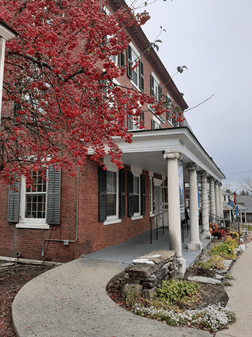
The Henry Sheldon Museum of Vermont History is the oldest community-based museum in the country opening their doors to visitors and researchers in 1884. Their mission is to serve the public by preserving the historic memory of the Addison County and surrounding communities, heightening the awareness and enjoyment of their rich cultural legacy, and stimulating the study of connections between Vermont’s past and broader historical themes. There are three main areas of the museum:
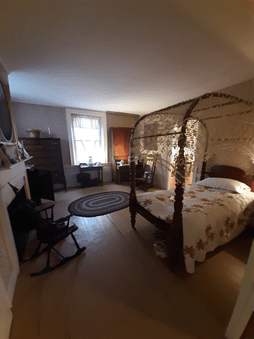
The Judd-Harris House, built in 1829, showcases a wealth of objects depicting small town life in nineteenth century Vermont
The Stewart-Swift Research Center houses one of the state’s premier archival collections, documenting the history of Middlebury, Addison County, and Vermont
The Walter Cerf Gallery hosts changing exhibits throughout the year.
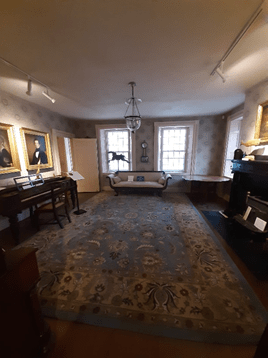
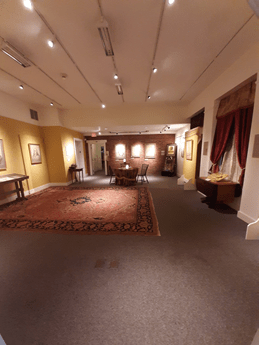
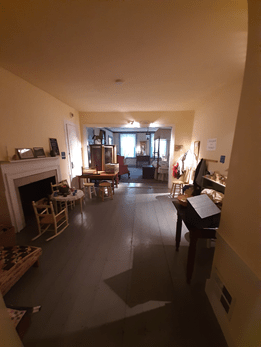
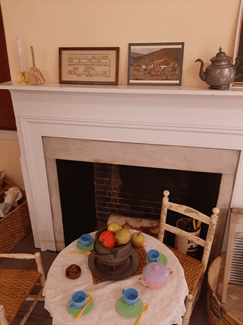
Before I entered the museum, I walked through the museum’s garden and then went inside for the museum. I first explored the Judd-Harris House with objects displayed to show what small-town life was like in nineteenth century Vermont. The first floor was set up as both a home and an exhibit space. When I was exploring the first floor of the museum, one of the things that stood out to me that I have never seen in a historic house museum before was an 124 year old stuffed cat sitting behind glass that was donated to the museum after the woman from Cornwall, Vermont who owned the cat had it stuffed by one of the students from Middlebury College.
At first, I was startled because I was not expecting to see a stuffed cat lying there in a case. The more I stared at it, the more impressed I was with how the cat was able to be preserved since about 1895. While I would not want to do this with my own pet, I understand why someone at that time wanted to keep their favorite pet around after its death. It also felt like a morbid time capsule that preserved what an animal that lived over a hundred years ago looked like.
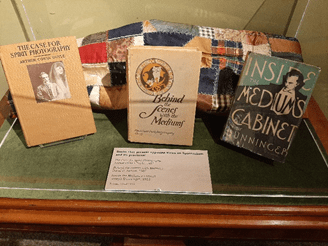
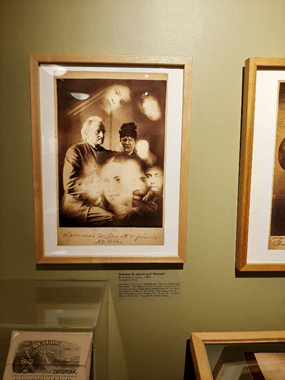
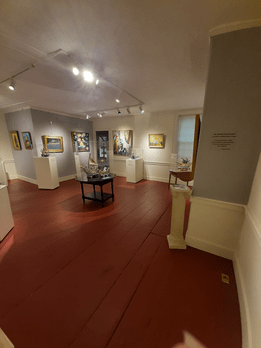
I also noticed that there were at least three exhibits located within the museum. The exhibits I explored the most were Conjuring the Dead: Spirit Art In The Age Of Radical Reform, The Animals Are Innocent, Ceramics And Paintings By Dana Simson, and Whimsical Wonders: Fairy Houses From Nature By Sally J Smith. In Conjuring the Dead, it presents spirit photographs and original spirit artwork from the Henry Sheldon Museum’s collections acquired by Solomon Wright Jewett (1808-94). According to the exhibit description from the Sheldon Museum, Jewett claimed he had supernatural powers that made him able to cure multiple ailments and bring people back from dead. Also, he was a strong believer in Spiritualism, which was a movement that preoccupied many people in the U.S. before and especially after the Civil War.
The Conjuring the Dead exhibit displayed Jewett’s collection of “spirit photographs” in which he appeared to be visited by notable figures, including President George Washington and Prince Albert of Great Britain. He also associated with and befriended a spirit artist, Wella P. Anderson and his wife, Lizzie “Pet” Anderson (a medium), who worked in New York City and Oakland, California. Jewett acquired from them eighteen pencil portraits that depict well-known historical and mythical figures spanning many geographical locations and historical times that apparently “visited” the artist under the influence of Jewett’s presence. Anderson’s drawings are now mostly known from photographs, and the original drawings in the Sheldon’s archives are rare.
In addition to the photographs and drawings, it also had ephemera, pamphlets, and objects that provide a rich context to the rise of Modern Spiritualism. It stemmed from a number of radical religious and social movements, including Mormonism, Millerism, utopianism, abolitionism and women’s suffrage, many of which originated and took a strong hold in Upstate New York and Vermont beginning in the 1820s. This exhibit occupied two floors, and I found on the second-floor drawings of spirits including one of Jesus of Nazareth. I also noticed a table with a Ouija board set up in the middle of the room which was most likely set up for exhibit related events.
After I explored the Spiritualism exhibit, I noticed on the door trim there was a subtle sign to show the next exhibit. In the Animals are Innocent, there are pieces that are part of a mixed media/ceramic exhibit of colorful, boat sculptures and paintings featuring animals, by Maryland artist, ceramist, author, and illustrator Dana Simson. Dana’s goal through her art is to how animals are losing both habitat and food sources, suffering the man-made effects of pollution and wilderness encroachment, and are imperiled by fossil-fuel enhanced climate change. Simson’s message she conveyed within her pieces was very clear to me, and I recommend checking out her pieces to see an artistic representation of the pain animals are going through because of climate change on our planet.
I was also impressed with other exhibits and interactive activities within the historic house setting. For instance, there is a children’s area where kids can both play and learn what 19th century life was like especially in Vermont. Also, there is an exhibit within one of the bedrooms called Whimsical Wonders: Fairy Houses from Nature. Sally J Smith created fairy houses inspired by ones she made when she was a little girl; and like Simson, Smith considers herself an environmental artist. Her hopes with the fairy houses are to bring visitors back to nature, to invoke “a deeper respect and love for the Earth,” stressing the need for us to “reconnect with the Earth” in order to survive. One of the things I find fascinating about her fairy houses is the materials used to make them were found and gathered from the woods near her studio in Westport, New York. Located on shelves inside a closet behind glass, another thing I find fascinating about the fairy houses is the detail that goes into each house. There were no two houses that looked the same, and each one had its own unique character.
The last part of the self-guided tour was Henry Sheldon’s bedroom where a lot more treasures were found there including a set of keys laid on the bedside table and the Sheldon family crest. While I did not include everything I saw inside the museum, I strongly recommend seeing it for one selves and learn more about the history of Vermont.
I have once again participated in the New England Museum Association conference. It was in Burlington, Vermont this year and it was the first time that I have been in the state. I was not only excited to be participating in this year’s NEMA conference, but I was also looking forward to exploring the area. With a friend, I took a road trip to travel to Vermont for the conference. This year I decided to not only focus on sessions focusing on education but also sessions that help me get a better understanding of how to improve my leadership skills and of fundraising. As always, I found these conferences both informative, engaging, and entertaining to be with New England and New York colleagues. Thanks to all who have been following my tweets on Twitter covering the conference, and I have included a highlight of my tweets, photographs, and the sessions I attended during the week.
There were many beautiful views I witnessed as my friend and I went up to Middlebury, Vermont as the first stop before going to the hotel.
Once we arrived, she went to a pre-conference event and I decided to explore the area. The first place I went to was the Henry Sheldon Museum. The Henry Sheldon Museum of Vermont History is the oldest community-based museum in the country opening their doors to visitors and researchers in 1884. Their mission is to serve the public by preserving the historic memory of the Addison County and surrounding communities, heightening the awareness and enjoyment of our rich cultural legacy, and stimulating the study of connections between Vermont’s past and broader historical themes. There are three main areas of the museum:
The Judd-Harris House,
built in 1829, showcases a wealth of objects depicting small town life in
nineteenth century Vermont
The Stewart-Swift
Research Center houses one of the state’s premier archival collections,
documenting the history of Middlebury, Addison County, and Vermont
The Walter Cerf Gallery hosts changing exhibits throughout the year.
After visiting the museum, I walked around Main Street and window shopped along the street. I did go into a few stores including Vermont’s Own, which the majority of the products they sell were maple syrup which I could not help but purchase a sample. I went through a country store and the Vermont Book Shop. Eventually I walked back to meet my friend and explore the Middlebury College Museum of Art’s exhibit on the Women’s Suffragette.
Once we checked into the hotel, we walked down Main Street to visit the Lake Champlain Chocolate Store. As a former employee of a chocolate store, I purchased a number of samples for comparison. When we were done with exploring, we were ready for the next few days of conference sessions and events.
My first day of the conference began with learning about analysis of the open-ended questions and audience data. The panelists pointed out that using more than one method to analyze the data and multiple people to review the questions will be helpful for getting the results needed for what the museum is looking for.
I also attended the keynote session that focused on social justice. Dr. Gretchen Sorin, who is committed to encouraging museums to be more active in civic responsibility and social justice, discussed the upcoming book Driving While Black: African American Travel and the Road to Civil Rights and the PBS documentary produced by Ric Burns and Steeplechase Films, to be released in 2020.
To start, we addressed indigenous peoples living in the area our conference is located. And we will be seeing a video about the Wabanaki people and culture #NEMA2019
The next session I attended focused on how to foster deeper connections between local teachers and museums; they argued that focusing education programming on supporting educators can lead to more quality student-site interactions, a deeper valuing of our museums in the community, and an expansion of museum capacity. Other sessions I attended were about summer camps and how to use camps to draw in new audiences as well as strengthen ties to schools and community (and listened to the experiences of teenagers who participated in the camps), and museum volunteers and how to create an impact measure for their roles.
That night I attended the opening evening event at the Echo Leahy Center for Lake Champlain. Echo Leahy Center inspires and engages families in the joy of scientific discovery, wonder of nature, and care of Lake Champlain. While enjoying hors d’oeuvres, I interacted with various exhibits including but not limited to Thomas Edison’s Secret Lab (which invites visitors to join the fun through interactive explorations that promote science, technology, engineering and math learning) and Into the Lake (which allows visitors to be immersed in the shipwreck at the bottom of Lake Champlain and learn about a twenty-foot serpent that may have lived in the lake).
On the second day, I attended a number of sessions, an Educators professional affinity group (PAG) lunch, and another evening event at the Shelburne Museum. The first session I attended that morning was the importance of fundraising as a team effort (to learn effective ways to motivate staff and board members to be better fundraisers and hear strategies for attracting and retaining members). Also, the panelists led us in a half hour exercise around major gifts where we practiced “Making the Ask” or an elevator pitch to convince donors to help contribute to our museums’ upcoming major projects. One of the most important takeaways I learned from this session was:
71% of first time donors do not give a second time. One of the possible reasons is that museums did not let them know what the impact their gift made. #NEMA2019#professionaldevelopment#fundraising
Other sessions I attended were about emotionally intelligent leadership and how to incorporate evaluation practices into museum programming. In the session on emotionally intelligent leadership, we learned about assessing emotional skills, leveraging emotions and learning strategies to achieve results.
In the session on how to incorporate evaluation practices into museum programming, panelists shared practices and examples of incorporating evaluative thinking and reflective practice into the work as practitioners. It introduced practical, tested approaches for building evaluation capacity and using data to improve educational products and professional practices. At the Educators PAG lunch, we discussed the necessity of advocating for our needs as educators and had discussions among ourselves to ask questions, share ideas, offer each other advice, and connect with one another to provide inspiration, support, and resources after we leave the conference.
The second night I attended the evening event at Shelburne Museum. After eating hors d’oeuvres, I walked through an exhibit that was not yet open to the public and a current exhibit. Time Lapse: Contemporary Analog Photography, which opened on November 9th (a couple of days after the evening event), is an exhibit that celebrates the work of 13 international and national contemporary artists who use the darkroom as a laboratory and find inspiration in the vast range of 19th-century photographic processes, from daguerreotypes to photograms. In the second exhibit, which is called Joel Barber & the Modern Decoy, the curator of the exhibit led us through a tour to discuss the life and artwork of architect, author, illustrator, and pioneering decoy collector Joel D. Barber.
After returning to the hotel, there was a lot of cars covered in snow which made me excited since I grew up watching the film White Christmas (majority of the film taking place in Vermont) and I was looking forward to seeing snow in Vermont. I was excited to see more snow on the ground the next morning, and while I was a little disappointed that most of it melted by the end of the conference, I was relieved that we were able to travel without worrying too much about the road conditions.
On the last day of the conference, I attended sessions about the introduction to assessment programs for museums, intangible histories, and a session of its kind called Recharge and Reimagine: Creative Break before attending the closing luncheon and annual meeting. The assessment programs session was intended to introduce, clarify, and spark interest in museum assessment programs such as AASLH StEPS, AAM MAP and Accreditation programs. In the intangible histories session, which was standing room only, panelists shared case studies from the Monticello (an exhibit about Sally Hemings), the Rokeby Museum, and Florence Griswold Museum to share techniques they used to show intangible histories and create meaning out of the memories and stories of individuals. As a public historian, this session was interesting to me because of the challenge intangible histories present and the importance of addressing underrepresented history.
Another session I attended which was different than ones I have previously attended was Recharge and Reimagine: Creative Break. I enjoyed it because it not only helped us tap into our creativity to inspire our work, but it also helped us wind down from an overload of information and excitement from the past few days. We participated in hands-on exercises that helped us use examples of ekphrasis, or the creation of one kind of art inspired by another kind of art. For example, one of the pieces of art shown to us Henri Matisse’s Open Window (1905) and we were encouraged to write any type of poem inspired by this painting. This is my poem:
Today I will look out my window. The colors are so vibrant. The shades of green bring the yard to life. The reds are these in my flowers helping them stand out on this beautiful day. The blues bring out the boats and the body of water. The water filled with so many waves of pink that channels happiness on this beautiful day. I welcome these colors into my window, and I watch as they emerge inside. The pinks and greens occupy the walls of my home. The blues join the greens and even some of the pinks joined the greens. All of the colors also reflect in my windows. I hope to never close my windows to these colors. I implore all who see colors outside to let them in. The colors bring me joy each day. Colors, please keep coming to my window. Tomorrow will be another beautiful day with you.
The drive back was beautiful because there was still snow on the ground. Once again, I enjoyed my experiences at the NEMA conference and will make efforts to exercise what I learned in all of the sessions.
If you are interested in learning more specific information about what I learned and my thoughts, please contact me here. Stay tuned for a new blog post tomorrow!
This week I will be attending the New England Museum Association conference in Burlington, Vermont. The New England Museum Association conference is a large annual professional development gathering of museum professionals in and out of the New England area; in most recent years, member of the Museum Association of New York are able to attend as NEMA members. Museum professionals have been gaining new insights, inspirations, and friendships through the NEMA conference since 1919. Since I am going to have a full schedule attending sessions and events, I will not be posting a full blog post on the usual Thursday date but I will be updating my experiences on my Twitter page throughout the week.
I will be in Vermont from November 5th through November 8th, and on November 5th I will be exploring the area before the official sessions begin. To learn about my experiences and my thoughts on the sessions as well as the events, follow me on Twitter: @Steward2Lindsey. Also, follow the conference itself by using the hashtag: #NEMA2019.
To learn about the previous NEMA conference, this is a recap from last year.
Another museum I visited during the AASLH Annual Meeting in Philadelphia was the Science History Institute. On the last day of the Annual Meeting, I decided that this will be one of the museums I wanted to see before I left. According to the website, the Science History Institute collects and shares stories of innovators and of discoveries that shape our lives. The Institute also preserves and interprets the history of chemistry, chemical engineering, and the life sciences. Inside the Institute, there are four programmatic areas that address specific parts of the non-profit organization’s overall mission: an archive and library for historians and researchers, a fellowship program for visiting scholars around the world, a community of researchers who examine historical and contemporary issues, and an acclaimed museum that is free and open to the public. The Institute also has a state-of-the-art conference center located within the building.
Because I did not have much time before I was leaving the city, I visited the museum and the exhibits. The Institute’s museum exhibits include an array of artifacts, scientific instruments, and art utilized to create exhibitions, public programs, and other materials showcasing the research and diverse collections. Making Modernity, a permanent exhibit, shows visitors how chemistry has touched our lives and visitors can trace the scientific progress in the laboratory, the factory, and their homes; the exhibit’s mission is to help visitors learn how chemistry created and continues to shape the modern world. Throughout the exhibit, there are scientific instruments and apparatus, rare books, fine art, and the personal papers of prominent scientists. Making Modernity also have varying topics that range from alchemy, synthetics, and the chemical-instrument revolution to chemistry education, electro-chemistry, chemistry sets, and the science of color.
During my visit, I noticed that each part of the museum showcased scientific artifacts that described the evolution of everyday materials we may take for granted nowadays. For instance, one of the many sections I was impressed with was called The Chemical Body: A New View of Health which showed technical innovations in the 19th century that led to discoveries of vitamins and techniques for analyzing the body’s chemical and cellular makeup.
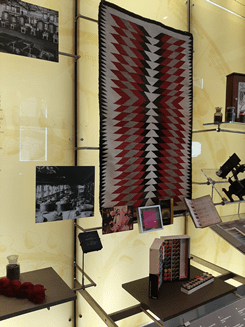
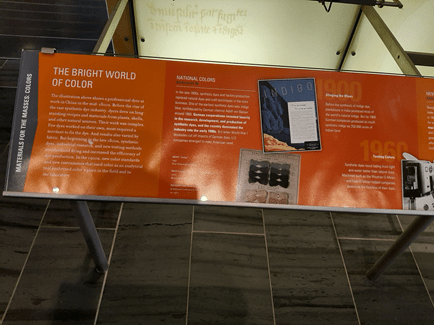
Another example of a section that stood out to me was The Bright World of Color which shares the changes in creating dyes from natural resources to using industrial research, synthetic dyes, and new testing methods to improve dye production. It reminded me of my research while I was in college about the history of cochineal used as red dyes. I enjoyed how much detail the exhibit labels went into each section of the museum exhibit especially in the Bright World of Color.
I was also impressed with another part of the exhibit which features an interactive multimedia learning experience which showcases the collections of art, scientific instruments, rare books, and other artifacts. The installation has a two-story high video column and a pair of high-resolution, interactive tables known as Object Explorer; visitors can explore the history and science behind various everyday objects by placing them on an interactive table to investigate the object’s history and the stories of the materials they are made of. For instance, I took a Pyrex measuring cup and placed in on the interactive table which revealed information about the history of glass and how the quality of glass was improved to eventually be used as the measuring cup.
Also, there was another exhibit I viewed while I was inside the Science History Institute called What Was the Real Age of Alchemy? Inside the exhibits there were various paintings and artifacts that revealed alchemy was change, creativity, and curiosity which shaped the modern understanding of modern science.
If you are visiting Philadelphia, I recommend spending a lot of time at the Science History Institute for there is so much to see and learn.










 Looking Back, Moving Forward in Museum Education!