Planning a Summer Program: My Experience Creating a Summer Camp Program

Added to Medium, August 2, 2018

On August 1st, I executed and implemented a test summer program for the Three Village Historical Society. I spent months with the rest of the Education Committee coming up with ideas for activities and coming up with a list of materials needed for the program. During those months, I developed the invoice, lesson plan, and evaluation forms for the program. While planning this program, I thought a lot about summer programming and the significance of keeping activity going in the museum during the summer.

 
Last year I discussed in a previous blog post about previous experiences with summer programs in museums. I included a link to the blog post “Summertime: Keeping Audiences Coming to Museums” below which provided details about my experience at Connecticut’s Old State House, Connecticut Landmarks, Noah Webster House & West Hartford Historical Society, and the Long Island Museum. I stated my plans with the Three Village Historical Society:
I also began working with Three Village Historical Society on education programs. Collaborating with the Director of Education and the Historian, I will work on school and kids summer programs. I look for inspiration from past programs Three Village Historical Society has taught, my own experiences, and the lessons I learned from professional development programs. Summer programs and the staff who develop them I have learned from my experiences provide opportunities for visitors to return for more programming. It is important to have it well advertised so more people will be able to know about these programs through outlets such as social media, newspaper ads, flyers, mailings, and/or a mixture of any of the previous methods. Also, it is important to develop a way to evaluate the programs to see what works and what needs to be improved on.
A few months ago, the plan I mentioned in last year’s blog post was put into action. As we planned and implemented the program, we found that there are things we could improve upon for future programs.

 
One of the first steps that were taken was to find a camp that is willing to participate in our test summer program. The Three Village Historical Society decided to ask Campus Camps in Oakdale to participate in the demonstration, and they accepted our invitation. I was put in charge of not only being the main person to maintain contact with Campus Camps but I was also put in charge of leading the activities. Both parties came to an agreement on the cost and number of participants for the program, and we determined that the program should last about two hours. Since this summer program is a test run, we decided to charge the regular rate for school programs but decided to revisit the summer program rates in the future.

 
During the initial process, I developed a couple of documents to put our agreements into writing and to allow program participants provide feedback for us to keep or make changes going forward. After we made the agreements for the amount of campers and rates, I drew up an invoice based on the historical society’s invoice set up for school programs and sent it to the director of Campus Camps. Then I created two different versions of evaluation forms for campers and counselors, and the rest of the Education Committee’s reviewed the forms so we would be able to determine what we want to take away from the evaluations so we should ask the right questions that will help us improve the program.

 
In the counselors’ evaluations, the first couple of questions asked them to provide a rating for their experience with the program and the educational value of the program. The third question asked the counselors to rate the staff and explain how the staff could be more effective while leaving the fourth question to have the counselors elaborate on their previous ratings. The last question asked the counselors to provide any suggestions or recommendations for improving the summer program.

 
In the campers’ evaluations, we asked them to describe what their favorite part of the visit was, what they were surprised about, and what they would like to learn more about. At the end of the sheet, they were also given an option to draw a picture or write a story about their favorite part of the trip. The evaluation forms were given to the counselors at the end of the program.

 
Once we had the evaluation forms developed, we were ready to develop the lesson plan to use as a guideline. The Education Committee met on a weekly basis to discuss ideas for activities focused on the Culper Spy Ring, and we came to a consensus on how this test program will be run. I took the notes I wrote down from our brainstorming and planning process to develop the lesson plan.

 
We decided to have the campers walk through the Culper Spy Exhibit and once they have walked through the campers will gather in the room to listen to the introduction. In the introduction, we would explain what the Culper Spy Ring is as well as who the spies were: Benjamin Tallmadge (who was in charge of the espionage ring), Robert Townsend, Abraham Woodhull, Caleb Brewster, Austin Roe, and Anna Smith Strong. During this introduction, a brief explanation of what the campers would expect from the program is given. We have three stations to divide the campers into to participate in writing messages using invisible ink, creating clues to guess which Culper Spy they portray called Who Am I?, and solving codes. Each station has an opportunity to create their own presentations to share with the rest of the participating campers to see what they learned and discovered at the end of the program. The campers picked the names of stations out of a basket to help move the process along.

 
In the Invisible Ink station, campers would first practice writing with quill pens and lemon juice. While their first sample dried, campers would make predictions of whether milk, baking soda and water mixture, or lemon juice would work better for use as invisible ink. After making their predictions, the campers wrote messages using each method. As those messages dried, since I was in charge of this station, I would discuss invisible ink or sympathetic stain with the campers and demonstrate how pH pens worked on revealing messages. The campers then prepared poster boards for their presentations, and used an iron to reveal their hidden messages. Each camper had varying results since some found that baking soda worked better while others found lemon juice worked better. What each camper agreed was the heat worked better to reveal the hidden messages than the pH pens for the majority of the invisible ink methods.

 
In the Who Am I? station, the leader would explain why the Three Village Historical Society wanted a permanent display to be made so campers can contribute to the exhibit. The campers can choose from six characters who were involved in the Culper Spy Ring, pick and try on costumes, and pick related props for their characters. Once they picked their characters, they have an opportunity to practice out their clues and act as their characters.

 
In the Coding station, the leader would explain what coding is to the campers and then show a poster of a primary source document, Tallmadge’s Code. The campers received a copy of one of the original letters written by Abraham Woodhull and a dictionary code of Tallmadge’s Code to decode letter. Also, the leader would show campers other samples of types of codes and the campers would choose one to decode. Then the campers chose a code to write their own message with to have other campers attempt to decode.
We used the past couple of days earlier in the week to prepare for the program. The Director of Education and myself went in to the Three Village Historical Society to set up the costumes and props, the invisible ink section, and the coding sections. Then we left the rest of the preparation for the morning of the program.

 
On the day of the program, we tested our flexibility skills when we executed and implemented the program. As the campers came in, the campers were older than we initially believed they would be so we made last minute adjustments to each of the stations, and we added a trip to the nearby cemetery at the Presbyterian Church so the campers could visit Abraham Woodhull’s grave. Overall, the campers as well as the counselors seemed to enjoy the visit, and we had a blast working with the group. The Education Committee will meet again to compare notes and see what we can do to develop the summer program further as we look to the future.

 
Have you planned a summer program in the past? What were your experiences like?
Resources:
Summertime: Keeping Audiences Coming to Museums: https://wp.me/p8J8yQ-9v
Three Village Historical Society: http://www.threevillagehistoricalsociety.org/
What Grants Mean for Museums

Added to Medium, July 26, 2018

Museum professionals understand that grants are significant for funding museums to keep them exercising their practices such as running programs and caring for collections. Based on my experiences, grants are a tedious necessity since there is a lot of paperwork that needs to be filled out to fund museums, and the information we need to fill out for grants is repetitive depending on how many times we need to apply to the same grant.

One of my responsibilities at the Long Island Explorium includes writing grant applications and proposals. I have worked with state grants and kit applications to keep the museum fulfilling its mission. With the Executive Director, I filled out paperwork to send to the state representative and the county legislator. Also, I filled out online applications for program kits such as the Earth Science Earth & Space Toolkit to be able to use at the museum. In the Earth Science Earth & Space Toolkit application, I would first write in the museum’s demographics as well as a brief explanation of how the museum will use the toolkit in a downloaded form then copy the information into the online application after making adjustments to reflect the current year.

While my main interest in the museum field is education, I see value in learning about grant application processes since we need a fund source that is at least somewhat consistent to keep museum education programs running. The problems we all come across in the field is limited availability of grants and being able to convince foundations, government agencies, and other funders of why we need these funds. It is a challenge to find funding for our museums but it is worth the time and effort to search and apply for these grants.

Foundations, organizations, government agencies, and other funding sources have websites that share resources on what grants are out there and how to apply for them. I came across a blog post on the American Alliance of Museum’s website written by Charlotte A. Montgomery who shared some of the websites about grants to help museum professionals get started on the grant search process. One of the websites in the post was for the Foundation Center (http://foundationcenter.org/) which connects people to the resources they need by using data, analysis, and training. Another grant website discussed in the blog post was Grants.gov which is a place to find and apply for federal grants, and it is highly advisable to make sure the organization is registered with the System for Award Management weeks before planning to submit a proposal. Once museum professionals find the grant or grants they want to apply for, they need to figure out what the grant process is like to accurately submit a proposal.

Sarah Sutton’s second edition of Is Your Museum Grant-Ready? revealed one of the first things to do before even thinking about applying for grants is to understand the grant funding system. According to Sutton, she pointed out that

If you need funds for programs or capital projects, then the best way to support the grants process is to understand it well enough to ask the right questions and provide the right kind of material and assistance.

When museum professionals are able to ask the right questions and provide the right kind of material as well as assistance, the whole grant process will be easier to understand for future grant applications. Also, museums would save a lot of time when figuring out how to apply for the grant. Without knowing how the process is performed, a lot of time is wasted as we continue to correct the errors are made.

I learned that it is important to go over each detail carefully while I was filling out grant paperwork for the Long Island Explorium. Since I have to make a number of copies to send to the state representative and county legislator, it was easy for me to make and discover errors. The good news was I was able to catch them before I sent the paperwork in the mail. If any errors were made in the process, we would not be able to know until a few months after submitting the paperwork; it would take a few months for them to go through the grant paperwork. Understanding the process is beneficial for myself as well as all museum professionals working on grant proposals. Since there are so many museums that apply to grants, each museum need to figure out how they can stand out from other applications.

As I was reviewing information about grants, I came across two blog posts on answers to grant proposals if non-profits were brutally honest. The writer pointed out that non-profits are trained to tell funders what we think they want to hear, and had collected various honest answers to questions posed by grant applications. If non-profits are able to be brutally honest, some of the answers are

  1. What is innovative about your program design? “Our program is entirely innovative. The design is unproven; the approach is untested; the outcomes are unknown. We also have a tried-and-true service delivery model with outstanding results and a solid evidence base to support it. But you funded that last year and your priority is to fund innovative projects. So we made this one up. Please send money.”
  2. How will you use the funds if you receive this grant? We honestly really need this grant to pay for rent and utilities and for wages so our staff can do important work and feed their families, but since you won’t allow your funds to be used for those things, we will say that your grant is paying for whatever you will actually fund, then get other funders or donors to give and then tell them that their money is paying for the stuff that they want to fund. We will ultimately waste hundreds of hours every year trying to figure out who is paying for what, hours that could be used to deliver services. Please send unrestricted money.
  3. What is the mission of your organization? Susan, can we talk? This is a renewal grant. It’s the third year you have supported us. You know what our mission is, along with our programs, outcomes, challenges, etc., because we’ve been in constant communication. Instead of writing an entire proposal again as if you’ve never heard of us, how about I just tell you what’s new since last year? That will save us both a lot of time. What’s new is that Jason got a standing desk that he made out of cardboard boxes and Gorilla tape because you and other funders want overhead to be low. He says hi. Also, demands for our services has doubled. Please send double the amount of money you normally send.
  4. What needs are you addressing? We are addressing the failure of our government and capitalism to provide for people who are suffering from systemic injustice caused by government and capitalism. Please send money or convince corporations and the rest of society to pay more taxes and take care of people better and put us nonprofit professionals out of business so that some of us can pursue our dreams of acting and/or wedding photography.

I believe a lot of museum professionals from time to time have identified with these honest responses. Museum professionals are constantly attempting to brainstorm innovative ideas for programs to draw visitors in and show foundations providing grants we have something unique worth putting money towards.

Also, we do need to consider paying for rent, utilities, and salaries when trying to fund our museums but the problem can be summed up with this question: is there a grant that will pay for us to be in our building and do the work we do to support ourselves? An honest response previously listed suggests there isn’t. One of the issues we are talking about in this field is the lack of providing living wages for our staff and how we should be working towards better pay. As we work towards addressing and resolving what we need to fix, we should acknowledge how we need to receive more support from the government to help us fix the problems we are facing in the museum field. We are constantly working towards making sure the government provides funding for our organizations through our advocacy efforts, and since we continue to struggle to make sure they run smoothly with sufficient funds we need to continue to advocate for our museums.

We acknowledge the need for grants in our organizations, and without grants we would have a hard time keeping our museums running.

Have you worked on a grant or grants for your organization? What are your experiences with grants?

Resources:
http://nonprofitaf.com/2018/02/answers-on-grant-proposals-if-nonprofits-were-brutally-honest-with-funders/
http://nonprofitaf.com/2018/07/answers-on-grant-proposals-if-nonprofits-were-brutally-honest-part-2/
https://rowman.com/ISBN/9781442273108/Is-Your-Museum-Grant-Ready-Second-Edition
http://ww2.aam-us.org/about-us/grants-awards-and-competitions/grants-calendar
https://www.comnetwork.org/insights/
http://www.raise-funds.com/positioning-grant-writers-for-success/
https://www.aam-us.org/2015/02/02/your-museum-needs-money-now-what/
http://www.smallmuseum.org/smaresources
https://www.childrensmuseums.org/members/resources/grants-and-award-calendar

Museum Leadership: What We Need To Do To Develop Our Skills in the Museum Field

Added to Medium, July 19, 2018

All museum professionals need to develop their skills to succeed in the field, and we need to do more to help museum professionals, especially emerging museum professionals, develop their leadership skills. The current state of our field, however, does not do a lot to encourage its museum professionals to practice their skills that will help them develop their careers. There are numerous resources we provide on what leadership is and what characteristics make a great leader, but how are museum professionals exercising their leadership skills? In our field, gaining experience is a double-edged sword because we attempt to develop the skills we learned and are well versed in by applying for jobs with leadership building opportunities but we are turned down because hiring managers say we lack the experience.

As a museum professional, I continue to seek leadership opportunities and take advantage of as many opportunities as possible. Throughout my career, I have developed my skills in museum education and would often have to take on leadership responsibilities to maintain time as well as knowledge for school programs. I began to see more leadership opportunities when I came to Long Island. As I became more involved in the museum field on Long Island, I took on more responsibilities that I have not taken on before such as administration duties like booking programs and creating docent schedules. A lot of what I am able to do now as a museum professional I have learned from experience. Lately I have been thinking about my previous and present experiences, and tried to recall how much of my leadership skills were learned from lessons and how much of them were learned from experience. I also wondered what we are doing now for museum professionals on developing leadership skills.

Based on the articles such as “Leaving the Museum Field” and numerous articles about museums and self-care, our field is not doing enough to make sure museum professionals have well-rounded experiences with time dedicated to self-care. We still have far to go in having a sustainable and effective museum workforce. There are many resources museum organizations and associations provide about leadership and how leadership skills should be utilized. Our museum associations provide a wide variety of leadership resources in forms of books, articles, blogs, museum association standards, webinars, and conferences.

One of the books that discusses leadership Martha Morris’ Leading Museums Today: Theory and Practice published for the American Association for State and Local History through the Rowman & Littlefield publishing firm. In her book, Morris revealed that this book is about the context, the urgency, and the nuances of service to the mission of the museum organization whether at the level of the governing body or a middle manager. The book also provides a balanced look at external operations of the museum which are factors that influence success such as demographic changes and political trends, and internal operations of the museum such as organizational design, new modes of planning and decision making, implementation of strategic programs, and flexibility in response to the reality of constant change. Museum professionals also find resources from other museums and museum associations especially about leadership.

Blogs, like this one, is one of the ways museum professionals can learn from one another and other museums or museum associations to develop their leadership skills. Also, there are articles and standards museums and museum associations provide about leadership. I took a look at the resources page on the American Alliance of Museums’ website, and I found the following.

The American Alliance of Museums has a page on its website that shared standards the Alliance has for Leadership and Organizational Structure. Its page stated standards regarding governance, standards for museums with joint governance, standards regarding the composition of the governing authority, and standards regarding delegation of authority. In the latter standards, it describes how

Having clear delegation of authority means that the governing authority understands the main areas of its responsibility. Those areas are to collectively determine mission, set policies for operations, ensure that charter and bylaw provisions are followed, plan for the institution, approve budgets, establish financial controls and ensure that adequate resources are available to advance the museum’s mission.

In other words, if authority is clearly laid out in a museum’s organization all of the responsibilities of leaders would be fulfilled for the museums. Each standard I have previously listed discuss the purpose and importance, implementation, and documentation.

AAM also provides blog posts such as “Leadership, and Why You Need a SWOT Analysis (and a Personal Board of Directors)” which is a conversation between Greg Stevens and Anne Ackerson about ways to improve leadership skills such as the SWOT (Strengths, Weaknesses, Opportunities, Threats) analysis, and “Museum Leadership, Organizational Readiness, and Institutional Transformation” which is a case study that was a part of a series on museum leadership, developed for the career and leader-ship management workshop for participants in the International Program, held at the AAM Annual Meeting & MuseumExpo in May, 2016.

The American Association for State and Local History also have a number of resources available on the website. One of the blog posts AASLH previously posted about leadership is “A Special Kind of Leader: Small Museum Leadership Characteristics” that lists characteristics that museum professionals have or should have when working in a small museum. Another example of a blog on leadership is “The Ideal Director?”; the writer of this post gave their impressions of job descriptions looking for directors and what they believed are the characteristics an “ideal” director should be for an organization. I do realize that there are many more resources than what I previously described but the point is leadership is a common discussion that is addressed throughout the field.

Providing all these resources is all well and good but the question remains: How do we utilize all of the resources we learned from on leadership?

There is a difference between having the knowledge and actually practicing this knowledge. If museum professionals are under the impression that there are only certain professionals that can exhibit their leadership skills, then we would be hindering our museum professionals and future professionals’ potential. We need to show museum professionals at all levels how leadership skills benefit all of them within the organization. Our field right now is working towards improving the museum workplace throughout the field but there are still issues we need to work through to untangle this web. A blog post I found addresses leadership and where we are now as a field.

This week Joan Baldwin wrote on the Leadership Matters blog about where we are now with museums and leadership. She discussed how Baldwin and Anne Ackerson are planning to revise the original Leadership Matters book by interviewing more museum professionals in the field. In the meantime, Baldwin provided a preliminary list of places where leadership intersects with the lives of individuals, directors, organizations and boards. For individuals, for instance, she pointed out that

-The job market remains highly competitive and graduate school is still the admission ticket.
-This is still a field where too often one is asked to work for no money in the form of volunteering or internships before actually making too little money.
-This is a field that too often fails to train for leadership, but asks for independent, creative forward-thinking employees.
-This is still a field where race, class and gender are barriers: Race because too often young POC are hired for the wrong reasons and asked to represent a race/culture rather than being treated with equity; class because poor salaries continue to make it easier for wealthy individuals to enter the field; and gender, because for women, particularly women of color and most especially trans women, even the most casual Facebook survey points to a boatload of bias.

Individuals within the field constantly move through figurative cobwebs of expectations that contradict themselves making it challenging for museum professionals to meet their personal goals. This double-edged sword needs to be addressed, make expectations clear and be sure the reality can meet these expectations. Baldwin also pointed out that for leaders in the museum field need to remember:

-The back of the house is as important as the front of the house. Museum workers who have a long tradition of not retaliating when mistreated have started to react individually and collectively.
-Museum workers and museum audiences expect (and want) organizations to be values driven. Sorting out what that means for a given museum or heritage organization is one of the tasks for today’s leader.
-Leading an organization means engagement not just presentation.
-Leaders need to understand how and where personal and organizational leadership intersect and mirror one another. A self-aware leader means a self-aware organization.
-21st-century museum leaders need the courage to tackle the hard stuff.

The relationship between directors and staff is a significant one especially within the museum field. Directors have many responsibilities and challenges when running a museum, and by establishing expectations and applying them both parties will be able to create a strong organization that will make both of their jobs easier to execute in the long run.

Museum professionals at every level should be able to serve as both mentors and mentees. When museum professionals learn from one another, the bonds between them will not only be strengthened they will also be able to preserve and strengthen future museum leadership in the field.

What are your impressions about leadership? Where and how have you learned to be a leader? How have you utilized your leadership skills?
Below are resources I referenced in the blog post and additional resources I found.

Resources:
https://leadershipmatters1213.wordpress.com/2018/07/16/museums-and-leadership-the-story-continues/
https://www.amazon.com/Leading-Museums-Today-Practice-Association/dp/1442275332/ref=sr_1_1?ie=UTF8&qid=1532058143&sr=8-1&keywords=leading+museums+today
https://aaslh.org/how-much-did-that-meeting-just-cost/
https://aaslh.org/managing-interpreters-expectations-and-feedback/
https://aaslh.org/the-ideal-director/
https://aaslh.org/other-duties-as-assigned/
https://aaslh.org/a-special-kind-of-leader-small-museum-leadership-characteristics/
http://ww2.aam-us.org/resources/ethics-standards-and-best-practices/leadership
http://ww2.aam-us.org/resources/ethics-standards-and-best-practices/public-trust
https://www.aam-us.org/2017/08/02/leadership-and-why-you-need-a-swot-analysis-and-a-personal-board-of-directors/
https://www.aam-us.org/2017/03/01/museum-leadership-organizational-readiness-and-institutional-transformation/
https://www.aam-us.org/2014/11/02/museum-leadership-and-growing-enormous-pumpkins-2/

Museums Are Not Neutral: A Discussion on Why There is No Museum Neutrality in Museum Education

Added to Medium, July 12, 2018

Throughout the conference sessions I have attended and the social media discussions I participated in, the topic of museum neutrality has been discussed among myself and many other museum professionals. Questions we should start with when discussing museum neutrality are: What does museum neutrality mean? If we should claim we are neutral, how can we claim to be relevant in current events in our society and in the future? If we claim we are not neutral, how do we move forward in our practices at museums and what are the best approaches in moving forward? In recent years, I began to hear more about the Museums Are Not Neutral movement which addresses how museums should be spaces that allow museum professionals and visitors to express their concerns for social justice. These discussions also included how we in the museum field interpret the term “neutral”.

According to the Merriam-Webster dictionary, the word neutral means not engaged on either side, or not decided or pronounced as to characteristics. Neutrality, however, means different things to different people, and depend on perspectives. There has been a notion that museums do not take sides on political and social issues since in the past museums focused their missions on collecting and preserving items without considering the visitors’ capabilities of understanding the significance of preserved items on display. Anabel Roque Rodríguez discussed the myth of museum neutrality in her blog post about it. She stated that

In the past, museums were temples where knowledge was preserved and education was the highest value. This might still be a big asset, but with this purpose comes the voice of institutional authority, that does not facilitate a dialogue with the people visiting the museum. A collection can be used as a tool to start visitor’s engagement, but knowledge works two-ways. How much space is there for the own experiences of the public and in which ways are museums still able to transport the research and knowledge behind the exhibition? Museums are facing a shift and need to open up in order to remain relevant in the future.

As our society continues to work on changing these issues, museums need to remain relevant by knowing and figuring out what they stand for. We as museum professionals can connect with our visitors by providing the space to express their concerns with our society. The topic of museum neutrality is a lengthy conversation we need to continue discussing because there are a lot of concerns about museums not taking action and concerns about what if museums do take action. In other words, when we talk about taking action instead of remaining neutral we need to be prepared to take action on many issues.

Museums should find out how they should approach taking action because there are individuals that believe museums are not doing enough to show museums are not neutral. In the post “Changing the Things I Cannot Accept: Museums Are Not Neutral” the writer expressed their concerns about museums’ lack of actions on political and social issues:

I have always known that museums are not neutral. They have never have been neutral. I would hope that our colleagues know that museums originate from colonialist endeavors. They are about power. As I have shared on social media networks, if anyone comes as me with that neutrality mess, I will take them down. I have had it with that narrow-minded perspective that ignores history and enables museums to operate as racist, sexist, and classist spaces.

While finding the balance between incorporating visitor input and utilizing research and knowledge in our institutions can be a challenge, it is a challenge worth pursuing to remain relevant in our community now and in the future.

Some museum professionals pointed out the evidence that museums should not be neutral. Mike Murawski, founding author and editor of ArtMuseumTeaching.com, museum educator, and the Director of Education & Public Programs for the Portland Art Museum, stated in his post

Museums have the potential to be relevant, socially-engaged spaces in our communities, acting as agents of positive change. Yet, too often, they strive to remain “above” the political and social issues that affect our lives — embracing a myth of neutrality.
Well, MUSEUMS ARE NOT NEUTRAL, plain and simple.

In other words, we have the potential to set examples within our communities on how every individual can create positive change. One of the examples I have found in my research shows positive impact on going beyond neutrality and incorporating issues previously difficult to discuss in the museum.

In Elizabeth Merritt’s Center for the Future of Museums blog post “Beyond Neutrality”, she pointed out the reasons Eastern State Penitentiary in Philadelphia are moving away from using the word neutral:

We believe that the bedrock value that many of us brought into this field—that museums should strive for neutrality—has held us back more than it has helped us. Neutrality is, after all, in the eye of the beholder. At Eastern State, more often than not, the word provided us an excuse for simply avoiding thorny issues of race, poverty and policy that we weren’t ready to address.

By moving away from using the word, and making different approaches in discussion about tough issues, the Eastern State Penitentiary saw significant positive change in the amount of visitors learning something thought-provoking and an increase in attendance at the Penitentiary. Each museum is different so no one way would be effective for all museums but by looking into their own organizations and the communities they serve museums could potentially work towards addressing the issues. Other museum professionals expressed concern about how we can be agents of positive change while finding out how we define museums in the process.

Rebecca Hertz reflected on what has been discussed about museum neutrality and brought up concerns she has on the possibility of museums being neutral. In her blog post, Can Museums Be Neutral?, Hertz stated there are two problems that concern her: first, the assumption that museums or any other institutions can be “neutral,” and second, the places that political engagement on a larger scale might take us. She discussed that museums being neutral or not neutral is more complicated than previous museum professionals have suggested; Hertz pointed out

Museums implicitly support systems of hierarchy through their funding structure, which makes museums highly dependent upon the support of the 1%, the “winners” in our capitalist system. Racism, sexism, and injustice of many kinds in the contemporary world are entangled in a system which equates merit with money, and confers advantages to the rich that keep them rich. So museums are not neutral, but instead bulwarks of the system that the “Museums are not neutral” campaign asks us to lobby against.

A lot of museums depend on donors with significant amounts of financial support to keep its doors open, and unfortunately the issues we face are intertwined with financial dependency. What seems to be suggested is we should also tackle on economic issues as well when we move forward to untangle the complicated weave. Hertz’s blog post described further detail about each of the problems she is concerned about such as opening up the possibility of continuing to widen the gap within already divided communities as museums begin to take sides of the political spectrum.

Leadership Matters blog expressed their support for museums not being neutral and they also pointed out concerns museum leaders face. In their blog post “Museums Are Not Neutral”, they summarized their thoughts on museum neutrality by stating

We believe first and foremost that museums have to understand their communities, and their entire community, not just the largely white, heterosexual, wealthy community who wanders their galleries and attends openings. But how do museums decide when and how to take a stand? Is what’s relevant to the director important to the community? And how about the board? As a director, if you take a stand will it matter to the people you’re trying to support? Does not being neutral mean being a good citizen, and how should an organization be a good citizen? How do museums engage their communities while being transparent?

All museum professionals should be able to understand and have knowledge of the community surrounding their museum. We also should be asking ourselves questions, especially the previously listed questions, about what it means to not be neutral.

Each museum is different, and each community is different so therefore all museums would have to answer similar questions differently and sometimes ask different questions. What we all could agree on is we cannot go backwards in our progress as a field. Our museum field talks about what our role should be in the community, and by stating that museums should be neutral we would be taking steps backward in trying to be relevant in our society.

What does museum neutrality mean to you? When was the first time you began to see the “Museums Are Not Neutral” phrase, and how do you respond to it?
To learn more: I included more resources on the subject below, especially ones I referenced in this week’s blog post.

Resources:
https://artstuffmatters.wordpress.com/2017/10/15/changing-the-things-i-cannot-accept-museums-are-not-neutral/
https://artmuseumteaching.com/2017/08/31/museums-are-not-neutral/
https://museumquestions.com/2017/12/18/can-museums-be-neutral/
https://www.aam-us.org/2016/08/23/beyond-neutrality/
https://archivaldecolonist.com/2018/01/18/your-neutral-is-not-our-neutral/
https://soundcloud.com/museopunks/s2-ep27-museums-are-not-neutral
https://leadershipmatters1213.wordpress.com/category/museums-are-not-neutral/
https://coalitionofmuseumsforclimatejustice.wordpress.com/2018/04/02/is-there-another-way-reflection-on-museums-neutrality-and-activism/
https://www.anabelroro.com/blog/the-myth-of-museum-neutrality
https://medium.com/@artlust/are-museums-neutral-or-are-they-neutered-4d879721a54


Mentorships: Why It Is Significant for Museum Educators

Added to Medium, June 28, 2018

Our most important resources in the museum and museum education field come from each other. Mentorships are one of the ways all professionals, especially museum professionals, can learn from one another. As we discuss taking care of ourselves, it is important to learn the value of the relationship between mentors and mentees.

There are many definitions of mentorships since there are many types of mentorships. A mentorship could be described as a process for informal spread of knowledge, social capital, or psychosocial support the recipient believes to be relevant to work, career, or professional development. Professionals especially in the museum and non-profit field can benefit from participating in a mentorship program whether one seeks a mentor or a mentee. In the article “Finding a Guide: The Value of Having a Professional Mentor” written for the Common Good Careers organizations, it stated that

Mentors provide developing nonprofit leaders with the support they might not have access to otherwise. For example, access to the mentor’s personal network can give emerging leaders a chance to meet important people at a crucial time in their careers and can broaden their range of possible professional opportunities.

Mentors have the opportunity to help mold new museum professionals to help develop the future of museums, while mentees have the opportunity to not only learn more about the field but can make connections to help them move forward in their careers. The same article from the Common Good Careers also shared a very good point mentees should keep in mind when communicating with their mentors:

As the relationship develops, mentees should remember to share their successes with their mentors and make sure the mentor knows how valuable their time and insight is. Remember that mentoring is about sharing knowledge and expertise in a way that benefits both of the participants and thereby helps to build and strengthen the nonprofit sector as a whole. As nonprofit professionals develop their leadership skills, it will be important to incorporate best practices into every mentoring relationship.

I believe it is important for both mentors and mentees to continue the mentoring relationship to share successes and to show appreciation for one another. Testimonials from mentees are especially helpful for mentors in the museum field to help improve museum practices and to learn how mentees can benefit from the mentor-mentee relationship. I came across a blog post “Mentorship at the Museum | Origins of the Mentorship” from a mentee, Kevin Mooz, participating in a mentorship program at the American Civil War Museum in Virginia.

Mooz’s blog post discussed his fascination with battlefield history and how museums are run which started at a young age through his own visits to museums and stories from his grandfather who was a museum curator. He explained that his experience as a mentee working at the American Civil War Museum allowed him to express both of these passions, and to learn more about how museums are run. When we learn from our mentees, mentors have the opportunity to learn what their mentees’ passions are then use this information to find the best fit for them to succeed within the field. Both mentors and mentees go through a learning process that will hopefully continue to develop their careers as well as their respective fields.

Some mentees utilize their relationships with their mentors by looking up to them as role models. In the Leadership Matters blog post “Role Models: Why We Need Them and What They Tell Us About Us”, they pointed out that

Role models can be positive or negative. They all teach us, good or bad, and the positive ones inspire us. They’re mirrors by which we can examine our own strengths and weaknesses, measure our abilities and desires, and clarify our choices. Role models can change our outlook and encourage us to reach our own potential.

By seeing mentors as role models, mentees have long lasting inspiration to continue to develop and improve Museum professionals can benefit from participating in a membership program, whether it is within the departments or museum associations.

A number of museum organizations offer mentorship programs to help museum professionals. The American Alliance of Museums Education Committee, for instance, developed a seven-month mentorship program with the mentors and mentees deciding on what to discuss and how often they will meet (in-person or online). Mentors and mentees are matched depending on the program applicants’ backgrounds in the museum education field, and participants are encouraged to report to a supervisor on how the mentorship is working and to help make adjustments as needed. There is also an orientation webinar to introduce mentors and mentees to the program and learn more about the advice they can give to conduct a successful mentorship. As a mentor in the program, I so far enjoy this program because my mentee and myself would not only have the opportunity to meet and get to know one another, but we are able to share experiences and learn from one another. This program also encourages mentors and mentees to continue to keep in touch after the program ends. There are other mentorship programs that help other museum professionals in the field.

The Association of Art Museum Curators (AAMC) also has a mentorship program to assist museum curators in moving the field forward. In the program, approximately five to eight sets of established, senior curators (mentors) and emerging to mid-career curators (mentees) embark on the 12-month program each year. Museums Association created a pilot project called Mentoring for All which looks to develop a new model for mentoring for the sector across England and Scotland. I included links to the previously mentioned mentorship programs and other mentorship programs I came across in the resources section below.

I also included other resources on the benefits of establishing a mentorship program within an organization. When given the right tools and the opportunity, mentors and mentees can learn from one another about our field and help develop and preserve the future of museums.

Have you participated in a mentorship program? What was your experience like? How has your mentorship program helped you in your career?

Resources:
https://leadershipmatters1213.wordpress.com/2018/06/25/role-models-why-we-need-them-and-what-they-tell-us-about-us/
http://commongoodcareers.org/index.php?/articles/detail/finding-a-guide-the-value-of-having-a-professional-mentor/
https://www.artcurators.org/page/Mentorship?
https://www.museumsassociation.org/professional-development/mentoring-for-all
https://museums.ca/site/projects_rbc
https://acwm.org/blog/mentorship-museum-origins-mentorship
https://nemanet.org/conference-events/lunch-nema/multigenerational-mentorship/
https://www.kent.edu/yourtrainingpartner/value-establishing-mentoring-program-within-your-organization

How We Can Show Policymakers and Teachers Our Museums’ Potential as Educational Resources

Added to Medium, June 21, 2018

Museums continue to find ways to develop the relationships and collaborations with schools whether they are private, public, or homeschool. Even though museums are increasingly being seen as educational resources for school curriculums, education policies in the United States suggest that as museum professionals we need to continue to prove how significant museums are for our schools.

To be able to convince education policy makers the significance of museums, we as museum professionals need to have a better understanding of education policies and keep up to date with current education policies. The Federal Education Policy and the States, 1945-2009: A Brief Synopsis, for instance, provides information about education policies in the United States.

Our education policies constantly change to fulfill our need to improve the quality of education in our nation. Education is a state and local responsibility, and yet the federal role in the schools has grown significantly since the mid-twentieth century, and as a result state-federal interactions in the realm of education policy have become increasingly complex. Both the New Deal and World War II contributed dramatically to the size and the scope of federal activities. In 1944, Congress passed the biggest package of federal aid to education to date: the Serviceman’s Readjustment Act, commonly known as the G.I. Bill of Rights which entitled veterans who had served at least ninety days in the armed forces to a year of secondary, special, adult, or college education, plus an additional month of education for each month in the service, up to a total of 48 months.

When Eisenhower became president, the increase in children during the baby boom had caused school districts to request federal aid to increase the number of classrooms and teachers to accommodate more children enrolling in schools. Since the Eisenhower administration, each incoming president of the United States faced various circumstances that led to them changing education policies to accommodate current economic and educational situations.

For instance, we had the No Child Left Behind during the Bush administration and the Every Student Succeeds Act during the Obama administration. The No Child Left Behind Act of 2001 supported standards-based education reform based on the premise that setting high standards and establishing measurable goals could improve individual outcomes in education, and required states to develop assessments in basic skills. According to Julia Kennedy in her article “The Room Where It Happens: How Policy and Perception are at Play in Museum-School Relationships”, the Every Student Succeeds Act (ESSA) gave incentives for states to adopt academic standards which prepare students to succeed in both college and the workplace, and narrows the government’s role in Elementary and Secondary education.

In the education policies, museums are not mentioned as education resources. While these education policies do not directly affect museums, it is important that museums pay attention to any changes to the policies. Museums and museum groups such as the American Alliance of Museums (AAM) have kept a close eye on the policy in an effort to become a better partner to the formal education sector. Julia Kennedy pointed out that,

“Policy remains a large divider between formal and informal educational institutions because: public schools are at the mercy of policy with state and local standards; museums are loosely legislated and not governed as official educational institutions; and museum’s strengths as places of lifelong learning are not considered when discussing educational policy.

Current and past policy reflects the perception that museums are just an extension of the classroom; and before any real, impactful, collaborative effort or long-standing partnerships can happen, the relationship between these two institutions must be examined. “

Before we can convince policy makers museums have a ton of potential, we need to get the evidence by strengthening the relationships between museums and schools.

One of the articles that was posted on the American Alliance of Museums was written about how museums can improve the relationship between museums and schools from a teacher’s perspective. There are many complications in planning field trips for both museums and schools; the article described the teachers perspective on the challenges of planning field trips. Meg Davis pointed out it takes time, resources, and local expertise for teachers to plan field trips. To make sure a field trip happens, teachers have to navigate complex websites to find out costs, scheduling protocol and basic logistical details; then afterwards, teachers have to reach out to the organization to schedule the field trip, and that takes additional few days or weeks of back and forth so field trips teachers end up planning are ones that feel easy.

Davis suggested making a few changes to position museums as partners in the future of schools. The changes she suggested in the article were divided into three categories: on the website, in communication, and support students.

On the website, Davis suggested the website should highlight the alignment of each learning experience clearly so the teacher can quickly and easily explain what objective they can achieve through the field trip to their administrators and therefore will have an easier time getting approval. Also, it is important to list logistical information right on the website so teachers will know where the students can eat lunch, use the bathroom, and any offsite places the museum recommends so planning the field trip would be less intimidating. She also revealed that it would be helpful to offer a pre-trip preview so teachers can visit and have the opportunity to plan logistics and objects they want to highlight in advance.

When museums communicate with teachers, museum professionals scheduling field trips should shorten the feedback loop and communicate asynchronously. Davis explained that museum professionals should respond to requests in between 24 and 48 hours and if staff is part-time we should make sure it is indicated when staff is able to schedule field trips so that way teachers would be able to expect a delay and can communicate with their teams accordingly. Also, make sure there is an opportunity to make it easier for teachers to have time to make field trip arrangements since 90 percent of teachers have limited time during the day to answer a call or send an email.

To support students attending the field trips, routines should be facilitated and supplementary materials should be provided to the students. Davis pointed out that “If you have specific routines that teachers and students can follow when they arrive or move through your space, it makes the inherently hectic nature of shepherding 30 students through a new place feel calmer.” Since students are used to routines in the classroom, it will be easier for students to understand there are routines at the museums and to facilitate the visit. Also, if they are not doing so already museums should provide supplementary materials such as pre/post trip materials so students would be prepared with questions before they arrive to the museum. By making various changes and tweaks, museum programs would become more accessible to teachers and the museum-school partnerships will continue to grow and strengthen.

As we continue to advocate for museums and its educational mission, we need to continue to keep in mind what is going on in education policies to strengthen our knowledge of what we can do to better help schools.

What do you think of the educational policies? What is your reaction to the teacher’s perspective of the educational programming in museums?

Resources:
Meg Davis, Founder, Explorable Places, “Meeting Teachers Where They Are”, https://www.aam-us.org/2018/06/13/meeting-teachers-where-they-are/
Julia Kennedy, “The Room Where It Happens: How Policy and Perception are at Play in Museum-School Relationships”, Museum Scholar Theory and Practice, Vol. 1, June 19, 2018. http://articles.themuseumscholar.org/tp_vol1kennedy


Patron Request: Does History Repeat Itself? A Discussion About This Concept

Added to Medium, June 14, 2018

One of the common thoughts that has been discussed numerous times over the years is “does history repeat itself”. We continue to ask ourselves this question as well as: What makes history repeat itself? Individuals in and outside of academia talked about the concept of history repeating itself especially when discussing current events that remind ourselves of the past. I was introduced to the concept itself while I was studying history in college. One of my history professors had stated, which I will never forget, that history does not repeat but rhymes. I think it is a good point because we are not repeating the exact same circumstances of the past but we are living through situations that definitely sound similar.

For instance, we do not go through every single day by going through the same movements and the same actions of Pearl Harbor in a time loop forever. We do, however, see similar patterns that are recognized from previous historic events as we face current events. When I was asked to write about this concept, I thought it would be a good topic to write about this week and to revisit the concept by doing research on what has been written about the topic. While I was doing my research, I found numerous information about the concept of history repeating itself.

The concept of history repeating itself is also known as historic recurrence. In addition to the concept of history rhyming, I also like the term “historic recurrence” because it acknowledges actions that have reappeared in different circumstances. G.W. Trompf’s The Idea of Historical Recurrence in Western Thought, from Antiquity to the Reformation, they discussed that historical recurrence has variously been applied to the overall history of the world (such as the rises and falls of empires), to repetitive patterns in the history of a given society, and to any two specific events which bear a striking similarity. A post called “Short Paragraph on the concept of history repeats itself” provided a brief discussion about historic recurrence. It stated that,

History is thus nothing, but man’s long struggle for survival, identity and values. The struggle has often been born more than a slight resemblance in methods used and the manner adopted in such period. Such repetition of historical fact-events, ideas and acts-sometimes makes us think that there was nothing coincidental, but a planned sequence leading towards a pre-destined goal.

These statements pointed out an important idea: history is a human experience. Humans make various decisions every day whether they are living now or have lived a thousand years ago. Even though all humans that have existed and currently live on this planet lived with different technological advances and life expectancy, each human develop similar habits, thought processes, and actions which leaves the next human to look back at past human experiences and see similar patterns.

Historic recurrence is not a new concept, rather the discussions about historic recurrence began in ancient times. According to Trompf, ancient western thinkers focused on cosmological rather than historic recurrence and they introduced western philosophers and historians who have discussed various concepts of historic recurrence including Polybius, the Greek historian and rhetorician Dionysius of Halicarnassus, and Italian philosopher and historian Niccolò Machiavelli. A modern historian named Arnold J. Toynbee also discussed concepts of historic recurrence.

Scholars have come up with their own conclusions about historic recurrence within their works. Arnold J. Toynbee’s book Civilization on Trial has a chapter dedicated to historic recurrence called “Does History Repeat Itself?”, and provides an example of thoughts on historic recurrence. Toynbee stated in this chapter that

If human history repeats itself, it does so in accordance with the general rhythm of the universe; but the significance of this pattern of repetition lies in the scope that it gives for the work of creation to go forward. In this light, the repetitive element in history reveals itself as an instrument for freedom of creative action, not as an indication that God and man are the slaves of fate (38).

In other words, Toynbee believes history repeats itself based on humans having the capability of making their own decisions and have the choice to follow on their actions. Individuals also have the choice to make changes to move forward in society. Historic recurrence has been discussed in the past, and will continue to be discussed as long as humans continue to exhibit similar behaviors and make similar decisions.

What do you think of the concept of “history repeats itself”? Does it really repeat or rhyme? Do we have a choice in breaking these patterns? Why or why not?

Why Self-Care is Important for Museum Educators

Added to Medium, June 7, 2018

Self-care has become an increasingly important topic of discussion in the museum field, and we need to express why museum educators especially need to take the care they need. I recently have been in a situation that I needed self-care to help myself get back to where I need to be as a museum educator. Because of recent events, I began to review information I have about self-care and museums.

One of the posts I came across was Seema Rao’s “Focusing on Self-Care is Good for Business” in which she summarized a keynote talk Rao gave at the Pennsylvania Museums Association conference in April. I also read her book Objective Lessons: Self Care for Museum Professionals in the past, and I decided to re-read the book in light of recent events. While there are many resources online that have self-care and self-help, it is overwhelming to dedicate time to sit down and read through every material.

Earlier tonight I hosted #MuseumEdChat on Twitter and since I was hosting I decided to come up with the topic about self-care and develop the questions for the topic. I thought that I would learn more about the current status of self-care in museums by asking the questions I had to the Twitter community. After an hour-long discussion, I found so many great responses to these questions and what I found is that we need to continue to promote self-care and the significance of self-care among museum professionals of all levels.

The first question I asked was “How would you describe self-care?” because while everyone needs self-care at some point or another not everyone would have the same definition depending on the circumstances of why they need self-care. One of the first responses I came across that I think perfectly sums up what self-care is in general is:

To me, self-care is having the time and patience to actively care for your overall health (physical, mental, emotional, social, spiritual)

We all need time and patience to provide ourselves with the self-care we need to keep ourselves moving forward. The key, however, is finding the time to do so and not many museum professionals have that opportunity because some managers do not see the value of self-care.

A couple of tweets mentioned this dilemma. One tweet pointed out that “Self-care can be hard for staff who don’t have paid time off or vacation.” Another tweet also said,

Self-care is hard in sector w/ so much of the staff working on term-limited/ hourly wages in precarious jobs. Self-care can be seen as a waste by managers, who put pressure on junior staff to be super productive ALL THE TIME.

There are not many job opportunities that are full-time for museum professionals which provide benefits that will help us with self-care. These situations are a part of a bigger issue in the museum field that we continue to work towards so self-care would be acknowledged by managers, directors, and board of directors and trustees.

Rao has also stressed the importance of self-care in her post “Focusing on Self-Care is Good for Business”, and made an argument for managers to pay attention to this need for not only for their staff but for the managers as well. She stated that burnouts are high in the museum field because of the long hours with little pay and no time to recharge. Her post also directly addressed the managers to set examples for self-care:

Managers need to be honest about their own struggles with burnout and share their strategies to counteract these feelings. Sharing challenges is not a sign of weakness. A good leader is a human who is worth following, flaws and all; a boss is a person who you have to work for.

Our work culture in this society promotes the idea that having challenges are signs of weakness in managers. However, that is not true at all because we are all human and knowing how to deal with challenges and flaws is what makes great leaders a person worth following. A few responses on Twitter also pointed out that they either do not know how to or do not know how to find time to do self-care.

I have said this on Twitter and I will say again here that I don’t think everyone is good at self-care at times because sometimes it is hard to find the time to take care of ourselves. It will take a lot of practice for all of us to practice and promote self-care. Some individuals have shared what we can do to promote the importance of self-care.

One of the tweets talked about promoting workshops and activities for staff with special guests such as individuals from government or higher education agencies. I agree with this suggestion because by having programs like the ones suggested it would start to make discussions about self-care easier for museum professionals and opens up communication about self-care with managers and directors. Another tweet reiterated the sentiments I have about self-care:

All museum professionals, no matter the position, need to foster an environment of caring and understanding. If there is a need to promote self-care at work, professionals need to feel that they can open up and be honest about what they need.

After the #MuseumEdChat discussion, I was reassured that I am not alone in my own struggles to find time for self-care and balance work with much needed self-care time. I was also reassured that this is a topic that we all need to continue to discuss as we continue to find ways to improve the museum field. Self-care is different for every individual in the museum field, and it is necessary for every museum professional on all levels to take care of themselves.

I leave you all with a couple of questions that I have asked on Twitter’s #MuseumEdChat discussion that we all need to think about and share with all museum professionals in the field:

If you were going to explain to your manager and/or colleagues about self-care, how would you explain why it is important for all museum professionals, including museum educators? Please share what you and your co-workers do, or would like to do, for self-care. What method is most helpful for you? What can we do to spread more awareness to the need of self-care?

Resource:
http://brilliantideastudio.com/selfcare/focusing-on-self-care-is-good-for-business/

People’s Experiences during the Great Depression

Added to Medium, May 31, 2018

For this week, I was asked to write about a topic in history that always interested this patron: people’s experience during the Great Depression. She is interested in this topic because she was told about her mother’s life when the Great Depression hit, and her mother told her that years later she did not realize the impact of the Great Depression until many years later when she talked about it with her friends. I also thought it is an interesting topic to discuss because I knew of the general information about what happened during the Great Depression, and learning more about the specific experiences of individuals within the United States would not only give us the human perspective of the event but it would also help us identify with the individuals as we continue to recover from the recession.

I took a closer look into learning about individuals’ experiences during the Great Depression through the material I came across.

The Great Depression was a severe worldwide economic depression which took place mostly during the 1930s, beginning in the United States. According to PBS, on Black Tuesday, October 29, 1929, the stock market crashed, triggering the Great Depression, which was the worst economic collapse in the history of the modern industrial world. A strong believer in rugged individualism, President Herbert Hoover did not think the federal government should offer relief to the poverty-stricken population. Focusing on a trickle-down economic program to help finance businesses and banks, Hoover met with resistance from business executives who preferred to lay off workers. Not many people living during that time understood how everyone was living since the big hit and the years since then.

In Washington state, for instance, more than a quarter of the population had lost their source of income, from unemployment or loss of a family breadwinner. According to research from the University of Washington, in response to the larger changes happening in the government

People in Washington and across the nation developed new household and work practices, navigated emerging social systems of welfare, explored different avenues of social protest, and reworked their understandings of their role in communities, in the nation, and in the world.

The changes during the Great Depression were absolutely felt by the individuals who lived in the state. An article written and posted through the University of Washington by Annie Morro provides a glimpse of what everyday life was like in the town of Bellingham after the Great Depression.

In the town of Bellingham, which had been a thriving coal-mining town in Washington’s Whatcom County, many men found their wages and hours cut, or lost their jobs completely. Meanwhile the wives and mothers throughout Whatcom County did their best to adjust to the hard times, and one way to do this was to change household routines such as cooking simple recipes like Quick Breads that used every day ingredients and left money typically spent on bread for their other needs.

Women were expected to be a positive force in the community and the supportive center of a family and community weathering hardships. It was anticipated that women would become active community members by attending PTA meetings, raising funds for charities, collecting clothing for the needy, saving at the market, raising a family, and providing encouragement for disheartened husbands all while keeping up a happy, normal appearance. Children in the Bellingham community absolutely felt the affects of the Great Depression.

They were raised to be competitive on the job market and active members of their community, which reflected the cooperative community’s values as well as the competitive nature of a very tight job market. Older children, teenagers and college students, felt the effects of the Great Depression through school budget cuts which made it harder for them to begin their own lives through the difficult times. The experiences of each individual in the United States seemed similar while at the same time more specific experiences were different from one another.

I learned of an experience from the patron whose mother lived in Massachusetts as a little girl during the Great Depression. This patron’s mother grew up on Cape Cod, and lived on vegetables grown in her family’s garden. As an adult, she learned about one of her friends, who lived closer to the Boston area, knew too well about the concept of “coresies”. Coresies was when someone yelled out coresies that person would be able to eat the core of the apple once the person who was eating the apple left the core. As I compared the experiences of individuals from Washington and the two women from Massachusetts, I noticed that each individual of varying ages had different perspectives of the Great Depression based on what society expected from them.

Families had to adapt in order to survive, and their misfortunes did not seem to end until the New Deal introduced by Franklin Delano Roosevelt began to help people turn their lives around. It took until the end of World War II for the nation to fully recover from the Great Depression.

What experiences have you learned about individuals who lived during the Great Depression? Are there similarities and differences that stood out the most to you?

Resources
https://www.pbs.org/wgbh/americanexperience/features/dustbowl-great-depression/
http://depts.washington.edu/depress/everyday_life.shtml
https://www.history.com/topics/great-depression
https://www.britannica.com/event/Great-Depression
https://www.nytimes.com/topic/subject/the-great-depression
https://en.wikipedia.org/wiki/Depression_cake
https://www.allrecipes.com/recipe/8214/depression-cake-i/

Social Media Journalists at Conferences: My Experience As One At NYCMER 2018

Added to Medium, May 24, 2018

At each conference I have attended, and of course I am sure everyone reading this post felt this way as well, there are so many sessions I have wanted to attend but I could not be in more places at once. Twitter began to provide opportunities to share information from conferences on the social media platform. This year the NYCMER conference, React & Respond: The Next Steps, held at Teachers College at Columbia University this past Monday (May 21st) had social media journalists sharing their impressions about the conference and the highlights of each sessions. Rachel Ropeik, the Social Media Coordinator for NYCMER, asked myself and other NYCMER members to join her team of social media journalists.

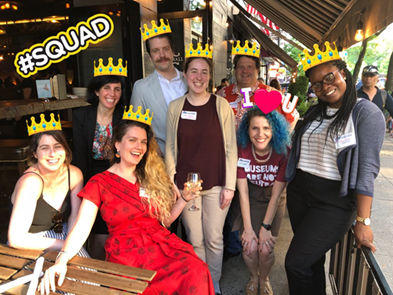
NYCMER Social Media Journalists, Courtesy of Rachel Ropeik, Social Media Coordinator, NYCMER via Twitter
We were asked to cover the conference via Twitter by tweeting our impressions of and thoughts about the keynote session and the rest of the conference sessions. I attended the sessions, and then I tweeted some highlights of the sessions I chose to attend. All of the social media journalists, and other NYCMER conference participants following on Twitter, used the hashtags #NYCMERsmj and #NYCMER2018 to participate in conversations on the social media site. We also included photographs we took during the conference to give followers visuals of what we covered in the sessions we participated in. In this blog post, I included some of my tweets I shared during the conference for each session I participated in with brief descriptions.

This year’s NYCMER conference began with a keynote that discussed this year’s theme: React & Respond: The Next Steps. The keynote was moderated by Keonna Hendrick who is School Programs Manager at the Brooklyn Museum, cultural strategist, educator and author, nurturing equity through art and museum education. Hendrick posed questions to the keynote participants Gonzalo Casals and Annie Polland. Gonzalo Casals is the Director of the Leslie-Lohman Museum of Gay and Lesbian Art. His experience ranges from innovative cultural programming and authentic community engagement strategies to progressive cultural policy. Annie Polland is the Executive Director at the American Jewish Historical Society (AJHS). Previously, Polland served as the Senior Vice President for Programs & Interpretation at the Lower East Side Tenement Museum where she was responsible for developing programs and content for over 250,000 annual visitors.

Lindsey Steward‏ @Steward2Lindsey 9:04 AM – 21 May 2018
Welcome to this year’s #NYCMER2018 I’m looking forward to learning more about today’s theme 🙂 What are your thoughts about this year’s theme? #NYCMERsmj

Lindsey Steward @Steward2Lindsey 21 May 2018, 9:23am
I’m also glad that NYCMER is requiring salary information in job postings. It is important for us to show our support for equity and best practices in salary sharing and negotiations #NYCMER2018 #NYCMERsmj

Lindsey Steward @Steward2Lindsey 21 May 2018, 9:49am
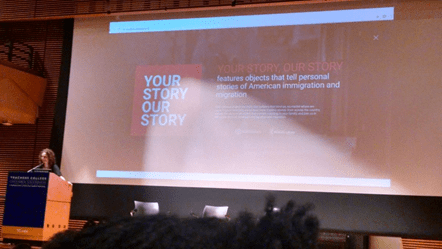
Allows people to upload pictures that tell their immigrant stories. What a great idea to be able to share and identify with people’s stories #NYCMERsmj #NYCMER2018


Lindsey Steward @Steward2Lindsey 21 May 2018, 9:56am

Interesting thought: If you could create a poem or an inscription on the Statue of Liberty today, what would it say? #NYCMERsmj #NYCMER2018

Lindsey Steward @Steward2Lindsey
I think board of trustees should also participate in programs and conferences like @NYCMER This will also help staff and board work together especially on diversity. It is unfortunately not surprising when no one said they were from a museum board. #NYCMER2018 #NYCMERsmj
10:48 AM – 21 May 2018

The first session I attended was Virtual Field Trips: Traveling Through Time and Space to Connect Museums and Audiences. During this session, Frantz Lucien, an educator at the Intrepid Sea, Air, and Space Museum who specializes in community outreach and engagement, and Charissa Ruth, a freelance educator whose resume includes the Intrepid Museum, the Brooklyn Botanical Garden, the Brooklyn Public Library, and the Cooper Hewitt Museum, discussed their experience with virtual field trips. Lucien and Ruth discussed the benefits and challenges of running and planning virtual field trips. They also performed a demonstration what a virtual field trip is like by giving us a brief demonstration of what it would be like to be in space without wearing a space suit.

Lindsey Steward @Steward2Lindsey 11:29 PM – 21 May 2018
A test to see how Virtual Field Trips work via Skype #NYCMERsmj #NYCMER2018

Lindsey Steward @Steward2Lindsey 1:13 PM – 21 May 2018
Lindsey Steward Retweeted Paul Orselli
Paul, I think there should be required professional development programs for museum leaders, directors and board of trustees, to talk about salary and the importance of having salary information included when searching for a job candidate. #NYCMERsmj #NYCMER2018
Paul Orselli @museum_exhibits
#NYCMER2018 Food for thought over lunch: How can we get ALL orgs to require salary ranges on job postings? #NYCMERsmj

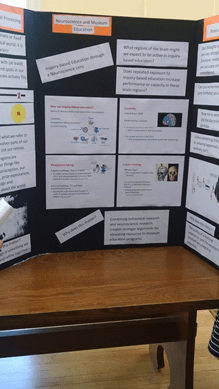
During the lunch break, I attended poster sessions that shared various brief information related to this year’s theme. One of the most interesting poster sessions I attended is Neuroscience and Museum Education. Megan Kuensting from The Met’s School Programs team shared some highlights gleaned from her Master’s program in Neuroscience and Education at Columbia University Teacher’s College, including questions about the potential for inquiry-based education to reduce student stress.

Lindsey Steward @Steward2Lindsey 21 May 2018, 1:37pm
Check out this fascinating information about Neuroscience and Museum Education! #NYCMER2018 #NYCMERsmj

The second session I attended was Beyond White Feminism: What Stands Between Museums and True Gender Equity: A Journal of Museum Education Facilitated Dialogue presented by Alicia Greene, the Community Engagement Program Developer for Boston Children’s Museum, and Margaret Middleton, the exhibit designer and museum consultant with over ten years’ experience in the museum field. In this session, we brainstormed topics about our concerns in the museum workplace in addition to discussing the upcoming edition of the Museum Education Roundtable’s Journal of Museum Education. An important take away from the session is that Museums still struggle to achieve gender equity in the workplace and the fight for representation in the galleries continues.

Lindsey Steward @Steward2Lindsey
This is to keep in mind when thinking about equity and resolving issues within the system put in place in museums. #NYCMER2018 #NYCMERsmj

The third session I attended was Making Room: Creating and Sustaining Effective and Inclusive Learning Environments presented by a former instructor and a current Museum Education Program Director at Bank Street College of Education, Cynthia Copeland and Cathleen Wiggins. This session was a participatory workshop which model interactive techniques and activities where participants explore scenarios and potential outcomes relevant to their communities.

Lindsey Steward @Steward2Lindsey 21 May 2018, 3:45pm
I love this quote! Everyone should feel like they are represented in the storytelling process. #NYCMER2018 #NYCMERsmj

I enjoyed this year’s NYCMER conference, and I thought it was a great idea to start having a team of social media journalists share information from the sessions. At first I was concerned that it would be a challenge to participate on Twitter and during the sessions at the same time. I decided to make a couple of tweets during the sessions then I tweet my reactions after the session ended. There was a lot of great reactions on the sessions at the NYCMER conference, and if you are interested in reading more tweets from the conference go to Twitter and look up #NYCMERsmj and #NYCMER2018.

How do you feel about having social media journalists during conferences? Does following conversations on Twitter make participation easier?