The Past is in the Past? A Closer Look into Public History

Added to Medium, March 22, 2018

As a museum professional with a Master’s degree in Public History, recent discussion in the public history field has captured my attention. One of the reasons why I decided to write a little more about public history this week is because I came across Taylor Stoermer’s “Let It Go: The Exceptionalist Narrative in American Public History” on Medium. Stoermer is a Museum Studies (Public History) lecturer at Johns Hopkins University. After reading his article, I thought more about my experience in public history and the lessons I’ve learned especially while I was earning my Master’s degree at Central Connecticut State University.

Stoermer’s “Let It Go” article briefly discussed internal issues museums face including equitable pay schemes, governance development, and better attention to the modern needs of emerging museum professionals in the economy. His article focuses more on external issues especially the disconnection between the America we see outside of our museums and the one that many of our sites represent.

He provided examples of tough issues museum professionals have always had a hard time discussing but are making progress in being awareness to these issues. According to the article, he stated that

Slavery and race have always been thorny issues for interpreters, but tremendous progress has been made to help them tell the stories of enslaved peoples, to accurately and effectively weave them throughout a site’s narrative (and maybe point out that race doesn’t really exist except as a cultural construct). Programs only for Black History Month, like those for Women’s History Month, just don’t cut it anymore, as the penny has finally dropped for museum directors that every month is for black and women’s (and LGBTQ) history (check out Old Salem’s “Hidden Town” project). But larger institutions are slowly, but surely, recognizing their responsibilities as stewards to smaller, satellite sites, in providing workshops and interpretive resources to create a rising tide that lifts all museum boats. The upcoming Mount Vernon/American Alliance of Museums program on museum leadership and the Montpelier/National Trust for Historic Preservation’s recent National Summit on Teaching Slavery are solid examples. We’re not yet where we need to be in those respects, but progress is being made.

It is true that we are not there yet and that progress is being made in discussing slavery and race. We should also acknowledge what smaller institutions are doing to provide workshops and interpretive resources. For instance, I mentioned in a previous blog post about my experience with the Stanley-Whitman House in Farmington, Connecticut.

A historic house museum that also focuses on the history of Farmington, the Stanley-Whitman House began to take a closer look at slaves who have lived in Farmington between the 17th and 19th century. While I was in graduate school, I decided to work with the Stanley-Whitman House on a project that addressed slavery in Connecticut. I had a couple of classmates and colleagues join me in the team to work on this project for a Curatorship class requirement. We researched former slaves who worked and lived in Connecticut before the 1790 Census to present the research results about what slavery was like for slaves in Farmington to colleagues who attended the In Plain Sight symposium presentations and discussion.

Since working on this project and the symposium, there have been more developments on discussing slavery in Connecticut. One of my teammates collaborated with the Stanley-Whitman House to create a database on the information about slaves in Farmington. This project is called The Farmington Slavery Research Project, and the goals were to document captive people – record them as they were discovered in primary source materials such as probate inventories, wills, account books and other records. It is an ongoing volunteer-staffed project that volunteers are welcome to contribute to the continuous research on Farmington’s history with slavery. To learn more about this project, I included a link in the resources section of this blog post.

Also, more recently a new exhibit that opened on February 17th called “Slavery, Resistance & Freedom in Connecticut”; one of the students from the Public History program I graduated from at Central Connecticut State University researched, wrote, and designed the exhibit. By being able to discuss slavery in Connecticut more, we are able to address what life had been like for enslaved individuals and draw more attention to their lived experiences.

Many museum professionals and public historians would have to admit that we still have a long way to go in creating that informative and comfortable dialogue between staff and visitors on tough issues. Our field is constantly attempting to catch up and move forward to remain relevant in the community. Stoermer brought up this question: “What are we trying to catch up to?” He concluded that the answer is that “…sites are trying to catch important, undertold, underrepresented stories up to the same tale of American exceptionalism that has dominated public history…” In other words, museum professionals and public historians research and tell stories that have been forgotten or previously overlooked to figure out how they fit into the familiar narrative of our nation’s history that the majority have become used to over the centuries.

We have realized in recent years that visitors are asking more questions that challenge the narrative and we continue to work towards answering these questions through our programming and exhibitions. Many questions come from what visitors learned or have seen outside of museums especially through our media. Movies in the cinemas are examples of media where debates have emerged to contribute to the ongoing portrayal of our history and museum practices.

The discussion surrounding the film, Black Panther, is especially important for the museum field and one of the excellent examples of public history. Before I proceed with talking about this film, there is a spoiler alert for individuals who have not yet seen the film since I will mention a scene from the film that museums should pay attention to.

Released last month, in case if one is not familiar with the film, Black Panther is a film from Marvel Studios about a superhero also known as T’Challa. He is also king of an African nation that is isolated and technologically advanced called Wakanda. According to IMDB, when T’Challa rises to power after the passing of his father, his claim to the throne is challenged by a vengeful outsider who was a childhood victim of T’Challa’s father’s mistake.

I saw the film last month, and I enjoyed it. In addition to special effects and other elements that go into making this film, I admired its look into the issues it presented especially when one of the main antagonists, Erik Killmonger, visited a museum that had items in the collections which belonged to the nation he was born in. In that scene, the curator approached Killmonger to explain the history of these items; a little while into the scene the curator told him the items are not for sale when he made an attempt to take them, and he responded by asking if her ancestors paid a reasonable price when they took them from his native country. I took notice of the museum scene not only because of what happens within that scene but my perspective as a museum professional made me think about past museum practices of obtaining items in its collections and the ethical practices we have today.

In the online museums journal, The Hopkins Exhibitionist, Casey Haughin wrote about the Black Panther film in the piece “Why museum professionals need to talk about Black Panther”. The article went into a deep discussion about the museum scene and wrote about the impact the film had on the continuing conversation on our nation’s and global history. Haughin stated that

Black Panther provides a platform to discuss a multitude of topics on a national scale. With issues such as police brutality, the ever-present effects of slavery in Western society, and black identity approached in the film, it is easy to gloss over one of the more exposition-driven scenes of the film that engages with the complicated relationship between museums and audiences affected by colonialism.

What I have learned in my history courses all the way up to the end of graduate school and beyond the classroom is that colonialism had a major impact on world and it continuously makes an impact as we deal with its consequences. We still have a long way to go to be as inclusive and accepting of one another as we need to be in an ever changing world.

Haughin proposed a response for museum professionals to make after seeing this film. According to the article, among many things that were proposed, it stated

The first step after this movie is to publicly confirm the reality of the situation; museums need to step up and acknowledge the fact that Killmonger’s anger in the exhibition and the experience he had were not entirely fictionalized, but rather a magnification of museum practices in the modern world. The next step is to listen. Listen to people of color, to communities, and to whole countries who see themselves both robbed by and cast out from international institutions. By communicating openly with the audience of a museum, professionals can determine how better to adapt their practices and make the institution a place that is relevant and respectful for all visitors. Until a truly symbiotic dialogue is established, this scene in Black Panther will represent the reality of museum politics where fact is truly more alarming than any fiction.

I also came across an opinion piece written by Lise Ragbir, who is a writer, curator, and the Director of the Christian-Green Gallery and the Idea Lab, both part of Black Studies at the University of Texas. In her piece, What Black Panther Gets Right About the Politics of Museums, she went into detail about the representation of current attitudes towards museums in the film while sharing her perspective of the scene, a similar situation that occurred in the film happening in France, and shared data from the American Alliance of Museums of how many African Americans visits. These are only a few examples of what she discussed in her piece.

One of the statements she made that stood out to me was the importance of access and how it creates opportunities to learn especially about how we are represented in other narratives. She then went on to say

To be clear, museums and other cultural spaces have functioned under the weight of these truths since people began publicly exhibiting art and artifacts. But old truths are giving way to new attitudes, as evidenced by France’s more diplomatic version of Killmonger’s vigilante repatriation of African artifacts. However, ongoing debates about representation, repatriation, and cultural appropriation — all cannily encapsulated in Killmonger’s memorable visit to the Museum of Great Britain in Black Panther — affirm that a great deal of work is still needed to make our museums truly welcoming and diverse. Besides, as Princess Shuri puts it: “Just because something works doesn’t mean it can’t be improved.”

Both Ragbir and Haughin emphasized what museum professionals need to do, and continue to do, is to work towards being truly inclusive and diverse organizations.

We need to invest in time to address each issue that we face in the public history/museum field. So many issues are brought to our attention and we need to keep moving forward to remain relevant in the changing climate of our society. We should be asking ourselves the tough questions, and finding effective ways to invite our visitors in to help our communities fully understand our past.

What do you think of our museums progress of being more inclusive and diverse so far? Have you discussed about Black Panther within your own organizations?

Resources:
https://medium.com/@History_Doctor/let-it-go-the-exceptionalist-narrative-in-american-public-history-3338e3a11b87
https://jhuexhibitionist.com/2018/02/22/why-museum-professionals-need-to-talk-about-black-panther/
https://hyperallergic.com/433650/black-panther-museum-politics/?utm_source=twitter&utm_medium=social&utm_campaign=sw#sidr
Farmington Slavery Research Project: www.captivepeople.stanleywhitman.org/
To learn more about Black Panther and the impact it has in the museum field:
https://www.aaihs.org/the-black-panther-and-cold-war-colonialism-in-the-marvel-universe/
https://impactingmuseums.org/2018/02/16/why-museum-professionals-should-go-see-black-panther-today/


What is the Benefit of Museum Partnerships?

Added to Medium, February 9, 2018

In previous blog posts, I have talked about how important it is for museum professionals to collaborate. Museums can also benefit in forming partnerships to work on projects to bring in more visitors and awareness to our organizations. We can learn a lot from each other on how to draw visitors’ attentions. I was inspired to write about museum partnerships based on my recent experience in meeting with another museum professional and planning visits between two museums. Also, I saw various articles written about partnerships formed for greater purposes for the community.

The articles I came across pointed out that partnerships come in different sizes and ways for their community. Seema Rao has talked about different types of museums and how there is potential for museums to create partnerships that will benefit all parties. Also, museums can also come together to promote their programs, lectures, exhibits, and other events to discuss the importance of art and technology. Another article I came across was an article in an early childhood educators’ journal that discussed why museums are beneficial for young children and how early childhood educators can utilize museums’ services.

In her article, called “What Can Museums Learn from Each Other”, Seema Rao pointed out that in order to maintain and increase audience members “museums of all kinds should be looking to others to see what is working.” Rao discussed what art and science museums have to offer, and the benefits of having art and science museums work together. She stated that “Art museums have already seen the power of interactives, and environmental installations. Science museums could learn from art museums on ways to draw adults.” While there is potential for art and science museums to collaborate, there is also potential for history museums can also learn from art and science museums on drawing more visitors into our organizations.

History and historic house museums assimilate art and science topics in their programs especially school programs. When I worked in history and historic house museums, I have taught school programs that talked about what paintings can tell us about what life was like in the 19th century. Also, in historic house museums specifically I have taught students how to cook 18th century recipes by using mugs since there were no measuring cups to accurately measure ingredients for a chemical reaction. Museums can form partnerships to learn from each other about bringing visitors in and sharing knowledge about topics.

As an Education Committee member at the Three Village Historical Society, I joined the rest of the committee to visit a museum in Connecticut to see what they had about volunteering and the exhibits they have in their spaces including a small section about the Culper Spy Ring. We met with the Director of Education who showed us around as well as answered questions we had about volunteers and developing volunteer programs. We continue to make connections with the museum to share with them our resources about the Culper Spy Ring.

Museums can also come together for educational purposes such as the relationship between art and technology.

There are fourteen Boston-area arts and culture institutions are teaming together to show how technology has affected our relationship to art. Each of these organizations planned a series of exhibits and panels between now and July. For instance, the deCordova Sculpture Park and Museum has an exhibit called ‘Cool Medium: Art, Television & Psychedelia, 1960 – 1980’ through March 11th; the exhibit explores color television’s relationship to art of the era and its connection to mind-altering substances and spirituality. In Tufts University’s Art Galleries, artist Jillian Mayer creates furniture specifically designed to support human bodies as they interact with cellphones, tablets and computers.

Museums can be appealing to all ages especially young children, and partnerships between museums and early learning institutions recognize they can help children reach their full potential. The NAEYC, an organization that promotes high-quality early learning for all children, birth through age 8, by connecting practice, policy, and research, publishes a journal series called Young Children and one of their editions talked about the importance of creating partnerships with museums.

In the March 2016 edition of Young Children, an article called “Creating Meaningful Partnerships with Museums” discusses why museums are beneficial for both young children and early childhood educators. They argued that museums have much to offer young children, and described in detail how children at various age levels including but not limited to infants, toddlers, and preschoolers benefit from what museums offer.

According to Sarah Erdman, who wrote the article, teachers working with infants have seen firsthand how babies respond to stimulus such as high-contrast objects and bold images. By bringing infants to museums, they would be exposed to museum collections which have a wide variety of sizes, colors, textures, and movement. Also, museum exhibits can help advance language development and teachers are encouraged to talk to babies using rich and varied vocabulary. Finally, museums can be flexible in giving time for infants and their adults to interact with exhibits and because of this they may be explored at a time and pace suitable for infants and often have spaces set aside for baby care.

The article also discussed how toddlers can benefit from interacting with museums exhibits and programs. Museums can speak directly to a toddler’s ability to connect with concrete objects, and the variety of objects can also help toddlers understand that familiar objects such as houses can come in many shapes and sizes. Like infants, toddlers need flexibility and museums are able to accommodate for teachers to create experiences that work for their classes.

As a museum professional who is working in a children’s science museum, Erdman’s arguments are to my knowledge accurate since kids at the Maritime Explorium learn STEM lessons through hands-on activities and events. The Maritime Explorium’s preschool program, Little Sparks, shows children how fun learning can be while they develop the skills they need to reach their full potential.

We should continue to reach out to other museums and organizations to keep our institutions going strong.

What examples of museum partnerships have you experienced or read about? What benefits and challenges have you faced when maintaining partnerships?

Resources:
https://brilliantideastudio.com/art-museums/what-can-museums-learn-from-each-other/
www.wbur.org/artery/2018/02/07/art-tech-collaboration-exhibitions
https://www.naeyc.org/resources/pubs/yc/mar2016/creating-meaningful-partnerships-museums

How Education Supplies Are Significant in Museum Programming

Added to Medium, September 14, 2017.

Supplies for programming in museums are endless and are selected based on the needs of each program. There are various ideas for museums to create school and public programs from, and they are based on each institution’s missions and educational goals. Since there are different ways educators can plan their school and public programs within their missions, we have to plan what supplies and how much supplies are needed as they plan the programs.

For instance, if a historic house museum focuses not only on its history and the family that lived there but also focus on serving the community, programs are planned to support the study of history and connect with members in the community to be relevant in its community.

School program supplies include but are not limited to paper, pencils, markers, crayons, paint, scissors, color pencils, and ink. Public program supplies include but are not limited to supplies used in school programs (depending on what program is planned for what audience), food, drinks, cups, and plates. The previous examples are supplies I have personally used, and have been in charge of the supply inventory in my career as a museum educator.

Depending on what an education department needs, many stores provide the typical supplies needed. If the programs require specific items not found in stores, there are places that museums partner with to provide materials needed. At the Long Island Museum, for instance, they had school and other children’s programming that allow them to pretend to turn over hay outside the barn on the Museum’s campus; the education staff travel to a farm stand that sells hay, and makes a purchase that should last throughout the school year.

An important issue in education programming museums have to address each year is funding for these programs. It is also an issue that educators faces in the school system.

I came across an article from Education Week called “Teachers Spend Hundreds of Dollars a Year on School Supplies. That’s a Problem.” Written by Ann Ness (executive director of the Minneapolis-based nonprofit AdoptAClassroom.org), the article discussed how teachers have spent a lot of their own money to provide the supplies needed for their classrooms. According to Ness’ article, a survey of more than 1,800 public and private school teachers conducted in the 2015-16 school year stated that the average American educator spends $600 of their own money every year on basic supplies and they not only cover typical staples such as copier paper or colored pencils, but also go toward clothing and personal hygiene necessities for students who need them. Ness argued that educators need to have a better way to be able to have plenty of supplies for their students, and the students and parents need to urge their local school districts and state legislatures to adequately fund education that is able to provide supplies for students in need.

This article made me think about how this fact also applies to museum educators who need to purchase items for their programs. For each year, education departments in each museum have to figure out funding for education supplies.

Like educators in public and private schools, many museum educators use the money out of their own pockets to support the programs. At Connecticut Landmarks, for instance, one of my former co-workers would purchase food such as cookies and vegetables for the Cultural Cocktail Hour program that promotes local artists’ works. It is also possible for museum educators could be reimbursed for their purchases especially when there is room in the budget to reimburse them.

Whenever a museum educator purchases items for the program or programs, a receipt is saved so the director of the education department or executive director would sign off on the purchase and provide a check to give to the museum educator. To provide the funds to reimburse the education staff, the education budget includes an amount that has to be spent on supplies and should be enough to provide a part in the budget to give money to educators that purchase items for the museum.

The majority of the funds that support museum programming, and on a larger scale to keep museums running, come from grants that museums have to apply for each year. In each grant application, museums have to address what they hope to accomplish when they receive the funds. When they applied for grants they have previously received funds from, museums must address how much they have accomplished with the grant in the previous year(s) and how the grant would be essential for the upcoming year. This is an understanding that was reaffirmed while I was assisting the executive director at the Maritime Explorium on part of a grant application to keep the museum running programs for visiting children.

To be able to successfully run programs that make an impact on our audiences, we need to be able to get access to supplies.
What supplies do your institutions use for your programming? Are there other ways your organization or institution find funding for programs?

Here is the link to the article I referenced in this post:
http://www.edweek.org/tm/articles/2017/08/02/teachers-spend-hundreds-of-dollars-a-year.html?cmp=eml-enl-eu-news2

Maker Space: Museums Can Benefit from Having a Creative Space

Also posted on Medium, June 22, 2017.

During my experience as a museum educator, I have taught history lessons at mainly historic sites. As I move forward in my career, I have started to learn more about STEM when I began working with the Maritime Explorium where they not only discuss maritime history but also include hands-on activities related to Science, Technology, Engineering, and Mathematics. These hands-on activities are part of the Maritime Explorium’s Maker Space for children and adults can participate in with their children. For those not already aware, Maker Space is an example of the maker movement that, according to the Institute of Museum and Library Services (IMLS), puts the emphasis on learning by doing that is informal, self-directed, iterative, and collaborative. Museums can benefit from having a space dedicated to hands-on learning because it not only encourages children to be active and entertained but it also provides them learning opportunities. In the museums I have worked for, there have been spaces created as a temporary maker space and as a permanent maker space. Also, the museums I have worked for provide lessons that incorporate STEM techniques with the history lessons taught to school programs.

The Stanley-Whitman House in Farmington, Connecticut has two rooms that are part of the addition later added to the historic house when it opened as a museum. One of the rooms is a multi-use room that is converted for various purposes such as gallery space, meetings, lectures and symposiums, school programs, and most relevant to this entry is a space for family fun programming. Family programs include a Thanksgiving program where kids and their family members learn to create holiday related crafts while participating in activities that educated them about the holiday and the history of Farmington.

In the second room at the Stanley-Whitman House, there is a recreated colonial kitchen that is used for public programs and for kids participating in school programs. During the school programs, the kids would learn how to follow recipes such as apple pies and Irish-style mashed potatoes. The kids learned these recipes by going step by step with each ingredient and place the measured ingredients in the bowl to be stirred together. After combining the ingredients, the kids would learn how the mixed ingredients were cooked over the hearth. By showing the kids how food is cooked over a hearth, they understand how long it takes to cook over the fire. Also, teaching the kids about cooking over a hearth not only shows what it was like to cook in the eighteenth century but it shows the chemical reaction of how the mixed ingredients create something new.

Noah Webster House also has rooms added to the historic house when it became a museum. The museum includes two rooms that re-creates what life was like in 18th century West Hartford; the first room is a small room that re-creates the one-room school house that kids attended some of the time, and the second room is a re-created colonial kitchen. In the one-room school house, students can reenact school in the eighteenth century by giving them similar lessons of reading, writing, and arithmetic and explaining the rules of what the schoolmaster/mistress expected in their one-room schoolhouse.

Inside the re-created colonial kitchen, students visiting the museum can learn how to cook inside a colonial kitchen by following the recipes, or receipts as they were called back then. Some of the recipes they created include flatjacks, vegetable stew, and Sunday Night wafers. Students follow each recipe by reading the ingredients and following the directions. Also, they learned about measuring using cups and spoons since measuring cups and spoons did not exist in the eighteenth century; the kids learned how to measure the ingredients without referring to the guidelines found on measuring cups today. Like at the Stanley-Whitman House, the lessons taught in Noah Webster House’s re-created colonial kitchen showed examples of chemical reactions to create food consumed during the eighteenth century and recreated for kids to try the food people in eighteenth century West Hartford (or West Division as it was known then). Today, I teach programs and activities that emphasized on STEM and constructivism at the Maritime Explorium in Port Jefferson, New York.

Maritime Explorium has a space where children of various ages can interact with hands-on activities educating them on STEM lessons. For instance, there are a couple of stations where kids play and learn about balance. One example of an activity that taught balance was a small boat (strings are attached from the mast, located in the middle of the boat, to the boat) where kids can place different small items onto the boat. The second example of a balance activity is a small table with a large circle, and the object of the activity was to put blocks on the circle to make it balanced; this activity is also supposed to resemble a town since the circle had roads and grass painted on and the blocks represented town buildings. Other activities in Maritime Explorium focus on building, measuring, and sending messages with pullies; while some activities remained the same, there are activities that continually change to provide different experiences for children. These activities were conducted in the Maritime Explorium’s maker space which puts emphasis creating projects that encourages them to find multiple ways to make the same projects. The lessons were taught using constructivism, or constructivist theory.

Constructivism comes from the idea that people learning can construct knowledge for themselves. Maritime Explorium believes that by asking the kids questions about what they are working on, the kids can discover for themselves the importance of science and technology through the projects they worked on and understand there are several ways to get to the results they want to achieve the activities’ objectives. I look forward to learning more and more about different activities, and being able to translate what I have learned to the visitors.

I will continue to learn more about maker space by doing research on the subject. For instance, I began reading The Big Book of Maker Space Projects by Colleen Graves and Aaron Graves. Colleen Graves is a teacher librarian who earned many awards including the School Library Journal/Scholastic School Librarian of the Year Co-Finalist Award in 2014, and is an active speaker and presenter on makerspaces and the maker movement on a national level. Aaron Graves is a school librarian with 18 years of experience in education, and is also an active speaker on makerspaces, libraries, and research skills. This book was written as a handbook that not only gives guidelines for projects introduced in the book but it also encourages the reader to create their own projects. By using different resources and gaining more experience in the maker space, I will be able to continue to develop my skills as a museum educator.

Does your institution teach lessons using STEM? What are your experiences in teaching using STEM? Share your experiences teaching STEM.

Summertime: Keeping Audiences Coming to Museums

Originally posted on Medium, June 15, 2017.

As the summer approaches, museum professionals continue to develop exhibits, kids summer programs, and public programs that encourage visitors to keep coming back to these organizations. I have visited many museums throughout my life, and each one provides various and unique summer programming to keep visitors, new and regular, coming to their institutions. Summer programs must not only provide visitors options for summer entertainment but should also reflect the institutions’ missions in some way. During my experience as a museum education professional, I have figured out there are many ways to help visitors engage with museums I have worked with. As I begin my summer work as an educator at Maritime Explorium in Port Jefferson and at Three Village Historical Society in East Setauket, I reflect on what has worked in the past.

My summer experience began with my summer internship at Connecticut’s Old State House, located in downtown Hartford, while I was earning my Master’s degree at Central Connecticut State University. In addition to giving tours to the public and researching answers to questions asked during tours, I create an animal scavenger hunt for young kids, called “Where Am I Hiding? Holcombe Center Animal Hunt”, to do while visiting the Old State House. The animals I used for the scavenger hunt came from Connecticut’s Old State House’ s Holcomb Center, where education programs are usually held for young kids. I walked around the Center and chose nine animals that were painted on the walls. I chose a variety of animals that can be found in different habitats; the animals I chose include a duck, cow, horse, starfish, turtle, and an alligator. To participate in the activity, the kids followed simple instructions so they will be able to find all the animals in the room.

Kids would use the clues provided to figure out what animals they will look for. For instance, one example of a clue I wrote was
“I love to swim and ruffle my feathers. I love to say ‘Quack’ and you can find me and my little ones underneath the bench in the water.”

When they look for the animals, the kids use the clue to figure out what animal it is, and where it is in the Center. Once they found where the animals are in the room, the kids use the reference picture on the sheet to match it with the clue. By doing so, it will show that the kids know what the animals are and keep the kids entertained. While this activity does not completely tie into the mission to reawaken citizen engagement and awareness, it helps young kids interact with their surroundings which would carry into getting more engaged and inspired to learn more as they grow up and learn how their voice matters as citizens of a democratic nation.

Another example of summer programming I worked on was at Connecticut Landmarks’ Butler-McCook House also located in Hartford. During the summer, the Butler-McCook House has a summer concert series where various artists on certain dates in the summer months perform on the lawn between Connecticut Landmarks’ headquarters and Butler-McCook House; the headquarters was moved into the Amos Bull House which was relocated from Main Street to behind the Butler-McCook House on the McCook family property to save the Bull House from being torn down. The Butler-McCook House also had a few rooms open to concert attendees to learn a little bit of the history of the house and Hartford. Connecticut Landmarks’ mission is

“to inspire interest and encourage learning about the American past by preserving selected historic properties, collections and stories and presenting programs that meaningfully engage the public and our communities.”

The summer concert series are an example of how programs are relevant to the institutions’ missions because the summer concerts encourage many people in the community especially families to come together to not only enjoy the music but become more aware of what Connecticut Landmarks’ can offer to the community as historical resources of local and national history.

Some museums and historic sites also provide summer day camps for kids of various ages to participate in to both learn and have fun. I worked at Noah Webster House & West Hartford Historical Society’s summer day camp which had two sessions that kids between the ages of 8 and 12 could sign up for one or a later one; the program taught kids about 18th century life through cooking recipes, performing chores, making crafts based on toys that 18th century children would have made themselves, and creating their own skits based on what they learned for their families at the end of the session. Noah Webster House & West Hartford Historical Society also partnered with Westmoor Park to include farm activities to learn what it is like to do chores on the farm as well as to learn about and pet the animals. At Westmoor Park, the kids also participated in other activities including crafts and nature walks. This summer camp helps kids gain a better understanding of history and culture while participating in fun activities.

The Long Island Museum also had a summer day camp that allows kids to work with artists hired for the summer to teach different art projects. I supervised check in to make sure everything ran smoothly and I was on call to make sure each session had enough supplies and everything else ran smoothly during the day. There are many different sessions scheduled during the summer. For instance, one of the sessions is called Fashion Illustration. Fashion Illustration teaches registered kids how to draw sketches to create different fashion designs. Another art session tied in with the exhibit Long Island in the Sixties by having kids create crafts based on things from the 1960s. These summer day camp sessions allowed kids to have a better understanding and enjoyment of art, especially through Long Island heritage.

In my current roles, I continue to provide educational and entertaining experiences for visitors of various ages. At the Maritime Explorium, I assist kids with hands-on activities related to science and maritime. For instance, I helped kids between kindergarten and second grade find a way to make a penny shine by providing materials such as dish soap, barbeque sauce, baking soda, salt, and sponges for them to figure out the solution, and have them write down methods that did not work. Also, I worked at the Eastern Long Island Mini Maker Faire where kids participated in hands-on games, activities, and crafts while participating in other Maker Faire activities such as interactive activities and listening to live music.

I also began working with Three Village Historical Society on education programs. Collaborating with the Director of Education and the Historian, I will work on school and kids summer programs. I look for inspiration from past programs Three Village Historical Society has taught, my own experiences, and the lessons I learned from professional development programs. Summer programs and the staff who develop them I have learned from my experiences provide opportunities for visitors to return for more programming. It is important to have it well advertised so more people will be able to know about these programs through outlets such as social media, newspaper ads, flyers, mailings, and/or a mixture of any of the previous methods. Also, it is important to develop a way to evaluate the programs to see what works and what needs to be improved on. Summer programs continue to evolve as the communities needs change while fulfilling their institutions’ missions.

Do you have a favorite experience, or experiences, with summer programs? What are your experiences in developing and/or implementing summer programs at your institutions?

Response to Blog: “Museums are places to forget”

Originally posted on Medium, May 4, 2017. 

I chose to do something a little different this week for my blog post. While I have done something similar in the past by responding to what museum professionals discuss in professional development programs. This time I decided to write about what other people discuss about in the museum field in their own blogs. I came across the blog post “Museums are places to forget” written by Steven Lubar. Lubar is a professor of American Studies at Brown University in Providence, Rhode Island, and a museum consultant. Before that, Lubar was the Curator at the National Museum of American History, Director at the Haffenreffer Museum of Anthropology, and Director at the John Nicholas Brown Center for Public Humanities and Cultural Heritage. He has written a book called Inside the Lost Museum: Curating, Past and Present which will be released in August.

When I came across this blog and finished reading this blog, I thought it was an interesting piece since it reminds me of lessons I have learned while in both college and graduate school. At least one of my previous classes had a deep discussion about what it means to be a professional historian, and one of the topics discussed was about history and memory. The relationship between history and memory is an ongoing discussion that takes place outside of the classroom especially during my experiences as a museum professional. This blog post Lubar wrote is a discussion about how museums are examples of how history and memory are dealt with within our community.

One of the things that caught my attention as I read the blog was this subtitle for the blog. Lubar stated that “sometimes, museums are places of forgetting, not remembering” which I find interesting since in general people believe that they are supposed to attend museums to be reminded of our past and learn about a part of the past that help them understand a community’s culture. While this is true that people come to museums to be reminded of the past, museums can represent what we have forgotten and chose to forget. Museums can also sometimes choose to forget the past and/or unintentionally forget the past.

Museums have the purpose to tell a narrative that supports the institution’s mission, and sometimes when museum professionals decide on a narrative not every item in its collections can be displayed to explain their narrative. For instance, when I worked at the Butler-McCook House & Garden in Hartford, the historic house is set up to tell the story of the third and fourth generations of the family who lived in the house during the 19th century even though the history of the house and family can be traced back to the 18th century.

The staff created an exhibit in the History Center that gives an overall history of Hartford and of the family during the 18th and 19th century; the exhibit included not only narratives but also objects and photographs from the house’s collections. While I was there, the staff and myself worked on projects based on the interpretive framework that will help start including more information from the Butler-McCook House’s history; to this day, the Butler-McCook House continues to create interpretive programs that covers more history that can be shared with visitors of all ages and backgrounds interested in learning more about this family.

The example of the Butler-McCook House showed how a historic house museum while still maintaining its display in the house as a 19th century house it also works on incorporating other significant parts of the house’s history. There are more objects that are found in both the collections storage room and on the third floor of the house not open to the public which are not seen by the public.

This brings up a point Lubar brought up in his blog that there are times that not everything in a museum, especially at the Butler-McCook House, can be viewed by the public for various reasons. Some items in museums’ collections are those that are in poor condition, and even have stopped serving purposes for the museum and are forgotten with the passage of time.

Of course, there are more than a couple of reasons museums forget. Lubar pointed out that sometimes “society decides that it’s not longer ethical for museums to hold certain kinds of artifacts.” And this can be true especially for museums that have Native American artifacts in its collections. The Native American Graves Protection and Repatriation Act (1990) was created to require museums receiving federal funding to return Native American human remains and other artifacts to appropriate tribes. Between museums and the government, they work together to find out what is no longer ethical to hold onto for educational purposes and it is important for all museums to acknowledge ethical issues and find ways to make sure artifacts are given respect. It is also important for museums to serve and work with society to remain relevant, and to stay relevant museums need to pay attention to how society views its own practices in ethics.

Another statement that stood out to me was this statement about religion and religious artifacts. Lubar stated in the blog “When something’s put in a museum, it loses part of its meaning. Religious artifacts become art.” That can be true for museums that include religious artifacts in the collections. As Parish Historian at my childhood church, I have seen a unique situation where the meaning behind the artifacts in Trinity Church that have both its own original identity and an identity as a historic collection item. When I last talked about my experience as a Parish Historian, I talked about the exhibit I designed to celebrate the Easter season using items that were viewed as items used in church services in addition to photographs.

At the same time, Trinity Church also has items in the collections that are not stored with the rest of the items but are still used in church ceremonies (such as the chalice and prayer books); these items are listed in a book of donated items to the church which is one of the items in the collections. In my experience, the collections are constantly crossing the line between being part of a collection that is, until recent years, has been forgotten about by the Trinity community and being part of Trinity’s practices today. The Trinity community continues to rediscover its collections from the past as future projects are getting underway.

Museums today continue to practice its practice of helping the public remember and forgetting its history, and will always constantly cross the line between remembering and forgetting to meet expectations of society and its surrounding communities.

The link to the original blog post can be found here: https://medium.com/@lubar/museums-are-places-to-forget-ba76a92c5701
Do you agree that museums are places to forget? What are some examples you have seen and experienced with remembering to forget and forgetting to remember?

Women Represented in Historical Narrative and Museums

Originally posted on Medium, March 23, 2017.

In honor of women’s history month, I thought I would discuss women’s roles in history and how women are represented in museums. I specifically will talk about the women in the historical narrative of the museums I worked for. Also, I will discuss a lesson plan that I wrote for my capstone project, Women of the Eighteenth Century at Stanley-Whitman House, as a requirement for my Master’s degree in Public History at Central Connecticut State University. The lesson plan I wrote focused on the women who lived in the Stanley-Whitman House in Farmington, Connecticut, and women’s role in 18th century America.

In addition to my experience writing this lesson plan, I also worked at Connecticut Landmarks’ Butler-McCook House where strong independent women once lived in and heavily involved in the Hartford community. For instance, there was Frances McCook who was a substitute organist at her father’s (Reverend John James McCook) church at St. Joseph’s Episcopal Church in East Hartford and was an active member of the Antiquarian Landmarks Society (now called Connecticut Landmarks) who saved a historic building from being torn down by suggesting it is moved onto her family property. Women’s roles in history as we are reminded this month are significant in our society.

Women have an impact on our society in large and small ways. My experience on teaching Hartford history and the women’s role in preserving that history is an example of this. Stanley-Whitman House is a living history center and museum that teaches through the collection, preservation, research, and dynamic interpretation of the history and culture of early Farmington. My lesson plan was written based on this mission and on my experience teaching programs there. The purpose of this lesson plan was to aid school-age children in becoming more aware of the study of Early American women’s history and its significance to the overall local and American eighteenth-century history. According to my capstone project, it is based on the requirements of a Teaching with Historic Places lesson plan which focuses on eighteenth century New England women and it takes a specific look at the lives of two women who lived in the Farmington, Connecticut, Mary Steele Smith and Susannah Cole Whitman.

Mary Steele Smith was born in 1709 to Ebenezer Steele and Sarah Hart. She inherited the house from her father who purchased it from Deacon John Stanley, whose father (John Stanley) built the house between 1709 and 1720 using wood and stone, and used post and beam construction for the frame. At the time of her father’s death, he did not have male heirs who would have inherited his property so therefore Mary inherited the property. In 1725 18-year-old Mary and her 25-year-old husband Thomas Smith moved in, becoming its first occupants. Smith was a professional weaver who also farmed along the banks of the Farmington River. Mary and Thomas Smith lived in the house for ten years before selling the property and moving to another house in Farmington.

The second family that lived in the Stanley-Whitman house was the Whitman family. Reverend Samuel Whitman, a minister of the First Church of Christ, Congregational in Farmington, purchased the property in 1735 for his son Solomon Whitman who was born in 1711. Solomon married Susannah Cole (Cowles), born on October 22, 1721, in 1736. Susannah was the daughter of Caleb Cowles (1682–1725) who was a deacon and Abigail Woodford (1685–1736). Cowles and Woodford were both descendants of the parties that followed Thomas Hooker to Connecticut in the 1630s; James Cowles, Caleb’s great grandfather, came over to New England with his family from Essex County in England and sometime in 1633 his family traveled to where they settled Hartford, and Woodford was the granddaughter of Thomas Woodford who was one of the parties led by Thomas Hooker to Hartford, of which he became one of the founders in 1633. Based on these connections, Susannah would have come into a lot of wealth, land, and prestige.

Both were economically comfortable, two white New England women who were members of the First Congregationalist Church. Also, both Mary Smith and Susannah Whitman were landowners, mothers, daughters, faithful Christians, and servants within their communities, one in the early eighteenth century, and the other before the Revolution. The lesson includes background information about the history of Farmington and about women of different social and economic status to inform students that not every individual who lived during the eighteenth century lived the same way Mary and Susannah lived.

The capstone also includes background information on the history of Farmington taken from research materials found in the Stanley-Whitman House library and collections as well as Central Connecticut State University’s Elihu Burritt Library for more background information about eighteenth century New England. Farmington was settled in 1640 when English settlers arrived in the Tunxis Native Americans territory. For the first 100 years in Farmington, the main occupation was farming. By 1700, the self-reliant community included carpenters, blacksmiths, tailors, shoemakers, tanners, weavers, and coopers. As the number of industries grew in Farmington in the late 1700s, the town became increasingly prosperous. After the Revolutionary War, the town became a trading center, selling Yankee wares in the South and importing goods from as far away as China. Townspeople began wearing silks and satins, buying luxuries such as pianos and phaetons — light horse-drawn carriages — and spending money on fine new homes. The lesson plan has an impact on the Stanley-Whitman House because it provides them another lesson plan for visiting students who come to the museum.

This project provided a way to teach eighteenth century New England women’s history to students. The capstone project began with a paper called “Eighteenth-Century Women’s Roles in the Stanley-Whitman House: Typical or Extraordinary?” which discusses the question of whether Mary Smith and Susannah Whitman were typical women of their time or were exceptional; based on the available evidence, I discovered that Mary Steele Smith and Susannah Cole Whitman were largely typical women of their respective eras within their socio-economic class. After the paper, the capstone project continued with the lesson plan. The lesson plan was divided into sections: an introduction to the history of Stanley-Whitman House, about the lesson which has a citation and where the curriculum fits into the national and state learning standards, objectives for students, and materials for students. Another section in the lesson plan was teaching activities which includes a map activity, a few reading comprehension activities that include narratives of Farmington and women’s history especially the women who lived in Stanley-Whitman House, and object-based activities inside the house that help students compare the women in the house as well as the 18th century. The experience of writing this lesson plan provided an opportunity for me to learn more about women’s roles in the local community.

I continued to learn more about women in the local community by learning more about three women who were dedicated to preserving their family history and Hartford’s history. Connecticut Landmarks, originally known as the Antiquarian Landmarks society, obtained two historic houses from members of the organization in Hartford.

The first property was the Butler-McCook House located on Main Street across the street from Capitol Street; it was originally owned by four generations of the same family from the 1780s until 1971, and the last living member who owned it was Frances McCook (1877–1971). In 1907 and 1908, she traveled around the world with her father stopping in places like Spain, Italy, Egypt, Korea, Japan, and Hong Kong and then visited her sister Eliza in China; Eliza McCook was a teacher who moved to China to become a missionary. As a member of the Antiquarian Society, she offered to save Amos Bull House by having it moved onto her property.

The eighteenth-century building was originally a dry goods store and a residence and then it was used as a hardware store, an auto dealership, insurance offices and a restaurant; Amos Bull (1744–1825) was born in Enfield and grew up there and in Farmington. He completed his home in late 1789 and advertised that he was open for business in December 1789; his store sold linens, hardware and household items. In 1968, the building was threatened with urban renewal-related demolition but with the efforts of the community and Frances’ generosity the endangered building was moved to the rear of the Butler-McCook House.

Toward the end of her life, Frances decided to make the McCook house into a museum and spent years organizing family letters and diaries as well as taking care of the house. She wanted people to enjoy the house for its architectural significance as well as her family’s role in the Hartford community and the history of Hartford. What I have learned from these experiences and throughout my life is that women have contributed so much to our society, and they inspire me to be continue to achieve my goals as a person, historian, and museum educator.

Find out more about these women and places they lived in here:
http://www.ctlandmarks.org
http://www.stanleywhitman.org

What have you learned about women in history? If you had to choose a favorite female historical figure, who would it be? Do you have any women in your life you look up to for inspiration?


Equity and Inclusion in Museums

Originally posted on Medium, March 10, 2017.

This week’s blog post is both a continuation of the previous blog post “How to use Food to Create Relevance in Museums” and a discussion on equity and inclusion in museums. The topic was inspired by a New York City Museum Educators Roundtable (NYCMER) event Lessons in Equity from Culturally-Specific Institutions: Beyond the “Target Program” that took place this week at the Museum of Chinese in America. This panel began with a gallery exploration of the exhibit “Sour, Sweet, Bitter, Spicy: Stories of Chinese Food and Identity in America” and snacks and refreshments were provided based on the exhibit.

The panel was moderated by Stephanie LaFroscia who is the Arts Program Specialist at New York City Department of Cultural Affairs. Each of the panelists who spoke at the program represent culturally-specific institutions and discuss their experiences and challenges of inclusivity and equity. The panelists were Nancy Yao Maasbach (President of the Museum of Chinese in America), Shanta Lawson (Education Director at the Studio Museum in Harlem), Joy Liu (Education Specialist at the National Museum of the American Indian in New York), and Isra el-Bishar (Curator of Education and Public Programming at the Arab American National Museum). While I was listening to the panelists’ experiences, I also thought about how equity and inclusion is discussed in the general museum field. Last month’s Museum magazine issue was dedicated to the topic of equity and inclusion. Also, I recently received my issue of the Journal of Museum Education which includes articles based on the issue’s title “Race, Dialogue and Inclusion” (Volume 42.1, March 2017). By attending this program, I learned more about how to create an environment that is more inclusive as a museum professional.

The program took place at the Museum of Chinese in America (MOCA) located on Centre Street in New York City. The Museum of Chinese in America is an organization that is dedicated to preserving and presenting the history, heritage, culture and diverse experiences of people of Chinese descent in the United States; the museum also promotes dialogue and understanding among people of all cultural backgrounds. The central part of this museum’s mission is the goal to make Chinese American history accessible to the general public. Also, the museum not only promotes the understanding and appreciation of Chinese American arts, culture, and history but it also informs, educates and engages visitors of Chinese American history in the making.

Museum of Chinese in America

After I walked from the subway to the Museum of Chinese in America, I had the opportunity to try the food related to the museum’s exhibit “Sour, Sweet, Bitter, Spicy: Stories of Chinese Food and Identity in America” before the program began. The snacks were provided by Nom Wah Tea Parlor which is a vintage dim sum parlor that dates back to 1920. There was a sample of various dim sum featured on their menu as well as sparkling water and lemonade for beverages.

I had the opportunity to try vegetarian dumplings, scallion pancake, chicken siu mai, and fried sesame ball with lotus paste. Vegetarian dumplings have mixed vegetables and mushrooms in homemade tapioca starch wrappers. Scallion pancakes are made with wheat flour batter mixed with scallions and then the batter is pan-fried. Chicken Siu Mai is minced chicken in wonton wrappers. The fried sesame ball with lotus paste is lotus paste (sweet and smooth filled paste made from dried lotus seeds) that is wrapped in rice flour dough and then wrapped in sesame seeds. Each of these were delicious, and it is different from other Chinese dishes I have had during my lifetime so far. By trying dim sum, I was able to see what authentic Chinese food tastes like and I had the opportunity to appreciate the culture even more than I had before this experience.

Once I finished eating dim sum, I explored the exhibit “Sour, Sweet, Bitter, Spicy: Stories of Chinese Food and Identity in America” which opened on October 6, 2016 and will now close on September 10, 2017 due to its popularity. The exhibit had a large table and chairs around it in the middle of the room which featured plates, utensils, place settings, and ceramic sculptures; this exhibit told stories of thirty-three Chinese and Asian-American chefs. Also, this exhibit weaves together various complex stories through video installations featuring pioneering chefs including Cecilia Chiang, Ken Hom, Anita Lo, Ming Tsai, and Martin Yan; new restaurateurs like Peter Chang, Vivian Ku, and Danny Bowien; and persevering home cooks like Biying Ni, Yvette Lee and Ho-chin Yang.

This video as well as the large table in the center of the room create a tapestry of various stories that tell their experiences with immigration as well as sharing food memories, favorite dishes and cooking inspirations that define the culinary and personal identities of these chefs. The name of this exhibit comes from an expression that not only refers to the balance of flavors that define Chinese cooking but it also refers to the ups and downs of life. As I read each personal story and explored the rest of the museum’s exhibits, I began to understand the Chinese American experience and I was able to see the relevance of how important it is to continue telling stories of and to appreciate various cultures in our nation.

The program began, after spending time in the exhibit, with each representative from culturally-specific institutions describing their institutions’ missions. For instance, Shanta Lawson of the Studio Museum in Harlem stated that the museum, founded in 1968/1969, was created in response to the lack of diversity in the community and fifty years later there is still a long way to go, and was created to support black artists and art education. Nancy Yao Maasbach of the Museum of Chinese in America discussed the Journey Wall which features Chinese immigrant families and talk about how each of the items in their collection (which is about 65,000 items) have value to the museum and the community. Also, Isra el-Bishar of the Arab American National Museum stated that the museum has been around for twelve years and continues to fulfill its mission by finding ways to represent individuals’ narratives from each Arab country. At the conclusion of the program, after answering various questions from the moderator and people in the audience, each panelist discussed how their respective organizations move forward towards inclusion and equity.

Lawson, for instance, stated that the Studio Museum in Harlem staff plan to continue challenging themselves on how to push forward and challenge norms to see what works and what doesn’t work. Joy Liu of the National Museum of the American Indian in New York discussed the opportunity to include other indigenous peoples’ stories (Latin American indigenous groups), integrate indigenous history, and answer the question what does it mean to be indigenous today? Liu also stated that it is important to emphasize that indigenous peoples’ stories continue to this day, and make sure the truth about indigenous people (indigenous people are the majority in North America for example) is told. Also, Maasbach stated that the museum will use technology more to help visitors understand stories in a way people of different cultures can understand what they did not experience (such as the chair to simulate interrogation of twelve-year-old that was separated from family on Angel Island, California). This program made me think more about equity and inclusion, especially how it is discussed by organizations such as the American Alliance of Museums and the Museum Education Roundtable.

The American Alliance of Museums publishes Museum a magazine that publishes articles written by museum professionals and by writers who write about topics that help museum professionals run their museums. As an AAM member, I have the opportunity to subscribe to this magazine. The previous issue, January/February 2017, main topic was “Equity in the Museum Workforce”, and each article was written with this topic in mind. For instance, there is an article written by Elizabeth Merritt (founding director of the Center for the Future of Museums [CFM]) called “Taking the Bias out of Hiring” which discusses identifying and eliminating unconscious bias in the recruitment process. Another article is “We’re Not That Hard to Find: Hiring Diverse Museum Staff” by Joy Bailey-Bryant (who is responsible for the U.S. operations of Lord Cultural Resources) which presents a set of guidelines to implement change in the museum and identify a pipeline of diverse employees.

Museum Education Roundtable’s publication Journal of Museum Education presents articles written by museum education professionals and museum professionals to discuss current trends and practices in museum education. This month’s journal is on the topic of “Race, Dialogue, and Inclusion: A Museum on the National Stage” and it is broken down into a few sections. The Journal starts with an editorial from Cynthia Robinson, editor-in-chief, and then moves on to an article from guest editors and additional articles from various museum professionals; the Journal also includes a section Tools, Frameworks, and Case Studies which provide exercised examples of how the topic can be addressed in the museum, and What the Research Says which is a research study. I will also be participating in AAM’s discussion on Race, Dialogue and Inclusion based on this month’s Journal of Museum Education so I will discuss this one in further detail. I leave you with these questions to ponder on:

What is your museum/organization doing to move forward on equity and inclusion? Have you read any of the above articles and journal I referred to? If so, what do you think?

How to use Food to Create Relevance in Museums

Originally posted on Medium, February 24, 2017.

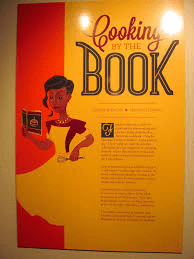
Food is an important necessity people need to survive, and by creating an exhibit or program based on the narrative of food history museums create examples of how people can understand relevance in museums. This week there was a webinar the American Association of State and Local History hosted called Interpreting Food at Museums and Historic Sites, which provided introduction to strategies for using food and food history to develop interpretation with depth and significance, and will make relevant connections to contemporary issues and visitor interests. This webinar inspired me to write about my own experiences when I collaborated with my classmates and Connecticut Historical Society on the exhibit Cooking by the Book: Amelia Simmons to Martha Stewart. Also, I will discuss how the study of food history is continued to be discussed since I first approached the subject during graduate school.

During my second semester of my first year of graduate school, I took a course on Museum Interpretation in which the major assignment was creating an exhibit at Connecticut Historical Society using food as the theme. My classmates and I were introduced to the project at the beginning of the semester, and my professor assigned books to provide background information on food history; one of the books was Warren Belasco’s Food: The Key Concepts (Bloomsbury Academic, 2008) which served as an introduction to the study of food studies and an essential overview to the increasingly critical field of enquiry. Other books assigned were about food and food preparation in different centuries in America.

In my records, I also found my notes on the justification of creating an exhibit based on food for Connecticut Historical Society. They argue that food is a part of history that individuals can identify with as being universally relevant. According to my notes, food is an essential part of life for everyone needs food to survive, and more than that food can unite families and larger communities; food can also conjure powerful memories for individuals whether it is a yearly holiday meal tradition or cooking in the kitchen with a relative. My justification notes also stated that the exhibit will provoke questions about the differences in food history as it relates to class and gender within Connecticut’s social structure as well as challenging visitors to think about their own personal experiences with food. This is what my teammates and I had in mind when we created the original proposal presented to the committee at Connecticut Historical Society.

To create the proposal, in addition to figuring out a way to present food history in Connecticut, we also picked out objects that represented food history and our idea for the exhibit. We originally came up with an idea that was like the Upstairs/Downstairs concept when creating the Connecticut food narrative. Then we included the idea of telling Connecticut food history throughout time from the 18th century to current period. We then looked through Connecticut Historical Society’s collections that we felt best represented the narrative we believed will be presented in the exhibit. For instance, I oversaw picking out items from the eighteenth century and one of the pieces I chose to include in our proposal was a ceramic bowl that was made and used between 1730 and 1770.

After selecting our items for the proposal, we also had to figure out how to include an interactive segment in our exhibit to allow visitors to engage with the historical narrative. A couple of ideas we had include a tea etiquette practice in which a table and chairs are set up with a container of all the necessary items for the tea setting (photocopies of the directions for a Victorian tea setting would be provided and visitors would then attempt to properly set the table for tea based on the directions). The second idea we came up with was we would provide reproductions of community cookbooks from the Connecticut Historical Society’s collections for the visitors to look through.

When our class had the opportunity to present our proposals, my teammates and I presented our idea to a committee of Connecticut Historical Society staff members to determine which group’s exhibit idea they will move forward with. Each member of my group presented two different sections of our exhibit idea, and I presented the very first section when visitors enter the exhibit space as well as the interactive elements section to the committee. The first section was called “Cooking for a New Nation” which would feature Amelia Simmons’ American Cookery (which was the first cookbook published in America). The book would have been used as a representation of how women cooked in eighteenth century America and the narrative would have described the women’s and servants’ roles in the kitchen during this period; when discussing these roles, the narrative would also discuss the separation between servants and household was emerging in the eighteenth century as well as the transition from colonies to a new nation. Then I described the objects that would be selected for display in this section. After the rest of the sections were presented, I introduced the interactive element for the exhibit we brainstormed for the proposal.

Some time passes, and our professor announced that the committee decided to choose our group’s idea for the exhibit with some suggested changes. The exhibit was changed to focus more on the time line of cookbooks published in the United States and discuss food history in America (especially Connecticut) in each century beginning with Amelia Simmons’ American Cookery and ending with Martha Stewart’s cookbooks. It was named Cooking by the Book: Amelia Simmons to Martha Stewart and we proceeded with selecting the objects and collaborating with the University of Hartford art design students to design the exhibit labels and space. My group oversaw the interactive element of the exhibit; the interactive element was changed to providing copies of various recipes that came from the cookbooks displayed in the exhibit, and presented the opportunity for visitors to write their own recipes and place them in a box. We each took a cookbook and selected the recipes we would be interested in using then narrowed down the options to a few of them. Cooking by the Book: Amelia Simmons to Martha Stewart eventually opened in January 2013, and it ran from January 18, 2013 to April 13, 2013.

Since then I did not see much of the history of food presented in a museum setting until I came across Michelle Moon’s Interpreting Food in Museums and Historic Sites which was published by the American Association of State and Local History in 2015, and the basis of this past week’s American Association of State and Local History (AASLH) webinar. Moon’s book argued that museums and historic sites have an opportunity to draw new audiences and infuse new meaning into their food presentations, and food deserves a central place in historic interpretation. Her book provides the framework for understanding big ideas in food history, suggesting best practices for linking objects, exhibits and demonstrations with the larger story of change in food production as well as consumption over the past two centuries. She also argues that food tells a story in which visitors can see themselves, and explore their own relationships to food.

I also came across Linda Norris’ blog post “Building a Learning Culture: Food Included” on her blog The Uncatalogued Museum which discussed her experience working with the board and staff at the American Swedish Institute in Minneapolis, Minnesota on creative practice in context of interpretive planning. The American Swedish Institute decided to include stories of all immigrants not only Swedish immigrant stories. To assist with creative practice including in interpretive planning, there are lessons that each institution needs to learn to connect with each other and with their communities. Norris introduced lessons from this experience including good ideas come from everywhere so it is important to cast a wide net to gain knowledge, and making time to think together is especially important.

Also, it is important be open to collaborate with people in the community to develop new collaborations and deepen other partnerships. If the American Swedish Institute did not learn that lesson, then they would not have learned about a restaurant in their community that shows appreciation for Bollywood dance and shows customers how to perform them. She also talked about the experience influencing the staff to schedule regular fika, or Swedish coffee break, with baked goods to spend some time from a busy day and connect with each other. For more information about her experience, the link to her blog can be found here: http://uncatalogedmuseum.blogspot.com/2017/02/building-learning-culture-food-included.html.

These previous examples show how food presentations in the museum field has evolved in the past few years. By sharing my previous experience on food presentation and the most current experiences on food and culture, I provide some examples of how visitors can make connections to their own memories related to food. I will soon be attending a New York City Museum Educators Roundtable (NYCMER) program called Lessons in Equity from Culturally-Specific Institutions: Beyond the “Target Program” at the Museum of Chinese in America on creating a diverse environment in the museum. The program will also include a closer look at the special exhibition Sour, Sweet, Bitter, Spicy: Stories of Chinese Food and Identity in America. When I heard about this program the first time, it reminded me of the many family meals I have had during my childhood and in my adulthood trying various Chinese food dishes. I will continue the discussion on food history and how individuals can to share my experiences after I attend this program.
Do you think your museum or institution would be able to include food history in its exhibits or programs? What is your most powerful memory that comes to mind when you think of food? Have you attended a program or exhibit that discusses food history or a subject related to food?


Professional Development: Shared Authority and Relevance of Education

Originally posted on Medium, February 16, 2017. 

This week I attended a couple of professional development programs on shared authority through the American Association of State and Local History (AASLH) called Peb Yog Hmoob Minnesota: Sharing Authority and Building Relationships with Your Communities and on education called The Relevance of Education through the American Alliance of Museums (AAM). The AASLH program was a case study of the Minnesota History Center and the Hmong community members’ relationship, and how they worked together to create an exhibit in 2013 on the Hmong culture anchored on the 40th anniversary of the first Hmong refugees’ arrival in Minnesota. The Relevance of Education program was a discussion based on the Committee on Education’s Excellence in Practice: Museum Education Principles and Standards that was released in 2002 and revised in 2005, and the program tackled questions including What has changed in the 15 years since its publication? How has the document impacted the field? How do the principles and standards hold up over time? In what way would the document be different if it was written today? These programs are significant to the practice of museum education since both topics discuss how to adapt the field to a changing society.
The concept of shared authority is certainly not a new one in the museum field but is continually discussed to be relevant in our evolving communities. While I was in graduate school earning my Master’s degree in Public History, I did some research in 2012 on shared authority between museum officials and the public by presenting the challenges in interpreting history with articles and case studies found in my research. Shared authority is a partnership between museum professionals and outside parties to work on projects for the public. I discussed in my presentation the positive impacts and the challenges shared authority has on museum staff.


Positive impacts shared authority presents includes encouraging experts to engage with the world around them; encouraging museums to stretch out beyond their communication channels and include others to interact more with the projects; visitors can engage deeply with the exhibits and museum experts are still able to share expertise in the collaborations. Partnerships also bring as many challenges into developing projects as they bring positive impacts. For instance, it is hard to please each visitor, and therefore it is important to have as balanced input from both museum professionals and visitors or outside parties as possible to have a successful program or exhibit. As we continue to work with others within our communities, our involvement in the community is increasingly becoming more significant as it is demonstrated in AASLH’s shared authority professional development program.


The presenters in the Peb Yog Hmoob Minnesota: Sharing Authority and Building Relationships with Your Communities program were Dan Spock (the Director of the History Center Museum and Exhibitions & Diversity Initiatives at the Minnesota Historical Society), Wameng Moua (the publisher of “Hmong Today,” a community newspaper and the voice behind HMONG-FM, a radio variety show focused on the Hmong), Sieng Lee (exhibit designer for the Peb Yog Hmoob/We Are Hmong Minnesota exhibit/visual artist), and Nicholas J. Hoffman (Managing Director of Education and Visitor Experience at the Missouri History Museum in Saint Louis, Missouri). The program discussed how the idea for the exhibit began and went through the entire process of creating this exhibit. It also revealed how museums can overcome the lack of diversity and diverse viewpoints within historical interpretation.


Before the exhibit was added to the Minnesota History Center, there was a lack of diversity that was in the exhibits as well as a lack of items that reflected what the community was really like in St. Paul. One day a committee from their local Hmong community, led by Wameng Moua and Sieng Lee, approached the History Center with a huge binder of photographs and materials of Hmong history. The committee asked this museum for full collaboration on this project, since they were concerned about having their impact on the state lessened in the eyes of MNHS’ visitors, by sharing curatorial control with Hmong community representatives from a list put together of a good mix of people that would form an advisory committee to discuss ideas. A few examples of what the advisory committee discussed include figuring out what do the people want to see (and it was decided they will tell the whole story of the culture), put together what the narrative would be, and the layout of the exhibit throughout the galleries.


The challenges that they faced while creating this exhibit was figuring out what objects to include and exclude in the exhibit, and where these objects would be placed in the exhibit. These challenges are always going to be present in every institutions’ exhibit planning, and it especially includes project collaborations with individuals outside the institution; the best way to approach these challenges is to stick with the narrative chosen for the exhibit then base decisions on that narrative. The presenters stated something similar in their discussion amongst other things they took away from this experience.


Some of the advice they present include the whole staff must be on board with doing things a little differently than what they normally do, and maintain authenticity for projects especially when presenting someone else’s culture within an exhibit. Also, they say to hit the streets and be open to learning all aspects of the community. It is also important to keep up with the evolving history of the community; exhibits like this one must be reflective of what the community is today. If an institution ignores the community surrounding it and does not acknowledge the evolution of a community, then the institution will not be supported by the community. The exhibit should also be created to attract each member of the community; for instance, an interactive element of a farmer’s market was added for children to learn about the food in the culture in English and Hmong by scanning the food to visually see the names associated with them. Each of the presenters also discussed what happened after the exhibit opened to the public, and how the History Center was affected by the exhibit.


During the exhibit opening, the staff noticed that there was a positive reaction to the exhibit. The exhibit also lasted longer than they were expecting; it ended up running for six months after the exhibit opening. After the opening, the staff conducted visitor research to find out how this exhibit affected the museum. According to the visitor research, the number of Asian visitors had quadrupled and a lot of them were under thirty years of age which means these individuals wanted to learn more about their history and their community. The exhibit also inspired to continue to develop new relationships with more people in the community. For instance, the exhibit led to the creation of Asian Pacific Heritage Day which celebrated various Asian cultures represented in the St. Paul community and currently they are working with Native American communities. Shared authority is a part of maintaining relevance in education, and the American Alliance of Museums’ The Relevance of Education program continues the discussion of learning to continue adapting the museum education practice.


The Relevance of Education program was hosted by Greg Stevens and moderated by Timothy Rhue II (Senior Informal Education Specialist at the Space Telescope Science Institute, Baltimore, MD and Communications Chair in EdCom). The panelists for this discussion were Jim Hakala (Senior Educator at the University of Colorado Museum of Natural History in Boulder, CO), Sage Morgan-Hubbard (Ford. W. Bell Fellow for Museums and P-12 education at AAM), and Mary Ellen Munley (Principal at MEM & Associates in Bennington, VT). After providing links to the original 1990 Statement on Professional Standards for Museum Education and the 2002 (revised in 2005) Excellence in Practice: Museum Education Principles and Standards for our reference, the discussion began with this question: How do these principles apply today? It was agreed that the principles in museum education need to be updated on a regular basis instead of addressing the need 15 years later.


Another point that was mentioned in the discussion was our institutions are constantly evaluating our communities and because of this we cannot stay static. Also, our institutions make efforts to make connections within our communities as well as include community members in collaborated projects to create a shared space for multicultural groups to get together in. The discussion also pointed out that our roles as museum professionals transitioned from about education being about what we want the public to know to serving the public by having the responsibility to earn the recognition of how important our institutions are.


Then we also need to acknowledge how we now define museum educators in the museum community. The term “museum educator” has a different definition at each institution. Based on my experience, I have noticed that museum educators can describe individuals who specifically teach school programs as well as museum staff in general that are dedicated to their institution’s mission in education. As a museum professional, I have had different titles at each museum I work for. For instance, at Stanley-Whitman House my title was “Museum Teacher”; at Connecticut Landmarks, when I started there it was simply “Tour Guide” but as I and my previous co-workers became more involved with interpretation and creating our own ways of presenting the material the title changed to “Museum Interpreter”; at Noah Webster House & West Hartford Historical Society, my title was “Museum Teacher”; and at the Long Island Museum my title was “Museum Educator” and yet my role included not only teaching school programs but also I was responsible for administrative tasks including mailing flyers and booking school programs as well as assisting running family and public programs. Since we include outside parties collaborate with museum staff, we allow their contributions to define their relationships as being co-curators, co-authors, and co-educators within our museum community. As a result, we need to keep in mind that the terminology for museum educators will change based on what the institutions and communities value in our society.


Another question that was addressed in the discussion was: How do the principles and standards hold up over time? The panelists discussed that the principles had a theoretical base work but it does not provide an example of applied best practices. Also, they stated that the basic principles were there all along but the interpretation changes over time. I agree with that statement because the principles do address ways to engage audience members of various backgrounds that would theoretically work in the museum setting, and yet our institutions learn to adapt and change with our society and because of these changes we view these education principles differently. Since our policies continue to change we need to be able to understand that we will not be able to get our programs right the very first time and that we need to be able to leave room for adjusting our programs based on audience members’ reactions and interactions with the programs. The next question on our minds would then be: What are the next steps?
Do we need to write another document to reflect what is going on now in museum education practice? The panelists concluded that the principles do need to be readdressed to reflect the changes that have been made since it was written in 2002 and revised in 2005.


Then we need to also address how the museum education field as its own community will support each member as we allow it to evolve with the changing society. Mary Ellen Munley had stated that she noticed there is what she calls an “isolation in practice” or in other words we do not have the time to catch our breath let alone get together to figure out what we need to do collectively as our own community. I see where she is coming from since as museum professionals we continue to create and implement programs, maintain and protect our collections, and run our administrations there is little time to stop and figure out our communities in practice.


However, I also see that there are moments where we can stop and develop our skills as professionals as well as connect with our community. For instance, there are opportunities for museum educators to develop their skills with state museum educator roundtables (like Connecticut Museum Educators Roundtable and New York City Museum Educators Roundtable), and the national group Museum Education Roundtable that offer resources and programs to allow them to be involved in the practice. Also, there are other ways that museum professionals can connect with the community and develop our skills including writing blogs about our experiences and joining various organizations that will help both parties grow and develop. The challenge is to finding the right balance so we would be able to both run our institutions and continue to grow with our community.


What is your opinion on how museum education is changing? Have you read Excellence in Practice? What are your answers to the questions I posted from the program? Do you have an example of shared authority that has occurred involving your institutions? What worked and what did not work?