How to Work with Museum Boards: A Relationship Between the Staff and the Board

Added to Medium, November 9, 2017

As I assist with preparations for my museum’s board meeting this week, I thought more on what I have learned about the board’s role in the museum. Throughout my career so far, I became more involved in getting to know the board and what their impact is on the museum. I continue to learn more as I become more involved in projects that help the board see the museum’s progress. To absorb more knowledge about museum boards, in addition to personal experience, I read books, articles, and blog posts on various information about museum boards.

There are a number of responsibilities boards have for museums and other non-profit organizations. According to Hugh H. Genoways and Lynne M. Ireland’s Museum Administration 2.0, board members have a number of responsibilities including but not limited to: ensure the continuity of the museum’s mission, mandate, and purposes; act as an advocate in the community for public involvement in the museum; review and approve policies consistent with the museum’s mission and mandate, and to monitor staff implementation of these policies; plan for the future of the museum, including review and approval of a strategic plan that identifies the museum’s goals and ways to attain them, and monitoring implementation of the plan; and ensure that the museum has adequate staff to fulfill the mission.

Museum board responsibilities are not limited to only the previously listed. Their responsibilities do have to be clear to make sure the board members understand how their tasks have an impact on the overall museum’s function. Board members do need to not only understand the museum director and staff roles to see the museum’s impact on the community.

To effectively run a museum there has to be a clear definition of roles and responsibilities of board members, the executive director, and staff. Each of them need to work together to fulfill the museum’s mission and meet the needs of its constituencies. The executive director and board balance their leadership roles between both of them, and the extent to which the board and director achieve this balance will vary from museum to museum and will depend on the size of the museum. Each staff member, director, and board member have a role to fulfill to keep the museum running.

By learning more about my role in the museum and other roles in the museum, I can see how all of our work keeps the museum running for the community.

I began to learn more about museum boards and my role in collaborating with boards during my most recent years in my museum career. For instance, this week I have been asked to look over financial records of Maritime Explorium’s admission records for 2017. I carefully looked through each information between January and October to make sure it was all accurate to prepare for an upcoming board meeting. By completing this task, I will be able to help the executive director and the board understand the trends of this past year so far and they would be able to move forward in planning for next year.

While I was learning from my personal experience and from the book Museum Administration 2.0 about the board’s role in the museum, I also read the blog posts about museum boards.

In the Leadership Matters blog post “It’s the board, stupid”, Joan Baldwin pointed out that not everyone on boards internalizes the museum’s mission, gets along with the executive director, contributes time and money and gets others to do the same, but if board members have understood their trusteeship as work, based in a museum’s mission, there would probably be less disruption, less mediocrity, and more organizational success.

No one is perfect, and it can be a challenge to keep things functioning in the museum. The most important thing to keep in mind is to have constant and clear communication between the board, director, and museum staff.

Communication also needs to be clear between the board, executive director, and staff. The more effective and accurate the communication among them are the more likely what changes unfold can be accommodated smoothly.

Board members bring a variety of values with them, and the director’s success in the museum is directly related to his or her understanding of the board and its values. The board’s composition needs to be reflective of the community it serves. Museums’ boards, in other words, need to reflect diversity in their leadership. In Rebecca Herz’s blog post “Museum Boards” from a few years ago, one of the former museum directors she talked with pointed out that “we need boards that can represent the range of communities served by our museums”. This is certainly true now as it was when this blog post was written. If we do not effectively represent our communities, then people within those communities will not see how museums can be valued. To be able to represent our communities, we need to start with a diverse museum board.

The best way to have a better understanding of how museum boards function is to take advantage of the opportunities to assist in projects that affect museum boards’ roles and to get to know your museum board members.

Have you been on a museum board? What is your experience like? If you work in a museum, how directly have you worked with board members? What have your experiences with boards been like?

Resources:
Genoways, Hugh H., Lynne M. Ireland, Cinnamon Catlin-Legutko, Museum Administration 2.0, Lanham, MD: Rowman & Littlefield, 2017.
https://museumquestions.com/2013/11/18/museum-boards/
https://leadershipmatters1213.wordpress.com/2017/10/30/its-the-board-stupid/

What Do You See? The Importance of the Visitors’ Perspectives

Added to Medium, November 2, 2017

Museums continue to work to make educational programs, events, and exhibits more visitor-centered. One of the first things museum professionals should consider is to understand the visitors perspective. It is sometimes easy to forget what it is like to see the museum one works for with a fresh perspective. When we learn from the visitors, we are able to appeal to visitors and potential visitors.

I previously wrote about visitors in past blog posts, and by developing this topic now we see that it is still relevant in the museum field. To best understand our visitors, we should observe as well as talk with our visitors.

When we are able to observe visitors during their experiences, museum educators especially can learn how to make programming more engaging, fun, and educational for participants.

In the Museum Notes blog, visitor observation and perspective discussion was developed in the post “Observation: Seeing, Un-seeing, Re-seeing”. According to the blog post, it stated “Without thoughtful observation, what can we know and understand about what is happening around us in our museums, in the experiences we create, and the connections we hope to foster?” They brought up a good point since we need to learn what our visitors want or need from their experiences, and if we do not observe how visitors react to our programming our field cannot move forward and would not be relevant within our community.

To find out how we can observe visitors effectively, museum educators should find the best methods that would be the most appropriate and effective for their institution. Museum Notes stated that “we engage in both formal and informal observation in research and evaluation, during prototyping, and sharing visitor comments.” When we find out how we observe visitors, we follow through with the method, and hopefully gather results that will make our services better for visitors and potential visitors.

We also need to keep in mind when we observe we do not exclude our own actions within the museum. Museum Notes points out that,

“As good observers, we must also be observers of ourselves, studying our attention, checking our assumptions, and registering our focus. Questioning ourselves as we observe reminds us that we arrive at subjective interpretations, partial findings, and, hopefully, new questions.”

When we observe ourselves, we learn what we are currently doing to provide what the visitors want or need from our museums programming, events, and exhibits.

As we learn more about our visitors and ourselves, we should keep in mind what visitors’ rights are while they are participating in museums activities and interacting with the exhibits. In this month’s Brilliant Idea Studio blog, Seema Rao wrote about visitors in the short blog “Bill of Rights for Museum Visitors” which lists a number of certain rights museum visitors have while they are inside the museum. Some of the rights she listed are

“They have the right to just listen, to ask, to share, to question.
Again, they have the right to question.
They have the right to ask and question when their story isn’t included.
They have the right to notice when museums are doing it wrong.”

Visitors have various levels of interest in the material museums present depending on their reasons for visiting the museums in the first place. Sometimes they want to spend hours in the exhibits, and sometimes they want to walk through the exhibits to briefly see the exhibits. There are other times that visitors want to only attend programs such as a seminar, a family program, and an exhibit opening then leave.

Also, visitors should know how they can feel connected to the stories museums present as well as why they are significant within the community. If they feel they cannot relate to the museum and what it has to offer, then there would be no point from their perspective to go in.

Most importantly visitors need to feel that they can trust museums to allow them to express their desires for attending museum programs/exhibits/events, and for museums to trusts its visitors. They have many reasons for why they visit a museum, and if they feel the museum can provide a safe place or simply a place for them to relax visitors are more likely to continue their patronage to the museum. Visitors should also be able to provide feedback not only because it will help the museum continue to be relevant to its patrons but visitors also have a way to express what they enjoyed and what can be improved upon for future visits.

How does your museum or institution learn about its visitors? What feedback have you received from visitors that surprised (or not surprised) you the most?

Resources:
https://museumnotes.blogspot.com/2017/10/observation-from-seeing-to-un-seeing-to.html
https://brilliantideastudio.com/art-museums/bill-of-rights-for-museum-visitors/

What Can We Learn from International Museums? Encouraging A Global Relationship Between Museums

Added to Medium, October 26, 2017

When I began my career as a museum educator, I learned about various local, regional, and national organizations that provide professional development and other resources for museums. As I continue my career in the museum field, I also learned more about international museum organizations that offer similar resources for museum professionals around the world. I understood that museums can benefit from meeting with other museum professionals to share ideas and learn from each other about various museum operations especially education programming. Museums and museum professionals have opportunities to gather and learn from one another to keep developments in the field moving forward.

During tonight’s #MuseumEdChat on Twitter, myself and other participants emphasized the importance of learning from other professionals in the field. One of the participants, on answering a question about mentorship, pointed out that “people with varying areas of expertise need to mentor you through different issues”. There are so many professionals with various areas of expertise we work with that it is important to collaborate and seek guidance.

Another participant also thought about “colleagues in museums in other countries who literally risk their lives to preserve culture.” Museum professionals in many countries are dedicated to preserving culture, and work together to provide resources to help one another.

If we continue to engage with museum professionals both within our country and outside of the country, we will not only have a better understanding of one another we will also be leading by example on dealing with current issues in the world.

I was first introduced to international organizations when I learned about MuseumNext.

Museum Next is an organization that began in 2009 with the question “what’s next for museums?” They discovered that the answer to this question is as varied as the people who are building it. This organization builds a global community of museum leaders, innovators and makers who champion future thinking in museums. MuseumNext has led to collaborations that span the globe, and the influence of this passionate community can be seen in action in museums all over the world. It offers conferences held throughout the year in Europe, North America and Australia to offer participants the opportunity to hear inspiring presentations, pick up career skills in expert hosted workshops and network with fellow delegates.

When I began writing my blog, I began to learn more about international museum organizations through LinkedIn and other social media outlets such as Museums Association and the International Council of Museums (ICOM).

Museums Association is a UK based organization that inspires museums to change lives. It is the oldest museums association in the world (set up in 1889) based in London, and is independently funded by memberships. Their memberships are made up of museum professionals, institutions and corporate members. Museums Association values a lot in making museums have impacts on lives. This organization values having the courage to say what they believe; passion about delivering diversity and equality; working collaboratively, inclusively, and ethically; and lead change by example. The Association advocates for museums, sets ethical standards and runs training and professional development for members wishing to further their careers.

Museums Association is governed by a board of trustees from all parts of the UK museum community, elected by MA members. It runs various professional development programs, including conferences, and mentoring and regular training events.

The International Council of Museums (ICOM) is an organization created in 1946 by and for museum professionals with more than 37,000 members and museum professionals who represent the global museum community. A diplomatic forum made up of experts from 141 countries and territories was formed to respond to the challenges museums face worldwide. ICOM carries out international missions thanks to international mandates in association with partners including UNESCO, INTERPOL and the World Customs Organization (WCO). Also, ICOM is committed to providing cultural institutions with the necessary support and risk prevention tools when faced with conflict situations or natural disasters.

ICOM also organized International Museum Day, a worldwide event held around May 18th which aims to increase public awareness of the role of museums in developing society since 1977. Participation in International Museum Day promotes greater diversity and intercultural dialogue among the international museum community, and each year ICOM identifies a theme for the event. I have spread awareness of this worldwide event for years since I discovered it early on in my career. This past year’s theme was “Museums and contested histories: Saying the unspeakable in museums” which focuses on the role of museums that, by working to benefit society, become hubs for promoting peaceful relationships between people.

In addition to previously mentioned, ICOM also operates thirty international committees on a range of museum specialties, who conduct advanced research in their respective fields for the benefit of the museum community. Some of the committees include CECA – Education & Cultural Action, DEMHIST – Historic House Museums, ICOM-CC – Conservation, and ICFA – Fine Arts.

There are so many international museum organizations out there that emphasize the importance of museums and what they offer.

On the social media outlets, I have had discussions with museum professionals from various countries including but not limited to Uganda and Nigeria; there have been sharing points of view as well as sharing advice during these conversations. By connecting with museum professionals outside the country, I learn more about the museum field on a larger scale and appreciate so much diversity our world has to offer; we could (and should) celebrate what all of us in the world have to offer.

Do you know of other international museum organizations? What has your experience like connecting/networking with international museum professionals?

Resources:
http://www.museumsassociation.org/home
https://www.museumnext.com/
http://icom.museum/

Anniversary Special: One Year of Writing about Museum Education

Added to Medium, October 19, 2017

As a way to celebrate both the one-year anniversary and my birthday tomorrow, I decided to reflect on the past year and share plans moving forward for the blog. It has been exactly a year today since I started my first blog entry on Medium, and so much has happened since then. When I began my blog, I talked about how I became the museum educator I am and what led me to start writing it. I stated in my blog,

This story will continue not only with a discussion about my experiences in greater detail but I also will discuss recent topics in the field as well as recent books and journal articles I read. I also will write about conferences and workshops I attended. What I hope to accomplish with this blog is to give educators and aspiring educators both a personal account of and resources on the museum education field.

Now a year later, I kept my promise and discussed recent topics in the field including museum professionals leaving the field and what to do to make the field more appealing to stay in. Also, I discussed what I have been reading and discussed topics based on what I read in books, journals, blog posts, and articles. I briefly discussed my professional development experience in the blog.

Since I started the blog a year ago, I have met with many people who have expressed their thoughts, opinions, and insights on the ideas I shared. I shared my blog posts each week on social media outlets LinkedIn, Facebook, and Twitter to reach out to people especially other museum professionals. Especially on LinkedIn, I read many comments, opinions, and insights to the topics I discussed. I am thankful for everyone who has read and responded to this blog since you all gave me insights on your perspectives on the museum field and continued the discussion on these topics. Also, I thank those who reached out to ask me questions and for my advice. When you respond to these blog posts, I am able to not only know what you thought about the current topic we are also able to learn from one another to keep moving our field forward. Because of this blog, I have also became even more involved in the field than before I started writing.

Ever since I began writing this blog there have been many developments including meeting new people, joining Gender Equity in Museums Movement (GEMM), and creating a new website to promote the blog in addition to sharing resources I come across.

After writing about gender equity in the Lunch with NEMA program, I was asked if I would be interested in joining Gender Equity in Museums Movement (GEMM) which is dedicated to educating museum professionals about gender equity and assisting museum professionals in discussing gender equity among colleagues. In addition to this, I created a website that is used as my professional reference and where I promote my blog.

When I created my website, https://lookingbackmovingforwardinmuseumeducation.com, I hoped to promote not only my blog but to also promote my expertise by sharing resources I refer to and open communication with viewers to discuss topics on museums. I designed my website so visitors can see an abbreviated version of my resume, and if they are interested in learning specific experiences there is a contact page where they can ask me to send them a copy of my resume. Also, my website has various resources organized into various topics including education and interpretation, educational resources, books on museums and public history, and blogs I read. These are resources I share that show I keep up to date on current topics and trends in the field. While I update my website, I also check on the number of individuals who have accessed my website.

I have seen people who have visited my website come from not only within the United States but from many countries around the world. There were individuals from Iceland, Israel, Ghana, South Africa, Australia, Canada, Japan, India, Spain, Germany, Ireland, China, Bangladesh, New Zealand, United Kingdom, Brazil, Peru, Russia, Switzerland, and Italy. When I saw the amount of people from different countries visiting my website, I saw the potential in continuing to make my website grow and reach out to more people.

I have learned a lot in this experience and I am thankful for each moment that led me to this point in my career.

Moving forward, I have additional ideas and projects I am continuing to work on. Since I realize there is international attention to this website as well, I will look out for resources that discuss international museum topics to add to my website.

While I have posted for the most part only once a week, I know that there is so much I want to write about so I want to write more than once on a regular basis. In order to do so, I want to make sure this blog and website can be financially supported to keep it running. I will launch my Patreon page to help support my website and blog.

Patreon, for those not familiar with the website, is a membership platform that provides business tools for creators to run a subscription content service, as well as ways for artists to build relationships and provide exclusive experiences to their subscribers, or patrons. It is popular among YouTube video makers, artists, writers, podcasters, musicians, and other creators who post regularly online.

On my Patreon page I encourage all to make a contribution to help support the blog and website, and/or share my page with others. There are a number of rewards you can earn when you contribute which are: acknowledgement on my website, send information you come across to me on museums and history, and make requests for what I should write about for the blog. When you make higher contributions, in addition to the previously mentioned rewards we can arrange for an hour meeting, a two-hour meeting, or an unlimited meeting for either a meet and greet or seek consulting advice.

My goals are when I reach 50 patrons contributing I will post two blog entries per week instead of once per week. As more patrons contribute to my blog and website, I will increase the number of blog entries per week.

I encourage visiting and sharing my Patreon page, listed here: https://www.patreon.com/lindseysteward

Thank you all for your continued support during the past year, and I hope you all continue to read as I continue to give educators and aspiring educators both a personal account of and resources on the museum education field.

“Leaving the Museum Field”: A Reaction to the Alliance Labs Blog

Added to Medium, September 27, 2017

This week I am posting earlier than usual because I have a family event this weekend I am preparing for and I also want to address a blog post from Alliance Labs, the American Alliance of Museums blog, discussing the topic of why many museum professionals are leaving the field.

It is an important topic because there are so many people considering leaving the field for various reasons, and we need to do something to work towards making our field more inclusive and rewarding for museum professionals to make it more appealing to stay. After reading this blog and similar articles, the experience made me think about my own reasoning for staying in the field as well as my resolve to be a part of making this museum field a more encouraging field to continue working in.

Sarah Erdman, Claudia Ocello, Dawn Estabrooks Salerno, and Marieke Van Damme last week talked about this topic in their blog “Leaving the Museum Field”. These four museum professionals got together after the 2016 AAM conference in DC to try to find out the reasons museum workers leave the field. In this blog, they presented their findings based on the over one thousand individuals who participated in a survey with open-ended questions. One of the questions that were placed in the survey include,
Why we stay. Hands down, we stay because of the work we do. Unsurprisingly, for those of us who have made lifelong friends at our museums, we also stay because of our coworkers. The close 3rd and 4th reasons for staying are “Pay/Benefits” and “No Other Option.” The least popular response was “Feel Lucky to Have a Job” (1%) and the write-in “I love dinosaurs.”’

I have mentioned in previous blog posts my reasons for joining the museum field, and for me my reasons are definitely for the love of the work I do as well as my passion for museums. In my very first blog post, “Writing about Museum Education”, I mentioned my family trips to museums inspired my passion for and my career in museum education. I also pointed out that

“Education for me has always been my favorite part of life, and while at times it was challenging for me field trips especially to museums have given me a way to understand the lessons I learned in the classroom.”

I still believe museums can illuminate an individual’s educational experience, and by continuing in the museum field I hope to make an impact on the public. It is a challenge to accomplish this when there are things that prevent me from fulfilling this goal.

As I was graduating with my Master’s degree in Public History, there were limited opportunities to get a position in the field that would meet the typical needs. Similar limitations were addressed in the blog post as reasons museum professionals are leaving. According to the blog,

Reasons why museum workers leave the field. We had about 300 answers to this open-ended question. We grouped them by theme and found the following reasons (in order of frequency of response):
1. Pay was too low
2. Other
3. Poor work/life balance
4. Insufficient benefits
5. [tie] Workload/Better positions
6. Schedule didn’t work.”

There was a point that I thought I should consider leaving. However, I thought about my experiences I have had at this point, and knew there is so much I still have to offer to the field. I began working at the Maritime Explorium, a children’s science museum, which is a little different from my previous experiences but is just as passionate about education for children and the public as I am. Also, I began work on this blog sharing my experiences in the museum field as well as my impressions on current trends in the field. I also became involved in museum organizations, including the Gender Equity in Museums Movement, to help other museums and museum professionals make a difference in the community and within their institutions.

In a way, I adapted my career in the museum education field and I found a way to stay in the field. I continue to work hard to stay in the field. This blog pointed out a number of ways to help museum professionals stay; it stated,

How can we prevent museum workers from leaving? Again, increasing pay was at the top of the list, but respondents also suggested many free or cost-effective ways to create better working environments, like:
Create mentoring opportunities
Respect each other – break departmental silos
Make room for new ideas.”

By following the previously mentioned suggestions, we as museum professionals will be able to work towards making museums a better workforce to stay in so we would be able to work within our communities better.

While I continue to face challenges in attaining these needs, I am thankful for every opportunity that I have experienced in the field. Each experience has led me to getting to know various people in the field and to learning lessons in the field that help me grow as a museum professional.

The key to making this field a more appealing field to stay in is to keep working towards making a change in our museums and the museum community. It would not be realistic to expect the museum field to be better overnight. We need to keep talking about this situation, and be able to learn from this experience to move forward. I included the original link to the blog in my resources section for all museum professionals to refer to, and it also includes a variety of resources related to this topic to refer to.

Please leave your responses about this topic on my blog and/or the Alliance Labs blog, and continue this discussion among your colleagues.
Resources:
http://labs.aam-us.org/blog/leaving-the-museum-field/
https://www.genderequitymuseums.com/


Why We Need to Be Prepared: Resources on Preparation for Natural Disasters for Museums

Added on Medium, September 7, 2017.

In the past couple of weeks, we were either preparing for and assisting others in preparing as well as helping people in the aftermath of Hurricane Harvey (August 25, 2017-September 2, 2017) and now Hurricane Irma. Since these natural disasters occurred, the museum community continues to support those museums that had been through these hurricanes by sharing resources on how museums can prepare for these storms like Hurricane Harvey and Hurricane Irma in addition to offering whatever we could to help those museums and the communities surrounding them. I was one of the museum professionals who shared resources on how to prepare for natural disasters; in my last blog, I stated that I have gathered resources and posted them on my website for those who want to learn more.

As a community of museums, we need to recognize that we should be able to be prepared for whatever storm or natural disaster that comes into our area. Many of the items in our collections are irreplaceable, and without the protection we need (insurance and preservation procedures) we could lose a part of our past that we may never be able to recover.

We have various organizations and resources that offer ways to help protect and preserve items on the national and state levels. The Documentary Heritage and Preservation Services for New York, for instance, is a collaboration between two long-running New York programs dedicated to service and support for archival and library research collections throughout the state, and is supported by the New York State Archives, New York State Library, Conservation Center for Art & Historic Artifacts, and the New York State Education Department.

The Documentary Heritage and Preservation Services for New York offers various resources to assist museums and other organizations on preserving items in their collections. Back in June, I participated in a workshop called Disaster Response and Recovery: A Hands-On Intensive.

This workshop was an all-day program that allows participants to not only listen to advice from the experts affiliated with the Documentary Heritage and Preservation Services for New York but it also provided an opportunity to practice what we have learned through hands-on salvage activities. Participants were also given folders with additional information that can be referred to later on after the program has been completed. Inside the folders, there were pieces of information about the Documentary Heritage and Preservation Services for New York including what the organization is and the programs it offers especially educational workshops.

The folders also included additional information on disaster response and recovery. One of the pieces of information include guidelines for boxing wet books for freezing, and freezing and drying of book, paper, and photographic materials information and guidelines packet. Inside the folders, there were also additional information to supplement the presentation including information about the Incident Command System (the team that is gathered to respond and recover items after a disaster), and what we would need to recover specific type of items such as books, paper, CDs/DVDs, parchment/manuscripts, microfilms, black and white photographic prints, and textiles.

We were also given copies of the PowerPoint presentation to both refer to after the workshop and to take down additional notes on information they mentioned that were not brought up on the slides.

Also, it provided an agenda for the day’s workshop and information about the workshop speakers as well as a directory of museum professionals who attended the workshop.

In the morning, after a brief introduction, we were introduced to a few topics. The experts discussed the Incident Command System, Personal Safety, Site Assessment Techniques, Knowing When to Contact a Vendor, and Basic Salvage Techniques.

One of the first things the speakers pointed out that need to be done is to make human health and safety a priority. It is important to check in on the staff’s emotional and physical state since we should care about the individuals we work with to fulfil our organizations’ missions. Afterwards, the staff has to gather personal protective equipment (PPE) such as aprons, boots, gloves, goggles, and hard hats before approaching the situation.

The next steps in the recovery process are to assess the situation, prevent further damage, have a collections salvage, and return to as normal practice as possible. Each staff member should be assigned to different roles to record the damage, retrieve the items, and recover the items using appropriate techniques to best preserve the various types of items in the collections.

After a short break, we continued learning more about disaster response and recovery. We started to learn about the functional activity we would be participating in, and each part of the activity has a number of steps. For instance, we have to assess the site, assign roles, gather the supplies, and then set up the triage areas.

Once we assigned the roles to our team members, we proceeded to perform the salvage of items provided by the experts using the techniques we learned. After a lunch break, we continued the salvage but switched roles so each team member was able to practice what they have not done before the break.

In addition to this workshop, I also plan on gaining more resources from a webinar I found, hosted by the Texas Historical Organization, called Webinar: Responding to Hurricane Harvey. During this webinar, Rebecca Elder of the National Heritage Responders and Lori Foley of the Heritage Emergency National Task Force will host a discussion about emergency response. The discussion also includes opportunities to ask questions on emergency response, salvage, and recovery.

I recommend signing up for this webinar if your institution was affected by Hurricane Harvey and Hurricane Irma. I also recommend signing up if you are curious about what resources are available for emergency responses.

During these times, we need to be there for each other and help support each other however we can. I decided to write about hurricanes and natural disaster recovery processes as a way to offer help to those who need resources on how to preserve their collections. My thoughts are with those still recovering from the aftermath of Hurricane Harvey and those who are in the middle of Hurricane Irma.

What resources have you came across for natural disaster recovery processes? How does (do) your organization(s) prepare for and recover from natural disasters?
Here are some resources I referred to in my blog and a link to resources I gathered on my website on natural disasters:
Documentary Heritage and Preservation Services for New York: http://dhpsny.org/
https://register.gotowebinar.com/register/1686939294244406785 (webinar I referred to in the blog)
Northeast Document Conservation Center: https://www.nedcc.org/
and the NEDCC article: https://www.nedcc.org/free-resources/preservation-leaflets/3.-emergency-management/3.8-emergency-salvage-of-moldy-books-and-paper
Virginia Association of Museums: http://www.vamuseums.org/page/DisasterResources
My website and the resource pages I gathered for visitors: https://lookingbackmovingforwardinmuseumeducation.wordpress.com/resources/articles-I-am-reading/


What Can We Learn From the DreamSpace Project?

Added to Medium, August 24, 2017

I was reading the Alliance Labs blog posts when I came across one that I found not only interesting but also relevant for museum professionals and other readers alike. It is an example of a blog post that provides information about how to have a better understanding of race and racism. American Alliance of Museum’s Ford W. Bell Fellow in P-12 Education and Museums Sage Morgan-Hubbard has transcribed an interview she had with Alyssa Machida, an Interpretive Specialist at the Detroit Institute of Arts, about the workbook, The DreamSpace Project in the Alliance Labs blog post “Building the Dreamspace in Museum Education”.

What is a Dreamspace? A Dreamspace is a place in the museum where museum educators are able to learn how to provide a safe space for discussion about race and racism.

We need to take the time to acknowledge what is going on in our nation and look deep down into ourselves and in our communities. The Dreamspace project is one of the ways we can do so in the museum field.

According to the blog post on incluseum website called “The Dreamspace Project: A workbook and toolkit for critical praxis in the American art museum Part I”, there is a growing need for tools and resources to guide museum educators in developing more nuanced understandings of race and racism throughout their institutions; in order to do so, Alyssa Machida researched concepts from critical pedagogy, critical race theory, and ethnic studies to integrate with museum education pedagogy.

Machida, as of last year, was working on the Dreamspace workbook which translates theoretical concepts into practical language and frameworks adaptable for art museum professionals with key vocabulary, diagrams and graphic organizers, ideas for building tours, and questions for critical reflection.

The purpose of this workbook is to take educators through a significant amount of content for the purpose of raising critical consciousness. Educators, especially in this day and age, engage us in wide-reaching social forces and dynamics beyond our peripheral vision, and as a result teach us how to become better human beings in the process.

Machida also discussed in the blog post “The Dreamspace Project: A workbook and toolkit for critical praxis in the American art museum Part 2” contextualizing, deconstruction, and decolonization. She explained that in the chapter of the Dreamspace workbook “Contextualizing: Mapping and Navigating Terrains” it introduces the practice of developing critical self-awareness, building knowledge of the many ecologies we inhabit, and expanding understandings of our roles and responsibilities. There are also key points that museums have to keep in mind when establishing critical self-awareness and openness to being challenged within ourselves to see individuals as agents of change.

The key points in mindfulness to keep in mind provide a framework for openness. In the blog post, she stated the first key point is everyone is complicit with racism; in other words, it is everyone’s responsibility to be attuned and counteract deeply ingrained behaviors and biases which will take time. The second key point is don’t let emotion get in the way of critically and consciousness; while learning about racism and systems of oppression is an emotional and painful, it is important to not let emotions take control since we are learning something that is changing our perspectives, and make sure we breathe, stay calm, and keep going. Then the third key point is to bring it up; these conversations are difficult to bring up to colleagues and supervisors but if you have trust and respect speak up since it is an opportunity for learning, teaching, and growth. The fourth key point is listen with your skin; in other words, when the subject of racism is brought up, be ready to put all biases and assumptions aside as well as listen for understanding. In addition, it is important to be open to being challenged and look for multiple ways to be supportive.

Machida’s work has gained a lot of attention in the past few days especially after what had happened in Charlottesville this month. These blog posts about her work were included as resources to look over while reading the Alliance Labs piece by Sage Morgan-Hubbard.

In the interview, Morgan-Hubbard used some of the questions in the Dreamspace toolkit. Some of the questions include: What was one of your first experiences with a museum? What does education mean to you? What is your personal learning style? Do you teach in a way that leans towards your personal learning style? and How do you see your role in society, or in your community?

By learning about Machida’s background in museum education and her work on the Dreamspace project, I am able to think about my own background and know that there are many museum educators that can identify with her answers.

When we understand more about individuals of all backgrounds within our own communities we would be able to provide a safe space for both museum professionals and visitors.

Here are the links to the blogs I referred to:
http://labs.aam-us.org/blog/building-dreamspace-in-museum-education/
https://incluseum.com/2016/08/11/a-workbook-and-toolkit-for-critical-praxis-in-the-american-art-museum/
https://incluseum.com/2016/10/13/the-dreamspace-project-a-workbook-and-toolkit-for-critical-praxis-in-the-american-art-museum-part-2/
Have you read the Dreamspace workbook? What do you think of the Dreamspace workbook and toolkit?

How Do We Educate Our Students About Charlottesville?

Added to Medium, August 17, 2017

Museum educators continue to prepare for school visits as the new school year approaches. As I was preparing for the upcoming school year, I as well as everyone in this country found out about the white supremacists rally and the attack that occurred on Saturday in Charlottesville, Virginia. It made me sad to learn that this is occurring in our country, and more importantly I thought about the future generations trying to understand how and why this is occurring in our nation. Museums and history organizations made their statements on what has happened in our country and their stand on these tragic events. We, as museum professionals, have this one question in mind: how do we educate our students about what is happening in Charlottesville?

Throughout the museum and education community, I have seen many organizations have spoken about these events. The American Alliance of Museums stated in their newsletter and Twitter account “There is absolutely no place in society for the kind of hatred, racism, and violence that were on display this past weekend, and we offer our deepest condolences to the victims, their families, and the community.”

The American Association for State and Local History also released a statement on the events in Charlottesville. They reinforce the importance of this organization, and what it stands for in this nation. AASLH
“abhors not only the violence of the clash in Virginia, initially over a Jim Crow era statue, but the hateful misunderstanding of history, the cruel misuse of the past, and the willful blindness to the historical record by the forces of white nationalism. As the national professional association for individual members, historical societies, history museums, and history sites that preserve and interpret state and local history, the AASLH stands for open discussion, reasoned research and interpretation, reliance on evidence and current scholarship, and the preservation of historical resources.”

Museums are not the only organizations that have made statements about the events in Charlottesville. Facing History and Ourselves, a nonprofit international educational and professional development organization that engages students of diverse backgrounds in an examination of racism, prejudice, and anti-Semitism to promote the development of a more humane and informed citizenry, released a message as well.

Roger White, President and CEO of Facing History and Ourselves stated in an email sent to newsletter subscribers:
“As educators, our first concern is the millions of young people watching Charlottesville unfold. As we return to classrooms across the United States and the world, we will be called upon to manage difficult conversations about the evil, base bigotry at play. We will need to provide historical and cultural context for the violence, for the references to Nazi language and events, and for the legacy of slavery in the U.S. that underlies the pain we see across the nation today.” Roger White, August 14, 2017.

As I read through these statements, I thought about how we should explain these events to our children and students. It is important to express that we should be accepting of every person within our community. One of the resources I read which I agree with is an article written by CNN’s Jessica Ravitz on the topic of what we should be telling children. According to Jessica Ravitz, we should be proactive, not just reactive; don’t ignore; and empowering kids as well as yourself.

Children should be taught at an early age to appreciate diversity and practice empathy at home, in the classroom, and within their community. Also, it is important for parents, guardians, and teachers to be honest and frank about these events in an age-appropriate way, as well as reassure them they are safe and remind them there is still good in the world. I agree with these tips because we all should be able to make the choice to take a moral stand and do not support hate crimes.

Teachers should be able to encourage students to learn about different cultures and identities in addition to what had happened in our past to understand why we should continue to work at decreasing the hate in our communities and nation.

What should museums do to help educate students about what happened in Charlottesville? Museums need to continue to fulfil their education missions, and inspire people to learn more about the community around them to learn how to appreciate diversity in addition to practicing empathy. According to Paul Orselli’s blog post, “What can museums do to resist?”, now is not the time for museums to be “neutral” or to sit on the sidelines. He has a point that museums should not be neutral because we create a space where people can come together to acknowledge our past and help one another respect and appreciate each individual from all backgrounds through our collections and programming.

Various museum professionals have been vocal about what has happened in our country, and what we should do moving forward. Seema Rao for instance wrote a post for Nina Simon’s blog Museum 2.0 called “How Museums Can Resist Racism and Oppression”. Seema wrote this post in response to a program she participated called MuseumCamp (a summer professional development program at the Santa Cruz Museum of Art & History) in addition to the news on what happened in Charlottesville. Both Nina Simon and Seema Rao started an open Google Doc to assemble ideas for specific things both museums and museum professionals can do to resist oppression.

Some of the ideas from the Google Doc include staff can share their feelings together; have an open ear for those that need to express their feelings, thoughts, ideas, vent, etc.; raise money for organizations that support inclusion; educate themselves on anti-racist terminology, history, activities, and opportunities; and reach out to colleagues in Charlottesville with unencumbered, unquestioning support.

Also, in the Google Doc, museums could, but not limited to, host conversations for visitors; if open conversations are not possible, then provide open talk-back boards (remember to talk back); model inclusion in their programming, work together in regions to create safe spaces for inclusion; and offer space to local NAACP, BLM, SURJ, and other anti-racist groups for their own events, meetings, and public forums.

There is more than one way we can encourage inclusion and diversity, and practice empathy as we have seen in this blog post. I implore everyone, including everyone who reads my blog, to take action however you can and…be good to one another.

While I was reading social media posts about what happened in Charlottesville, and the statements from organizations including American Alliance of Museums and American Association of State and Local History on what happened in Charlottesville, I came across resources that will help all educators approach this topic with students. Here are the following resources I read and recommend everyone to read and use:
Washington Post: https://www.washingtonpost.com/news/answer-sheet/wp/2017/08/13/the-first-thing-teachers-should-do-when-school-starts-is-talk-about-hatred-in-america-heres-help/?utm_term=.6fc22fdfe36f
NPR: http://www.npr.org/2017/08/14/543390148/resources-for-educators-to-use-the-wake-of-charlottesville
Harvard: https://www.gse.harvard.edu/news/uk/17/02/talking-race-controversy-and-trauma
CNN: http://www.cnn.com/2017/08/14/health/talking-to-kids-about-hate/index.html (article referenced in this blog)
Paul Orselli: http://blog.orselli.net/2017/08/what-can-museums-do-to-resist.html?m=1
Museum 2.0: http://museumtwo.blogspot.com/2017/08/guest-posted-by-seema-rao-how-museums-can.html?m=1


What are you and your organizations doing in response to the events in Charlottesville? Do you have ideas on what museums should do?

Reaction to Museum Magazine: Engaging Visitors

Added to Medium, July 13, 2017

I decided for this week I am react to something different than I have reacted to in the past. As an American Alliance of Museums member, I receive regular subscriptions to Museum magazine published by AAM, and I thought I would give you my thoughts on the most recent edition of the magazine. The July/August edition of Museum magazine compiled many articles about engaging visitors in the museum. In addition to my thoughts on the Museum magazine, I am also going to briefly talk about other resources I have read on visitor engagement as well as my experience on engaging visitors to the museums I have worked for.

This edition of Museum magazine has the regular pieces from the departments. In the beginning of the magazine, a letter from the President and CEO Laura L. Lott discusses what is in this issue and additional information available to AAM members to sharpen the institutions’ focus on audience engagement through professional networks such as the Committee on Audience Research and Evaluation (CARE) and the Public Relations and Marketing Network (PRAM). There is a “By the Numbers” section that shares brief statistics of how museums impact the nation; this edition focuses on visitor statistics for museums. One of the statistics shared in the magazine was in 2016 forty-eight percent of those who participated in the U.S. leisure attraction visitors survey, published in the Voice of the Visitor: 2017 Annual Outlook on the Attractions Industry, visited museums. The magazine also shared what is new going on at AAM’s member museums, an article providing information about creating collaborative community-based programming, and an article on museum educators sharing ideas with Chinese counterparts as part of the strategic plan to connect U.S. museums with international organizations.

After the regular pieces, Museum has five features related to the magazine’s main topic.

Greg Stevens wrote about the 25th anniversary of AAM’s 1992 publication Excellence and Equity: Education and the Public Dimension of Museums called “Excellence and Equity at 25: Then, Now, Next” which includes an interview with the individuals who wrote the original publication discussing the document then, how it has changed to reflect what is happening in the museum now, and what they think the document will be used in the future. Everyone who was interviewed for the article agreed that the effort to address diversity, equity, accessibility, and inclusion (referred to as DEAI in the article) in the museum field is still ongoing especially since as one of the contributors put it there will never be an endpoint where they will sit back and congratulate themselves on finally being inclusive. I thought that this last point shows there is always room to improve our inclusive programming in museums.

Another article is “Converting Family into Fans”, written by Bob Harlow and Cindy Cox Roman, which is about how the Contemporary Jewish Museum changed its focus and increased visitation to this museum. Their article shared various strategies they had used when they put together strategy and tasks including designing major exhibitions designed to attract families and new programs and a welcoming environment, reduce financial barriers, and develop community partnerships. Since I began my career as a museum educator, and when I started working at the Maritime Explorium, I have seen different ways of engaging families with museum programs and activities. I have participated in engaging families during programs such as family concerts, First Night Hartford, Family Fun Day, and the Mini Maker Faire. These programs have taught me how engaging families with museums are beneficial for not only museums but for families looking for ways to spend time together.

Sara Lowenburg, Marissa Clark, and Greg Owen discuss creating programs uniquely suited to build confidence, comfort, and community for veterans in the third article called “Serving Those Who Served: Engaging Veterans at Museums”. The article includes case studies from the Intrepid Sea, Air, and Space Museum in New York City, the Philadelphia Museum of Art in Pennsylvania, and the Museum of Glass in Tacoma, Washington on how their programming attracts veterans. Lowenburg, Clark, and Owen proved in the article that veterans can benefit from programs and activities museums can offer.

The article “Think of a Time When You Didn’t Feel Welcome”, written by Barbara Cohen-Stratyner, Michael Lesperance, and Renae Youngs, discuss how museums can align and apply the LGBTQ Welcoming Guidelines in their internal and external museum operations. I appreciate that this article is included in this edition since our mission for visitor-centered museums is to allow all visitors to not only engage with the museum programs and exhibits but to make sure all visitors are able to express themselves as well as feel comfortable within the museum while participating in its programming and interacting with the exhibits. It makes me sad that at different points people did not feel welcome in the museum, and by using the guidelines Lesperance and Youngs discuss in their article this shows that we are making sure that all visitors and staff members can feel they have a space to go to no matter what sexual orientation and gender they identify as.

The last feature “A Visitors’ Perspective on Visitor Engagement” by Max A. van Balgooy discussed how understanding visitors’ needs will greatly inform museums work in visitor engagement. I appreciate that this article was included in this edition because to understand what the visitors want we should learn from the visitors themselves.

Visitor engagement as a topic is not new but it is worth discussing because our audiences wants and needs change as the community and nation values change. I have discussed this topic previously with my book review on the Visitor-Centered Museum by Peter Samis and Mimi Michaelson that introduces various methods of creating visitor centered programs (the link to the original blog post can be found here: https://medium.com/@steward.lindsey/visitor-centered-museums-how-we-can-appeal-to-our-audiences-6a5ebc33853). MuseumNext, an organization that joins museums from across the world together to discuss what happens next for the museum field, posted a brief article on their website called “Visitor Centered Museums in Practice and its Future” covering a discussion Lath Carlson and Seema Rao (MuseumNextUSA speakers with 30 years’ experience in the museum field) had about what museums are doing now to be more visitor-centered and what directions the visitor-centered museums may be like going forward. The discussion can be found here: https://www.museumnext.com/2017/07/visitor-centered-museums-practice-future/. We continue to work towards an improved visitor experience for all visitors who come to our museums.

Have you read this edition of Museum? If you have, what are your thoughts? For those who have visited museums, whether you work for one or not, can you describe your experiences at the most recent museum you have visited? What did you take away from those experiences?

Museum Hack’s Relevance: Game of Thrones Mini-Tour

Added on Medium, July 10, 2017

Game of Thrones logo

German Medieval Shield

In my previous posts, I have discussed how museums use relevance to engage audiences with subject matter they present. I wondered what if you did not work for a specific museum but rather a tour company. What would a tour be like with someone outside of the museum? How will they create ways to engage audiences with the subject matter? On Friday, I participated in one of Museum Hack’s evening tours that took place at the Metropolitan Museum of Art in New York City to find out.

Friday’s tour was the Game of Thrones theme tour called Metropolitan Museum of Art: Game of Thrones Mini-Tour. For those who do not know, Game of Thrones is an HBO series which is an adaptation of George R.R. Martin’s A Song of Ice and Fire book series, and Game of Thrones is the first book in the series. I chose the Game of Thrones Mini Tour because I thought it was not a tour that I would expect to find in other places I have visited. Plus, I was interested in seeing how they would tie the show with the pieces displayed at the Met. I also enjoy watching Game of Thrones so I thought it would be a great way to refresh my memory about the series before the new season airs.

There may be minor spoilers of the Game of Thrones series, so be forewarned.

Each of the Game of Thrones tours is adjusted based on the tour guide’s knowledge of a piece in the museum itself, and to connect it someway to the HBO series. The main point of the tour was to show both museum lovers and those who are not fans of attending museums how awesome museums are by sharing how individuals interested in the Game of Thrones series can identify and interact with the museum exhibits.

To get that point across, Museum Hack tour guide, Anna, led activities that the audience participated in throughout the tour. The first example of an activity was introduced during an ice breaker where we were broken up into pairs and came up with our house name, motto, and animal (for instance, my house was House Stragglers, our motto: Pizza is Coming, and our animal was a bear). Throughout the tour, we were encouraged to take pictures of anything in the museum that contains dragons or birds that will later be added for points and whoever has the most points wins a prize; there is an opportunity at the end to take away points from other houses.

Another example of an activity I participated in was verbal jousting. We were given sheets of paper with medieval insults listed in three columns. Then we were separated from our House partners, and were told to choose three insults (one from each column) to use at each other. After shouting these insults at each other, Anna decided the winner by determining whose is the silliest. Not only there were activities related to the HBO series we occasionally participated in during the tour, we were also guided through most of the Metropolitan Museum of Art, and stopped at pre-selected artifacts to discuss similarities to Game of Thrones.

The ties made between the collections at the Metropolitan Museum of Art and Game of Thrones were sometimes strong and other times they were reminders of what we have seen during the show.

During the tour, Anna discussed how George R.R. Martin had written the book series using historical events and figures as inspirations for the events and characters in the A Song of Ice and Fire books and were later portrayed in the Game of Thrones HBO series. For instance, she mentioned the civil war, which was the result of Robert Barathean’s death, to earn the right for the throne of the Seven Kingdoms, known as the Iron Throne, was inspired by the War of the Roses which was a civil war fought to claim the throne of England. She draws connections at each stopping point by talking about what had happen to the characters in the show and what similarities are found in individuals from the past.

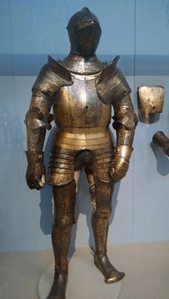
For instance, she talked about Robert Barathean and Henry VIII of England by briefly talking about the Game of Thrones character then talked about the 16th century king of England. Both men were kings who enjoyed sports especially jousting. Robert Barathean was the king of the Seven Kingdoms who took over the throne after defeating the previous king of the Seven Kingdoms, Aerys II Targaryen, during a battle known as Robert’s Rebellion. Anna then talked about Henry VIII by talking about his two armors we stopped in front of; Henry VIII was an athletic young king, and during one of his jousting games a horse landed on top of him. He survived but because of the injuries he had as a result, he was no longer able to participate in jousting and began eating an over 5,000 calorie diet that led him to a being fitted for a larger armor with an adjustable chest plate.

Henry VIII’s armor, before jousting accident

Henry VIII’s armor, after jousting accident
Anna also mentioned during the tour that both Tyrion Lannister and Henri de Toulouse-Lautrec could have been friends if they lived in the same world and time. Tyrion Lannister was a dwarf who was a member of one of the wealthiest and most powerful families in the Westeros kingdom; he used his family’s status alleviate the prejudice he received throughout his life from his family and others. Henri de Toulouse-Lautrec was a French painter, known for his paining At the Moulin Rouge (1892–1895), who immersed himself in the colorful and theatrical life of Paris during the late 19th century. As a boy, he suffered from fractures that were later attributed to an unknown genetic disorder which prevented his legs from growing; Toulouse-Lautrec developed an adult-size torso and retained his child-sized legs. Both Tyrion and Henri soothed themselves with wine and prostitution.

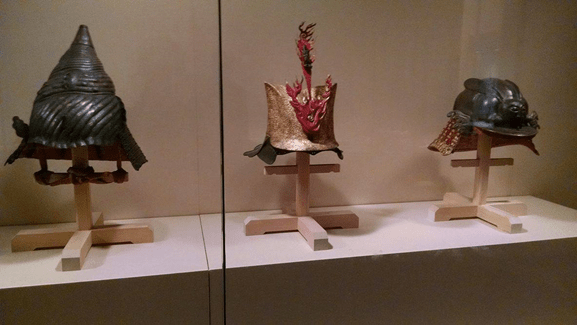
The tour included items in the museum’s collections that did not fit into the equivalent of the Westeros culture but nevertheless reminded Anna of one of the character’s helmets worn during the show. Anna took us through the display of Japanese armors to show us decorative helmets that took on various shapes and animals including a rabbit. She introduced the helmets by talking about the Game of Thrones character known as The Mountain. Gregor Clegane, known as The Mountain because of his height at eight feet tall, is a knight who led Tywin Lannister’s (Tyrion’s father) army, and known for his brutality from his numerous war crimes as well as rape and murder of the Targaryen royal family at the end of Robert’s Rebellion.

During the show, he has been shown to be wearing variously shaped helmets which helped create the connection to the Japanese armor helmets. I also connected these helmets to the helmets and armor I talked about when I gave tours of the Butler-McCook House in Hartford; the McCook collected various artifacts during their world trips including Japanese Samurai armor and helmets displayed in the library. These helmets drew many different reminders that help audiences including myself make connections to.

Japanese armor helmets

Overall, I enjoyed the tour very much because it includes activities to help audiences think about the show and keep them actively participating in the tour. I also enjoyed the tour because the connections made to the Game of Thrones show not only captured my interest but made me think about the museum’s collections a little differently than I previously had when I visited the Metropolitan in the past. This tour did refresh my memory about what I have seen on the show so far, and not only did I leave the museum feeling I had an entertaining evening but I also wanted to learn more about the artifacts presented in the tour. If interested in learning more about Museum Hack tours or want to participate in similar tours, find out here: https://museumhack.com/tickets/.

Have you participated in a Museum Hack tour? If you have, what do you think about your experience participating in their tour? If you have not, have you had similar experiences of making connections like the ones I discussed during the Game of Thrones Mini-Tour?