“Leaving the Museum Field”: A Reaction to the Alliance Labs Blog

Added to Medium, September 27, 2017

This week I am posting earlier than usual because I have a family event this weekend I am preparing for and I also want to address a blog post from Alliance Labs, the American Alliance of Museums blog, discussing the topic of why many museum professionals are leaving the field.

It is an important topic because there are so many people considering leaving the field for various reasons, and we need to do something to work towards making our field more inclusive and rewarding for museum professionals to make it more appealing to stay. After reading this blog and similar articles, the experience made me think about my own reasoning for staying in the field as well as my resolve to be a part of making this museum field a more encouraging field to continue working in.

Sarah Erdman, Claudia Ocello, Dawn Estabrooks Salerno, and Marieke Van Damme last week talked about this topic in their blog “Leaving the Museum Field”. These four museum professionals got together after the 2016 AAM conference in DC to try to find out the reasons museum workers leave the field. In this blog, they presented their findings based on the over one thousand individuals who participated in a survey with open-ended questions. One of the questions that were placed in the survey include,
Why we stay. Hands down, we stay because of the work we do. Unsurprisingly, for those of us who have made lifelong friends at our museums, we also stay because of our coworkers. The close 3rd and 4th reasons for staying are “Pay/Benefits” and “No Other Option.” The least popular response was “Feel Lucky to Have a Job” (1%) and the write-in “I love dinosaurs.”’

I have mentioned in previous blog posts my reasons for joining the museum field, and for me my reasons are definitely for the love of the work I do as well as my passion for museums. In my very first blog post, “Writing about Museum Education”, I mentioned my family trips to museums inspired my passion for and my career in museum education. I also pointed out that

“Education for me has always been my favorite part of life, and while at times it was challenging for me field trips especially to museums have given me a way to understand the lessons I learned in the classroom.”

I still believe museums can illuminate an individual’s educational experience, and by continuing in the museum field I hope to make an impact on the public. It is a challenge to accomplish this when there are things that prevent me from fulfilling this goal.

As I was graduating with my Master’s degree in Public History, there were limited opportunities to get a position in the field that would meet the typical needs. Similar limitations were addressed in the blog post as reasons museum professionals are leaving. According to the blog,

Reasons why museum workers leave the field. We had about 300 answers to this open-ended question. We grouped them by theme and found the following reasons (in order of frequency of response):
1. Pay was too low
2. Other
3. Poor work/life balance
4. Insufficient benefits
5. [tie] Workload/Better positions
6. Schedule didn’t work.”

There was a point that I thought I should consider leaving. However, I thought about my experiences I have had at this point, and knew there is so much I still have to offer to the field. I began working at the Maritime Explorium, a children’s science museum, which is a little different from my previous experiences but is just as passionate about education for children and the public as I am. Also, I began work on this blog sharing my experiences in the museum field as well as my impressions on current trends in the field. I also became involved in museum organizations, including the Gender Equity in Museums Movement, to help other museums and museum professionals make a difference in the community and within their institutions.

In a way, I adapted my career in the museum education field and I found a way to stay in the field. I continue to work hard to stay in the field. This blog pointed out a number of ways to help museum professionals stay; it stated,

How can we prevent museum workers from leaving? Again, increasing pay was at the top of the list, but respondents also suggested many free or cost-effective ways to create better working environments, like:
Create mentoring opportunities
Respect each other – break departmental silos
Make room for new ideas.”

By following the previously mentioned suggestions, we as museum professionals will be able to work towards making museums a better workforce to stay in so we would be able to work within our communities better.

While I continue to face challenges in attaining these needs, I am thankful for every opportunity that I have experienced in the field. Each experience has led me to getting to know various people in the field and to learning lessons in the field that help me grow as a museum professional.

The key to making this field a more appealing field to stay in is to keep working towards making a change in our museums and the museum community. It would not be realistic to expect the museum field to be better overnight. We need to keep talking about this situation, and be able to learn from this experience to move forward. I included the original link to the blog in my resources section for all museum professionals to refer to, and it also includes a variety of resources related to this topic to refer to.

Please leave your responses about this topic on my blog and/or the Alliance Labs blog, and continue this discussion among your colleagues.
Resources:
http://labs.aam-us.org/blog/leaving-the-museum-field/
https://www.genderequitymuseums.com/


Why We Need to Be Prepared: Resources on Preparation for Natural Disasters for Museums

Added on Medium, September 7, 2017.

In the past couple of weeks, we were either preparing for and assisting others in preparing as well as helping people in the aftermath of Hurricane Harvey (August 25, 2017-September 2, 2017) and now Hurricane Irma. Since these natural disasters occurred, the museum community continues to support those museums that had been through these hurricanes by sharing resources on how museums can prepare for these storms like Hurricane Harvey and Hurricane Irma in addition to offering whatever we could to help those museums and the communities surrounding them. I was one of the museum professionals who shared resources on how to prepare for natural disasters; in my last blog, I stated that I have gathered resources and posted them on my website for those who want to learn more.

As a community of museums, we need to recognize that we should be able to be prepared for whatever storm or natural disaster that comes into our area. Many of the items in our collections are irreplaceable, and without the protection we need (insurance and preservation procedures) we could lose a part of our past that we may never be able to recover.

We have various organizations and resources that offer ways to help protect and preserve items on the national and state levels. The Documentary Heritage and Preservation Services for New York, for instance, is a collaboration between two long-running New York programs dedicated to service and support for archival and library research collections throughout the state, and is supported by the New York State Archives, New York State Library, Conservation Center for Art & Historic Artifacts, and the New York State Education Department.

The Documentary Heritage and Preservation Services for New York offers various resources to assist museums and other organizations on preserving items in their collections. Back in June, I participated in a workshop called Disaster Response and Recovery: A Hands-On Intensive.

This workshop was an all-day program that allows participants to not only listen to advice from the experts affiliated with the Documentary Heritage and Preservation Services for New York but it also provided an opportunity to practice what we have learned through hands-on salvage activities. Participants were also given folders with additional information that can be referred to later on after the program has been completed. Inside the folders, there were pieces of information about the Documentary Heritage and Preservation Services for New York including what the organization is and the programs it offers especially educational workshops.

The folders also included additional information on disaster response and recovery. One of the pieces of information include guidelines for boxing wet books for freezing, and freezing and drying of book, paper, and photographic materials information and guidelines packet. Inside the folders, there were also additional information to supplement the presentation including information about the Incident Command System (the team that is gathered to respond and recover items after a disaster), and what we would need to recover specific type of items such as books, paper, CDs/DVDs, parchment/manuscripts, microfilms, black and white photographic prints, and textiles.

We were also given copies of the PowerPoint presentation to both refer to after the workshop and to take down additional notes on information they mentioned that were not brought up on the slides.

Also, it provided an agenda for the day’s workshop and information about the workshop speakers as well as a directory of museum professionals who attended the workshop.

In the morning, after a brief introduction, we were introduced to a few topics. The experts discussed the Incident Command System, Personal Safety, Site Assessment Techniques, Knowing When to Contact a Vendor, and Basic Salvage Techniques.

One of the first things the speakers pointed out that need to be done is to make human health and safety a priority. It is important to check in on the staff’s emotional and physical state since we should care about the individuals we work with to fulfil our organizations’ missions. Afterwards, the staff has to gather personal protective equipment (PPE) such as aprons, boots, gloves, goggles, and hard hats before approaching the situation.

The next steps in the recovery process are to assess the situation, prevent further damage, have a collections salvage, and return to as normal practice as possible. Each staff member should be assigned to different roles to record the damage, retrieve the items, and recover the items using appropriate techniques to best preserve the various types of items in the collections.

After a short break, we continued learning more about disaster response and recovery. We started to learn about the functional activity we would be participating in, and each part of the activity has a number of steps. For instance, we have to assess the site, assign roles, gather the supplies, and then set up the triage areas.

Once we assigned the roles to our team members, we proceeded to perform the salvage of items provided by the experts using the techniques we learned. After a lunch break, we continued the salvage but switched roles so each team member was able to practice what they have not done before the break.

In addition to this workshop, I also plan on gaining more resources from a webinar I found, hosted by the Texas Historical Organization, called Webinar: Responding to Hurricane Harvey. During this webinar, Rebecca Elder of the National Heritage Responders and Lori Foley of the Heritage Emergency National Task Force will host a discussion about emergency response. The discussion also includes opportunities to ask questions on emergency response, salvage, and recovery.

I recommend signing up for this webinar if your institution was affected by Hurricane Harvey and Hurricane Irma. I also recommend signing up if you are curious about what resources are available for emergency responses.

During these times, we need to be there for each other and help support each other however we can. I decided to write about hurricanes and natural disaster recovery processes as a way to offer help to those who need resources on how to preserve their collections. My thoughts are with those still recovering from the aftermath of Hurricane Harvey and those who are in the middle of Hurricane Irma.

What resources have you came across for natural disaster recovery processes? How does (do) your organization(s) prepare for and recover from natural disasters?
Here are some resources I referred to in my blog and a link to resources I gathered on my website on natural disasters:
Documentary Heritage and Preservation Services for New York: http://dhpsny.org/
https://register.gotowebinar.com/register/1686939294244406785 (webinar I referred to in the blog)
Northeast Document Conservation Center: https://www.nedcc.org/
and the NEDCC article: https://www.nedcc.org/free-resources/preservation-leaflets/3.-emergency-management/3.8-emergency-salvage-of-moldy-books-and-paper
Virginia Association of Museums: http://www.vamuseums.org/page/DisasterResources
My website and the resource pages I gathered for visitors: https://lookingbackmovingforwardinmuseumeducation.wordpress.com/resources/articles-I-am-reading/


How to Make Educational Programs Accessible?

Added to Medium, August 31, 2017

Museums prepare school programs for the upcoming year, and we figure out how to make these programs accessible for all students of various capabilities. There are different ways museums have developed programs that are accessible for all learners. For instance, museum programs are developed to be easily adapted to all ages and capabilities. Another way is specific programs can be developed to be geared towards specific capabilities. Many museums have a combination of programs geared to be easily adapted and towards specific capabilities.


It is important to be able to have different types of programs that can be adapted to all individuals with various capabilities as well as those geared towards different capabilities because each individual learns in different capacities and there should not be limitations to what they can participate in. Also, not many museums have the resources to create costly programs geared to people who need to learn in different ways including, not limited to, those with visual impairments, hearing impairments, and memory loss.


I learned additional information about accessible programming at this past year’s New York City Museum Educators Roundtable (NYCMER) conference. The theme of the conference was “Inclusivity: From Within & Beyond”, and it was located at the School of Visual Arts.
When I was at this past year’s NYCMER meeting, I attended a session that discussed various accessibility programs. This session was called “Resource Workshop: Designing Accessible Materials”, and it was presented by Miranda Appelbaum (from the Lincoln Center for the Performing Arts), Lara Schweller (from The Museum of Modern Art), Beth Ann Balalaos (from the Long Island Children’s Museum), Ellysheva Zeira (from the Lower East Side Tenement Museum), Charlotte Martin (from the Intrepid Sea, Air & Space Museum), Emmanuel von Schack (from the National September 11 Memorial & Museum), and Roberto Chavez (from the New York Transit Museum). It was a workshop in which I participated in various micro-workshops where I learned more about designing social narratives and visual schedules, tactile objects, training resources, and digital resources.


During the Resource workshop, the presenters handed out various documents to assist participants in learning about how to create our own programs. For instance, one of the handouts we received was called “Creating Resources for People who are Blind or have Low Vision”. On the handout, it gave advice on verbal descriptions including having a plan in which the programs provide a verbal description interwoven with a story; use specific words in the description including composition, color, texture, pattern, and relative size; and be able to choose a few important features and consider the best way to order the information to not overwhelm the audience.
The handout also shared the best practices for objects. According to the handout, the best practices for objects are show and tell, give clear instructions, connect to the object’s physicality by asking the visitors feel an object’s weight and texture for instance, set a time limit with the kids, and be selective. There was also a DIY Object Ideas section in the handout that provides ideas to assist in teaching these programs.


These ideas include the use easy to find craft/household supplies including puffy/fabric paint, plastic lace, and restaurant squeeze bottles, jars and mesh (for smells). Another idea on the handout was to check out the Lighthouse Guild Shop where it has items such as bump/locator dots which can be used for all sorts of things and ‘High Mark’ tactile pens. One of the most important advices the presenters and handout provided was to not be afraid to try new things since one can always ask for feedback from participants with new methods and materials.


In addition to programming, it is also important to be able to provide resources easily accessible for all visitors. One of the ways to provide resources easily is an accessible website that make accessibility information easy to find on your institution’s homepage; it is also important to include a statement about your institution’s accessibility commitment, highlight the resources your institution provides, and to keep your website up-to-date with accessibility web standards.


Also, it is important to have visible signage about accessibility features visible to the public. In addition to visible signage, it is especially important to train staff to share information about accessibility features and to train staff with disability equality awareness in mind.
There should also be universal options provided for visitors when they come to the museums or institutions. In other words, it is important to integrate accessibility into every museum resource, to make accessibility options available to all users when possible, and to create kits and content for exploring exhibitions and object information in different ways. It is also important to opt for a Universal Design for every individual to be able to use to comprehend the material museums offer.


There are ways to have cost effective programs for accessible programming.


At the Long Island Museum, for instance, there is an In the Moment program that uses limited resources to educate individuals with Alzheimer’s, dementia, and memory loss on the museum’s collections as well as help them with their memories. Each booked program is changed depending on which exhibit a group is interested in seeing. For instance one program would be interested in viewing an exhibit in the Carriage Museum building while another group would be interested in seeing the latest exhibit in the Art Museum building.


When the program is booked for inside the Carriage museum, various props representing the parts of a carriage from the collections are shared with participants. By allowing the participants to feel the props they will be able to begin to understand the significance of these items. For instance, they understand how heavy the materials made for the carriage and why these materials have to be the best quality.
In the Art Museum, some participants viewed the Long Island in the Sixties exhibit. Songs from the 1960s were selected and downloaded based on the different parts of the exhibit. They were also able to sit and look at pre-selected displays to view and discuss about. During both experiences, participants were able to bring pictures home of what they saw at the museum to share with loved ones and inspire continued discussion about what they saw during their visits.


Both types of In the Moment programs encourage participants to discuss what they see and remember from the past. When asked questions, participants share sometimes personal memories and observations. The purpose of these activities is to inspire them to talk and interact with their surroundings.
As we continue to keep up to date on accessibility standards, we should also be able to appeal to a wider audience through programming accessible for all types of learners.


What kinds of accessible programs have you learned about? Are there any methods that your institutions have practiced? What worked and/or what were the lessons learned from those experiences?
Announcement: On my website, I have included more resources especially about how to prepare for natural disasters and museums reactions to Hurricane Harvey. Take a look at https://lookingbackmovingforwardinmuseumeducation.wordpress.com/resources/articles-I-am-reading/

What Can We Learn From the DreamSpace Project?

Added to Medium, August 24, 2017

I was reading the Alliance Labs blog posts when I came across one that I found not only interesting but also relevant for museum professionals and other readers alike. It is an example of a blog post that provides information about how to have a better understanding of race and racism. American Alliance of Museum’s Ford W. Bell Fellow in P-12 Education and Museums Sage Morgan-Hubbard has transcribed an interview she had with Alyssa Machida, an Interpretive Specialist at the Detroit Institute of Arts, about the workbook, The DreamSpace Project in the Alliance Labs blog post “Building the Dreamspace in Museum Education”.

What is a Dreamspace? A Dreamspace is a place in the museum where museum educators are able to learn how to provide a safe space for discussion about race and racism.

We need to take the time to acknowledge what is going on in our nation and look deep down into ourselves and in our communities. The Dreamspace project is one of the ways we can do so in the museum field.

According to the blog post on incluseum website called “The Dreamspace Project: A workbook and toolkit for critical praxis in the American art museum Part I”, there is a growing need for tools and resources to guide museum educators in developing more nuanced understandings of race and racism throughout their institutions; in order to do so, Alyssa Machida researched concepts from critical pedagogy, critical race theory, and ethnic studies to integrate with museum education pedagogy.

Machida, as of last year, was working on the Dreamspace workbook which translates theoretical concepts into practical language and frameworks adaptable for art museum professionals with key vocabulary, diagrams and graphic organizers, ideas for building tours, and questions for critical reflection.

The purpose of this workbook is to take educators through a significant amount of content for the purpose of raising critical consciousness. Educators, especially in this day and age, engage us in wide-reaching social forces and dynamics beyond our peripheral vision, and as a result teach us how to become better human beings in the process.

Machida also discussed in the blog post “The Dreamspace Project: A workbook and toolkit for critical praxis in the American art museum Part 2” contextualizing, deconstruction, and decolonization. She explained that in the chapter of the Dreamspace workbook “Contextualizing: Mapping and Navigating Terrains” it introduces the practice of developing critical self-awareness, building knowledge of the many ecologies we inhabit, and expanding understandings of our roles and responsibilities. There are also key points that museums have to keep in mind when establishing critical self-awareness and openness to being challenged within ourselves to see individuals as agents of change.

The key points in mindfulness to keep in mind provide a framework for openness. In the blog post, she stated the first key point is everyone is complicit with racism; in other words, it is everyone’s responsibility to be attuned and counteract deeply ingrained behaviors and biases which will take time. The second key point is don’t let emotion get in the way of critically and consciousness; while learning about racism and systems of oppression is an emotional and painful, it is important to not let emotions take control since we are learning something that is changing our perspectives, and make sure we breathe, stay calm, and keep going. Then the third key point is to bring it up; these conversations are difficult to bring up to colleagues and supervisors but if you have trust and respect speak up since it is an opportunity for learning, teaching, and growth. The fourth key point is listen with your skin; in other words, when the subject of racism is brought up, be ready to put all biases and assumptions aside as well as listen for understanding. In addition, it is important to be open to being challenged and look for multiple ways to be supportive.

Machida’s work has gained a lot of attention in the past few days especially after what had happened in Charlottesville this month. These blog posts about her work were included as resources to look over while reading the Alliance Labs piece by Sage Morgan-Hubbard.

In the interview, Morgan-Hubbard used some of the questions in the Dreamspace toolkit. Some of the questions include: What was one of your first experiences with a museum? What does education mean to you? What is your personal learning style? Do you teach in a way that leans towards your personal learning style? and How do you see your role in society, or in your community?

By learning about Machida’s background in museum education and her work on the Dreamspace project, I am able to think about my own background and know that there are many museum educators that can identify with her answers.

When we understand more about individuals of all backgrounds within our own communities we would be able to provide a safe space for both museum professionals and visitors.

Here are the links to the blogs I referred to:
http://labs.aam-us.org/blog/building-dreamspace-in-museum-education/
https://incluseum.com/2016/08/11/a-workbook-and-toolkit-for-critical-praxis-in-the-american-art-museum/
https://incluseum.com/2016/10/13/the-dreamspace-project-a-workbook-and-toolkit-for-critical-praxis-in-the-american-art-museum-part-2/
Have you read the Dreamspace workbook? What do you think of the Dreamspace workbook and toolkit?

How Do We Educate Our Students About Charlottesville?

Added to Medium, August 17, 2017

Museum educators continue to prepare for school visits as the new school year approaches. As I was preparing for the upcoming school year, I as well as everyone in this country found out about the white supremacists rally and the attack that occurred on Saturday in Charlottesville, Virginia. It made me sad to learn that this is occurring in our country, and more importantly I thought about the future generations trying to understand how and why this is occurring in our nation. Museums and history organizations made their statements on what has happened in our country and their stand on these tragic events. We, as museum professionals, have this one question in mind: how do we educate our students about what is happening in Charlottesville?

Throughout the museum and education community, I have seen many organizations have spoken about these events. The American Alliance of Museums stated in their newsletter and Twitter account “There is absolutely no place in society for the kind of hatred, racism, and violence that were on display this past weekend, and we offer our deepest condolences to the victims, their families, and the community.”

The American Association for State and Local History also released a statement on the events in Charlottesville. They reinforce the importance of this organization, and what it stands for in this nation. AASLH
“abhors not only the violence of the clash in Virginia, initially over a Jim Crow era statue, but the hateful misunderstanding of history, the cruel misuse of the past, and the willful blindness to the historical record by the forces of white nationalism. As the national professional association for individual members, historical societies, history museums, and history sites that preserve and interpret state and local history, the AASLH stands for open discussion, reasoned research and interpretation, reliance on evidence and current scholarship, and the preservation of historical resources.”

Museums are not the only organizations that have made statements about the events in Charlottesville. Facing History and Ourselves, a nonprofit international educational and professional development organization that engages students of diverse backgrounds in an examination of racism, prejudice, and anti-Semitism to promote the development of a more humane and informed citizenry, released a message as well.

Roger White, President and CEO of Facing History and Ourselves stated in an email sent to newsletter subscribers:
“As educators, our first concern is the millions of young people watching Charlottesville unfold. As we return to classrooms across the United States and the world, we will be called upon to manage difficult conversations about the evil, base bigotry at play. We will need to provide historical and cultural context for the violence, for the references to Nazi language and events, and for the legacy of slavery in the U.S. that underlies the pain we see across the nation today.” Roger White, August 14, 2017.

As I read through these statements, I thought about how we should explain these events to our children and students. It is important to express that we should be accepting of every person within our community. One of the resources I read which I agree with is an article written by CNN’s Jessica Ravitz on the topic of what we should be telling children. According to Jessica Ravitz, we should be proactive, not just reactive; don’t ignore; and empowering kids as well as yourself.

Children should be taught at an early age to appreciate diversity and practice empathy at home, in the classroom, and within their community. Also, it is important for parents, guardians, and teachers to be honest and frank about these events in an age-appropriate way, as well as reassure them they are safe and remind them there is still good in the world. I agree with these tips because we all should be able to make the choice to take a moral stand and do not support hate crimes.

Teachers should be able to encourage students to learn about different cultures and identities in addition to what had happened in our past to understand why we should continue to work at decreasing the hate in our communities and nation.

What should museums do to help educate students about what happened in Charlottesville? Museums need to continue to fulfil their education missions, and inspire people to learn more about the community around them to learn how to appreciate diversity in addition to practicing empathy. According to Paul Orselli’s blog post, “What can museums do to resist?”, now is not the time for museums to be “neutral” or to sit on the sidelines. He has a point that museums should not be neutral because we create a space where people can come together to acknowledge our past and help one another respect and appreciate each individual from all backgrounds through our collections and programming.

Various museum professionals have been vocal about what has happened in our country, and what we should do moving forward. Seema Rao for instance wrote a post for Nina Simon’s blog Museum 2.0 called “How Museums Can Resist Racism and Oppression”. Seema wrote this post in response to a program she participated called MuseumCamp (a summer professional development program at the Santa Cruz Museum of Art & History) in addition to the news on what happened in Charlottesville. Both Nina Simon and Seema Rao started an open Google Doc to assemble ideas for specific things both museums and museum professionals can do to resist oppression.

Some of the ideas from the Google Doc include staff can share their feelings together; have an open ear for those that need to express their feelings, thoughts, ideas, vent, etc.; raise money for organizations that support inclusion; educate themselves on anti-racist terminology, history, activities, and opportunities; and reach out to colleagues in Charlottesville with unencumbered, unquestioning support.

Also, in the Google Doc, museums could, but not limited to, host conversations for visitors; if open conversations are not possible, then provide open talk-back boards (remember to talk back); model inclusion in their programming, work together in regions to create safe spaces for inclusion; and offer space to local NAACP, BLM, SURJ, and other anti-racist groups for their own events, meetings, and public forums.

There is more than one way we can encourage inclusion and diversity, and practice empathy as we have seen in this blog post. I implore everyone, including everyone who reads my blog, to take action however you can and…be good to one another.

While I was reading social media posts about what happened in Charlottesville, and the statements from organizations including American Alliance of Museums and American Association of State and Local History on what happened in Charlottesville, I came across resources that will help all educators approach this topic with students. Here are the following resources I read and recommend everyone to read and use:
Washington Post: https://www.washingtonpost.com/news/answer-sheet/wp/2017/08/13/the-first-thing-teachers-should-do-when-school-starts-is-talk-about-hatred-in-america-heres-help/?utm_term=.6fc22fdfe36f
NPR: http://www.npr.org/2017/08/14/543390148/resources-for-educators-to-use-the-wake-of-charlottesville
Harvard: https://www.gse.harvard.edu/news/uk/17/02/talking-race-controversy-and-trauma
CNN: http://www.cnn.com/2017/08/14/health/talking-to-kids-about-hate/index.html (article referenced in this blog)
Paul Orselli: http://blog.orselli.net/2017/08/what-can-museums-do-to-resist.html?m=1
Museum 2.0: http://museumtwo.blogspot.com/2017/08/guest-posted-by-seema-rao-how-museums-can.html?m=1


What are you and your organizations doing in response to the events in Charlottesville? Do you have ideas on what museums should do?

Is Children’s Play Declining? What are Museums Doing to Encourage Playtime

Added on Medium, July 20, 2017

When I was on Twitter this week, I came across a tweet from Sage Museum Ed, the American Alliance of Museums’ Ford W. Bell Fellow for Museums & P-12 Ed. She tweeted an article that came to my attention from Huffington Post called “Children’s Play is Declining, But We Can Help Reclaim It”, written by Huffington Post contributor Merete L. Kropp who is a child development and family specialist. Kropp shared data that showed how play has been decreasing over the years. According to the data she shared, between 1981and 1992 there was a 25 percent decrease in children’s time spent playing even though experts in child development have stressed the importance of playing. Playtime has continually decreased over the past 25 years as the article claimed.

Kropp discussed the number of possibilities that contribute to the decline in play and how to encourage children to dedicate their time to play. A few of the examples she briefly discussed about the contributions to decline in play include overly structured schedules, too many extracurricular activities, decreased recess time in school, and increased time in front of a screen. While children find ways to play, they play in small amounts of time in between activities and waiting for their parents or guardians to spend time with them when the adults are occupied with other tasks such as meal prep time and talking on the phone. Then Kropp shared how children should be encouraged to have their playtime with a couple of points including scheduling unstructured time for children to be bored and entertain themselves, providing simple toys with multiple purposes that give opportunities for creativity and problem solving, and following children’s lead during playtime and allow them to negotiate and communicate on their own terms.

This article made me think about how museums have been providing many options for children to engage and play not only during school programs but also during the summer. Museums, especially in the museums I have worked for, can engage children in providing outlets for them to be creative and the desired time to express their creativity. Also, museums have the ability to provide time children can dedicate to, as Kropp pointed out, “participate in complex scientific discovery as they hypothesize, experiment and make generalizations about the world and how it works”.

Museums I work for currently and those that I have worked for have various activities and programs that allow children to express their curiosity as well as their creativity.

The Maritime Explorium in Port Jefferson, for instance, has various projects and activities that encourage children’s creativity and playtime. Inside the Explorium, there is a bailing boat, or a boat that removes water from the boat, filled with rice where kids can play inside the boat. Kids are encouraged to play with the rice by figuring out how many cups of rice could fill a bucket, how many spoonful of rice can fill a bucket, and which size funnel would the rice come out the fastest. They not only entertain themselves using the rice but they also learn about measuring in the playing process.

Children in the rice boat also have the time to use their imaginations, and create their own play world. With the rice boat, there are toys including sea creatures in addition to white pipes, funnels, buckets, shovels, plastic cups, bowls, and spoons. They use these toys and tools to create endless possibilities for the world and games they create. For instance, one girl pretended she owned her own restaurant and served various dishes using the rice as her creations. Another example of unique possibilities was when a girl today pretended she was able to create a roof using the white pipes.

Also today, a brother and a sister walked in and created two different ways of play. The brother took the pipes and created a maze that would send the rice through on the other end of the pipes. Meanwhile, his sister used the bowels of rice to feed four toy sea turtles and an octopus, and then used two buckets to create their homes (she buried each of the toys in the rice, and pretended to create rooms for these houses). The rice boat is not the only place in the Maritime Explorium where children can have the opportunity to be creative and play.

In addition to working on activities such as puzzles, Legos, drawings, and learning how to turn on a light bulb only using a battery, there is another activity children can create projects however they wanted with limited instructions. Located in the front center of the Maritime Explorium, especially during the summer, there is a project children can work on that changes each week to give them a chance to create something new to take home.

Some of the projects the kids worked on were bug houses, building with paper towel and toilet paper tubes, and seascapes. Bug houses are places where bugs are attracted to and use for shelter outside made out of twigs. Seascapes are dioramas of views of the sea, and were made with either cardboard, Styrofoam cup holders, or paper with the option of adding sand onto their projects; they also have the option of creating their favorite sea creatures to add to their seascapes. Each of these projects had additional tools and materials such as scissors, tape, glue sticks, paper, ribbons, markers, pipe cleaners, and popsicle sticks children can use to make their projects unique and creative.

There are endless possibilities, especially for their building with paper towel and toilet paper tubes projects, for children to make their projects their own unique projects. For instance, one of the girls participating in the building with tubes project, using the tools and materials available, created her own robot.

Since the Maritime Explorium believes in the constructivist theory, museum educators like myself give few instructions on how they are made in order for children to not only do their projects by themselves but they develop their own problem solving skills and express their creative energies. As long as the building is open during public hours, the activities introduced at the Maritime Explorium provide opportunities for children to increase their playtime which coincidently are also encouraged in Kropp’s article.

Another example of a museum that I worked for and that also provide ways for kids to spend time playing is the Noah Webster House & West Hartford Historical Society in Connecticut. Noah Webster House offers a number of summer camp sessions to allow kids to not only learn more about 18th century America but they also have opportunities to express their creativity.

The summer camp at Noah Webster House in partnership with Westmoor Park, called Colonial Kids’ Adventures, I taught before coming to Long Island allowed children to learn, be creative, and play. Kids have time to learn about 18th century life by performing the tasks individuals living in the time period would have completed such as laundry and mixing recipes to be cooked over a hearth, as well as creating crafts related to the time period including corn husk dolls. They also have time during the day to go outside and play with 18th century toys including ball in cup, stilts, and hoops. I also not only supervised play with the toys but also games that the children decided to play.

When the summer camp children visited Westmoor Park, they participated in outdoor activities that not only allowed them to learn but to play as well. Children learn about outdoor chores on the farm by participating in activities that assist in taking care of the animals including cleaning out stalls. Also, they participated in nature walks throughout the park. Then they played games during lunch breaks and after craft activities. Throughout the program, the children work on their skits which allowed them to express their creativity.

The only rules the children had in creating their skits were they had to be set in the colonial period and reflect what they saw and or learned during the camp. Also, the children were divided into groups based on the assigned family names of people who lived during that period. I assisted them by answering questions they have such as what props and costumes they would need to use for their skits. They created their own dialogue in their stories, and one of the stories I remember was a day in the life of a family traveling through town, visiting neighbors, and eating together at the table. At the end of the program, they performed their skits for their friends and families. Summer camps were not the only way children could have playtime at Noah Webster House.

During public hours and programming, there is a space in the museum that allows children to express their imaginations and creativity. In the lean-to of the 18th century house, there is a space that has a small hearth, cookware, toy food, and silverware that allowed children to pretend to cook and role play stories they come up with. Also, in the rooms off of the lean-to, there is a buttery that stores pretend food the children can use for their playtime and there is another room with a Noah Webster farm set they can play with as well as a sandbox with treasures inside to allow children to find them as if they were archeologists. There are also programs that are geared toward young children that allow playtime and creativity.

Bookworm Adventures, for children between three and six years old and the theme for each program changes each time it is held, promote reading as well as playtime. During the Dr. Seuss themed program I taught, the kids not only listened to Dr. Seuss stories read out loud but they also played with toys, drew and colored pictures, and made crafts. I assisted kids make a sweet version of green eggs and ham using green covered chocolates and marshmallows.

Based on my experience in the museum education field and what I have read in Kropp’s article, I noticed that children not only have a number of things to do in the day but they do need to find more time to play. While the museums I worked for provide opportunities to play, sometimes they are restricted to how long the museums are open and when their adults need to go on to the next thing in their schedules whether it is for kids to attend places such as lessons and/or sports or their adults need to run errands. There are other times that the families also planned other activities to spend more time together. We need to learn to make sure that children can have more time on their own to play, imagine, create, and learn so that way they will be able to understand the communities and society around them more. Museums provide these outlets for children, and should be taken advantage of when the opportunities arise.

How do you feel about children’s playtime? Do you feel that playtime has increased or decreased in recent years? What programs do your museums or organizations offer to allow playtime or time to express their creativity?

To read the article I referenced to, click here: http://www.huffingtonpost.com/entry/childrens-play-is-declining-but-we-can-help-reclaim_us_5935c726e4b0c670a3ce6778?platform=hootsuite

Reactions to Blog: “Emotionally Charged Spaces”

I read another blog post from Museum Hack, which is one of their case studies, called Emotionally Charged Spaces: Why You Should Create Immersive Tours with Sensitive Subject Matter. While this was a case study of one of the services they performed for the Canadian Museum of Human Rights in Winnipeg, Manitoba, there is a lot to learn about the challenges of telling a story of a difficult past. According to the blog post, the Canadian Museum of Human Rights’ mission “to create lasting global change in the field of human rights, shining a spotlight on some of the most egregious violations of human rights around the world, and to inspire activism.” To help fulfill the mission, Museum Hack provided the staff training on how storytelling can help people connect with the subject matter the museum presents.

Museum Hack uses the case studies in their blog not only to share what they were able to do for the museums that asked for their services but Museum Hack shared case studies like this one to show what museums can learn from these organizations.

As we know as museum educators, it is important to know how to tell a narrative or story effectively to show audiences how significant these stories are to be able to understand our past or subject matter. Museum Hack pointed out that the goal for programming on difficult subjects is for visitors to be educated, informed, and inspired to make change instead of leaving the place depressed. Also, it stated creating programming and telling stories that both acknowledge the gravity and seriousness of issues while getting audiences engaged without overwhelming them is a challenging objective but worth the effort when received positively. As a public historian, I have both learned and practiced storytelling of difficult subjects, especially slavery.

My previous experience was more focused on doing research for Stanley-Whitman House in Farmington for their symposium program discussing slavery in 17th century Connecticut. In addition to the research presented at the symposium, there were other colleagues that did their own research and presented their findings to share with the community of professionals and individuals interested learning more about the subject.

This experience is one of the examples of the points the blog made that not many challenging subjects are told through engaging programming but mostly through lecture series. To create more engaging programs and storytelling on difficult subject matter, there must be human connection to the topic discussed.

In the case study, Museum Hack revealed that by having guides share their personal connections it will further humanize what the visitor is interacting with. I agree with this because to have relevance in museums, especially with museums discussing difficult subject matter, visitors have to recognize the human connection in these stories. Whether they have their own personal connections to difficult subject matter or not, visitors should at least be able to learn from and understand those who have a personal connection.

Museum Hack also briefly talked about one of their best practices called scaffolding. According to the blog post, scaffolding is a way to strategically maximize visitor engagement throughout a tour. This practice is vital to making sensitive environments less overwhelming for visitors. Scaffolding is a practice museum professionals continue to adapt the museums’ stories to the visitor tours.

What we should take away from the Museum Hack blog post is when presented with the challenge to create an engaging tour with difficult subject matter it is important to make sure there is human connection with the stories. This is also an example of how relevance can be used to encourage engaging visitors to the museums.

What did you think of Museum Hack’s blog post on engaging in emotionally charged spaces? Have you seen scaffolding in other emotionally charged spaces? Share your thoughts. Here is the link to the original post:
View at Medium.com

Reactions to Blog: “9 Ways To Supercharge Your Museum Volunteers”

Also posted on Medium, June 29, 2017.

I decided this week to talk about another one of the blog posts I have been reading this week. I found this blog on Medium, 9 Ways To Supercharge Your Museum Volunteers, written by Ashleigh Hibbins for Museum Hack. As I prepare to help with revamping the docent manual for the Three Village Historical Society, I review resources I have to use as guides for this project. Part of developing the volunteer program is working on the docent manual. When I read this post, it reinforced what I already learned from the webinar I attended in January and the book I have read, Recruiting and Managing Volunteers in Museums by Kristy Van Hoven and Loni Wellman. Museum Hack’s post provides additional resources that are very helpful for the readers, and there were many statements they made that reaffirmed not only the knowledge I have gained but the importance of maintaining a great relationship with volunteers.

In the past and currently, I have volunteered for various organizations that have different ways of running their volunteer programs. I have also run a volunteer program in the past where I was responsible for volunteers teaching larger school programs. By learning how they could be run through professional development and reading books, I gain knowledge on how I should be treated as a volunteer and learn how I can improve my skills when I run a volunteer program. There is always something to learn when revisiting a subject including volunteer management, and this post is no exception.

I liked that they included how important volunteers are to museums at the very beginning of the article. They stated “Who are the most excited and engaged people in your museum?… Your volunteers!” And this is very true because as a volunteer and a leader in the volunteer program I see so many passionate people who have been volunteering for many years. It is important therefore to make sure that passion is kindled and used to help complete projects for their museums. Also, the post pointed out the importance of keeping volunteers happy.

It is true that volunteers are our museums’ biggest fans and advocates since they are dedicating their time to help museums to continue to adapt and develop. What I have not thought about before that they pointed out was according to a U.S. survey two-thirds of volunteers also donate money to their place of volunteering (they used Fidelity® Charitable Gift Fund Volunteerism and Charitable Giving in 2009 Executive Summary as a source). It makes sense because they work hard to keep the museums running and they are willing to do whatever is possible to keep them running including donations of time and sometimes money. The rest of the post gave the ways to supercharge volunteers, and then gave detailed explanations for each way.

Some of the ways they shared in the post include treat volunteer interviews like job interviews, don’t just smile and nod-volunteers have great ideas, volunteers are your secret recruiting weapon, and remind your volunteers how awesome they are. While these tips should seem obvious when considering volunteers, there are various points that need to be brought to our attention. For instance, when it was stated that readers should treat volunteer interviews like job interviews they pointed out that “don’t set someone up for failure by giving them a position they are unable to perform.” It is not only important to keep this in mind because no projects will be accomplished if volunteers cannot perform tasks but it will also affect their self-esteem and passion for the organization. Without that passion, we will not be able to retain the hard-working volunteers we need.

The post also pointed out how important it is to learn about volunteer programming from other museums in the community. In the post, it talked about being a nosy volunteer manager, or be continuously involved in making sure volunteers’ and museums’ needs are met, and then they stated “Also, be nosy with volunteer managers at other museums so you can pick up tips and tricks from them too.” I believe that it is important for volunteer managers should learn from other museums on how they run their volunteer programs not only because the programs can inspire their own way of running volunteer programs but museum professionals can come together to learn how to keep their museums relevant in the community through their volunteer programs.

What we should take away from this post is to be sure to keep our volunteers needs and happiness in mind when developing volunteer programs. I have also provided the link to the original post from Museum Hack for you all to read, and links to the resources they used in their post especially for anyone running volunteer programs.

Do you run volunteer programs? What do you think of Museum Hack’s contribution to the subject of museum volunteers? Have you followed similar advice Museum Hack discussed? What challenges have you faced when developing your volunteer program(s)? Share your reactions.

Resources used in Museum Hack article:
https://aamv.wildapricot.org/Standards-and-Best-Practices

Click to access Technical_Bulletin_45_-_Creating_a_Successful_Volunteer_Program.pdf

Click to access Volunteerism-Charitable-Giving-2009-Executive-Summary.pdf

View at Medium.com

How Creativity is Necessary in the Museum

Originally posted on Medium, June 8, 2017.

What is Creativity? Why is it so important to have creativity in our practice as museum professionals? Questions like these two are what we ponder every day to fulfill our museums’ missions and our career goals. Creativity allows us to be able to express ourselves and provides another outlook on the world around us. Museum professionals especially need to express their creative sides to help their organizations continue to grow and adapt to their changing communities. This is not a new topic but we can always learn something new when we express our creative side. I learn a lot when I allow to express my creative side whether it is drawing, writing, or making projects; and I use my experiences inside and outside of museums to inspire me to create something different and sometimes the same subject from a different perspective.

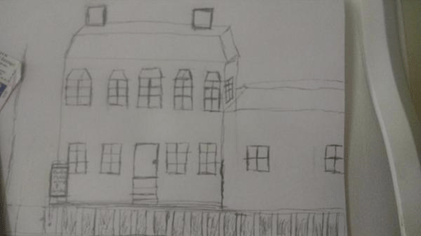
Since I was young, I made various drawings of many things including animals and landscapes. As I developed my interests in museums, I began drawing museums I have been to and museums I have worked with. For instance, I drew the Butler-McCook House in Hartford, the Stanley-Whitman House in Farmington, Connecticut, Noah Webster House in West Hartford, and Connecticut Historical Society. I drew many of these drawings from my own memory, and one was drawn using a photograph as reference. Also, I used either pens or pencils to make my drawings (depending on which utensil was available at the time). I learned to use my creativity to assist in my museum experience, and I continue to use references from books and professional development programs discussing creativity.

Connecticut Historical Society, pen, drawn 2015

  Noah Webster House, pen, drawn 2015

Stanley-Whitman House, pen, drawn 2014

Butler-McCook House, pencil, drawn 2014

One of the resources I used and continue to use is Linda Norris’ and Rainey Tisdale’s Creativity in Museum Practice to help me get inspired. Norris and Tisdale express the importance of allowing creativity to inspire work in the museum no matter which department they work from. In their book, they state that they believe “the daily life of museum workers behind the scenes both needs and deserves more attention in order for museums to reach their full potential.” Norris and Tisdale shared colleagues’ stories from across the museum field of what creative practices have worked for themselves and their museums. Also, they shared their own tips on how to jumpstart one’s creative practice using no-cost or low-cost activities. Throughout the book, Norris and Tisdale discuss many ways museum professionals can find creativity in their daily tasks, and use whatever inspiration they find in the environment they are surrounded by. The style of this book is written as both a textbook and a workbook to help museum professionals spark their own creativity.

Norris, Linda and Rainey Tisdale, Creativity in Museum Practice, Walnut Creek, CA: Left Coast Press, 2014.
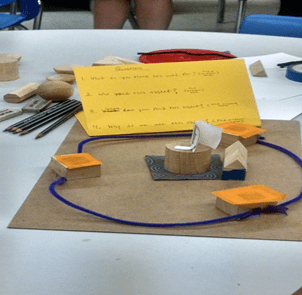
One of the professional development programs I participated in was a NYCMER workshop in October called “Exhibition Designs for Educators” at El Museo del Barrio. This program was an example of how educators can learn to express their creativity to design exhibits and programs simultaneously. There was a challenge in which we were not told what the object was, and we were expected to create an exhibit with an unknown artifact (what appeared to be a cement block). The group I worked with received the prompt to create this exhibit as a warm and friendly environment; we brainstormed various ways we could create the exhibit using the prompt. For more information about this activity, check out the post “Writing about Museum Education: Using Professional Development to Our Advantage.” By brainstorming together as a group, we were able to express our collective creative experience that led to the concept we designed.

“Exhibition Designs for Educators” Activity, October 2016
Creativity is especially used in museum education programs to not only entertain its audiences but to educate them on the subject matter of the museums’ expertise including but not limited to art, history, and science.

There are many examples of when I used creativity as a museum education professional. For instance, while I was working in historic house museums in Connecticut, I taught and assisted participants in making crafts and cooking recipes for school and camp programs. One of the crafts I helped kids make were cornhusk dolls during the summer camp program at Noah Webster House & West Hartford Historical Society which not only was a fun activity but they also learned about what kinds of dolls kids during the eighteenth century played with and created themselves to find ways to entertain themselves. I have also helped fifth grade students make apple pies and Irish-style mashed potatoes at the Stanley-Whitman House in Farmington. At Connecticut Landmarks Butler-McCook House, I helped kids create Samurai helmets out of gift wrap and yarn during the New Year’s Eve celebration, First Night Hartford. The Samurai helmet activity was inspired by the Samurai armor that the McCook family have in their old 18/19th century house; Reverend McCook and his daughter Frances traveled to many places on the way to and from China to visit another daughter Eliza, and one of the places they visited was Japan where he purchased the Samurai armor to bring back to Hartford.

One of the most recent examples include creating activities for kids to participate in during down time in school programs and during general tours at the Long Island Maritime Museum. I created activities such as cross word puzzles, word searches, matching games, and a scavenger hunt. To create these activities, I used information about the Long Island Maritime Museum and the maritime history it shares with its visitors. For instance, I created a crossword puzzle about one of the historic buildings on the museum’s property called the Rudolph Oyster House based on the information about the Oyster House and oyster business; the Rudolph Oyster House was built in 1908 by William Rudolph for his oyster company established in 1895, and it was used as an oyster culling and shucking house until 1947 and was acquired by the Long Island Maritime Museum in 1974.

Another example of activities I created was a breeches buoy search to teach participants the parts of the breeches buoy, an early contraption that pulled victims from shipwrecks, by writing down the names of the parts next to the corresponding letter (I included a word bank so they see the appropriate names). The next example of activities I created is a Name These Boats activity that challenges participants to use their memories of the boats stored in the museum’s Small Craft Building. I included a word bank to limit the possibilities, and participants would write down the name of the boat next to the photograph of a boat.

I also had the opportunity to observe a children’s program that the Maritime Explorium in Port Jefferson participated in. Children created sound-sandwiches for them to take home and play music on by blowing into them like harmonicas. The sound-sandwiches were made with tongue depressors, two pieces of straw, and rubber bands. To make them, one of the two tongue depressors needs a large rubber band wrapped around it from one tip to another; then the two tongue depressors and two small pieces of straw are tied together with smaller rubber bands at the ends. Sound-sandwiches can be adjusted until a humming or vibrating sound is heard. This was not only a fun activity for children to participate in but they also learned how to create sound by using the materials they were given.

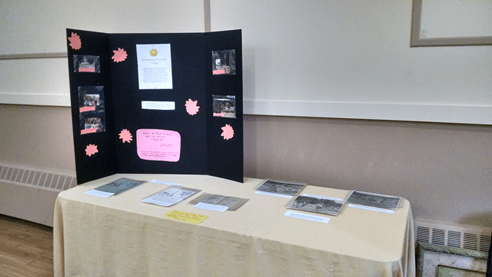
Last weekend I created another exhibit for my childhood church to share the community’s summertime fun since the season would be around the corner soon and I wanted this exhibit to focus more on the parishioners as well as their interactions with the community around them. I included photographs from the Summer Festival the church participated in in 1975, and photographs from a Church picnic that took place by the beach in the 1960s. I also included bulletins that included announcements of activities planned for the summer, ways to get involved in the community, and current events to remind parishioners to be good Christians and learn more about the issues discussed as a result of events. I designed little suns to decorate the exhibit with to represent summer. This exhibit is an example of how creativity is especially useful during the exhibit design process.

Summertime Fun with Trinity exhibit, opened June 4, 2017

Tomorrow I am also participating in another professional development program about creativity, Creativity Incubator. It is a New York State Council on the Arts (NYSCA)/ Greater Hudson Heritage Network (GHHN) Partnership Program which encourages museum staff to test out experimental interpretive approaches through hands-on activities. I will travel to the Raynham Hall Museum in Oyster Bay, New York where it is being hosted. Creativity will continue to be a significant part of our work as museum professionals, and we need to find ways to inspire creativity in our work and inspire creativity with our visitors.

What ways have you found to inspire creativity work for you? Do you have a favorite moment where you accomplished a creative project, museum-related or not? Have you been inspired by something outside of the museum field that helped you complete a project?


Reaction to Article: Museums transition from institutions of elite to places that “promote humanity”

Originally posted on Medium, May 18, 2017.

Especially in honor of International Museums Day, I wrote this blog post about museums progress towards inclusion and diversity. I came across an article posted on the St. Louis Public Radio website called “How are museums changing from institutions of the elite to places that ‘promote humanity?’” written by Kelly Moffitt, who is an online producer for St. Louis Public Radio’s talk shows St. Louis on the Air. Moffitt discusses about the radio show host Don Marsh’s interview with Sarah Sims, the Director of K-12 Education Programs at the Missouri History Museum, and Nicole Ivy, the Director of Inclusion for the American Alliance of Museums on the topic about promoting humanity and last week’s Annual Conference and Meeting in St. Louis.

In the beginning of the article, Moffitt stated a memory Sims had about visitors in museums. Sims stated that she remembers a trip she took her students to a local museum; one of the students came up to her during the visit and said to her how special the trip was, and when Sims asked why the student said, “this is a mansion and this is the only time I get to come here.” Sims mentioned how much this broke her heart since the museum they went to and many museums are free, and that museums should be places for everyone.

This story also broke my heart since it is not right that there are people who do not feel they are able to go to museums. Museums should be accessible to people who want to learn and make people feel welcome to attend. Museum professionals are working on making their organizations more accessible and inclusive, as evidenced especially in my previous blog posts on this subject.

The interview continued when Ivy described a brief history of how museums were viewed and run. According to the article, Ivy stated the history of the American museum is linked to elitism; museums started with the cabinet of curiosity and a real focus on exclusion. Her reference to the cabinet of curiosity reminded me of my own experience with a version of a cabinet of curiosity. While I was at Connecticut’s Old State House completing my internship, I was fortunate enough to see its own version of a cabinet of curiosities.

Inside one of the rooms of Connecticut’s Old State House, there was a small museum called Steward’s Museum of Curiosities. The Connecticut General Assembly allowed Reverend Joseph Steward to occupy space in the Old State House in 1796 to use it as a portrait studio. A year after opening the portrait studio, Reverend Steward established a curiosity room on the third floor featuring all sorts of wonders and treasures, including animals such as a two-headed calf, from around the world. The Museum of Curiosities was reproduced and moved to the second floor where other items are also displayed including Steward’s portraits. The purpose of this museum was to educate individuals of nature and animals they were not normally exposed to.

When I took both school groups and visitors through this Museum of Curiosities, there was a mixed reaction to the items in the room. As I described the history behind this museum, some individuals were impressed with the items in the room. Some were not impressed with the animals but were interested in the portraits Steward painted. This experience taught me that many people will have different reactions to curiosities. Also, the experience showed how individuals’ educational experiences have changed since the cabinet of curiosities were set up.

Museums have over time changed to become more responsive and more inclusive. This fact has been reiterated by Ivy during the interview and other museum professionals have worked to have their organizations create programs and exhibits more responsive and more inclusive. Ivy pointed out that a key to increasing diversity and inclusion would mean opening the doors of the museum to people who are really hurting; I agree that it is a key to increasing diversity and inclusion because everyone should be able to have a space to express their thoughts and museums can create relationships with the community to be able to serve society better.

To read the original article, see the post here: http://news.stlpublicradio.org/post/how-are-museums-changing-institutions-elite-places-promote-humanity#stream/0

What do you think of this article? Do you think we are making good progress so far in diversity and inclusion?