Philadelphia Museum Impressions: Museum of the American Revolution

September 26, 2019

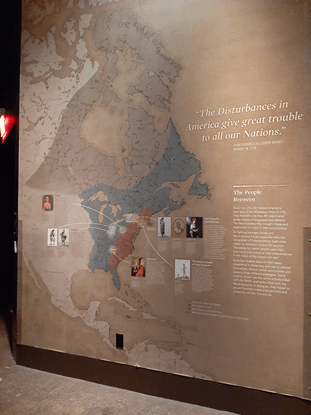
I wrote last time about my museum impressions on Independence Hall when I was down in Philadelphia for the AASLH Annual Meeting. Another place I visited during the first day of the conference was the Museum of the American Revolution. Since I was participating in a networking event later in the day, I did not spend the time I would have wanted to spend in the Museum since as soon as I entered the exhibit I knew I could spend an entire day exploring the place and utilizing the interactive supplemental materials.
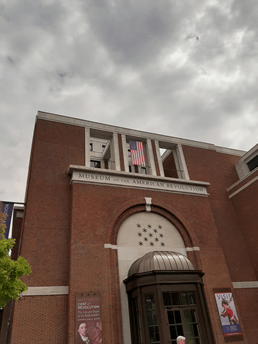
The Museum’s Entrance

Located not too far from the Independence Hall, the Museum of the American Revolution explores the American Revolution through its unmatched collection of Revolutionary-era weapons, personal items, documents, and works of art. Since it opened in April 2017, the Museum’s aim is to inspire visitors to gain a deeper appreciation for how this nation came to be and feel inspired to consider their role in the ongoing promise of the American Revolution. After getting my admission ticket, I decided to start by going upstairs to see the exhibits.

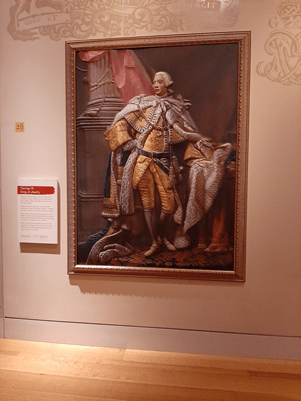
Portrait of King George III

The second floor contained the core exhibition which explores the origins of the American Revolution, the fight for independence, and the on-going legacies of the Revolution.  Throughout the exhibition, the collections and the narrative were guided by these questions which invites visitors to answer them while they explore:

How did people become Revolutionaries?

How did the Revolution survive its darkest hour?

How Revolutionary was the war?

What kind of nation did the Revolution create?

I enjoyed that the Museum guides visitors through the exhibit by introducing these questions for them to keep in mind because it could help them think about what they see, read, and interact with and the significance of the Revolutionary War. Another example of having visitors think more about what really happened during the Revolutionary War were the “Closer Look” markers I found as I went through the exhibit. One of the “Closer Look” labels asked the question When was the term “American Revolution” first used? This question made me happy as a public historian since introducing these questions puts the visitor in the perspective of a historian and challenges the usual way history is taught in the American school system (assuming there is a clear answer for each question posed).

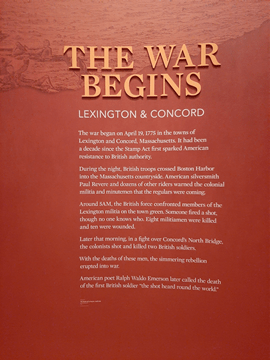
After exploring the origins of the American Revolution section of the exhibit, I proceeded to the fight for independence section. I read about the Battle of Lexington and Concord and saw the collections from the era.
As I moved through the exhibit, I noticed several more interactive supplements that made the experience more engaging. For instance, there is a map that lights up when a button is pressed to show the soldiers movements during battles such as the Battle of Princeton (1777). Also, in the room where the life-size replica privateer ship is located, there is a piece of the replica tar-covered rope inside a box, visitors were encouraged to smell it.

I also appreciated that within the exhibit there is a section within the exhibit that discussed the narrative of the forgotten allies, the Oneida Nation, that joined the colonists in the fight during the American Revolution. Not many talks about the Native American involvement and contributions to the American Revolution, and this exhibit includes a video describing how the Oneida Nation decided to join the colonists.
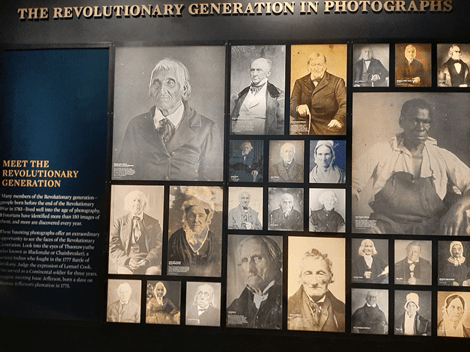
Towards the end of the exhibit, there is a section dedicated to the Revolutionary Generation through photographs. According to the Museum’s text, the last known Revolutionary War veterans had their photographs taken and died shortly after the Civil War. Also, I liked that the exhibit ended with visitors meeting the future of the American Revolution which has a wall covered with mirrors since it is a subtle way of explaining to visitors what these veterans were fighting for.
I did not explain everything I have seen because there was so much that the post would be too long, and I really encourage everyone reading the blog to visit the Museum of the American Revolution when one gets the opportunity. Since my visit, I found out that there is a virtual tour available on the Museum’s website so if one is not able to get there in person yet there is another way to see the Museum. It is a museum I am willing to visit again when I can visit Philadelphia again.

To find out more about the Museum, click here for the Museum’s website: http://www.amrevmuseum.org/

If you have been to the Museum, what were the things that you observed? If you have not visited yet, what would you like to learn more about or expect to see?

Museum Impressions: Independence Hall

September 12, 2019

On the first day of the AASLH Annual Meeting, I decided to not attend workshops and walk around Philadelphia to visit various sites. I mentioned in the previous blog post that I went to Philadelphia as a teenager with my family, and because it has been sixteen years since I visited, I decided it would be a better decision to explore the city. The first place I visited on the first day was Independence Hall where I participated in a tour led by the National Park Service Rangers.

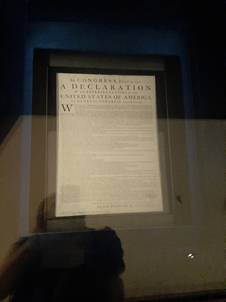
Since my tour was not going to begin for about 10 to 15 minutes, I was able to explore the grounds and visit the Great Essentials Exhibit in the West Wing of Independence Hall. According to the website, the Great Essentials Exhibit displays surviving copies of the Declaration of Independence, the Articles of Confederation, and the Constitution of the United States, along with the silver inkstand that, according to tradition, was used during the signing of the Declaration and Constitution. The copies that I saw were not signed since the ones signed are located in Washington, D.C., and while I was there a Park Ranger stated there were many copies made to be distributed throughout the colonies to spread the news of the Declaration and Constitution.

After visiting the exhibit, I went in line to wait with the group for the timed tour to start. I liked that one of the Rangers had a brief introduction before going in to remind people to not bring in food and drinks, and to not be on cellphones while on the tour. To me it showed that not only Rangers made sure history is being protected but they emphasized the importance of the history as well as the importance of engaging with the surroundings instead of calling and texting during the tour. We were then brought inside the East Wing of Independence Hall to sit down for a brief introduction of the history of Independence Hall and then we went onto the tour.

The group I was in was led outside to walk into the main building. Inside there were two rooms we went into to learn more about the Pennsylvania State House which is later known as Independence Hall. While it was known as the place where the Declaration of Independence was written and approved, there is so much more to this building’s history. According to the National Park Service, the Pennsylvania State House originally housed all three branches of Pennsylvania’s colonial government. The rooms we saw were the Courtroom of the Pennsylvania Supreme Court and the Assembly Room.

We went into the first room which was the Courtroom of the Pennsylvania Supreme Court. After taking pictures, our Ranger guide started to tell us more about the room and more history about Independence Hall. A couple of examples we were told about was that the Supreme Court of Pennsylvania sat in this room in the 1700s. Another example was that on July 8, 1776, an act of defiance occurred here when a group of Pennsylvania militiamen stormed in and tore down British King George III’s coat of arms; then a hundred years later, visitors came to this room during the Centennial to experience the National Museum, a collection of artifacts celebrating the founding of the nation.

Once we were finished in the Courtroom, we went into the Assembly Room where the Declaration of Independence and the U.S. Constitution were signed. The Assembly Room later became a shrine to the founding of the nation with a proudly displayed Liberty Bell and original paintings of the Founding Fathers. The tour concluded in this room after about twenty minutes in each of the rooms previously mentioned.

I would have liked to see more of Independence Hall such as the Long Gallery and Governor’s Council Chamber located on the second floor. The Long Gallery served as a reception area for visitors meeting with Pennsylvania’s governor, and the Governor’s Council Chamber was where Pennsylvania’s Supreme Executive Council met in this room in the 18th century then later was used as the location fugitive slave trials in the 1850s. There seemed to be at least a few opportunities to have further discussions about challenging the historical narrative that glorified the past briefly mentioned in the tour. While I was confused when I noticed how short the tour was, because this is one of the most popular landmarks in the United States there are numerous visitors the National Park Service bring through Independence Hall they would need to get each tour group through as swiftly and smoothly as possible.

Museums are moving forward to creating more engaging and interactive experiences to be more visitor-focused, and I wonder: should Independence Hall do the same and if so, what approaches should be done? I believe that there should be interactive opportunities at least on the property as another option to do while waiting for tours to begin like a pop-up museum that are easily moved for weather conditions. I do think that if one has not visited Independence Hall one should visit at least once to learn about the significance of it’s part in the birth of the United States and learn about the building beyond this significance.

Share your experiences. If you have visited Independence Hall, what were your experiences like?

Resources:

https://www.nps.gov/inde/index.htm

https://www.nps.gov/inde/planyourvisit/independencehall.htm

https://www.nps.gov/inde/learn/historyculture/places-independencehall.htm

https://www.nps.gov/inde/learn/historyculture/places-independencehall-assemblyroom.htm

https://www.nps.gov/inde/planyourvisit/westwing.htm

https://www.nps.gov/inde/learn/historyculture/places-greatessentialswestwing.htm

#AASLH2019: Conference Recap

September 5, 2019

Last week I attended the AASLH Annual Meeting for the first time located in Philadelphia. If you were following along with me on Twitter, I tweeted a lot about the sessions I attended, the events I participated in, and the places in Philadelphia I visited on my own. I included a highlight of tweets from the Annual Meeting in this post, and to see all of tweets I posted they can be found on the page here @Steward2Lindsey. Because I have not been to Philadelphia since I was a teenager, I was naturally excited to return and explore the area while I could during the conference.

I started tweeting about the conference the night before since I was so excited. I got the song “One More Sleep ‘til Christmas” from The Muppets Christmas Carol stuck in my head thinking about one more night until I leave for Philadelphia which inspired this tweet:

I will admit that it was hard for me to sleep the night before because I was so excited to be going back to a city I have not been in many years. In the morning, I left with my Three Village Historical Society colleagues to the Philadelphia 201 Hotel where the conference took place.

We arrived in Philadelphia later in the morning to check into our rooms. Once we put our things in our rooms, we went to the registration table to check in and get our totes that include conference programs, leaflets, and tickets for lunches as well as events. My colleagues and I went our separate ways to do our own plans in the city. Wednesday is technically the first day of the conference since there are several workshops that require an additional registration fees for each workshop. Since I have not been to the city in years, I decided to not sign up for them opting to explore the area instead. I went to take a tour of Independence Hall, visited the Liberty Bell, explored the Museum of the American Revolution, looked inside Carpenter’s Hall, and walked through the 18th Century Garden. After attending the International Coalition of Sites of Conscience reception, I walked to Chinatown to get some dim sum.

On the official first day of the conference I attended the opening plenary (opening panel discussion), first time attendee reception, and sessions. When I was sending tweets from the conference, I followed the social media guidelines AASLH provided to show where one was tweeting from such as #plenary, #keynote, and if one is attending a session the hashtag starts with “#s” then the session number (i.e. #s10) listed in the program.

After attending the morning sessions, I went to the Educators and Interpreters Affiliation Luncheon which had three courses including an irresistible chocolate cake. During the luncheon, we learned more about the Museum of the American Revolution and its education program offerings.

I attended afternoon sessions after the luncheon including, and these are a few of my favorite moments from the sessions:

In the evening, I went to an evening event that took place at the Eastern State Penitentiary. After getting off the bus, the first thing I did was participated in a twenty-minute introduction tour. Then I walked around the Penitentiary on my own looking at various cells including Al Capone’s cell. At the Penitentiary, there are a few food stations that offered various cuisine; for instance, there is one station that served Philly Cheese steaks and another one that served sushi and dumplings. I also went through an exhibit called Prisons Today: Questions in the Age of Mass Incarceration that illustrates what prisons are like in recent years in both general facts and in more personal experiences. In a future blog post, I will talk more about my experiences at this museum. While waiting for the bus heading back to the hotel, I watched part of the animation films, made by people currently in prison, that were projected onto the Penitentiary’s wall outside the main entrance.

On the second day, the Three Village Historical Society colleagues and I participated in a poster session to talk about the Founder’s Day program which won a Leadership in History Award from AASLH. Then I attended a luncheon for historic house museums, and sessions about reworking historic house tours and advocacy for equity. In the evening, I joined the rest of the Three Village Historical Society conference participants and staff/colleagues who were able to come down to attend the Awards banquet as the Historical Society received the award.

On the last day of the conference, I attended morning sessions about finances in historic house museums and revamping school programs. While the rest of the day were more workshops, I decided to walk around Philadelphia before I left the city. I went to places including Betsy Ross’s House, Elfreth’s Alley, the Science History Institute, Christ Church and Burial Ground, and the Quaker Meeting House.

Overall, I enjoyed the conference and it made me want to go to Philadelphia again so I could see more of the city. The sessions were informative and are helpful as I move forward in my career. To see more tweets from the conference, they are available on my Twitter page.

If you have any questions about the sessions I attended, please reach out to me on my social media pages or here.

Historic House Keeping: A Hands-On Professional Development Experience

July 18, 2019

On previous blog posts, I shared my experiences in participating in professional development programs including conferences and seminars. I participated in another program that would not only help me refresh my skills as a public historian and museum professional but could also help several museum professionals who are responsible for collections. Also, by sharing my experience in professional development programs it will also help individuals understand the challenges museum professionals face to maintain our collections for the public to enjoy and appreciate.

This past Monday I participated in a Historic House Keeping all-day seminar provided by the Greater Hudson Heritage Network in New York. Greater Hudson Heritage Network serves the museum and history communities as a catalyst to advance professional standards and practices, build the capacity of organizations to meet their missions, and create a network of effective and professional stewards of regional history and culture now and in the future. It serves member cultural organizations, their staffs, their boards, and their communities in New York State and beyond, offering consultations and assistance, a resource network, and professional development opportunities to advance the work of historians, historic house museums, heritage centers, historic sites, archives, and libraries. The workshop I participated in was one of the examples of programs Greater Hudson Heritage Network offers.

Before I took this workshop, my previous experience with historic housekeeping was at the Connecticut Landmarks historic houses in Hartford. At the houses, I assisted in cleaning the floors, carpets, and the collections within the house including but not limited to furniture and toys. I also unpacked and set up holiday decorations that were in the collections to use during the holiday season. For summer tours, I helped set up the family trunk used for their summer trips to Niantic and laid out their wool bathing suits on the bed they once wore when they swam in the summertime. I decided to take this workshop to both refresh my memory of historic housekeeping but to learn more about techniques that I should utilize when I take on my next historic housekeeping project.

Historic House Keeping took place at the Vanderbilt Museum in Centerport on Long Island. The Vanderbilt Museum, located in Suffolk County, includes the Eagle Nest Mansion once owned by William K. Vanderbilt II. He established a trust fund to finance the operation of the museum and deeded it to Suffolk County, New York, upon his death in 1944. Suffolk County opened the museum to the public in 1950.

During the full-day workshop, I learned the proper, hands-on methodology of collections care by working directly with collections which equipped myself and other attendees with the knowledge and skill sets necessary for cleaning, handling, and storing collections, along with the tools to teach our volunteer base these critical skills. Participants received a lite breakfast, networking luncheon, resource packet, and cleaning toolkit. The day began with introductions to Before we began our sessions, we had an opportunity to participate in an hour-long tour of the Mansion.

We learned a lot about the history of the Eagle’s Nest Mansion and the history of the Vanderbilt family. Each room we visited within the Mansion gave us a glimpse at the life of William K. Vanderbilt II through the estate that memorializes his legacy. Once we completed the tour, we were separated into three groups to start the first session before our lunch break. After the lunch break, we went to our next two sessions in our groups. While we did listen to their tips and had the opportunity to ask them questions, we were able to move and handle table settings, pack textiles, clean the carpet and objects, and clean silver based on the tips we were given. When we completed the three sessions, the three groups came back together to work together on a couple of storage and cleaning sessions. Also, we learned about various archival boxes that are recommended for various types of collections.

I enjoyed the full-day workshop not only because it was a great way to network with museum and history professionals, but we worked with session professionals on hands-on projects. We were able to practice our skills so we would know what to do when we are faced with these situations. At the end of the program, we were given cleaning kits of our own that included materials we used during our sessions and information we can refer to later during our own historic housekeeping. The main purpose of each session we participated in was how to prolong the collection items for preservation and for people to learn more about the past. If we do not practice these steps in preserving our collections, we will lose all of the physical connections to the past more quickly through decay. By participating in this workshop, I feel that I am better prepared for cleaning and preserving historic houses.

Discussion Questions: What techniques do you use in historic housekeeping? As a visitor of historic houses, what are your impressions of how the collections are displayed?

To learn more about the places I referenced and Greater Hudson Heritage Network, check out the links below.

Resources:

http://www.greaterhudson.org/

https://www.vanderbiltmuseum.org/

https://lookingbackmovingforwardinmuseumeducation.com/2019/04/25/museum-memories-connecticut-landmarks-historic-houses-in-hartford/

#NYCMER2019: the Yesterday, Today, and Tomorrow of Museum Education

May 16, 2019

It is that time of year again to talk about the New York City Museum Educators Roundtable Conference. On Monday, May 13, 2019, the New York City Museum Educators Roundtable (NYCMER) held a conference for museum and museum education professionals, and this year was special because this is the 40th anniversary of NYCMER. In honor of its anniversary, the theme of the conference was “Yesterday, Today, and Tomorrow” and was located again at the Teachers College at Columbia University. Like last year, I posted throughout the conference as a social media journalist to cover the sessions I went to.

On the morning of the conference, I went in to New York City with my husband as he was going in to work. By the time I arrived, I checked in and got ready to sit in the keynote session. The keynote session was when NYCMER related announcements and the conference’s theme was introduced and discussed through the keynote speaker. This year’s keynote speaker was Christy Coleman who serves as the CEO of the American Civil War Museum in Virginia. She discussed how she helped orchestrate the merger of the American Civil War Center at Historic Tredegar with the Museum of the Confederacy to create the American Civil War Museum. Also, she talked about how the staff and board of the American Civil War Museum work to fulfill its’ new mission to include more than one narrative of the American Civil War experience including talking more about the Native Americans, immigrant groups, and Mexicans who were often overlooked when educating school children about the Civil War.

Lindsey Steward-Goldberg @Steward2Lindsey

  May 13

I’m officially at #NYCMER2019 ! Any #MuseumEdChat at the conference this year? I’ll see you around #NYCMERsmj

Lindsey Steward-Goldberg ‏@Steward2Lindsey

  May 13

 We don’t talk about Native Americans, immigrant groups, Mexicans (African Americans escaped to Mexico to be free). There is so much that not many people knew about the Civil War. #NYCMER2019 #NYCMERsmj

After the keynote session, the first morning session I attended was called Empathy Mapping: Teachers on a School Field Trip. Empathy mapping, according to the session description from the conference pamphlet, is the process of diagramming qualitative user data in order to create a visual representation of the user’s needs and pain points. We participated in an empathy mapping exercise to promote user driven change and to improve how educators facilitate school field trips at our institutions. By learning the results from the empathy mapping created by the research team at the Intrepid Sea, Air, & Space Museum and participating in the exercise, we would employ the methods we learned to improve our school field trips.

Lindsey Steward-Goldberg @Steward2Lindsey

  May 13

  Instructions for our empathy mapping exercise. How to create an empathy map? #NYCMER2019 #NYCMERsmj

The second session I attended was called What We Say and How We Say It: Audio and Verbal Description that Consider Social and Historical Context. In this session, session speakers Justin Allen (New York City-based writer, performer, and art worker) and Kayla Hamilton (visually impaired artist, producer, and educator) helped us learn to answer questions like the following: How might verbal description and audio description present opportunities for discussing the ways artworks and performances address race, gender, and disability? Who or what are we describing, how are we describing, and why? We also participated in an activity where we were given a copy of an oil painting called Baby by Emma Amos and a worksheet to break down key information about the painting and the artist then write down our own description. On my worksheet, I started my description by describing the specific shapes as I would see them from left to right, then describes shapes that looked like a pair of legs, and the person (woman) in the painting; I connected it to the social and historical context by making an assumption that the painting might be a self-portrait and went into detail about the artist’s background.

During the lunch break, I attended the poster sessions which shared various projects and programs that museum educators have facilitated to help move museum education forward and it took place in an informal marketplace setting. For instance, I spoke with a presenter who talked about an arts program that collaborated with other organizations to help educate students about gun issues. Also, in honor of the 40th anniversary, I purchased a tote bag with the NYCMER logo and 40th anniversary embroidered on the tote. After having lunch, I attended the first afternoon session called Big Issues for Young Mind: Teaching climate, race, and other difficult topics. The session was described according to the conference pamphlet as:

As museum educators, we often are tasked with addressing “big issues” with our students. These are complex problems where it is essential to understand the past and present in order to think creatively about the future. In this session, we will use examples from two of these issues– race and climate change– to discuss how we can empower students of all ages to tackle issues we ourselves can find challenging. This session will provide tools to address some of the most difficult topics our institutions cover, as well as how to use the past and present to instill hope about the future.

During the session, we learned about how session presenters Clare Blackwell (School Partnerships Coordinator at Wave Hill) and Es-Pranza Humphrey (Teen Programs Associate at the New York Historical Society) educate school groups about the difficult topics. We also gathered into groups and were given scenarios to discuss among ourselves, then eventually with the rest of the participants, how we would handle the situation if we were faced with them in our practice at our institutions.

Lindsey Steward-Goldberg  @Steward2Lindsey

  May 13

 Possible reasons why race is a difficult topic to talk about. #NYCMER2019 #NYCMERsmj

The last session I attended was called Technology in Museums: when it works, and when it doesn’t. In the session description, it stated that

Right now we are feeling tons of pressure to add ‘technology’ into everything we do. When does that make sense? When does introducing technology actually take away from our objective? How can we figure this out before pouring thousands of dollars and hundreds of hours into a ‘new’ technology product? This session will dive deep into these questions in a roundtable format. Presenters will highlight a few examples of their own tech/museum collaborations (including major fails) and a format for thinking through a technology decision. Then we will break into groups to workshop current technology questions you are facing.

While we were waiting for the session to start, we were encouraged to write down a technology that we are proud of and a technology we wished to not use either for personal or professional use. Once we heard the example of technology that made booking, scheduling, and managing registrations for school programs easier from the speakers Meg Davis (founder of Explorable Places, an online platform that facilitates field trip discovery and registration), Melissa Branfman (Museum Director at Wyckoff House Museum), and Danielle Hilkin (Director of Education & Outreach at the Wyckoff House Museum), we broke into groups to discuss current technology questions faced in our museums and figure out what we could do to facilitate our use of the current technology and how to improve the experience of using technology in our spaces.

At the end of the sessions I attended the Concluding Reception located in the Learning Theater inside the Teachers College. There was a raffle in which I won two VIP passes to the Intrepid Museum. As usual, I enjoyed the conference and I wished I was able to attend more of the sessions because it was hard to only chose the four sessions. Also, I think it would be great to have some more representation of museum professionals that are not in the education field since museum educators often collaborate with them especially curators and collections managers. I once again thank NYCMER for a wonderful and informative conference.

To learn more about NYCMER, visit the website: http://www.nycmer.org

How Education Theory is Used in Museums

May 2, 2019

During my experience in museums, I have taught many school programs and learned a number of methods to educate students. Each experience taught me more about educating students within a museum and classroom management. My first experience in educating school programs began with my internship at Connecticut’s Old State House in which there were about 150 students between kindergarten and fifth grade. Because there was a diverse range of age groups on that day, I was introduced to the idea that there are different approaches for each age. When I worked at the Noah Webster House & West Hartford Historical Society, I was introduced to the idea of pre- and post-visit outreach programs where museum educators go to the schools to introduce and follow up with students before and after their visit to the Noah Webster House. Each of my experiences in history museums and historic house museums introduced me to object-based and inquiry-based teaching methods.

Object and inquiry based methods are used to help students connect with the past with observations and asking questions. These methods helped me understand and utilize the constructivist method, or constructivism, which I learned more about during my experiences at the Long Island Explorium, the children’s science museum. According to the Exploratorium in San Francesco that uses this method, constructivism refers to the idea that learners construct knowledge for themselves as they learn and the outcome is twofold: educators have to focus on the learner in thinking about learning and there is no knowledge independent of the meaning attributed to experience. This can be applied to museums especially during family programs in which learning is seen as a social activity. During my time at the Explorium, I have seen adults and children work together at each exhibit to help their children foster their own problem-solving skills. I also gained knowledge in education methods outside of my museum experiences.

Professional development programs have also helped me learn about the ways to educate students within a museum. Late last year for example I took an online course through American Association for State and Local History (AASLH) on Museum Education and Outreach, and one of the focuses was education program planning, management, and evaluation. To move forward in learning about planning, managing, and evaluating programs, I used the knowledge I gained on audience characteristics, interests, and needs, observed some visitors in real time, and explored the role of interpretation in education and programs to build foundation for this lesson. My classmates and I were given resources to use as part of our lesson including the National Standards & Best Practices for U.S. Museums from the American Association of Museums (now American Alliance of Museums), and standards for audiences, interpretation and programs through AASLH. We also used The Museum Educator’s Manual by Anna Johnson, Kimberly A. Huber, Nancy Cutler, Melissa Bingmann, and Tim Grove for the majority of the course especially this lesson. One of our assignments was to answer questions about developing an education policy, participate in discussions about developing education policies for museums, and if our museums do not have one to begin a draft of an education policy. A response I had for the assignment was relevant to the Three Village Historical Society:

What we hope for an education policy is to address how educators, both staff and volunteers, should interpret the historical narrative of local history. We also hope all educational programming will show how local history fits into the national historical narrative to reach out to out-of-state audiences who come to tour the Historical Society.

By developing an education policy in museums, it will help guide the education department in when drafting programs that will hopefully be accessible to its audiences, fulfill its mission, and appeal to teachers looking for outside the classroom opportunities. With my experience in this course, I hope to not only exercise what I learned within the institutions I work for but I also hope to build on what I learned through more development opportunities.

Earlier tonight, I participated in #MuseumEdChat, a discussion group on Twitter, which was about best practices in education/pedagogy/theory. The discussions include answering a number of questions and each participant provides their input. One of the questions posed was:  What formal classroom practices do you currently use to help connect with students who visit for school trips? Based on my past experiences, I responded with: At the end of the session or end of the program, I would ask the group questions to see how much they picked up on what was taught during the program. I usually have bring home materials for them to take. I have read other participants’ responses and each one bring up valid points. For instance, one has pointed out that they try to make sure that the programs are structured similarly to what their district does. It is important because to attract schools to coming to the museums for school programs not only do the costs effect their decisions but knowing if the program will supplement what they are learning in the classroom would be appealing to the teachers considering booking field trips. It is also important that school programs should put emphasis on skills they will use throughout their lives such as communication and creative thinking skills.

Another question that was asked during the #MuseumEdChat was Classroom management can be hard in a museum because of excitement, different enviro, new teacher, etc. What tricks or tips do you use? I agree that classroom management can be hard because museum educators are most likely going to work with a particular group once and are not always going to have an opportunity to keep their knowledge developing unless if the museum education program has post visit in-school programs. When I deal with managing school groups, I think about how I witnessed the teachers manage their classes and I would take those skills with me to each experience. For instance, my response to the question was: I sometimes depend on chaperones and teachers to help with classroom management but I find that in the past they consider the trip as a vacation for them so I use tricks that I’ve learned from teachers when I do in-school trips such as “1, 2, 3 eyes on me”. While as a field we have been pushing towards getting teachers and chaperones more involved, we understand it is a challenge since the past approach to chaperoning is still engrained in the field trip mindset. Creating activities that encourage adult and student participation is a good start in the right direction for chaperone and teacher involvement.

The next example of the questions asked during the discussion was: When developing activities for school groups, do you find that you use more formal education theory/pedagogy? Why? What do you use? Do you feel you have to? I believe it depends on what type of groups and programs; for school programs, I use both museum association & formal education theories as guidelines, and for family/summer programs I am more lenient since they come to mostly enjoy themselves while learn something. When I plan programs, I use a combination of standards from museum associations and formal education theory. I do this when planning education programs because I think that it is helpful to use them to show schools that we keep their students’ education goals in mind when providing and it helps draw more attention to the programs if shown we are meeting standards. Using education standards from the district, state, and nation are important considerations teachers take into when deciding on whether or not they can take their students on field trips. Through experiences and professional development, I continue to learn how to educate in school programs and develop my knowledge to help move museum education forward.

Do you find some methods have worked with you better than others in field trips you participated in? As an educator, what education method has worked for you?

Resource:

https://www.exploratorium.edu/education/ifi/constructivist-learning

Recap: The 100th Annual New England Museum Association Conference

It has been a long time since I talked about my experience and experienced the New England Museum Association (NEMA) conference. After a few years of not being able to attend the conference, I chose to attend the 100th annual NEMA conference. As always, I had a positive learning experience as well as reunited with a number of colleagues I have met at previous conferences and met with new conference participants. It was located at the Hilton Stamford Hotel & Executive Meeting Center in Stamford, Connecticut, and the theme of the conference was Museums on the Move which explored how museums have evolved since the very first NEMA conference and how they are positioning themselves for success in the century ahead.

A few days before the conference began, NEMA conference attendants were made aware of the labor situation at the Hilton Stamford Hotel & Executive Meeting Center in which hotel workers were protesting unfair wages. While NEMA considered moving the conference to another location, NEMA decided that it was not practical considering the size of the NEMA conference and the relatively short time frame before the conference; the full NEMA statement can be found here: https://nemanet.org/conference-events/conference/2018-nema-conference/hotel/. There have been some participants that decided to not attend the conference or decided to not hold sessions in the hotel as a result, and as a museum community we supported their decisions. During the keynote session, NEMA Executive Director Dan Yaeger dedicated time to talk about the labor situation at the hotel and a couple of staff members from the hotel spoke to us about what the work conditions were like at the hotel. Throughout our conference experience, discussions about the labor situation emphasized the importance of recognizing one another as hard workers who should and deserve to do and see changes made in our fields.

Also during the NEMA session, we heard more about the 100-yearhistory of NEMA and the NEMA conference. They introduced a pop-up exhibit which displayed a timeline of NEMA’s history and allowed conference participants to add their own museum’s history to the timeline using Post-Its, markers, and dry erase boards. What was also added to the exhibit was the wishes for NEMA and the museum field inside boxes that were lifted by the NEMA staff and keynote session presenters in front of the whole conference.

@Steward2Lindsey: Whoa! #nema2018 https://twitter.com/Steward2Lindsey/status/1060223671619514369

Each of the sessions I selected to attend during the week were both for my personal interest and also to gather information for the Long Island Explorium and the Three Village Historical Society. On the first day, I attended a session called The STEAM Dream Team in which I learned how collaboration between institutions can create meaningful STEAM programming from educators at the Wadsworth Atheneum Museum of Art and the Connecticut Science Center; they discussed how an initial joint-school program evolved, and continues to evolve, into a multivalent partnership that benefits both institutions. Also, the session included a hands-on STEAM activity using shadows, light and colors. and practical tips for starting our own art/science collaboration. Then I attended a session called Continuing Education for Your Most Committed(and Creative) Life-Long Learners which considers experiences of long-serving volunteer educators from the standpoint of their interest in and capacity for new learning, in subject matter and pedagogical techniques; I learned about different tailored programs that can refresh docents’ intellectual lives, keeping them up to date and incorporate reflective, cyclical self-assessment and these developmental strategies can be applied to all subject areas. The last session I attended for the day was Power Dynamics and Workplace Culture: A Think Tank in which I participated in a discussion about how to help colleagues examine power dynamics and workplace culture in museums by sharing solutions and ideas for moving the field towards a more equitable and transparent future.

In the evening I attended the Opening ceremony at the Bruce Museum of Art and Science in Greenwich which was originally built in 1853 as a private home on a hill overlooking Greenwich Harbor, and the museum has emerged as one of the area’s premier institutions highlighting art, science, and natural history. I strolled through the permanent collection galleries featuring art from legendary Cos Cob Impressionists (including Childe Hassam, Emil Carlsen, Leonard and Mina Fonda Ochtman, and Elmer McRae among others), a spectacular mineral and natural history collection, and American material culture spanning the Colonial period to the present day. Also, I went into the giftshop to purchase a few items, enjoyed hors d’oeuvres, and since I attended the ceremony I received a free book about the Bruce Museum’s collections.

The next day, I attendedthe session Beyond the School Visit:Museum and District Collaboration in which representatives from The AldrichMuseum and the Ridgefield Public Schools discussed their collaboration and howthey evolved school visits into “deep dive” programming resulting in district-wide, cross-disciplinary curriculum, learning opportunities for educators, school memberships, and experiences for students that align with their respective missions. We listened to museum management, district administrators, and a parent on how the collaboration evolved and how it impacts their institutions; afterwards we were engaged in an activity that was designed to inspired partnerships rooted in reciprocity, shared values, and innovation. The next session I went to was a session called How Visitor-Centered Are We? which was a follow up to the last year’s seminar discussion about truth in museums, and the discussion continued with examining the continuing shift to create more visitor-centered environments and what this means in the context of today’s society. This session also came with selected pre-readings in which we used to examine and share ideas and examples of inclusion, diversity and access, both physical and cultural, to help us understand how they shape, or should shape, our work today. The last session of the day I attended was called Finding Your Voice on Social Media which provided an overview of how Facebook, Twitter, and Instagram can become powerful tools for our organizations and connect with a greater audience.

Since this was the lastday of the conference, I attended two sessions before the conference luncheonand annual meeting. The first session was called Re-Imagining the Future! Museums for Tomorrow in which I learned howthree institutions of art, culture, and science are transforming their facilities and programming for the 21st century and beyond. This had a panel discussion that explored three significant capital projects at the Barnum Museum, Bruce Museum, and Yale’s Peabody Museum of Natural History, and they addressed mater planning and design, construction and interpretive planning. The last session was called Integrating Skill Building into Museum Programs for Children and Caregivers which had hands-on science activities introduced by science center and children’s museum staff that can be facilitated in a variety of museum settings; these activities can be used to look beyond the product or content goals and think about how children can practice important developmental and science process skills as they participate, and the presenters shared strategies for engaging caregivers in the process of their children’s learning and helping them recognize the skill development that is taking place.

At the conferenceluncheon and annual meeting we continued the celebration of NEMA’s 100thanniversary by recognizing winners of the 2018 NEMA Excellence Awards and commemorate the career of Larry Yerdon, NEMA’s 2018 Lifetime Achievement Awardee. Yerdon, President & CEO of Strawberry Banke Museum in Portsmouth, NH, has had a distinguished career in museums, an active supporter of NEMA its President, and has mentored countless museum professionals as they built their own careers in the field. During the lunch, conference participants heard about NEMA’s latest initiatives, then we helped elect the next NEMA board and officers during a brief annual meeting before heading home from the conference.

The conference experience is just as I remembered in terms of socializingwith former colleagues and new acquaintances. It meant a lot to me to be ableto participate in the 100th conference, and the additional momentsthat highlighted its 100 year history stood out to me; reading the timeline made me realize how much I did not know about NEMA and I am happy to have learned about this rich history. Meanwhile, the sessions themselves have not only been informative but presented fascinating information that I am happy to share with colleagues in New York (including colleagues at the Long Island Explorium and the Three Village Historical Society) and everyone in the museum online community reading this blog post.

If you would like to learn more about each session Idescribed above or have any questions, please contact me on social media or here: https://wp.me/P8J8yQ-4

How Museums Are Looking Back and Moving Forward

Added to Medium, October 25, 2018

As museums plan for the future, museum professionals are looking back at how much progress the museum field has come and how much we still need to accomplish as a field. We are constantly looking for ways to improve the field within the museum walls and within our communities. There are numerous examples of this push to move forward in the museum field. I have previously mentioned the changes museums are working towards continuing to be relevant in the community and the world in many posts in the past. I will mention a couple of recent examples I have come across that express this point.

Professional development programming, especially conferences, have sessions that stress how museums can adapt to changes in communities and society. This year I am returning to attending the New England Museum Association conference since I was not able to attend previous conferences once I moved to Long Island. Next month, the NEMA conference will celebrate its 100th annual conference. This conference’s theme is Museums on the Move, and each session investigates how museums have evolved since the very first NEMA conference and how they are positioning themselves for success in the century ahead. One of the points that was addressed about this year’s conference that is very poignant was:

It’s our field’s chance to take stock - to reflect on where we’ve come from and where we are going, and to reset our GPS if necessary along the way.

We are still trying to figure out as a field what we need to improve our field and our relationship with the community around us. I am looking forward to participating in this year’s conference, and learning how the museums I am with and how all museums can move forward in adapting to changes in our institutions and in our society.

Another recent example is within tonight’s MuseumEdChat on Twitter about museums and specialty programs. We talked about the topic Evaluating the Effectiveness of Specialty Programs by looking at cultural heritage or history month programming, along with large anniversaries or milestone celebrations. The first question that was addressed is What “specialty” programs (i.e. Women’s History Month, Native American Heritage Month, etc.) are out there in museums and cultural institutions? There are varying answers to this question depending on what type of museum and what their focus is in programming.

The next question asked was: In your opinion, what makes a good specialty program? Of course there were varying opinions since these museum professionals work in museums that are different types. For instance, I mentioned science museums in my opinion:

A2 For science, I believe what would make a good specialty program is paying attention to what is happening in current events i.e. climate changes. #museumedchat

Another opinion I came across in the Twitter conversation was focused on history museums.

A2: For history…1- Asking how the subject applies to the present/future. 2- General commitment to finding stories about a group of people. #museumedchat

Since I also work in a historical society, I concur with this opinion since keeping history relevant is especially important for all programming and exhibits in history museums and historic sites. One of the final questions in this discussion was about the side effect of having specialty programs.

The question specifically asked was: What are the downsides and/or general pitfalls of specialty programs? One of the answers that stood out to me was:

A3- it is easy to get wrapped up in the same old programming with specialty program. I also think it can create misconceptions if not done correctly, especially if it’s about a cultural group. Lastly, it worries me that sometimes we limit to heroes and holidays…. #museumedchat

This stood out to me because I think this is a common concern for many museum educators especially since we have so much more to offer than what we commonly do for programming. I do not think that we can resolve this situation with one recommendation since each museum is different and has a different focus in education programming.

Online communities, like #MuseumEdChat, are great examples of how museum professionals are continuing the discussions of how museums should move forward with changes needed for museums to be relevant for today’s society and community.

What are your museums and organizations doing to continue the discussion of how your organization has changed and will continue change?

Social Media Journalists at Conferences: My Experience As One At NYCMER 2018

Added to Medium, May 24, 2018

At each conference I have attended, and of course I am sure everyone reading this post felt this way as well, there are so many sessions I have wanted to attend but I could not be in more places at once. Twitter began to provide opportunities to share information from conferences on the social media platform. This year the NYCMER conference, React & Respond: The Next Steps, held at Teachers College at Columbia University this past Monday (May 21st) had social media journalists sharing their impressions about the conference and the highlights of each sessions. Rachel Ropeik, the Social Media Coordinator for NYCMER, asked myself and other NYCMER members to join her team of social media journalists.

NYCMER Social Media Journalists, Courtesy of Rachel Ropeik, Social Media Coordinator, NYCMER via Twitter
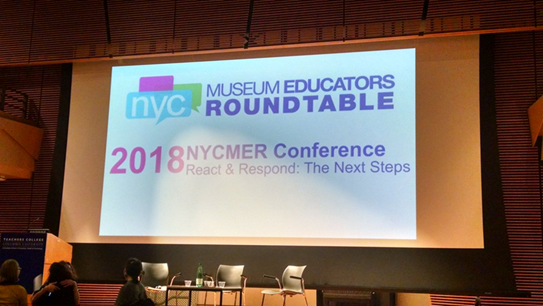
We were asked to cover the conference via Twitter by tweeting our impressions of and thoughts about the keynote session and the rest of the conference sessions. I attended the sessions, and then I tweeted some highlights of the sessions I chose to attend. All of the social media journalists, and other NYCMER conference participants following on Twitter, used the hashtags #NYCMERsmj and #NYCMER2018 to participate in conversations on the social media site. We also included photographs we took during the conference to give followers visuals of what we covered in the sessions we participated in. In this blog post, I included some of my tweets I shared during the conference for each session I participated in with brief descriptions.

This year’s NYCMER conference began with a keynote that discussed this year’s theme: React & Respond: The Next Steps. The keynote was moderated by Keonna Hendrick who is School Programs Manager at the Brooklyn Museum, cultural strategist, educator and author, nurturing equity through art and museum education. Hendrick posed questions to the keynote participants Gonzalo Casals and Annie Polland. Gonzalo Casals is the Director of the Leslie-Lohman Museum of Gay and Lesbian Art. His experience ranges from innovative cultural programming and authentic community engagement strategies to progressive cultural policy. Annie Polland is the Executive Director at the American Jewish Historical Society (AJHS). Previously, Polland served as the Senior Vice President for Programs & Interpretation at the Lower East Side Tenement Museum where she was responsible for developing programs and content for over 250,000 annual visitors.

Lindsey Steward‏ @Steward2Lindsey 9:04 AM – 21 May 2018
Welcome to this year’s #NYCMER2018 I’m looking forward to learning more about today’s theme 🙂 What are your thoughts about this year’s theme? #NYCMERsmj

Lindsey Steward @Steward2Lindsey 21 May 2018, 9:23am
I’m also glad that NYCMER is requiring salary information in job postings. It is important for us to show our support for equity and best practices in salary sharing and negotiations #NYCMER2018 #NYCMERsmj

Lindsey Steward @Steward2Lindsey 21 May 2018, 9:49am
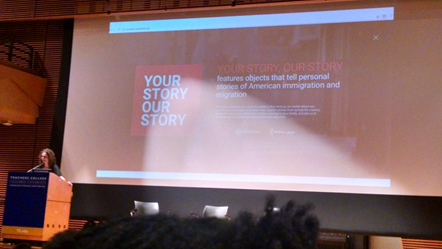
Allows people to upload pictures that tell their immigrant stories. What a great idea to be able to share and identify with people’s stories #NYCMERsmj #NYCMER2018


Lindsey Steward @Steward2Lindsey 21 May 2018, 9:56am

Interesting thought: If you could create a poem or an inscription on the Statue of Liberty today, what would it say? #NYCMERsmj #NYCMER2018

Lindsey Steward @Steward2Lindsey
I think board of trustees should also participate in programs and conferences like @NYCMER This will also help staff and board work together especially on diversity. It is unfortunately not surprising when no one said they were from a museum board. #NYCMER2018 #NYCMERsmj
10:48 AM – 21 May 2018

The first session I attended was Virtual Field Trips: Traveling Through Time and Space to Connect Museums and Audiences. During this session, Frantz Lucien, an educator at the Intrepid Sea, Air, and Space Museum who specializes in community outreach and engagement, and Charissa Ruth, a freelance educator whose resume includes the Intrepid Museum, the Brooklyn Botanical Garden, the Brooklyn Public Library, and the Cooper Hewitt Museum, discussed their experience with virtual field trips. Lucien and Ruth discussed the benefits and challenges of running and planning virtual field trips. They also performed a demonstration what a virtual field trip is like by giving us a brief demonstration of what it would be like to be in space without wearing a space suit.

Lindsey Steward @Steward2Lindsey 11:29 PM – 21 May 2018
A test to see how Virtual Field Trips work via Skype #NYCMERsmj #NYCMER2018

Lindsey Steward @Steward2Lindsey 1:13 PM – 21 May 2018
Lindsey Steward Retweeted Paul Orselli
Paul, I think there should be required professional development programs for museum leaders, directors and board of trustees, to talk about salary and the importance of having salary information included when searching for a job candidate. #NYCMERsmj #NYCMER2018
Paul Orselli @museum_exhibits
#NYCMER2018 Food for thought over lunch: How can we get ALL orgs to require salary ranges on job postings? #NYCMERsmj

During the lunch break, I attended poster sessions that shared various brief information related to this year’s theme. One of the most interesting poster sessions I attended is Neuroscience and Museum Education. Megan Kuensting from The Met’s School Programs team shared some highlights gleaned from her Master’s program in Neuroscience and Education at Columbia University Teacher’s College, including questions about the potential for inquiry-based education to reduce student stress.

Lindsey Steward @Steward2Lindsey 21 May 2018, 1:37pm
Check out this fascinating information about Neuroscience and Museum Education! #NYCMER2018 #NYCMERsmj

The second session I attended was Beyond White Feminism: What Stands Between Museums and True Gender Equity: A Journal of Museum Education Facilitated Dialogue presented by Alicia Greene, the Community Engagement Program Developer for Boston Children’s Museum, and Margaret Middleton, the exhibit designer and museum consultant with over ten years’ experience in the museum field. In this session, we brainstormed topics about our concerns in the museum workplace in addition to discussing the upcoming edition of the Museum Education Roundtable’s Journal of Museum Education. An important take away from the session is that Museums still struggle to achieve gender equity in the workplace and the fight for representation in the galleries continues.

Lindsey Steward @Steward2Lindsey
This is to keep in mind when thinking about equity and resolving issues within the system put in place in museums. #NYCMER2018 #NYCMERsmj

The third session I attended was Making Room: Creating and Sustaining Effective and Inclusive Learning Environments presented by a former instructor and a current Museum Education Program Director at Bank Street College of Education, Cynthia Copeland and Cathleen Wiggins. This session was a participatory workshop which model interactive techniques and activities where participants explore scenarios and potential outcomes relevant to their communities.

Lindsey Steward @Steward2Lindsey 21 May 2018, 3:45pm
I love this quote! Everyone should feel like they are represented in the storytelling process. #NYCMER2018 #NYCMERsmj

I enjoyed this year’s NYCMER conference, and I thought it was a great idea to start having a team of social media journalists share information from the sessions. At first I was concerned that it would be a challenge to participate on Twitter and during the sessions at the same time. I decided to make a couple of tweets during the sessions then I tweet my reactions after the session ended. There was a lot of great reactions on the sessions at the NYCMER conference, and if you are interested in reading more tweets from the conference go to Twitter and look up #NYCMERsmj and #NYCMER2018.

How do you feel about having social media journalists during conferences? Does following conversations on Twitter make participation easier?


Significant Resources in the Museum Field

Added to Medium, May 3, 2018

As museum professionals, we continue to develop our education through professional development resources provided in various sources including but not limited to books, websites, blogs, webinars, conferences, seminars, and magazines. We learn so much from these resources, and therefore we continue to use the same ones we continuously use. Museum professionals also seek more resources to use to assist in their practices.

In my blog post Writing about Museum Education: Using Professional Development to Our Advantage, I stated that,

I truly believe professional development is important for all career paths, especially in the museum education field. Professional development in the museum education field have many opportunities to help museum professionals develop their careers to make sure they are up to date with latest theories and skills.

Professional development has many opportunities for all museum professions to develop their careers. There are many options to choose from, and we do not need to stick to one resource to develop our careers and skills. Museum professionals are able to make sure they are up to date with latest theories and skills by seeking networking opportunities.

One of the most important resources museum professionals use is their own experiences as well as experiences of other museum professionals. While we can learn from the materials we gained access to, the best resources are the ones gained from experience and sharing these experiences. By doing our jobs as museum professionals, we have practical knowledge of what occurs on a regular basis in museum practices. Museum educators especially regularly apply skills they learn from the programs they teach; when they teach programs on a regular basis, museum educators learn what methods work or what needs to be improved on a case to case situation.

In the twenty-first century, we have many options for communicating with one another to learn through each other’s experiences. Museum professionals can meet in person at conferences, seminars, and workshops, or online. Whether they are online or in-person, museum professionals can talk with one another to gain inspiration for their own projects or practices.

The benefit of interacting online is that museum professionals can communicate with other museum professionals outside of their region on a regular basis rather than waiting for the next national meet-up. Another benefit I mentioned in my blog post Online Communities: Why They Are So Important for Museum Professionals was

It is important that museum professionals have the opportunity to connect with one another since one of the best ways to continue adapting programs and exhibits is to learn from other museum professionals. Not many museum professionals have the opportunity to meet with others in person for various reasons especially not having enough time and money to invest in traveling to museum conferences and workshops.

If museum professionals are not able to attend conferences and workshops for whatever reason, providing a way to communicate online will help more museum professionals learn from one another to help move the museum field forward.

There are many opportunities online to communicate and learn from other museum professionals. For instance, there are online communities through social media such as the Emerging Museum Professionals group on Facebook, museum groups on LinkedIn, and #MuseumEdChat on Twitter. Each of the examples I listed inspire museum professionals to ask each other questions and seek advice related to the field, and encourage discussion among one another.

In recent months, I discovered that there are also online mentorships programs like the American Alliance of Museum’s (AAM’s) Museum Education Professional Network that provides space for mentors and mentees to communicate with each other. Museum professionals at each career level can apply to be a mentor or mentee to seek advice from one another, and learn from one another’s experiences. Once selected, a mentor and a mentee is matched together based on similar experiences and backgrounds in the museum field to then begin communicating with one another.

Another example of an opportunity online for museum professionals to learn from other museum professionals experiences is the blogs posted on personal websites or museum websites. I have written many blog posts in the past couple of years that continue to gain attention from all of you who have continued to read them (and I thank you for continuing to read each of these blog posts). Also, I have read many blogs from other museum professionals in the field. One of the most recent blog posts I have read came from Anne Ackerson and Joan Baldwin in their blog Leadership Matters.

Their most recent blog post, Museum Leadership: Being vs Doing, discusses the importance of knowing the difference between “being” a museum leader and “doing” your role as a museum leader. They also discussed where museum professionals should turn to if we find ourselves in a situation where we are managing more people than tasks. It is important that all museum professionals understand where they can turn to find information that will help us be effective leaders. We all need to remember that if we find our organizations are not helping us perform well in our roles we should speak up so we will figure out how we can effectively accomplish our goals.

We have unlimited resources that we can gain access to especially for museum professionals in the museum field. Our resources continue to develop as we learn from one another, from books, blogs, networks and online communities, and we move forward with changes based on what we learned. We do not rely on only one resource as the most significant resource since we need to keep our minds open to change as our communities and our field continue to evolve with the times. The museum field is fortunate to have so many outlets we can reach out to learn more about our roles in our organizations.

What resources have been the most helpful for you in your field? Have you participated in online communities like the ones I mentioned in this blog post?

Resources:
http://www.aaslh.org/
https://www.aam-us.org/
https://leadershipmatters1213.wordpress.com/2018/04/30/museum-leadership-being-vs-doing/
Writing about Museum Education: Using Professional Development to Our Advantage 

Online Communities: Why They Are So Important for Museum Professionals