#NEMA2019 Recap

November 13, 2019

I have once again participated in the New England Museum Association conference. It was in Burlington, Vermont this year and it was the first time that I have been in the state. I was not only excited to be participating in this year’s NEMA conference, but I was also looking forward to exploring the area. With a friend, I took a road trip to travel to Vermont for the conference. This year I decided to not only focus on sessions focusing on education but also sessions that help me get a better understanding of how to improve my leadership skills and of fundraising. As always, I found these conferences both informative, engaging, and entertaining to be with New England and New York colleagues. Thanks to all who have been following my tweets on Twitter covering the conference, and I have included a highlight of my tweets, photographs, and the sessions I attended during the week.

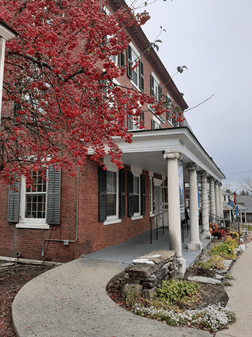
There were many beautiful views I witnessed as my friend and I went up to Middlebury, Vermont as the first stop before going to the hotel.

Once we arrived, she went to a pre-conference event and I decided to explore the area. The first place I went to was the Henry Sheldon Museum. The Henry Sheldon Museum of Vermont History is the oldest community-based museum in the country opening their doors to visitors and researchers in 1884. Their mission is to serve the public by preserving the historic memory of the Addison County and surrounding communities, heightening the awareness and enjoyment of our rich cultural legacy, and stimulating the study of connections between Vermont’s past and broader historical themes. There are three main areas of the museum:

The Judd-Harris House, built in 1829, showcases a wealth of objects depicting small town life in nineteenth century Vermont

The Stewart-Swift Research Center houses one of the state’s premier archival collections, documenting the history of Middlebury, Addison County, and Vermont

The Walter Cerf Gallery hosts changing exhibits throughout the year.

After visiting the museum, I walked around Main Street and window shopped along the street. I did go into a few stores including Vermont’s Own, which the majority of the products they sell were maple syrup which I could not help but purchase a sample. I went through a country store and the Vermont Book Shop. Eventually I walked back to meet my friend and explore the Middlebury College Museum of Art’s exhibit on the Women’s Suffragette.

Once we checked into the hotel, we walked down Main Street to visit the Lake Champlain Chocolate Store. As a former employee of a chocolate store, I purchased a number of samples for comparison. When we were done with exploring, we were ready for the next few days of conference sessions and events.

My first day of the conference began with learning about analysis of the open-ended questions and audience data. The panelists pointed out that using more than one method to analyze the data and multiple people to review the questions will be helpful for getting the results needed for what the museum is looking for.

I also attended the keynote session that focused on social justice. Dr. Gretchen Sorin, who is committed to encouraging museums to be more active in civic responsibility and social justice, discussed the upcoming book Driving While Black: African American Travel and the Road to Civil Rights and the PBS documentary produced by Ric Burns and Steeplechase Films, to be released in 2020.

The next session I attended focused on how to foster deeper connections between local teachers and museums; they argued that focusing education programming on supporting educators can lead to more quality student-site interactions, a deeper valuing of our museums in the community, and an expansion of museum capacity. Other sessions I attended were about summer camps and how to use camps to draw in new audiences as well as strengthen ties to schools and community (and listened to the experiences of teenagers who participated in the camps), and museum volunteers and how to create an impact measure for their roles.

That night I attended the opening evening event at the Echo Leahy Center for Lake Champlain. Echo Leahy Center inspires and engages families in the joy of scientific discovery, wonder of nature, and care of Lake Champlain. While enjoying hors d’oeuvres, I interacted with various exhibits including but not limited to Thomas Edison’s Secret Lab (which invites visitors to join the fun through interactive explorations that promote science, technology, engineering and math learning) and Into the Lake (which allows visitors to be immersed in the shipwreck at the bottom of Lake Champlain and learn about a twenty-foot serpent that may have lived in the lake). 

On the second day, I attended a number of sessions, an Educators professional affinity group (PAG) lunch, and another evening event at the Shelburne Museum. The first session I attended that morning was the importance of fundraising as a team effort (to learn effective ways to motivate staff and board members to be better fundraisers and hear strategies for attracting and retaining members). Also, the panelists led us in a half hour exercise around major gifts where we practiced “Making the Ask” or an elevator pitch to convince donors to help contribute to our museums’ upcoming major projects. One of the most important takeaways I learned from this session was:

Other sessions I attended were about emotionally intelligent leadership and how to incorporate evaluation practices into museum programming. In the session on emotionally intelligent leadership, we learned about assessing emotional skills, leveraging emotions and learning strategies to achieve results.

In the session on how to incorporate evaluation practices into museum programming, panelists shared practices and examples of incorporating evaluative thinking and reflective practice into the work as practitioners. It introduced practical, tested approaches for building evaluation capacity and using data to improve educational products and professional practices. At the Educators PAG lunch, we discussed the necessity of advocating for our needs as educators and had discussions among ourselves to ask questions, share ideas, offer each other advice, and connect with one another to provide inspiration, support, and resources after we leave the conference. 

The second night I attended the evening event at Shelburne Museum. After eating hors d’oeuvres, I walked through an exhibit that was not yet open to the public and a current exhibit. Time Lapse: Contemporary Analog Photography, which opened on November 9th (a couple of days after the evening event), is an exhibit that celebrates the work of 13 international and national contemporary artists who use the darkroom as a laboratory and find inspiration in the vast range of 19th-century photographic processes, from daguerreotypes to photograms. In the second exhibit, which is called Joel Barber & the Modern Decoy, the curator of the exhibit led us through a tour to discuss the life and artwork of architect, author, illustrator, and pioneering decoy collector Joel D. Barber.

After returning to the hotel, there was a lot of cars covered in snow which made me excited since I grew up watching the film White Christmas (majority of the film taking place in Vermont) and I was looking forward to seeing snow in Vermont. I was excited to see more snow on the ground the next morning, and while I was a little disappointed that most of it melted by the end of the conference, I was relieved that we were able to travel without worrying too much about the road conditions.

On the last day of the conference, I attended sessions about the introduction to assessment programs for museums, intangible histories, and a session of its kind called Recharge and Reimagine: Creative Break before attending the closing luncheon and annual meeting. The assessment programs session was intended to introduce, clarify, and spark interest in museum assessment programs such as AASLH StEPS, AAM MAP and Accreditation programs. In the intangible histories session, which was standing room only, panelists shared case studies from the Monticello (an exhibit about Sally Hemings), the Rokeby Museum, and Florence Griswold Museum to share techniques they used to show intangible histories and create meaning out of the memories and stories of individuals. As a public historian, this session was interesting to me because of the challenge intangible histories present and the importance of addressing underrepresented history.

Another session I attended which was different than ones I have previously attended was Recharge and Reimagine: Creative Break. I enjoyed it because it not only helped us tap into our creativity to inspire our work, but it also helped us wind down from an overload of information and excitement from the past few days. We participated in hands-on exercises that helped us use examples of ekphrasis, or the creation of one kind of art inspired by another kind of art. For example, one of the pieces of art shown to us Henri Matisse’s Open Window (1905) and we were encouraged to write any type of poem inspired by this painting. This is my poem:

Today I will look out my window. The colors are so vibrant. The shades of green bring the yard to life. The reds are these in my flowers helping them stand out on this beautiful day. The blues bring out the boats and the body of water. The water filled with so many waves of pink that channels happiness on this beautiful day. I welcome these colors into my window, and I watch as they emerge inside. The pinks and greens occupy the walls of my home. The blues join the greens and even some of the pinks joined the greens. All of the colors also reflect in my windows. I hope to never close my windows to these colors. I implore all who see colors outside to let them in. The colors bring me joy each day. Colors, please keep coming to my window. Tomorrow will be another beautiful day with you.

The drive back was beautiful because there was still snow on the ground. Once again, I enjoyed my experiences at the NEMA conference and will make efforts to exercise what I learned in all of the sessions.

If you are interested in learning more specific information about what I learned and my thoughts, please contact me here. Stay tuned for a new blog post tomorrow!

Resources:

https://henrysheldonmuseum.org/

https://www.echovermont.org/

https://shelburnemuseum.org/

Mini Blog Post: #NEMA2019

November 3, 2019

This week I will be attending the New England Museum Association conference in Burlington, Vermont. The New England Museum Association conference is a large annual professional development gathering of museum professionals in and out of the New England area; in most recent years, member of the Museum Association of New York are able to attend as NEMA members. Museum professionals have been gaining new insights, inspirations, and friendships through the NEMA conference since 1919. Since I am going to have a full schedule attending sessions and events, I will not be posting a full blog post on the usual Thursday date but I will be updating my experiences on my Twitter page throughout the week.

I will be in Vermont from November 5th through November 8th, and on November 5th I will be exploring the area before the official sessions begin. To learn about my experiences and my thoughts on the sessions as well as the events, follow me on Twitter: @Steward2Lindsey. Also, follow the conference itself by using the hashtag: #NEMA2019.

To learn about the previous NEMA conference, this is a recap from last year.

International Museum Workers Day 2019 and #MuseumEdChat

October 24, 2019

October 24th is International Museum Workers Day. According to the official website, IMWD began as an educational project to introduce the general public to the myriad professions relating to the creation, research, discovery and presentation of heritage. The people behind International Museum Workers Day value the importance of soft power heritage diplomacy to help with exchange of views & ideas, promote knowledge of other cultures, and build bridges between nations. This year IMWD is supporting sustainable heritage by committing to stimulate communities to urgently embrace the UN’s 2030 Agenda for Sustainable Development Goals. The Agenda, developed by the United Nations, is a commitment to eliminate poverty and achieve sustainable development by 2030 world-wide. To learn more about the Agenda, take a look at the European Commission page on the Agenda and sustainable development here.

In honor of International Museum Workers Day, I participated in the #MuseumEdChat on Twitter that focuses on stress and how museum professionals deal with stress. We all need to remember how to take time for ourselves for our emotional, mental, and physical health. The first question we addressed in the discussion was:

Q1: What in your work tends to ignite stress? #MuseumEdChat

A lot of the discussion focused on boundaries not being set, working significantly beyond the job description, low wages, and lack of understanding from leadership about emotional labor as well as physical and mental work put into our work as the main triggers of our stress in the museum field. In my opinion it seems that the further removed from the emotional, physical, and mental work the more leadership is unaware of what museum staff can realistically accomplish.

Museum professionals who participated in the discussion seem to agree that it is a challenge to have a work-life balance because we are stretched beyond our capabilities to meet expectations of leadership and the nature of our work. Some museum professionals, in my experience from talking with colleagues and participating in professional development programs, feel that they need to stretch themselves out to make ends meet on unlivable wages. If we continue this path, we will continue to have both an increase in burn out and individuals leaving the museum field. The second question we addressed in tonight’s discussion was:

Q2: What methods or strategies do you use to manage your stress? #MuseumEdChat.

My response to this question was:

There are varying strategies museum professionals can do to manage stress. For instance, some watch favorite television shows and knitting. The third question we addressed in our discussion was:

Q3: In what ways can managers/supervisors help staff manage their stress? In other words, what support do you need?  #MuseumEdChat

My response to this question was:

In other words, staff and managers should set aside time away from the museum to attend painting classes, go for a hike, etc. which would help both parties set up work/life balances. It is important that leadership should set an example for a healthy work/life balance. Also, an open communication between leadership and staff is a must to improve the quality of the museum work we do.

All museum professionals would benefit greatly from equitable pay, benefits, feasible expectations, and a healthy work/life balance. We need to continue to advocate for these things for museum workers. When we think about our museums contributions to the communities surrounding them, and sustainability for around the world, we should not forget about improving the quality of the museum workers’ working conditions. Our recognition of museum workers should be acknowledged on more than one day, as the people of IMWD strive towards with International Museum Workers Day.

Resources and Relevant Posts:

http://museumworkersday.org/

https://lookingbackmovingforwardinmuseumeducation.com/2018/06/07/why-self-care-is-important-for-museum-educators/

https://lookingbackmovingforwardinmuseumeducation.com/2019/04/04/reaction-no-money-no-new-ideas-conundrum/

https://lookingbackmovingforwardinmuseumeducation.com/2019/06/06/moving-towards-an-equitable-museum-workforce-reaction-to-salary-doc/

#AASLH2019: Conference Recap

September 5, 2019

Last week I attended the AASLH Annual Meeting for the first time located in Philadelphia. If you were following along with me on Twitter, I tweeted a lot about the sessions I attended, the events I participated in, and the places in Philadelphia I visited on my own. I included a highlight of tweets from the Annual Meeting in this post, and to see all of tweets I posted they can be found on the page here @Steward2Lindsey. Because I have not been to Philadelphia since I was a teenager, I was naturally excited to return and explore the area while I could during the conference.

I started tweeting about the conference the night before since I was so excited. I got the song “One More Sleep ‘til Christmas” from The Muppets Christmas Carol stuck in my head thinking about one more night until I leave for Philadelphia which inspired this tweet:

I will admit that it was hard for me to sleep the night before because I was so excited to be going back to a city I have not been in many years. In the morning, I left with my Three Village Historical Society colleagues to the Philadelphia 201 Hotel where the conference took place.

We arrived in Philadelphia later in the morning to check into our rooms. Once we put our things in our rooms, we went to the registration table to check in and get our totes that include conference programs, leaflets, and tickets for lunches as well as events. My colleagues and I went our separate ways to do our own plans in the city. Wednesday is technically the first day of the conference since there are several workshops that require an additional registration fees for each workshop. Since I have not been to the city in years, I decided to not sign up for them opting to explore the area instead. I went to take a tour of Independence Hall, visited the Liberty Bell, explored the Museum of the American Revolution, looked inside Carpenter’s Hall, and walked through the 18th Century Garden. After attending the International Coalition of Sites of Conscience reception, I walked to Chinatown to get some dim sum.

On the official first day of the conference I attended the opening plenary (opening panel discussion), first time attendee reception, and sessions. When I was sending tweets from the conference, I followed the social media guidelines AASLH provided to show where one was tweeting from such as #plenary, #keynote, and if one is attending a session the hashtag starts with “#s” then the session number (i.e. #s10) listed in the program.

After attending the morning sessions, I went to the Educators and Interpreters Affiliation Luncheon which had three courses including an irresistible chocolate cake. During the luncheon, we learned more about the Museum of the American Revolution and its education program offerings.

I attended afternoon sessions after the luncheon including, and these are a few of my favorite moments from the sessions:

In the evening, I went to an evening event that took place at the Eastern State Penitentiary. After getting off the bus, the first thing I did was participated in a twenty-minute introduction tour. Then I walked around the Penitentiary on my own looking at various cells including Al Capone’s cell. At the Penitentiary, there are a few food stations that offered various cuisine; for instance, there is one station that served Philly Cheese steaks and another one that served sushi and dumplings. I also went through an exhibit called Prisons Today: Questions in the Age of Mass Incarceration that illustrates what prisons are like in recent years in both general facts and in more personal experiences. In a future blog post, I will talk more about my experiences at this museum. While waiting for the bus heading back to the hotel, I watched part of the animation films, made by people currently in prison, that were projected onto the Penitentiary’s wall outside the main entrance.

On the second day, the Three Village Historical Society colleagues and I participated in a poster session to talk about the Founder’s Day program which won a Leadership in History Award from AASLH. Then I attended a luncheon for historic house museums, and sessions about reworking historic house tours and advocacy for equity. In the evening, I joined the rest of the Three Village Historical Society conference participants and staff/colleagues who were able to come down to attend the Awards banquet as the Historical Society received the award.

On the last day of the conference, I attended morning sessions about finances in historic house museums and revamping school programs. While the rest of the day were more workshops, I decided to walk around Philadelphia before I left the city. I went to places including Betsy Ross’s House, Elfreth’s Alley, the Science History Institute, Christ Church and Burial Ground, and the Quaker Meeting House.

Overall, I enjoyed the conference and it made me want to go to Philadelphia again so I could see more of the city. The sessions were informative and are helpful as I move forward in my career. To see more tweets from the conference, they are available on my Twitter page.

If you have any questions about the sessions I attended, please reach out to me on my social media pages or here.

A Public Historian’s Participation in Historians At The Movies

June 20, 2019

I first became aware of history depicted in movies was when I was about nine years old and I heard about the movie Titanic starring Leonardo DiCaprio and Kate Winslet being released in theaters. I read books about the history of Titanic with a classmate of mine, and I began to become more and more interested in learning about the ship itself and the tragedy that occurred in her maiden voyage.  When I approached my mother about going to see the film, especially since a number of my peers were going to see it, she said no pointing out that it was not going to be historically accurate since it is focused on a love story (and of course she also told me that she did not approve of taking a nine year old to see a PG-13 rated film). The fact that it would not entirely be a historically accurate film was enough for me to not ask to see it again. Almost a decade later, I watched the film and while yes it was more focused on a love story between two fictitious Titanic passengers I was impressed with so much detail that was put in to make the ship as accurate as possible. I may revisit the film in a future blog post to go in depth of how the filmmakers approached historical depiction. Since then, I have always enjoyed watching films depicting historical events or stories taking place in specific time periods.

The reason why I bring up my childhood memory is because this past weekend I participated in a live tweeting discussion called Historians at the Movies. Hosted by Jason Herbert, a Doctoral candidate at the University of Minnesota focusing on Indigenous and Atlantic History, Historians at the Movies is an online community for everyone interested in history and films and historians on Twitter that live-tweet films every week using the hashtag #HATM. On Saturday June 15th, I participated in Historians at the Movies live-tweet of the film Carol which is about an aspiring photographer who develops an intimate relationship with an older woman named Carol in 1950s New York starring Cate Blanchett and Rooney Mara. Participants are asked to use Netflix to get access to the film. If people do not have a Netflix subscription, I think it is possible to still watch the film using other ways including owning or borrowing the DVD/Blu-ray and watching it on demand.

Without revealing any spoilers, I will share a few of my tweets reacting to the film. The following tweets are reactions to the details made in helping make the film set in the 1950s.

Lindsey Steward-Goldberg @Steward2Lindsey

It does a really wonderful job in setting up the time period the story takes place in, and it doesn’t need to have font telling us when it takes place #HATM

Lindsey Steward-Goldberg @Steward2Lindsey

My grandmother had a beautiful collection of clothing she saved and as kids my cousins, sisters, and I would play dress up and put on plays in Nana’s old furs, hats, gloves, scarves, etc. #HATM

In response to a tweet on happiness in 1950s families: It was definitely the perception people in the 1950’s we’re expected to strive for especially from the media but does not exactly reflect the reality of people’s lives in this point in time.  #HATM

Reaction to a department store depicted in the film: It must have taken a lot of research time to not only find out what dolls were sold in that time but finding the dolls or even creating their own dolls using the parts that were used creating them in the doll factories back then. #HATM

If interested in participating in future live-tweets with Historians At The Movies, join them throughout the rest of this month on Saturdays at 9pm using the hashtag #HATM. In July, Historians At The Movies will move to Sundays at 9pm.

As a public historian, I thought the concept of historical depiction in films is interesting and curious about the work filmmakers put into these type of movies. I included a link to the National Council on Public History’s definition of public history in the resources section for those new to the public history field. Now that I have a Master’s degree in Public History I wonder how much involvement did historians have in depicting historical events and stories taking place in a specific time period. I watch films keeping in mind that there are decisions all involved in making them they need to consider to make visual and technical sense to entertain the intended audiences. This past weekend’s live-tweet of Carol was an example of that. I see films and television shows that are set in time periods or depict moments in history are ways to bring attention to history and hopefully inspire viewers to learn more by visiting museums, reading books, watching documentaries, and other accurate resources available.

How do you feel about history being depicted in films and televisions? Do you believe it has an impact on the history that is being portrayed in these mediums?

Resources:

https://ncph.org/what-is-public-history/about-the-field/ https://www.imdb.com/title/tt2402927/?ref_=nv_sr_1?ref_=nv_sr_1

How Education Theory is Used in Museums

May 2, 2019

During my experience in museums, I have taught many school programs and learned a number of methods to educate students. Each experience taught me more about educating students within a museum and classroom management. My first experience in educating school programs began with my internship at Connecticut’s Old State House in which there were about 150 students between kindergarten and fifth grade. Because there was a diverse range of age groups on that day, I was introduced to the idea that there are different approaches for each age. When I worked at the Noah Webster House & West Hartford Historical Society, I was introduced to the idea of pre- and post-visit outreach programs where museum educators go to the schools to introduce and follow up with students before and after their visit to the Noah Webster House. Each of my experiences in history museums and historic house museums introduced me to object-based and inquiry-based teaching methods.

Object and inquiry based methods are used to help students connect with the past with observations and asking questions. These methods helped me understand and utilize the constructivist method, or constructivism, which I learned more about during my experiences at the Long Island Explorium, the children’s science museum. According to the Exploratorium in San Francesco that uses this method, constructivism refers to the idea that learners construct knowledge for themselves as they learn and the outcome is twofold: educators have to focus on the learner in thinking about learning and there is no knowledge independent of the meaning attributed to experience. This can be applied to museums especially during family programs in which learning is seen as a social activity. During my time at the Explorium, I have seen adults and children work together at each exhibit to help their children foster their own problem-solving skills. I also gained knowledge in education methods outside of my museum experiences.

Professional development programs have also helped me learn about the ways to educate students within a museum. Late last year for example I took an online course through American Association for State and Local History (AASLH) on Museum Education and Outreach, and one of the focuses was education program planning, management, and evaluation. To move forward in learning about planning, managing, and evaluating programs, I used the knowledge I gained on audience characteristics, interests, and needs, observed some visitors in real time, and explored the role of interpretation in education and programs to build foundation for this lesson. My classmates and I were given resources to use as part of our lesson including the National Standards & Best Practices for U.S. Museums from the American Association of Museums (now American Alliance of Museums), and standards for audiences, interpretation and programs through AASLH. We also used The Museum Educator’s Manual by Anna Johnson, Kimberly A. Huber, Nancy Cutler, Melissa Bingmann, and Tim Grove for the majority of the course especially this lesson. One of our assignments was to answer questions about developing an education policy, participate in discussions about developing education policies for museums, and if our museums do not have one to begin a draft of an education policy. A response I had for the assignment was relevant to the Three Village Historical Society:

What we hope for an education policy is to address how educators, both staff and volunteers, should interpret the historical narrative of local history. We also hope all educational programming will show how local history fits into the national historical narrative to reach out to out-of-state audiences who come to tour the Historical Society.

By developing an education policy in museums, it will help guide the education department in when drafting programs that will hopefully be accessible to its audiences, fulfill its mission, and appeal to teachers looking for outside the classroom opportunities. With my experience in this course, I hope to not only exercise what I learned within the institutions I work for but I also hope to build on what I learned through more development opportunities.

Earlier tonight, I participated in #MuseumEdChat, a discussion group on Twitter, which was about best practices in education/pedagogy/theory. The discussions include answering a number of questions and each participant provides their input. One of the questions posed was:  What formal classroom practices do you currently use to help connect with students who visit for school trips? Based on my past experiences, I responded with: At the end of the session or end of the program, I would ask the group questions to see how much they picked up on what was taught during the program. I usually have bring home materials for them to take. I have read other participants’ responses and each one bring up valid points. For instance, one has pointed out that they try to make sure that the programs are structured similarly to what their district does. It is important because to attract schools to coming to the museums for school programs not only do the costs effect their decisions but knowing if the program will supplement what they are learning in the classroom would be appealing to the teachers considering booking field trips. It is also important that school programs should put emphasis on skills they will use throughout their lives such as communication and creative thinking skills.

Another question that was asked during the #MuseumEdChat was Classroom management can be hard in a museum because of excitement, different enviro, new teacher, etc. What tricks or tips do you use? I agree that classroom management can be hard because museum educators are most likely going to work with a particular group once and are not always going to have an opportunity to keep their knowledge developing unless if the museum education program has post visit in-school programs. When I deal with managing school groups, I think about how I witnessed the teachers manage their classes and I would take those skills with me to each experience. For instance, my response to the question was: I sometimes depend on chaperones and teachers to help with classroom management but I find that in the past they consider the trip as a vacation for them so I use tricks that I’ve learned from teachers when I do in-school trips such as “1, 2, 3 eyes on me”. While as a field we have been pushing towards getting teachers and chaperones more involved, we understand it is a challenge since the past approach to chaperoning is still engrained in the field trip mindset. Creating activities that encourage adult and student participation is a good start in the right direction for chaperone and teacher involvement.

The next example of the questions asked during the discussion was: When developing activities for school groups, do you find that you use more formal education theory/pedagogy? Why? What do you use? Do you feel you have to? I believe it depends on what type of groups and programs; for school programs, I use both museum association & formal education theories as guidelines, and for family/summer programs I am more lenient since they come to mostly enjoy themselves while learn something. When I plan programs, I use a combination of standards from museum associations and formal education theory. I do this when planning education programs because I think that it is helpful to use them to show schools that we keep their students’ education goals in mind when providing and it helps draw more attention to the programs if shown we are meeting standards. Using education standards from the district, state, and nation are important considerations teachers take into when deciding on whether or not they can take their students on field trips. Through experiences and professional development, I continue to learn how to educate in school programs and develop my knowledge to help move museum education forward.

Do you find some methods have worked with you better than others in field trips you participated in? As an educator, what education method has worked for you?

Resource:

https://www.exploratorium.edu/education/ifi/constructivist-learning

How the Government Shutdown Affects Museum Workers

Added to Medium, January 17, 2019

As the government shutdown continues in the United States, federal workers are struggling to financially support themselves and their families. Many museum professionals who work in museums that were not able to be open because of the shutdown are among the federal workers struggling for the past 27 days (as of January 17th). Federal workers are affected in a number of ways by the shutdown.

In a New York Times article, it stated approximately 800,000 federal workers are furloughed or working without pay across the country because of the government shutdown. Each state has been affected in varying ways; for instance outside the capital, states with large numbers of workers for the Departments of Agriculture and the Interior are more likely to feel the shutdown’s effects. Also, nearly the entire staff of the Environmental Protection Agency is furloughed, including hundreds of workers in North Carolina and Illinois. The most recent Washington Journal article pointed out that the partial government shutdown is now the longest in modern history and hundreds of thousands of federal workers have started to miss paychecks. The longer the government shutdown lasts, federal workers will continue to suffer and it will get worse if the shutdown persists.

There are businesses and other organizations that are doing what they can to help all federal workers affected by the government shutdown. During tonight’s #MuseumEdChat Twitter discussion, we talked about what opportunities are out there to help federal workers by offering free or discounted services and expressed who and what we are grateful for as we try to be as supportive as possible to our colleagues going through financial strain. One of the examples shared in the discussion was from phone companies:

Q1. We know the #Shutdown is affecting many people, and that many others are stepping in to provide help. If you know of an organization providing discounts/support share them here. Add a # with the location so people can find them along with #MuseumEdChat

@CabinetofCurios

AT&T, Verizon, Sprint, T-Mobile is willing to work with those affected on fees. Most banks are also willing to work with affected employees including Bank of America, CHase, DIscover, USAA, most credit unions

@CabinetofCurios

A1-Additional. The biggest would be your local food pantry or support organizations. Looking more “global” @WCKitchen. Also, I’ve got Coast Guard family and the fact that this is the first time that armed forces is going without pay bc of shutdown so @CGMutualAssist

Another example is from a university offering free professional development programs for federal workers.

@ERR_Librarian

Replying to @Museumptnrs

#MuseumEdChat A1 #Montclair, NJ

MSU Offers Free Program Friday for Federal Employees During Shutdown; Mikie Sherrill To Attend — https://baristanet.com/2019/01/msu-offers-free-program-friday-for-federal-employees-during-shutdown-mikie-sherrill-to-attend/

In addition to phone companies and universities, there are loan companies offering services for federal workers. According to one of participants in the discussion, there is a loan that federal workers in the Philadelphia and South Jersey area can sign up for:

@charliehersh

Hebrew Free Loan is offering $1,250 no-interest, no-fee loans to federal government workers who are not being paid due to the government shutdown. You don’t need to be Jewish to qualify. More info here: http://www.hflphilly.org/ShutdownLoans.htm

The global museum community is also doing what they can to help federal workers during the government shutdown. I shared a link I found for a GoFundMe page in which MuseumNext is raising money to give Smithsonian federal workers at least a slice of pizza as the government shutdown persists. MuseumNext is a major conference series on the future of museums that takes place annually in Europe, North America and Australia, attracting an engaged, loyal and dynamic audience working in museums, galleries and cultural venues across the globe. According to the page, they stated that they will organize a giant pizza order to deliver those working a lunch on them, which demonstrates that they have the support of the global museum community and that they wish to do something to help. By showing their support, I admire and appreciate that there is a global museum community that will reach out to their overseas colleagues in times of need to do what they can to help and show support.

Outside of the #MuseumEdChat discussion, I also came across a couple of sources to help federal workers as the government shutdown continues to make it harder for them to get basic needs. On the Today show website, Meghan Holohan wrote five ways we can do to help furloughed federal workers during the government shutdown including donating to the food pantry, donate to repair national parks, and call your representatives. Another one I found was from CertifiKid which lists family-friendly government shutdown freebies for federal workers. For example, it lists things to do including:

Monster Mini Golf (Columbia, MD): Free Mini Golf for up to 4 people valid Monday — Thursday until the shutdown ends. Mention CertifiKID and present government ID for each golfer.

There is also a list of restaurants and other entertainment deals to help with the financial burdens federal workers are dealing with, and the list will continue to be updated as soon as they are aware of more deals.

We all need to remember to help one another during these hard times. Federal workers, whether they are in the museums or out of the museums, need as much help as possible to support themselves and their loved ones. If you know someone who is struggling through the government shutdown, please tell them how grateful you are for what they do. Please do whatever you can to help them through these times.

Resources:

https://www.today.com/parents/5-ways-help-furloughed-workers-during-government-shutdown-t146812

https://www.gofundme.com/slice-for-smithsonian

https://www.nytimes.com/interactive/2019/01/09/us/government-shutdown-state-by-state.html

https://www.wsj.com/articles/cities-and-states-with-the-most-federal-workers-affected-by-the-shutdown-11547294400

How Museums Are Looking Back and Moving Forward

Added to Medium, October 25, 2018

As museums plan for the future, museum professionals are looking back at how much progress the museum field has come and how much we still need to accomplish as a field. We are constantly looking for ways to improve the field within the museum walls and within our communities. There are numerous examples of this push to move forward in the museum field. I have previously mentioned the changes museums are working towards continuing to be relevant in the community and the world in many posts in the past. I will mention a couple of recent examples I have come across that express this point.

Professional development programming, especially conferences, have sessions that stress how museums can adapt to changes in communities and society. This year I am returning to attending the New England Museum Association conference since I was not able to attend previous conferences once I moved to Long Island. Next month, the NEMA conference will celebrate its 100th annual conference. This conference’s theme is Museums on the Move, and each session investigates how museums have evolved since the very first NEMA conference and how they are positioning themselves for success in the century ahead. One of the points that was addressed about this year’s conference that is very poignant was:

It’s our field’s chance to take stock - to reflect on where we’ve come from and where we are going, and to reset our GPS if necessary along the way.

We are still trying to figure out as a field what we need to improve our field and our relationship with the community around us. I am looking forward to participating in this year’s conference, and learning how the museums I am with and how all museums can move forward in adapting to changes in our institutions and in our society.

Another recent example is within tonight’s MuseumEdChat on Twitter about museums and specialty programs. We talked about the topic Evaluating the Effectiveness of Specialty Programs by looking at cultural heritage or history month programming, along with large anniversaries or milestone celebrations. The first question that was addressed is What “specialty” programs (i.e. Women’s History Month, Native American Heritage Month, etc.) are out there in museums and cultural institutions? There are varying answers to this question depending on what type of museum and what their focus is in programming.

The next question asked was: In your opinion, what makes a good specialty program? Of course there were varying opinions since these museum professionals work in museums that are different types. For instance, I mentioned science museums in my opinion:

A2 For science, I believe what would make a good specialty program is paying attention to what is happening in current events i.e. climate changes. #museumedchat

Another opinion I came across in the Twitter conversation was focused on history museums.

A2: For history…1- Asking how the subject applies to the present/future. 2- General commitment to finding stories about a group of people. #museumedchat

Since I also work in a historical society, I concur with this opinion since keeping history relevant is especially important for all programming and exhibits in history museums and historic sites. One of the final questions in this discussion was about the side effect of having specialty programs.

The question specifically asked was: What are the downsides and/or general pitfalls of specialty programs? One of the answers that stood out to me was:

A3- it is easy to get wrapped up in the same old programming with specialty program. I also think it can create misconceptions if not done correctly, especially if it’s about a cultural group. Lastly, it worries me that sometimes we limit to heroes and holidays…. #museumedchat

This stood out to me because I think this is a common concern for many museum educators especially since we have so much more to offer than what we commonly do for programming. I do not think that we can resolve this situation with one recommendation since each museum is different and has a different focus in education programming.

Online communities, like #MuseumEdChat, are great examples of how museum professionals are continuing the discussions of how museums should move forward with changes needed for museums to be relevant for today’s society and community.

What are your museums and organizations doing to continue the discussion of how your organization has changed and will continue change?

Special Blog Post: The 100th Blog Post

Added to Medium, October 11, 2018

Time has definitely flown by so quickly. I remember as if it was only yesterday when I first started writing my blog on the Medium website. Now I am writing the 100th blog post on my own website. In the two years I have been writing the blog, I have heard from so many of you who have been reading and leaving comments about the posts. I am very thankful for all of you for reading and following my blog whether you started following two years, two months, two weeks, or two days ago. I read all of the responses that were made in various places where I shared each blog post: on my website, LinkedIn groups, Twitter, my Medium page, and my Facebook page. The following are examples of comments shared on each of the previously listed sites.

On the blog post Reaction: The Value of Small Museums, one of the comments from my website shared their perspective in working in a small museum:

I work at a small museum and I understand the comment. Better as in better paying or better as in more hours or better as in more professional. Many museums don’t pay or pay very little. I wouldn’t be offended by that comment. I am learning new skills and helping inspire and teach people something about the past they didn’t know. My work is important, people are often amazed at how knowledgeable I am and what they learned so I see both sides of the issue.
-The Time Treasurer

On the blog post Planning a Summer Program: My Experience Creating a Summer Camp Program, one of the comments on the website asked for further information about the summer program:

What a wonderful idea! Surely the [participants] were thrilled. How much of an age difference was there and why do you think this was the case. Will you state age range in future efforts or go with the flow? Fantastic energy and idea. Great article! Thank you.
-Teresa

Some comments also shared relevant sources to add to the discussion introduced in the blog posts. For example, on the blog post Patron Request: People’s Experiences during the Great Depression they shared their presentation on Medium from the Proceedings of the National Conference of Undergraduate Research 2012:

I wrote a paper on this topic when I was an undergrad. I interviewed three of my grandparents about their memories of Franklin Roosevelt and used those to shape a review of FDR’s rhetoric:
http://www.ncurproceedings.org/ojs/index.php/NCUR2012/article/view/174 
-Daniel

Other comments on Medium have written about how relevant the topics the blog posts were to individuals in and out of the museum field. There was one who wrote their comment about the Significant Resources in the Museum Field:

Lindsey Steward many of your suggestions also apply to historians. I haven’t engaged in the particular museum partnerships you have described, but blogs and public media have been a great method for me to learn and grow.

In particular I have found podcasting and the audio documentary field as a wonderful set of media to teach historians new skills to engage with an audience and to help people learn. I have found several tools useful in that, with blogs, organizations.

Other resources that have helped me grow as a historian and develop new skills are programming and digital humanities work. For instance forums and online courses are great sets of resources with formal and informal sets of instruction. These have been the biggest ways to help.

One last thing I’d share is undertaking projects. While many resources have been useful to help me learn about new ways to engage and think about my profession, but they have also shown me that the best way to learn is to model and try. Ive tried to experiment with lots of different tools and such, which have taught me immensely through experience.

Just a few thoughts to reply

Thanks for the provoking post!

-Christopher

Another comment written about the blog post What Grants Mean for Museums, which I shared on LinkedIn, expressed gratitude for writing on this topic:

As a public historian trying to break into grant writing to help support museums and historic sites I found this very encouraging and helpful. Thank you.
-Meghan

On Twitter I noticed that there are individuals who retweet the posts I shared to followers and readers. Some have added their own comments to their retweets and shares. This is one of the tweets I saw after I shared my blog post “Leaving the Museum Field”: A Reaction to the Alliance Labs Blog:

“Leaving the Museum Field”: A Reaction to the Alliance Labs Blog - Museums will not change overnight, we have to keep having these conversations to evoke change. This is something that is really resonating with me atm #EvokeChange …https://lookingbackmovingforwardinmuseumeducation.com/2017/09/27/leaving-the-museum-field-a-reaction-to-the-alliance-labs-blog/ … via @Steward2Lindsey
-Karen

I have also had a couple of conversations on Twitter related to the blog posts I shared. One of them had asked me if they could use some of the information from my post Maker Space: Museums Can Benefit from Having a Creative Space to use in their proposal to their local museum to consider opening a space for something similar to a maker space. Another conversation I had was about a book and book review I wrote for Katie Stringer’s Programming for People with Special Needs: A Guide for Museums and Historic Sites; they wished that they found the review sooner so they could use it for their capstone research but thought that having a personal connection to the topic like I have is helpful in creating educational programs for all capabilities.

Each of the comments I read gave me so much insight on what individuals thought about the blog post and their insights on the topic. While I was not able to include every single comment I read from the past couple of years, I am thankful to all of you for sharing your thoughts, expertise, suggestions, and appreciations. I started writing this blog to not only record my own experiences but to start conversations among individuals who are in and out of the museum field. This blog will continue to write about history, the museum field, and other topics suggested by all of you.

Thank you all for these past two years, and I look forward to many more in the future!

I also have an announcement: Next week I will be taking a break from writing a new blog posts because I will be preparing to visit family and celebrating my 30th birthday! I will continue to share previous blog posts so you will still have plenty to read.

Summer Memories, and How to Prepare for the Upcoming School Year

Added to Medium, August 24, 2018

Most of the summer for museum educators is dedicated to organizing the school programs for the upcoming school year. Since we also focus on practicing self-care, museum educators also focus their summers on spending time enjoying the summer vacation. With schools starting soon, a lot of our minds especially museum educators reflect on what has been accomplished during the summer and finalize programs for the upcoming school year.

This week’s main topic on #MuseumEdChat’s Twitter discussion was a recap of our summers. Participants were asked to share where we went during the summer (from far away places to a couple of blocks away), books, articles, and what skills we learned outside of the field that we can adopt into our practice as museum educators. Also, we were encouraged to share photographs from our summer experiences. The memories I have shared with #MuseumEdChat are:

I took part in planning and executing Culper Spy Tour in collaboration with the @fairfieldmuseum and I planned and executed a test summer program for the Three Village Historical Society #MuseumEdChat

@Museumptnrs
Q2: Read any good books (or articles or magazines or blogposts or listened to podcasts)? Tell us! They can be #museum or work related, or not… we all need to escape now and then… #MuseumEdChat
A2 I am currently reading The Forgotten Founding Father by Joshua Kendall about Noah Webster (shout out to @NoahWebHouse where I used to work!) and I am reading the current edition of the Journal of Museum Education #MuseumEdChat

@Museumptnrs
Q3. OK, there has to be a good story – whether it’s a #museum story or not… tell us – in 180 characters or less (or a string of replied tweets)! #MuseumEdChat
A3 I don’t know if you mean recent stories or not but the pictures of seagulls I posted reminded me of when I was a kid visiting my grandparents on the Cape my cousins, sisters, and I were feeding seagulls then suddenly a swarm of them chased us across the beach. #MuseumEdChat

Plus I also shared that I went to Robert Moses Beach in Babylon, New York with my fiancé and friends then went to one of our friends’ houses for a game night. I also shared a few photographs of seagulls from that day that reminded me of my childhood. It was a lively conversation that showed so many museum professionals enjoying their summers in and out of the field.

Now we think about what we need to do to prepare for the upcoming school year. Museum educators prepare for school visits by, and not limited to, sharing what the museums have to offer to school teachers and their students and prepare materials to have enough for each program. By advertising school programs ahead of time, teachers are made aware of what they can offer to their students to aide the lessons learned within the classroom. Museum educators also review evaluations from the previous school year to figure out how to improve the quality of their education programming to meet the standards and expectations of the visiting schools.

An upcoming resource from the New England Museum Association offers information to help museum educators prepare for this school year. According to their website, this month’s Lunch with NEMA webinar, Small Goals are Better than No Goals: An Hour for Museum Educators to Plan for Evaluation and Reflection Before the Madness Begins,

During this session, you’ll set realistic evaluation goals for the upcoming year—whether you simply want to find ways to be more reflective about your personal practice or you want to develop an evaluation plan for your entire department.

I plan to use this resource to assist myself and my teams to see how we can develop our educational programming and utilize our evaluations in the most effective way possible.

What is your plans for the upcoming year? How are your educators and/or education departments preparing for this school year?

Resource: https://nemanet.org/conference-events/lunch-nema/museum-educators/