How to Make Educational Programs Accessible?

Added to Medium, August 31, 2017

Museums prepare school programs for the upcoming year, and we figure out how to make these programs accessible for all students of various capabilities. There are different ways museums have developed programs that are accessible for all learners. For instance, museum programs are developed to be easily adapted to all ages and capabilities. Another way is specific programs can be developed to be geared towards specific capabilities. Many museums have a combination of programs geared to be easily adapted and towards specific capabilities.


It is important to be able to have different types of programs that can be adapted to all individuals with various capabilities as well as those geared towards different capabilities because each individual learns in different capacities and there should not be limitations to what they can participate in. Also, not many museums have the resources to create costly programs geared to people who need to learn in different ways including, not limited to, those with visual impairments, hearing impairments, and memory loss.


I learned additional information about accessible programming at this past year’s New York City Museum Educators Roundtable (NYCMER) conference. The theme of the conference was “Inclusivity: From Within & Beyond”, and it was located at the School of Visual Arts.
When I was at this past year’s NYCMER meeting, I attended a session that discussed various accessibility programs. This session was called “Resource Workshop: Designing Accessible Materials”, and it was presented by Miranda Appelbaum (from the Lincoln Center for the Performing Arts), Lara Schweller (from The Museum of Modern Art), Beth Ann Balalaos (from the Long Island Children’s Museum), Ellysheva Zeira (from the Lower East Side Tenement Museum), Charlotte Martin (from the Intrepid Sea, Air & Space Museum), Emmanuel von Schack (from the National September 11 Memorial & Museum), and Roberto Chavez (from the New York Transit Museum). It was a workshop in which I participated in various micro-workshops where I learned more about designing social narratives and visual schedules, tactile objects, training resources, and digital resources.


During the Resource workshop, the presenters handed out various documents to assist participants in learning about how to create our own programs. For instance, one of the handouts we received was called “Creating Resources for People who are Blind or have Low Vision”. On the handout, it gave advice on verbal descriptions including having a plan in which the programs provide a verbal description interwoven with a story; use specific words in the description including composition, color, texture, pattern, and relative size; and be able to choose a few important features and consider the best way to order the information to not overwhelm the audience.
The handout also shared the best practices for objects. According to the handout, the best practices for objects are show and tell, give clear instructions, connect to the object’s physicality by asking the visitors feel an object’s weight and texture for instance, set a time limit with the kids, and be selective. There was also a DIY Object Ideas section in the handout that provides ideas to assist in teaching these programs.


These ideas include the use easy to find craft/household supplies including puffy/fabric paint, plastic lace, and restaurant squeeze bottles, jars and mesh (for smells). Another idea on the handout was to check out the Lighthouse Guild Shop where it has items such as bump/locator dots which can be used for all sorts of things and ‘High Mark’ tactile pens. One of the most important advices the presenters and handout provided was to not be afraid to try new things since one can always ask for feedback from participants with new methods and materials.


In addition to programming, it is also important to be able to provide resources easily accessible for all visitors. One of the ways to provide resources easily is an accessible website that make accessibility information easy to find on your institution’s homepage; it is also important to include a statement about your institution’s accessibility commitment, highlight the resources your institution provides, and to keep your website up-to-date with accessibility web standards.


Also, it is important to have visible signage about accessibility features visible to the public. In addition to visible signage, it is especially important to train staff to share information about accessibility features and to train staff with disability equality awareness in mind.
There should also be universal options provided for visitors when they come to the museums or institutions. In other words, it is important to integrate accessibility into every museum resource, to make accessibility options available to all users when possible, and to create kits and content for exploring exhibitions and object information in different ways. It is also important to opt for a Universal Design for every individual to be able to use to comprehend the material museums offer.


There are ways to have cost effective programs for accessible programming.


At the Long Island Museum, for instance, there is an In the Moment program that uses limited resources to educate individuals with Alzheimer’s, dementia, and memory loss on the museum’s collections as well as help them with their memories. Each booked program is changed depending on which exhibit a group is interested in seeing. For instance one program would be interested in viewing an exhibit in the Carriage Museum building while another group would be interested in seeing the latest exhibit in the Art Museum building.


When the program is booked for inside the Carriage museum, various props representing the parts of a carriage from the collections are shared with participants. By allowing the participants to feel the props they will be able to begin to understand the significance of these items. For instance, they understand how heavy the materials made for the carriage and why these materials have to be the best quality.
In the Art Museum, some participants viewed the Long Island in the Sixties exhibit. Songs from the 1960s were selected and downloaded based on the different parts of the exhibit. They were also able to sit and look at pre-selected displays to view and discuss about. During both experiences, participants were able to bring pictures home of what they saw at the museum to share with loved ones and inspire continued discussion about what they saw during their visits.


Both types of In the Moment programs encourage participants to discuss what they see and remember from the past. When asked questions, participants share sometimes personal memories and observations. The purpose of these activities is to inspire them to talk and interact with their surroundings.
As we continue to keep up to date on accessibility standards, we should also be able to appeal to a wider audience through programming accessible for all types of learners.


What kinds of accessible programs have you learned about? Are there any methods that your institutions have practiced? What worked and/or what were the lessons learned from those experiences?
Announcement: On my website, I have included more resources especially about how to prepare for natural disasters and museums reactions to Hurricane Harvey. Take a look at https://lookingbackmovingforwardinmuseumeducation.wordpress.com/resources/articles-I-am-reading/

What Can We Learn From the DreamSpace Project?

Added to Medium, August 24, 2017

I was reading the Alliance Labs blog posts when I came across one that I found not only interesting but also relevant for museum professionals and other readers alike. It is an example of a blog post that provides information about how to have a better understanding of race and racism. American Alliance of Museum’s Ford W. Bell Fellow in P-12 Education and Museums Sage Morgan-Hubbard has transcribed an interview she had with Alyssa Machida, an Interpretive Specialist at the Detroit Institute of Arts, about the workbook, The DreamSpace Project in the Alliance Labs blog post “Building the Dreamspace in Museum Education”.

What is a Dreamspace? A Dreamspace is a place in the museum where museum educators are able to learn how to provide a safe space for discussion about race and racism.

We need to take the time to acknowledge what is going on in our nation and look deep down into ourselves and in our communities. The Dreamspace project is one of the ways we can do so in the museum field.

According to the blog post on incluseum website called “The Dreamspace Project: A workbook and toolkit for critical praxis in the American art museum Part I”, there is a growing need for tools and resources to guide museum educators in developing more nuanced understandings of race and racism throughout their institutions; in order to do so, Alyssa Machida researched concepts from critical pedagogy, critical race theory, and ethnic studies to integrate with museum education pedagogy.

Machida, as of last year, was working on the Dreamspace workbook which translates theoretical concepts into practical language and frameworks adaptable for art museum professionals with key vocabulary, diagrams and graphic organizers, ideas for building tours, and questions for critical reflection.

The purpose of this workbook is to take educators through a significant amount of content for the purpose of raising critical consciousness. Educators, especially in this day and age, engage us in wide-reaching social forces and dynamics beyond our peripheral vision, and as a result teach us how to become better human beings in the process.

Machida also discussed in the blog post “The Dreamspace Project: A workbook and toolkit for critical praxis in the American art museum Part 2” contextualizing, deconstruction, and decolonization. She explained that in the chapter of the Dreamspace workbook “Contextualizing: Mapping and Navigating Terrains” it introduces the practice of developing critical self-awareness, building knowledge of the many ecologies we inhabit, and expanding understandings of our roles and responsibilities. There are also key points that museums have to keep in mind when establishing critical self-awareness and openness to being challenged within ourselves to see individuals as agents of change.

The key points in mindfulness to keep in mind provide a framework for openness. In the blog post, she stated the first key point is everyone is complicit with racism; in other words, it is everyone’s responsibility to be attuned and counteract deeply ingrained behaviors and biases which will take time. The second key point is don’t let emotion get in the way of critically and consciousness; while learning about racism and systems of oppression is an emotional and painful, it is important to not let emotions take control since we are learning something that is changing our perspectives, and make sure we breathe, stay calm, and keep going. Then the third key point is to bring it up; these conversations are difficult to bring up to colleagues and supervisors but if you have trust and respect speak up since it is an opportunity for learning, teaching, and growth. The fourth key point is listen with your skin; in other words, when the subject of racism is brought up, be ready to put all biases and assumptions aside as well as listen for understanding. In addition, it is important to be open to being challenged and look for multiple ways to be supportive.

Machida’s work has gained a lot of attention in the past few days especially after what had happened in Charlottesville this month. These blog posts about her work were included as resources to look over while reading the Alliance Labs piece by Sage Morgan-Hubbard.

In the interview, Morgan-Hubbard used some of the questions in the Dreamspace toolkit. Some of the questions include: What was one of your first experiences with a museum? What does education mean to you? What is your personal learning style? Do you teach in a way that leans towards your personal learning style? and How do you see your role in society, or in your community?

By learning about Machida’s background in museum education and her work on the Dreamspace project, I am able to think about my own background and know that there are many museum educators that can identify with her answers.

When we understand more about individuals of all backgrounds within our own communities we would be able to provide a safe space for both museum professionals and visitors.

Here are the links to the blogs I referred to:
http://labs.aam-us.org/blog/building-dreamspace-in-museum-education/
https://incluseum.com/2016/08/11/a-workbook-and-toolkit-for-critical-praxis-in-the-american-art-museum/
https://incluseum.com/2016/10/13/the-dreamspace-project-a-workbook-and-toolkit-for-critical-praxis-in-the-american-art-museum-part-2/
Have you read the Dreamspace workbook? What do you think of the Dreamspace workbook and toolkit?

How Museum Can Gain Visitors’ Attention through Educational Programming: Homeschool and Other Non-Traditional Programming

Added to Medium, August 3, 2017

Museum educators prepare for the upcoming school year by not only preparing for school programs but also non-traditional education programs such as homeschool days and scout programs. As museum professionals, we recognize there are various groups interested in educational programming museums have to offer. Museums, however, need to continue to expand its offerings and spread the word to those groups to remain relevant for all visitors.
I have had some experience in education programs for non-traditional groups. It is without a doubt a different experience from school programs. At the same time, what all of these programs have in common were the ability to educate and engage students with the materials offered by museums.

Homeschool programming in museums vary depending on what museums offer to their visitors. For instance, my first experience educating homeschool groups was at Noah Webster House & West Hartford Historical Society. There was one homeschool group that came to Noah Webster House, and the students participated in an educational program that was adjusted to accommodate the small homeschool group in one of the pre-existing school programs.

I later experienced working with homeschool students in Long Island Museum’s Homeschool Day program. In May of 2016, there was a Homeschool Day planned in collaboration with the Smithtown Historical Society. Individuals participating in the program were able to visit both places in the same day or choose which place to visit for Homeschool Day. The families signed up with either organization, and they made the decision on whether to visit both places or one of the places. At the Long Island Museum, homeschool students and their families participated in a couple of interactive activities in addition to touring the Museum’s campus. They learned about parts of a 19th century stagecoach, experienced what it was like to attend school in a one-room schoolhouse during the 19th century, and visited the Samuel West’s blacksmith shop. Meanwhile at the Smithtown Historical Society, those who visited the place visited the historic structures and learned how to write with scratch pens (later version of the quill pen).

Many museums created programs that appeal to homeschool students and the majority of these programs helped homeschool students as well as their teachers network with each other. During my research on homeschool programming, I discovered a number of museums that have different programs that welcomed homeschool students and families to their museums. For instance, the New York Historical Society developed the Homeschool Academy which is designed to supplement their curriculum with engaging lessons in their classrooms, studios, and galleries. Also, the Museum of Play had programs geared towards homeschool students.

The Museum of Play in Rochester, New York offer various opportunities and programs for homeschool students to engage with the interactive exhibit spaces. While homeschool students and their families can participate in the Museum’s homeschool activities and lessons aligned with state and national standards, they also have the option to register for school group lessons that can be adapted for homeschool students’ needs.

There are other places that participate in their own versions of Homeschool Day. For instance, the Intrepid Museum of Sea, Air, and Space has Homeschool Days that feature talks and discussions geared towards appropriate age ranges and abilities. Also, there are activities that include an educator-led tour of the Museum as well as a chance to explore various topics through our historic artifacts, photographs and demonstrations. Homeschool students and their families also have time to travel the museum on their own, and can participate in a self-guided scavenger hunt. In addition to the Homeschool Days, homeschool groups of 10 or more students are also invited to take part in the Museum’s K–12 school programs.

Cradle of Aviation in Garden City, New York also has Homeschool Days that include activities such as guided tours and scavenger hunts. Also, when they bring 25 or more students, homeschool families can explore the Museum’s galleries, see a Giant Screen film, and Planetarium Show in addition to attending museum classes. They are welcome to register for any of the museum classes; and the educator-led programs include active discussion, fun visuals, hands-on demonstrations and other related activities.

I also did some research on homeschool programs in Connecticut museums since the beginning of my career in museum education began in this state. One of the examples I found was the Children’s Museum in West Hartford where it has a program known as the Homeschool Series. The Series offers various days in February, March, April, and May which they are able to participate in programs related to science and nature. This museum offers programs that encourage families to engage in hands-on science instruction, inquiry-based learning activities, and cooperative learning opportunities.

The New Britain Museum of American Art in New Britain, Connecticut has Homeschool Days that take place on second Mondays of every month between October and June. According to their site, each month features a different artistic element or medium, historical period, or special exhibit, using the galleries as the classroom. Homeschool students participate in inquiry-based learning and flex visual literacy skills with in-depth discussions of works of art, and sessions end with studio workshops that allow them to delve into the creative process.

Mystic Seaport also has Homeschool programs students and families can engage in during their visit. Their homeschool programs are a series of hands-on learning programs designed specifically for homeschoolers ages 4-13, adjusted for each age; each day of the program concentrated on one theme. Also, Mystic Seaport has Homecoming Community Sailing in which students practice boat handling and become familiar with the basics of water safety and wind.

Connecticut Historical Society has Homeschool Days, or events that give families the opportunity to enjoy engaging, educational workshops, tour our galleries, and connect with other homeschool families. There are short workshops on a variety of topics that are taught throughout the day; two Homeschool Days are scheduled at different parts of the year.

There are many museums and organizations that offer homeschool days and programming. While there are some differences, depending on what the museums’ offer, one of the things they have in common are how they offer interactive events that encourage participation in hands-on activities. These activities not only help homeschool students and families connect with each other but also assist with supplementing their education standards.

In addition to homeschool programs, there are other groups and programs that also encourage connecting with other people and engaging with the materials museums offer. Scout groups, for instance, are also drawn to visiting museums for their educational programs.

Boys and Girls Scout programs encourage them to be active members in their communities and part of these programs inspire them to earn badges that showed they accomplished a task and/or skill to move up a level in the program. Noah Webster House & West Hartford Historical Society and the Long Island Museum, for instance, have programs that are adjusted to meet the these organizations standards not only to allow participants to enjoy their visit but also earn the badges they needed for their programs.

Another example of other programming is family programs that connect them with other families and engage them with the hands-on activities. For instance, while I was at Noah Webster House & West Hartford Historical Society, I worked during a program called Bookworm Adventures with storytelling as well as crafts and other hands-on activities. The particular theme I worked during was Dr. Seuss, and I assisted young children make green eggs of green eggs and ham using marshmallows and green covered chocolates. Meanwhile, the kids pinned a tail on the Cat in the Hat, played with toys, listened to Dr. Seuss’ stories, and made other crafts.

Museums have so many programs and resources to offer. By extending them to groups including homeschool students and scouts, we reach out to audiences that will have another place to interact with other people and take advantage of what we have to offer in educational programming.

What other museums or organizations have similar programs I discussed? Has your organization considered expanding programs like homeschool programs if it does not have a program already? If your organization has similar programming, please share the accomplishments and challenges your museum or organization accomplished.

To learn more about the programs I mentioned in this post, check these out:
http://www.nyhistory.org/education/homeschool
http://www.museumofplay.org/education/homeschool-students
https://www.intrepidmuseum.org/homeschool-days
http://www.cradleofaviation.org/education/homeschool.html
http://www.thechildrensmuseumct.org/programs/homeschool-programs/
http://www.nbmaa.org/classroom/11
https://www.mysticseaport.org/learn/k-12-programs/homeschool/
https://chs.org/education/home-school-day/


Day at the Museum: Field Trips for Kids and Museum Educators

Added to Medium, July 27, 2017

Before we know it, it will be time for kids to return to school. The highlight of the majority of the students’ school year is the field trip or two. Both kids and museum educators look forward to these field trips for different reasons. Kids enjoy time away from the classroom to play and to, ultimately, learn. Museum educators look forward to interacting with the students to show them ways to bring the material they learn to life, and to assist teachers in teaching the material the students learn in the classroom. To successfully fulfil our institutions’ missions as well as our schools’ expectations, we learn about what the teachers’ standards are for in the classroom they make sure to follow to help their students fulfil the requirements. By seeing how field trips effect kids and museum educators, we can understand how field trips are appealing and continue to be appealing for years to come.

Museum educators go through a number of steps in preparing for students and teachers’ visiting the institutions. Throughout the year, museum educators attend professional development programs when there are opportunities to do so. Museum educators from various institutions gather together to learn about methods that work in educating school groups. Also, museum educators use a number of resources to learn about what teachers need to know about education standards including Common Core Standards.

Teachers plan their school field trips during the summer for their students in the upcoming year. As museum educators, we prepare for school visits by promoting school programs to teachers with flyers so the teachers know what programs are offered. While at the Long Island Museum, for instance, I assisted in keeping a list of teachers in each school district up to date which is continually updated each school year. Then I use the labeling machine to put the address labels on the school program brochures. Once the school program brochures are distributed, teachers interested in booking programs call to schedule field trips for their students to participate in. After the programs are booked, the supplies are prepared to make sure there is enough for each type of program booked.

Once the preparations are made museum educators wait for the school groups to arrive and then guide the groups through the program once they arrive. There are many things for museum educators to consider when gearing their school programs towards the students and chaperones.

Museum educators can learn a lot about what field trips are like from the other side. Tara Young’s Alliance Labs article “Museum Fieldtrips From the Other Side” went into detail about what it is like as a museum professional to be a participant in the field trip experience. She shared takeaways from a field trip to Lexington and Concord she participated in as a chaperone. Young pointed out in her article a number of takeaways from her experience as a chaperone that museum educators should keep in mind when planning school programs including kids need guidance in making connections, the experience is about so much more than the content, a schedule is just a suggestion, and the skill of the interpreter(or interpreters) makes or breaks the whole experience.

As museum educators, we understand that when we teach school programs there has to be at least some flexibility to make sure that students not only have a positive experience but be able to learn as much as we can teach them. Also, when we treat our schedule as a guideline rather than the rule we are able to be prepared for whatever comes including but not limited to when school groups arrive late and have to leave the museum by a certain time, and technical difficulties. The flexible schedule also allows the students to have a special takeaway from the experience rather than focusing on the school program schedule. By attending professional development programs and training sessions, we would be able to be better interpreters to guide students in the interactive programs we teach.

Young also stressed that it is important to address the physiological needs of the students visiting museums such as water breaks when it is hot outside especially when the majority of the visit is outside . Museum educators need to allow time and space for teachers as well as parents to address those needs, which leads to the whole group being better able to focus on the trip’s curricular goals.

These takeaways are important because to understand the lessons our programs teach the kids need to interact with the material in a way that makes them active participants in their education.

Another way to be able to provide a memorable experience for students attending field trips is to think about your own experience attending field trips when you were a student. For instance, I thought about all of the museums and sites I visited as a kid and what I remember the most about each of these experiences is being able to interact with the activities as well as to be educated. As a museum educator today, I remember my inner student and translate that experience into my own teaching methods.

What do you remember about your own field trip experiences? Has it effected the way you educated school groups that visit your museum or institution? Is there an example of a day that showed how much impact your programs had on the students visiting?

To read Tara Young’s original article, click here: http://labs.aam-us.org/blog/museum-fieldtrips-from-the-other-side/

Museum Hack’s Relevance: Game of Thrones Mini-Tour

Added on Medium, July 10, 2017

Game of Thrones logo

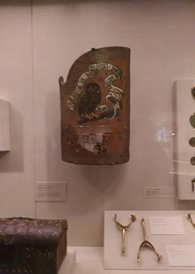
German Medieval Shield

In my previous posts, I have discussed how museums use relevance to engage audiences with subject matter they present. I wondered what if you did not work for a specific museum but rather a tour company. What would a tour be like with someone outside of the museum? How will they create ways to engage audiences with the subject matter? On Friday, I participated in one of Museum Hack’s evening tours that took place at the Metropolitan Museum of Art in New York City to find out.

Friday’s tour was the Game of Thrones theme tour called Metropolitan Museum of Art: Game of Thrones Mini-Tour. For those who do not know, Game of Thrones is an HBO series which is an adaptation of George R.R. Martin’s A Song of Ice and Fire book series, and Game of Thrones is the first book in the series. I chose the Game of Thrones Mini Tour because I thought it was not a tour that I would expect to find in other places I have visited. Plus, I was interested in seeing how they would tie the show with the pieces displayed at the Met. I also enjoy watching Game of Thrones so I thought it would be a great way to refresh my memory about the series before the new season airs.

There may be minor spoilers of the Game of Thrones series, so be forewarned.

Each of the Game of Thrones tours is adjusted based on the tour guide’s knowledge of a piece in the museum itself, and to connect it someway to the HBO series. The main point of the tour was to show both museum lovers and those who are not fans of attending museums how awesome museums are by sharing how individuals interested in the Game of Thrones series can identify and interact with the museum exhibits.

To get that point across, Museum Hack tour guide, Anna, led activities that the audience participated in throughout the tour. The first example of an activity was introduced during an ice breaker where we were broken up into pairs and came up with our house name, motto, and animal (for instance, my house was House Stragglers, our motto: Pizza is Coming, and our animal was a bear). Throughout the tour, we were encouraged to take pictures of anything in the museum that contains dragons or birds that will later be added for points and whoever has the most points wins a prize; there is an opportunity at the end to take away points from other houses.

Another example of an activity I participated in was verbal jousting. We were given sheets of paper with medieval insults listed in three columns. Then we were separated from our House partners, and were told to choose three insults (one from each column) to use at each other. After shouting these insults at each other, Anna decided the winner by determining whose is the silliest. Not only there were activities related to the HBO series we occasionally participated in during the tour, we were also guided through most of the Metropolitan Museum of Art, and stopped at pre-selected artifacts to discuss similarities to Game of Thrones.

The ties made between the collections at the Metropolitan Museum of Art and Game of Thrones were sometimes strong and other times they were reminders of what we have seen during the show.

During the tour, Anna discussed how George R.R. Martin had written the book series using historical events and figures as inspirations for the events and characters in the A Song of Ice and Fire books and were later portrayed in the Game of Thrones HBO series. For instance, she mentioned the civil war, which was the result of Robert Barathean’s death, to earn the right for the throne of the Seven Kingdoms, known as the Iron Throne, was inspired by the War of the Roses which was a civil war fought to claim the throne of England. She draws connections at each stopping point by talking about what had happen to the characters in the show and what similarities are found in individuals from the past.

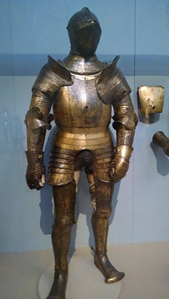
For instance, she talked about Robert Barathean and Henry VIII of England by briefly talking about the Game of Thrones character then talked about the 16th century king of England. Both men were kings who enjoyed sports especially jousting. Robert Barathean was the king of the Seven Kingdoms who took over the throne after defeating the previous king of the Seven Kingdoms, Aerys II Targaryen, during a battle known as Robert’s Rebellion. Anna then talked about Henry VIII by talking about his two armors we stopped in front of; Henry VIII was an athletic young king, and during one of his jousting games a horse landed on top of him. He survived but because of the injuries he had as a result, he was no longer able to participate in jousting and began eating an over 5,000 calorie diet that led him to a being fitted for a larger armor with an adjustable chest plate.

Henry VIII’s armor, before jousting accident

Henry VIII’s armor, after jousting accident
Anna also mentioned during the tour that both Tyrion Lannister and Henri de Toulouse-Lautrec could have been friends if they lived in the same world and time. Tyrion Lannister was a dwarf who was a member of one of the wealthiest and most powerful families in the Westeros kingdom; he used his family’s status alleviate the prejudice he received throughout his life from his family and others. Henri de Toulouse-Lautrec was a French painter, known for his paining At the Moulin Rouge (1892–1895), who immersed himself in the colorful and theatrical life of Paris during the late 19th century. As a boy, he suffered from fractures that were later attributed to an unknown genetic disorder which prevented his legs from growing; Toulouse-Lautrec developed an adult-size torso and retained his child-sized legs. Both Tyrion and Henri soothed themselves with wine and prostitution.

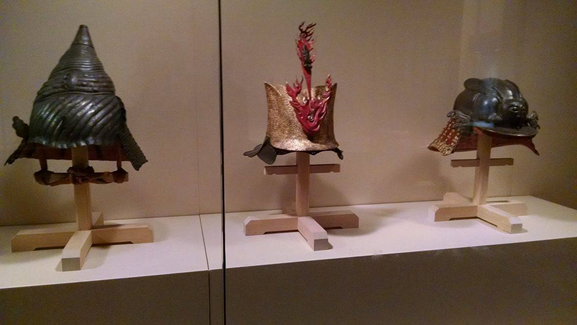
The tour included items in the museum’s collections that did not fit into the equivalent of the Westeros culture but nevertheless reminded Anna of one of the character’s helmets worn during the show. Anna took us through the display of Japanese armors to show us decorative helmets that took on various shapes and animals including a rabbit. She introduced the helmets by talking about the Game of Thrones character known as The Mountain. Gregor Clegane, known as The Mountain because of his height at eight feet tall, is a knight who led Tywin Lannister’s (Tyrion’s father) army, and known for his brutality from his numerous war crimes as well as rape and murder of the Targaryen royal family at the end of Robert’s Rebellion.

During the show, he has been shown to be wearing variously shaped helmets which helped create the connection to the Japanese armor helmets. I also connected these helmets to the helmets and armor I talked about when I gave tours of the Butler-McCook House in Hartford; the McCook collected various artifacts during their world trips including Japanese Samurai armor and helmets displayed in the library. These helmets drew many different reminders that help audiences including myself make connections to.

Japanese armor helmets

Overall, I enjoyed the tour very much because it includes activities to help audiences think about the show and keep them actively participating in the tour. I also enjoyed the tour because the connections made to the Game of Thrones show not only captured my interest but made me think about the museum’s collections a little differently than I previously had when I visited the Metropolitan in the past. This tour did refresh my memory about what I have seen on the show so far, and not only did I leave the museum feeling I had an entertaining evening but I also wanted to learn more about the artifacts presented in the tour. If interested in learning more about Museum Hack tours or want to participate in similar tours, find out here: https://museumhack.com/tickets/.

Have you participated in a Museum Hack tour? If you have, what do you think about your experience participating in their tour? If you have not, have you had similar experiences of making connections like the ones I discussed during the Game of Thrones Mini-Tour?


Summertime: Keeping Audiences Coming to Museums

Originally posted on Medium, June 15, 2017.

As the summer approaches, museum professionals continue to develop exhibits, kids summer programs, and public programs that encourage visitors to keep coming back to these organizations. I have visited many museums throughout my life, and each one provides various and unique summer programming to keep visitors, new and regular, coming to their institutions. Summer programs must not only provide visitors options for summer entertainment but should also reflect the institutions’ missions in some way. During my experience as a museum education professional, I have figured out there are many ways to help visitors engage with museums I have worked with. As I begin my summer work as an educator at Maritime Explorium in Port Jefferson and at Three Village Historical Society in East Setauket, I reflect on what has worked in the past.

My summer experience began with my summer internship at Connecticut’s Old State House, located in downtown Hartford, while I was earning my Master’s degree at Central Connecticut State University. In addition to giving tours to the public and researching answers to questions asked during tours, I create an animal scavenger hunt for young kids, called “Where Am I Hiding? Holcombe Center Animal Hunt”, to do while visiting the Old State House. The animals I used for the scavenger hunt came from Connecticut’s Old State House’ s Holcomb Center, where education programs are usually held for young kids. I walked around the Center and chose nine animals that were painted on the walls. I chose a variety of animals that can be found in different habitats; the animals I chose include a duck, cow, horse, starfish, turtle, and an alligator. To participate in the activity, the kids followed simple instructions so they will be able to find all the animals in the room.

Kids would use the clues provided to figure out what animals they will look for. For instance, one example of a clue I wrote was
“I love to swim and ruffle my feathers. I love to say ‘Quack’ and you can find me and my little ones underneath the bench in the water.”

When they look for the animals, the kids use the clue to figure out what animal it is, and where it is in the Center. Once they found where the animals are in the room, the kids use the reference picture on the sheet to match it with the clue. By doing so, it will show that the kids know what the animals are and keep the kids entertained. While this activity does not completely tie into the mission to reawaken citizen engagement and awareness, it helps young kids interact with their surroundings which would carry into getting more engaged and inspired to learn more as they grow up and learn how their voice matters as citizens of a democratic nation.

Another example of summer programming I worked on was at Connecticut Landmarks’ Butler-McCook House also located in Hartford. During the summer, the Butler-McCook House has a summer concert series where various artists on certain dates in the summer months perform on the lawn between Connecticut Landmarks’ headquarters and Butler-McCook House; the headquarters was moved into the Amos Bull House which was relocated from Main Street to behind the Butler-McCook House on the McCook family property to save the Bull House from being torn down. The Butler-McCook House also had a few rooms open to concert attendees to learn a little bit of the history of the house and Hartford. Connecticut Landmarks’ mission is

“to inspire interest and encourage learning about the American past by preserving selected historic properties, collections and stories and presenting programs that meaningfully engage the public and our communities.”

The summer concert series are an example of how programs are relevant to the institutions’ missions because the summer concerts encourage many people in the community especially families to come together to not only enjoy the music but become more aware of what Connecticut Landmarks’ can offer to the community as historical resources of local and national history.

Some museums and historic sites also provide summer day camps for kids of various ages to participate in to both learn and have fun. I worked at Noah Webster House & West Hartford Historical Society’s summer day camp which had two sessions that kids between the ages of 8 and 12 could sign up for one or a later one; the program taught kids about 18th century life through cooking recipes, performing chores, making crafts based on toys that 18th century children would have made themselves, and creating their own skits based on what they learned for their families at the end of the session. Noah Webster House & West Hartford Historical Society also partnered with Westmoor Park to include farm activities to learn what it is like to do chores on the farm as well as to learn about and pet the animals. At Westmoor Park, the kids also participated in other activities including crafts and nature walks. This summer camp helps kids gain a better understanding of history and culture while participating in fun activities.

The Long Island Museum also had a summer day camp that allows kids to work with artists hired for the summer to teach different art projects. I supervised check in to make sure everything ran smoothly and I was on call to make sure each session had enough supplies and everything else ran smoothly during the day. There are many different sessions scheduled during the summer. For instance, one of the sessions is called Fashion Illustration. Fashion Illustration teaches registered kids how to draw sketches to create different fashion designs. Another art session tied in with the exhibit Long Island in the Sixties by having kids create crafts based on things from the 1960s. These summer day camp sessions allowed kids to have a better understanding and enjoyment of art, especially through Long Island heritage.

In my current roles, I continue to provide educational and entertaining experiences for visitors of various ages. At the Maritime Explorium, I assist kids with hands-on activities related to science and maritime. For instance, I helped kids between kindergarten and second grade find a way to make a penny shine by providing materials such as dish soap, barbeque sauce, baking soda, salt, and sponges for them to figure out the solution, and have them write down methods that did not work. Also, I worked at the Eastern Long Island Mini Maker Faire where kids participated in hands-on games, activities, and crafts while participating in other Maker Faire activities such as interactive activities and listening to live music.

I also began working with Three Village Historical Society on education programs. Collaborating with the Director of Education and the Historian, I will work on school and kids summer programs. I look for inspiration from past programs Three Village Historical Society has taught, my own experiences, and the lessons I learned from professional development programs. Summer programs and the staff who develop them I have learned from my experiences provide opportunities for visitors to return for more programming. It is important to have it well advertised so more people will be able to know about these programs through outlets such as social media, newspaper ads, flyers, mailings, and/or a mixture of any of the previous methods. Also, it is important to develop a way to evaluate the programs to see what works and what needs to be improved on. Summer programs continue to evolve as the communities needs change while fulfilling their institutions’ missions.

Do you have a favorite experience, or experiences, with summer programs? What are your experiences in developing and/or implementing summer programs at your institutions?

How Creativity is Necessary in the Museum

Originally posted on Medium, June 8, 2017.

What is Creativity? Why is it so important to have creativity in our practice as museum professionals? Questions like these two are what we ponder every day to fulfill our museums’ missions and our career goals. Creativity allows us to be able to express ourselves and provides another outlook on the world around us. Museum professionals especially need to express their creative sides to help their organizations continue to grow and adapt to their changing communities. This is not a new topic but we can always learn something new when we express our creative side. I learn a lot when I allow to express my creative side whether it is drawing, writing, or making projects; and I use my experiences inside and outside of museums to inspire me to create something different and sometimes the same subject from a different perspective.

Since I was young, I made various drawings of many things including animals and landscapes. As I developed my interests in museums, I began drawing museums I have been to and museums I have worked with. For instance, I drew the Butler-McCook House in Hartford, the Stanley-Whitman House in Farmington, Connecticut, Noah Webster House in West Hartford, and Connecticut Historical Society. I drew many of these drawings from my own memory, and one was drawn using a photograph as reference. Also, I used either pens or pencils to make my drawings (depending on which utensil was available at the time). I learned to use my creativity to assist in my museum experience, and I continue to use references from books and professional development programs discussing creativity.

Connecticut Historical Society, pen, drawn 2015

  Noah Webster House, pen, drawn 2015
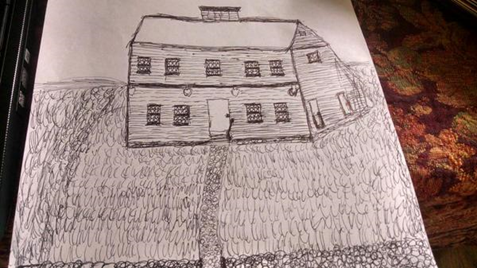
Stanley-Whitman House, pen, drawn 2014

Butler-McCook House, pencil, drawn 2014
One of the resources I used and continue to use is Linda Norris’ and Rainey Tisdale’s Creativity in Museum Practice to help me get inspired. Norris and Tisdale express the importance of allowing creativity to inspire work in the museum no matter which department they work from. In their book, they state that they believe “the daily life of museum workers behind the scenes both needs and deserves more attention in order for museums to reach their full potential.” Norris and Tisdale shared colleagues’ stories from across the museum field of what creative practices have worked for themselves and their museums. Also, they shared their own tips on how to jumpstart one’s creative practice using no-cost or low-cost activities. Throughout the book, Norris and Tisdale discuss many ways museum professionals can find creativity in their daily tasks, and use whatever inspiration they find in the environment they are surrounded by. The style of this book is written as both a textbook and a workbook to help museum professionals spark their own creativity.

Norris, Linda and Rainey Tisdale, Creativity in Museum Practice, Walnut Creek, CA: Left Coast Press, 2014.

One of the professional development programs I participated in was a NYCMER workshop in October called “Exhibition Designs for Educators” at El Museo del Barrio. This program was an example of how educators can learn to express their creativity to design exhibits and programs simultaneously. There was a challenge in which we were not told what the object was, and we were expected to create an exhibit with an unknown artifact (what appeared to be a cement block). The group I worked with received the prompt to create this exhibit as a warm and friendly environment; we brainstormed various ways we could create the exhibit using the prompt. For more information about this activity, check out the post “Writing about Museum Education: Using Professional Development to Our Advantage.” By brainstorming together as a group, we were able to express our collective creative experience that led to the concept we designed.

“Exhibition Designs for Educators” Activity, October 2016
Creativity is especially used in museum education programs to not only entertain its audiences but to educate them on the subject matter of the museums’ expertise including but not limited to art, history, and science.

There are many examples of when I used creativity as a museum education professional. For instance, while I was working in historic house museums in Connecticut, I taught and assisted participants in making crafts and cooking recipes for school and camp programs. One of the crafts I helped kids make were cornhusk dolls during the summer camp program at Noah Webster House & West Hartford Historical Society which not only was a fun activity but they also learned about what kinds of dolls kids during the eighteenth century played with and created themselves to find ways to entertain themselves. I have also helped fifth grade students make apple pies and Irish-style mashed potatoes at the Stanley-Whitman House in Farmington. At Connecticut Landmarks Butler-McCook House, I helped kids create Samurai helmets out of gift wrap and yarn during the New Year’s Eve celebration, First Night Hartford. The Samurai helmet activity was inspired by the Samurai armor that the McCook family have in their old 18/19th century house; Reverend McCook and his daughter Frances traveled to many places on the way to and from China to visit another daughter Eliza, and one of the places they visited was Japan where he purchased the Samurai armor to bring back to Hartford.

One of the most recent examples include creating activities for kids to participate in during down time in school programs and during general tours at the Long Island Maritime Museum. I created activities such as cross word puzzles, word searches, matching games, and a scavenger hunt. To create these activities, I used information about the Long Island Maritime Museum and the maritime history it shares with its visitors. For instance, I created a crossword puzzle about one of the historic buildings on the museum’s property called the Rudolph Oyster House based on the information about the Oyster House and oyster business; the Rudolph Oyster House was built in 1908 by William Rudolph for his oyster company established in 1895, and it was used as an oyster culling and shucking house until 1947 and was acquired by the Long Island Maritime Museum in 1974.

Another example of activities I created was a breeches buoy search to teach participants the parts of the breeches buoy, an early contraption that pulled victims from shipwrecks, by writing down the names of the parts next to the corresponding letter (I included a word bank so they see the appropriate names). The next example of activities I created is a Name These Boats activity that challenges participants to use their memories of the boats stored in the museum’s Small Craft Building. I included a word bank to limit the possibilities, and participants would write down the name of the boat next to the photograph of a boat.

I also had the opportunity to observe a children’s program that the Maritime Explorium in Port Jefferson participated in. Children created sound-sandwiches for them to take home and play music on by blowing into them like harmonicas. The sound-sandwiches were made with tongue depressors, two pieces of straw, and rubber bands. To make them, one of the two tongue depressors needs a large rubber band wrapped around it from one tip to another; then the two tongue depressors and two small pieces of straw are tied together with smaller rubber bands at the ends. Sound-sandwiches can be adjusted until a humming or vibrating sound is heard. This was not only a fun activity for children to participate in but they also learned how to create sound by using the materials they were given.

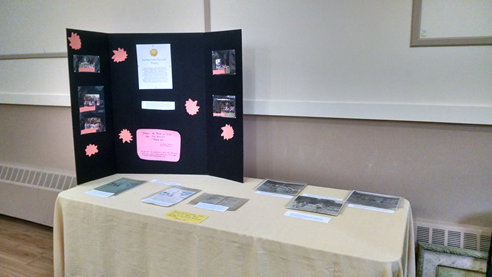
Last weekend I created another exhibit for my childhood church to share the community’s summertime fun since the season would be around the corner soon and I wanted this exhibit to focus more on the parishioners as well as their interactions with the community around them. I included photographs from the Summer Festival the church participated in in 1975, and photographs from a Church picnic that took place by the beach in the 1960s. I also included bulletins that included announcements of activities planned for the summer, ways to get involved in the community, and current events to remind parishioners to be good Christians and learn more about the issues discussed as a result of events. I designed little suns to decorate the exhibit with to represent summer. This exhibit is an example of how creativity is especially useful during the exhibit design process.

Summertime Fun with Trinity exhibit, opened June 4, 2017

Tomorrow I am also participating in another professional development program about creativity, Creativity Incubator. It is a New York State Council on the Arts (NYSCA)/ Greater Hudson Heritage Network (GHHN) Partnership Program which encourages museum staff to test out experimental interpretive approaches through hands-on activities. I will travel to the Raynham Hall Museum in Oyster Bay, New York where it is being hosted. Creativity will continue to be a significant part of our work as museum professionals, and we need to find ways to inspire creativity in our work and inspire creativity with our visitors.

What ways have you found to inspire creativity work for you? Do you have a favorite moment where you accomplished a creative project, museum-related or not? Have you been inspired by something outside of the museum field that helped you complete a project?


Museum Education Programs: The Challenges of Having Chaperones Be Effective Participants

Originally published on Medium and Student Voices, January 27, 2017.

I think many museum educators agree that from time to time we all have chaperones accompanying school groups that do not engage with the program and not participate in encouraging kids involvement in the programs. I recently had a conversation on Twitter about this subject which began with this question to the online discussion group, #MuseumEdChat: “how do you engage chaperones to be effective partners in your programs? Without losing kid interest or pandering”. Not many people on Twitter have found solutions to this posted question but we attempted to answer this question by coming up with our own answers. I thought it would be best to create a program that would encourage chaperone participation by allowing them to collaborate with the students so that way kids are not discouraged from participating and chaperones can set a good example for kids to become active learners. Also, chaperones are therefore seen as more than “crowd control”. The conversation on Twitter made me think about my own experiences with school field trips and chaperones.

As a museum educator, I have had mixed experiences with chaperones. Some of the chaperones encouraged kids to participate in the school program activities while others passively sit there not engaging with kids or the educators. Chaperones who have not interacted with the program have either text or talk amongst themselves. These museums I have taught school programs taught me various lessons on how to handle these mixed experiences. At the Old State House in Hartford, for instance, I taught the “I Spy” program for kindergarten students on my very first day of my museum education internship. The “I Spy” program is an activity in which students created their own spy glasses made from paper towel rolls and decorated various stickers, crayons, and color paper; then once their spy glasses were finished, the educators, chaperones, and myself took the group of kids around the Old State House using the spy glasses to make observations about what they saw. While they were being made, chaperones and teachers not only brought kids around with Old State House staff to participate in the activity together but they also assisted me and the Old State House staff helping students decorate their spy glasses as well as made sure they could understand the instructions. After the first day of my internship at the Old State House, I learned that students and teachers can participate together on the activity and can encourage students to participate in the activity. Another experience taught me how to handle challenging situations while teaching programs.

When I was at the Stanley-Whitman House, I taught various programs including a life in eighteenth century Connecticut program for kids aimed at fourth and fifth grade levels that included a cooking lesson assisted by myself and another museum educator. One of the fifth-grade groups were a rowdy bunch that were rough housing and not listening to a word one museum educator and myself were instructing the students about the cooking lesson on making Irish-style mashed potatoes and apple pie. The group was so rowdy that because of the rough housing and not paying attention, the recipes came out poorly and one student cut his finger with the knife used to cut potatoes. The museum educator and myself followed protocol to get first aid to clean and put a band aid on his finger. Then I called the rest of the group to sit down in silence until the program was finished. Meanwhile, the teacher who was with this group sat by and did nothing to help discipline the group nor showed interest in what we were teaching this group throughout the whole cooking lesson. What I kept thinking was: If the teacher was not willing to engage with the session, then why should the students? This experience has taught me to figure out how to handle tough groups, and showed me one of the early examples of what it is like to be around inactive teachers and chaperones. Another example of mixed experiences I have had with school groups and chaperones revealed that each visiting school chaperones behave differently and museum educators prepare for various situations.

At the Noah Webster House, I have had various teachers and chaperones that had different levels of involvement in the programs. Some chaperones were willing to assist the groups in making sure the students were paying attention as well as assisting with activities. Others were either passively sitting by as I teach the session or were destructive in the students learning process. For instance, there is a program called Living History in which museum teachers and students assume 18th century identities and pretend to be living in that period in West Hartford (or West Division as the town was called in the 18th century) learning different ways the Webster family performed chores i.e. cooking and cleaning. Some teachers and chaperones would continuously refer to 21st century items and ideas which distracts the students and encourages the students to do the same thing even though the pre-visit materials they received before the field trip warned against doing so. Then at the Long Island Museum, one of my most recent experiences, I taught a program that took place in the museum’s 19th century School House to teach students about what school and life was like on Long Island during the 19th century.

The program starts with a comparison on what school is like back then and now by asking students about their school and informing them about the 19th century rural community. I asked the students what their schools was like, and then asked inquiry-based questions about what they think it is like in the School House; for instance, I ask how many rooms are in this school house as well as how many grade levels are inside and after hearing their answers I inform them there is one classroom with eight or nine grade levels. After the short introduction, I informed the students we are pretending to be traveling back in time and share that they will be participating in reading, writing (using scratch pens, or pen and inkwells), and arithmetic (math) activities as well as behave how 19th century students would have in school. After the students participates in the lessons and the recess using toys students back then used, we pretended to travel back to the 21st century so they can go back on the bus to go back to school. There were different reactions chaperones had to the program and different ways chaperones interacted with the students. Some assist with the activities and even asked to also participate in the activities such as working on penmanship using scratch pens and inkwells. Other chaperones had a less active approach including sitting back and chatting with other chaperones. All experiences showed me that each chaperone had different expectations about what the chaperones’ roles should be.

I decided to take a closer look at any research and published works written about chaperones to see how museum educators can answer the question about chaperones being effective partners in school programs. I found an article from Volume 28 of the Journal of Museum Education by Maija Sedzielarz called “Watching the Chaperones: An Ethnographic Study of Adult-Child Interactions in School Field Trips”. Sedzielarz, at the time of the article, was the School Visits Coordinator at the Science Museum of Minnesota in St. Paul where the research for the article took place. This article was a synthesis from her master’s thesis research at the University of Minnesota; it was a study of the types of chaperones that participate in school field trips to museums by using ethnography to record observations between adults and children. This study was conducted at the Science Museum of Minnesota where they began to design materials that tap into the chaperone’s expectations of field trip outcomes, directly addressing chaperone needs as well as assumptions then share these findings with the teachers planning trips to the museum. According to Sedzielarz, she stated that she found in the recent study of the chaperones’ behavior in elementary school field trips, in which she observed and interviewed almost thirty chaperones at the museum and additional five chaperones at three other local museums, she “heard comments that revealed what each chaperone felt was important about the trip and what kinds of outcomes they expected and consequently experienced” (Sedzielarz, 21). The article went into detail about how the chaperones Sedzielarz observed felt they had multiple roles to fill: guide, learning leader, teacher, role model, security guard, learner, group facilitator, and timekeeper. She explained chaperones frustrations on what roles they should be focusing more on during their visits with school groups.

From my own experience, chaperones are not necessarily included in most of the programs taught and this causes them to think the programs are only for the students; therefore, it leads to most chaperones taking inactive roles in the field trips. What I understood from the article is that we as museum educators need to remind chaperones that the most important role that they are there to learn as well. Sedzielarz stated that “If we believe that school field trips are valuable learning experiences, we also need to regard all members of the field trip as learners” (24). Each museum has their own materials and ways of presenting this material to the school groups, and it is up to museum educators to make sure the chaperones’ role have a part in being learning partners with the students and museum educators.

How are your museum(s) or cultural institutions handle working with teachers and chaperones? Do you have ideas on how chaperones can be learning partners in your programs? What are your experiences working with chaperones like in the past?

Maija Sedzielarz (2003) Watching the Chaperones, Journal of Museum Education, 28:2, 20–24, DOI: 10.1080/10598650.2003.11510478

https://mystudentvoices.com/museum-education-programs-the-challenges-of-having-chaperones-be-effective-participants-96cced3d449c

Museum Education Online: Museums’ Position in the Virtual World

Originally posted on Medium. December 8, 2016.

Museum education is continuing to evolve as a museum field after many years of creating programs for schools and the public. While I have over seven years’ experience in the field so far, I have seen many changes to advance the field and make an impact on the community around us. For instance, in my last blog I discussed the continuously evolving inclusion of programs for people with special needs. Also, the internet has given the world, especially the museums, opportunities to connect and provide ways to learn online. This week I am looking at museums in the virtual world, including social media and online learning, and my reactions to these changes. When I was growing up attending museums, the internet was still a new concept created and not many websites offered online learning. As a child, I visited more museums than finding out about museums on the internet. My family would drive down to see Washington D.C., Thomas Jefferson’s Monticello, and Gettysburg battleground during the summer. I used the internet later to assist me with research for school and I used the internet more when I went to college and graduate school.

When I was at Western New England getting my Bachelor’s degree I participated in different courses that used online tools as part of curriculum. Most of my classes were in person courses with activities and assignments taken in an online portal, MYWNEC, as a supplement to these courses. I took two online courses, and with some exceptions the class met online; my first course was a psychology course that was entirely online and my second course was an art history course that occasionally had assignments where I had to attend a museum to complete them. I had a few courses that took place completely in the classroom. Meanwhile while I was at Central Connecticut State University getting my Master’s degree, there were no online courses provided in the program but I used resources online as part of my research for papers and projects. For instance, when I worked on the proposal for Connecticut Historical Society’s next exhibit which was eventually accepted and became Cooking by the Book (it was displayed from January 2013 to April 2013), I used their online collections resource to decide which objects to include in the proposal. Outside of school I took a few online courses on edx.org about various subjects including history and interactions in the classroom; I take these courses at my own pace to keep my skills relevant and updated. While I was becoming a museum professional, I saw how museums utilized the internet to create websites that provide information about their exhibits, programs, and resources.

Each museum I worked for have various ways visitors and potential visitors can access what they offer on the internet. On Stanley-Whitman House’s website, it has the history of the house and information on the museum as well as information about education programs, adult group programs, and special events & programs. The Stanley-Whitman House also provides information about the collections, gardens, exhibits, and research services. On Connecticut Landmarks’ website, it provides information about the nine properties it owns especially the two properties I worked at, Butler-McCook House and Isham-Terry House; the website also provides other information including information about the organization, upcoming special events, events calendar, a link to the facilities rental site, various ways individuals can donate to the organization, ways to get involved in the organization, and press releases. On Noah Webster House & West Hartford Historical Society’s website, in addition to information about the historic house museum/historical society and on how to become a member, it has information about school, youth, adult, and public programs as well as information about their exhibits especially their new tablet tour I learned about while I was a museum educator there. The website also has a Discovery & Learn section which includes the history of Noah Webster and West Hartford, brief descriptions of the historical society’s collections; a kid’s corner that includes interactive activities kids can download and click on tabs to learn about the history of West Hartford and Noah Webster, and teachers can download keys to a couple of the activities; and a Q&A section with the Executive Director that is coming up soon. On the Long Island Museum’s website, it has various information including on exhibits past and current, programs for students, adults, public and families, and a collections database that allows visitors to look up various pictures, books, and objects found in the museum’s collection. The previously mentioned museums’ websites have different ways to grab people’s attention and help bring them to these museums.

Museums use and should use the internet to their advantage to expand their reach to their audiences. As technology and the internet continue to evolve, museums also need to evolve to gain as well as maintain visitors to their exhibits. One of the books I read about museums and the internet is called Unbound By Place or Time: Museums and Online Learning by William B. Crow and Herminia Din published by the American Association of Museums Press (now called the American Alliance of Museums) in 2009. This book discusses various forms of online learning, the advantages and challenges of online learning, and how museums can utilize online learning.

Crow and Din also provided case studies that gave examples of how museums can create successful programs for visitors. The authors also stated that it is important to recognize that in the end our online programs are tools, no matter what we learn and experience our relationship with it will change as it evolves, and that what is consistent is our dedication and commitment for providing resources our museums offer. This is true even today especially with new technology being used in school and adult programs; at Long Island Museum for instance has a program for Alzheimer’s patients that use a tablet to play music related to objects and sections in exhibits. It is also true especially as skype is used to communicate with people and it has the potential to be used in more museum education programs. What do you think of the relationship between museums and online learning? Does your organization have online programs? If so, what are the advantages and challenges you find as an educator using these programs? If your organization does not use online learning programs, would you like to introduce this to your museum/organization and create your own?

As you ponder these questions, I recommend visiting these sites:
www.stanleywhitman.org
www.ctlandmarks.org
www.noahwebsterhouse.org
www.longislandmuseum.org


Writing about Museum Education: Using Professional Development to Our Advantage

Originally posted on Medium. October 26, 2016

I truly believe professional development is important for all career paths, especially in the museum education field. Professional development in the museum education field have many opportunities to help museum professionals develop their careers to make sure they are up to date with latest theories and skills. There are many ways any professional can develop their skills in their chosen careers. For instance, there are conferences, networking, courses, online and workshops professionals can develop their own skills and use those lessons to share with their organizations to continue to grow. These options allow every professional to gain insight in their own professions, and by sharing my experiences in participating in professional development I hope this would inspire both emerging professionals and seasoned professionals to take advantage of what our organizations can offer. As a museum educator, I participated in various professional development programs including conferences and workshops.

I attended annual New England Museum Association conferences held in various cities in the New England states. The ones I attended were at hotels in Newport, RI in 2013, Boston/Cambridge, MA in 2014, and Portland, ME in 2015. The first conference’s theme was called Who Cares? Why Museums Are Needed More Than Ever; this theme touched on exactly how museums can still be relevant today. The second conference’s theme was called Picture of Health: Museums, Wellness, & Healthy Communities which explained how museums can promote health and wellness. The third conference’s theme was called The Language of Museums which discussed communication within the museum, among the staff, and with museum visitors to best serve the surrounding community. Each conference lasted for three days, has various sessions related to each department in the museum field as well as to the overall conference, and some off-site sessions allowing participants to explore the area where the conference is held. The conferences start with Keynote Sessions lead by speakers related to the theme and discuss how the conference’s theme advances the museum field.

Also, the conferences provide various networking opportunities including opening events at local museum, and Professional Affinity Group Lunches; the Professional Affinity Group Lunches (or PAG Lunches) allow professionals to meet with other professionals in the field, such as museum educators, take a boxed lunch ordered ahead of time and participate in discussions as well as group activities. NEMA conferences also provide a couple of sessions for professionals who were attending the conference for the first time; there was a session on the introduction to the conference and newcomer’s reception for networking opportunities. When I attended the newcomer’s session and reception in 2013 as a graduate student, I was introduced to how the conferences were set up and the panelists gave me and other newcomers advice on how to choose sessions as well as how to take advantage of networking with colleagues. These newcomer’s sessions are very helpful because it made me feel comfortable about navigating through the conferences, and when I introduced a friend and colleague to the NEMA conference I made sure she went to these sessions. As I transitioned to the museum community in New York, I took advantage of attending conferences and events in New York City.

I attended my first New York City Museum Educators Roundtable (NYCMER) conference in May 2016. The NYCMER conference was located at the Morgan Library & Museum near Penn Station. While it was like the NEMA conferences I attended in the past, the differences include the focus was professional development for museum educators, and all on site sessions were at the museum not at a hotel. NYCMER conference started with a keynote session with many sessions related to the museum education field. The keynote session at the beginning of the conference featured speakers Steven Seidel, Faculty Director of the Arts in Education Program at the Harvard Graduate School of Education, and Jennifer Ifill-Ryan, Associate Director, Education & Community Engagement at the Sugar Hill Children’s Museum of Art & Learning, introducing the overall importance of storytelling in the museum education field. Unlike the NEMA conferences which had some sessions related to museum education, all NYCMER sessions were more focused on subjects related to the museum education field. For instance, I attended a session that shared how to engage new audiences through playful experiences presented by staff from Museum Hack, a program designed to engage individuals with museums and to help museums develop their skills in creating interactive programs. Not only have I taken advantage of attending conferences, I also participated in a workshop in New York.

Last week I attended a workshop hosted by NYCMER and El Museo del Barrio called “Exhibition Designs for Educators”. The workshop event started with an activity on creating an exhibit related to one object; we were split into four different groups and were given a task to create an exhibit using prompts to interpret the object in four different ways. The challenge was we were not told what the object was, and we were expected to create an exhibit with an unknown artifact. What I can describe about the object is it looked like a cement block with a whole in it, and had nails sticking out of it. This group activity allowed us to discuss with each other ideas about how we can achieve our mission. My group’s prompt was to create an open exhibit that has a warm, inviting environment. We decided to create a model of our exhibit; our model had the object on a pedestal in the center of the exhibit with seats around it and wires between the seats. I asked the group what if we included inquiry-based questions to allow the visitors of our exhibit to be able to talk about the object, and we agreed in addition to inquiry-based questions on the wall we also included a box next to the pedestal with answers related to the object. To create that warm, inviting environment, we decided to use bright colors associated with comfort for the wall and seats then used a darker color for the floor to complement the object. After a few minutes, each group presented their exhibit ideas.

The rest of “Exhibition Design for Educators” workshop had three panelists discuss their involvement in exhibition and how it can be translated to education. NYCMER’s event mission was to make sure everyone attending will have a better understanding of the relationship between exhibition design and interpretation, and how educators can take advantage of their colleagues’ strategies in their own practice. These panelists explained their approaches to the practice of designing exhibits and their approaches to integrating interpretation. The first panelist was Ricardo Mulero who has been involved in exhibition projects include the National September 11 Memorial Museum and James Madison’s Montpelier in Virginia; he discussed his experiences working on projects for these museums and revealed at the end the object we created exhibits for was a cast of Kodak Camera packaging foam (circa 1970s). The second panelist was Sofia Reeser Del Rio who is the Curatorial Programs Coordinator at El Museo del Barrio; she discussed her approach to exhibit design as a form of storytelling and used a seed as a simile for an exhibit. Like a seed, ideas need to be nurtured and supported by research, emotions, imagination, appropriate gallery space, and planning to become successful projects.

The last panelist was Paul Orselli, the President and Chief Instigator at Paul Orselli Workshop, Inc. (POW!) who discussed about creating prototypes or a tool to engage in co-creation outside museum, exhibit diplomacy (or how to try things quickly, answer simply, and let visitor answer you), and hybrid museum. Orselli also used Elvis Presley to explain exhibit prototyping by using each letter of his first name to discuss each step for prototyping; use everyday materials to make it easier, looseness in opportunities during development, have exhibits be vermicious or to worm around on different subjects, have iteration or in other words keep trying, and sharing ideas with visitors and other professionals. What I took away from this experience is being able to come up with ideas for integrating exhibit and education programs, and will hopefully use these discussions to assist in planning future programs. I believe I left the workshop with a better understanding of the relationship between exhibition design and interpretation.

These are only some of the emerging and seasoned professionals can develop their skills in museum education. Volunteering is another great way to get involved to not only help an organization but you can also continue to utilize and develop your skills. I volunteer as a Parish Historian for the church I grew up attending to keep track of the collections and figure out ways to utilize the collections; also, I volunteer for the Historical Society of Greater Port Jefferson and the Long Island Maritime Museum teaching school programs and working within the visitor services department. The previous experiences I shared with you all will hopefully show how much we can learn from professional development, and how important it is to take advantage of these events. I will leave you with the following questions to ponder on: What are ways you take advantage of professional development? Is there a session or workshop that inspired you? Have you presented at a conference before, and if you have what did you like most about your experiences?